Oxford American Cardiology Library - Böcker
Visar alla böcker i serien Oxford American Cardiology Library. Handla med fri frakt och snabb leverans.
5 produkter
5 produkter
797 kr
Skickas inom 7-10 vardagar
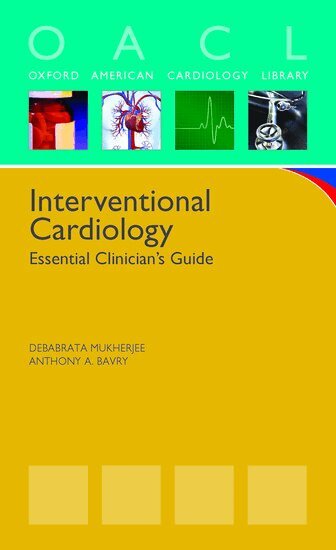
Interventional cardiology refers to catheter-based treatment of cardiovascular diseases. This dynamic new field is one of the fastest growing fields in medicine. In the United States, more than a million percutaneous coronary interventions (PCI) are performed annually; moreover, the number of procedures performed will likely continue to increase. The field of interventional cardiology has evolved dramatically over the past decade with the availability of embolic protection devices, drug eluting stents, mechanical thrombectomy catheters, etc. Interventional cardiology represents a rapidly moving target for the cardiologist who seeks to integrate recent advances into their clinical practice. The advent of newer technology presents both an opportunity as well as numerous challenges for the cardiologist to treat patients optimally.Interventional Cardiology: Essential Clinicians Guide (Oxford American Cardiology Library) aims to provide clinicians with concise, easily accessible guidance on the pre-procedural, procedural and post procedural aspects of PCI in general situations and in various specific clinical settings. The volume features evidence-based discussion on patient selection, vascular access, general principles of PCI, and various specific settings and optimal post procedure management of these patients. This handbook focuses on tailoring stent type to the individual patient, taking into account specific risk factors and comorbidities, appropriate use of embolic protection and thrombectomy catheters. Highly practical in format, content and style, Interventional Cardiology: Essential Clinician's Guide serves as a succinct, yet comprehensive, easily accessible point-of-care reference for busy practitioners. Useful tools, such as treatment algorithms, charts, tables and illustrations assist in making this volume a practical reference tool.
478 kr
Skickas inom 5-8 vardagar
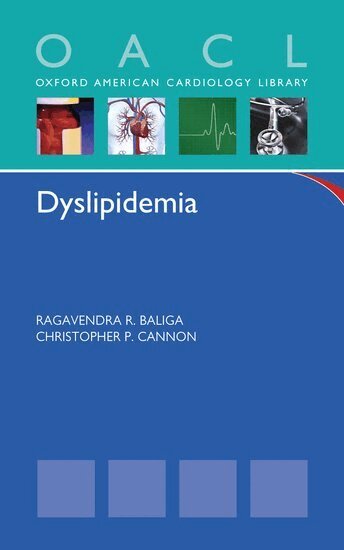
Dyslipidemia affects almost half of American adults and is the most prevalent manageable risk factor for atherosclerosis. Lipid disorders often co-occur with other prevalent conditions such as diabetes and kidney disease; they are also often a concern with certain medication regimens (such as anti-retroviral and certain anti-psychotic agents). Proper treatment of dyslipidemia can reduce the risk of peripheral arterial disease, revascularization procedures, nonfatal myocardial infarction, stroke, and cardiac death. However, only 20% of adults meet the national guidelines for cholesterol control.As part of the Oxford American Cardiology Library, this practical handbook is designed to serve as a concise yet authoritative resource on diagnosing and treating dyslipidemia. The book is tailored to the needs of busy health care professionals treating patients in various clinical settings, and focuses on presenting essential information to clinicians who are at the forefront of the diagnosis and management of dyslipidemia. Featuring evidence-based, concise yet comprehensive discussion of key clinical concepts in addition to numerous figures, tables and illustrations, this pocket-sized handbook will serve as an invaluable guide to healthcare professionals.
673 kr
Skickas inom 5-8 vardagar
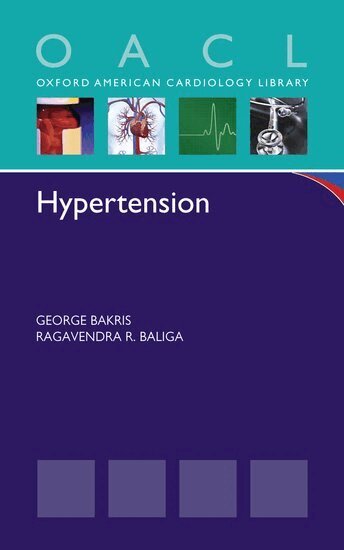
Over 75 million American adults suffer from hypertension, the leading risk factor for stroke and cardiovascular disease. Individuals who are normotensive at age 55 have a 90% lifetime risk for developing high blood pressure. Despite increased awareness in the past decades, about a third of adults with hypertension are not aware of their condition. With the growing prevalence of obesity, hypertension will continue to affect more individuals and, along with diabetes, will become the primary cause of cardiovascular morbidity and mortality.As part of the Oxford American Cardiology Library, this practical handbook is a concise yet comprehensive guide to overcoming the challenges of hypertension treatment. Written by leading experts in the field, this volume collects clinically oriented, up-to-date knowledge on accurate diagnosis, antihypertensive therapies, management of comorbidities, and hypertension in special populations. Featuring evidence-based discussions of key clinical concepts and therapy options, with numerous figures, tables, and illustrations, this pocket-sized handbook will serve as an invaluable guide to healthcare professionals.
673 kr
Skickas inom 7-10 vardagar
Clinical practice consensus guidelines for management of heart failure are available from the American Heart Association/American College of Cardiology, Heart Failure Society of America, Canadian Cardiovascular Society, and European Society of Cardiology. The guidelines from these organizations, based on evidence from clinical trials and expert agreement, are largely concordant and provide useful information for practitioners. Yet, the organization of the guidelines may confound efforts by a practitioner to determine which specific intervention, or combination of interventions, are most appropriate for an individual patient.As part of the Oxford American Cardiology Library, Heart Failure utilizes the staging of heart failure proposed by the ACC/AHA guidelines as a framework to develop a systematic approach for diagnosis and treatment across a broad spectrum of clinical presentations. Each chapter addresses a different stage in the progression of heart failure and provides a patient-centered description of the appropriate diagnostic and treatment options for that setting. Each chapter also incorporates discussion of the diagnosis and treatment options for both low ejection fraction heart failure patients and preserved ejection fraction heart failure patients, of which the latter group comprises at least 50% of all heart failure cases in clinical practice. Heart Failure restructures the information in the clinical guidelines to a format that is more accessible and clinically useful to practitioners.
510 kr
Skickas inom 5-8 vardagar
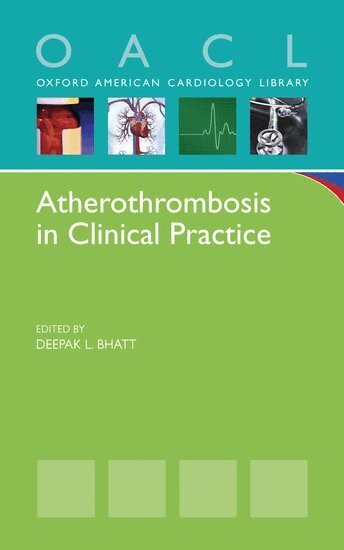
Atherothrombosis refers to the coupling of atherosclerosis and thrombosis, and it is the leading cause of the majority of preventable deaths in the modern world. The medical, economic, social, and societal consequences or atherothrombosis are enormous, which make it a dynamic area for development of new pharmacologic agents. Atherothrombosis in Clinical Practice focuses upon the many clinical manifestations of atherothrombosis and therapies that presently exist, with a focus on evolving therapeutic approaches. First, atherothrombosis is defined and the epidemiology is explored. Then, the specific manifestations of atherothrombosis (coronary artery disease, valvular heart disease, cerebrovascular disease, atrial fibrillation, peripheral artery disease) are concisely covered by distinguished experts in the field. Next, specific medications are discussed, with an emphasis on innovative therapies and investigational agents including experimental lipid-modifying, anti-inflammatory, antiplatelet, and anticoagulant agents. State-of-the-art treatment of hypertension and diabetes is described succinctly. Lifestyle modification, medical therapies, and where appropriate, invasive modalities are discussed. Controversies in areas such as cholesterol management and glycemic control are summarized. Part of the Oxford American Cardiology Library, this handbook provides a practical, evidence-based summary of the condition and the most up-to-date research to equip clinicians in managing this common clinical problem.