Oxford Islamic Legal Studies – serie
Visar alla böcker i serien Oxford Islamic Legal Studies. Handla med fri frakt och snabb leverans.
11 produkter
11 produkter
Inbunden, Engelska, 2020
1 273 kr
Skickas inom 5-8 vardagar
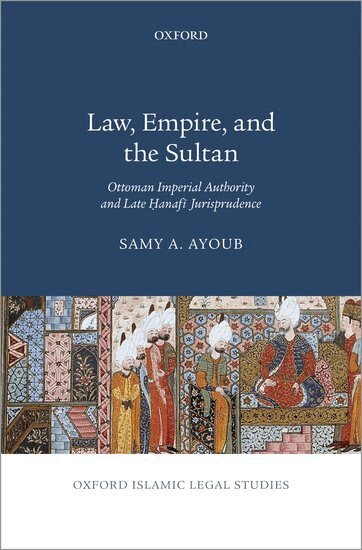
This book is the first study of late Hanafism in the early modern Ottoman Empire. It examines Ottoman imperial authority in authoritative Hanafi legal works from the Ottoman world of the sixteenth to nineteenth centuries CE, casting new light on the understudied late Hanafi jurists (al-muta'akhkhirun). By taking the madhhab and its juristic discourse as the central focus and introducing "late Hanafism" as a framework of analysis, this study demonstrates that late Hanafi jurists assigned probative value and authority to the orders and edicts of the Ottoman sultan. This authority is reflected in the sultan's ability to settle juristic disputes, to order specific opinions to be adopted in legal opinions (fatawa), and to establish his orders as authoritative and final reference points. The incorporation of sultanic orders into authoritative Hanafi legal commentaries, treatises, and fatwa collections was made possible by a shift in Hanafi legal commitments that embraced sultanic authority as an indispensable element of the lawmaking process.
Inbunden, Engelska, 2019
1 183 kr
Skickas inom 5-8 vardagar
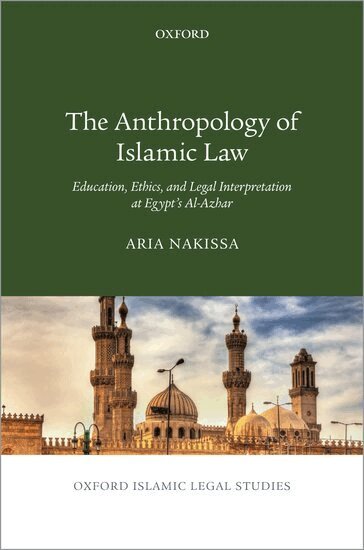
The Anthropology of Islamic Law shows how hermeneutic theory and practice theory can be brought together to analyze cultural, legal, and religious traditions. These ideas are developed through an analysis of the Islamic legal tradition, which examines both Islamic legal doctrine and religious education. The book combines anthropology and Islamicist history, using ethnography and in-depth analysis of Arabic religious texts. The book focuses on higher religious learning in contemporary Egypt, examining its intellectual, ethical, and pedagogical dimensions. Data is drawn from fieldwork inside al-Azhar University, Cairo University's Dar al-Ulum, and the network of traditional study circles associated with the al-Azhar mosque. Together these sites constitute the most important venue for the transmission of religious learning in the contemporary Muslim world. The book gives special attention to contemporary Egypt, and also provides a broader analysis relevant to Islamic legal doctrine and religious education throughout history.
Inbunden, Engelska, 2015
1 947 kr
Skickas inom 5-8 vardagar
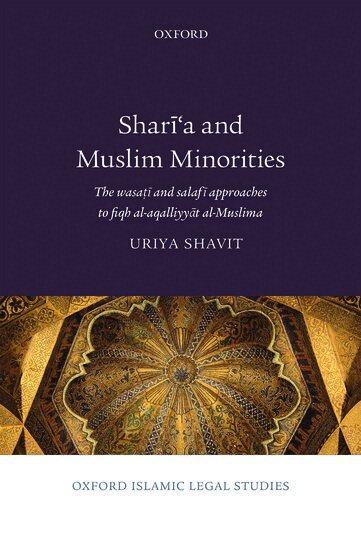
Based on a comparative analysis of several hundred religio-juristic treatises and fatwas (religious decisions), Shari'a and Muslim Minorities: The Wasati and Salafi Approaches to Fiqh al-Aqalliyyat al-Muslima offers the most systematic and comprehensive study to date of fiqh al aqalliyyat al-Muslima - the field in Islamic jurisprudence that treats issues that are unique to Muslims living in majority non-Muslim societies. The book argues that two main contesting approaches to fiqh al-aqalliyyat al-Muslima, the wasati and the salafi, have developed, in part dialectically. While both envision a future Islamizing of the West as a main justification for Muslim residence in the West, the wasati approach is pragmatic, facilitating, and integration-minded, whereas the salafi calls for strict application of religious norms and for introversion. The volume examines diverse and highly-debated juristic issues, including the permissibility of naturalizing in non-Muslim states, participating in their electoral systems and serving in their militaries and police forces; the permissibility of taking mortgages and student loans; the permissibility of congratulating Christians on Christmas or receiving Christmas bonuses; and the permissibility of working in professions that involve breaching of religio-legal prohibitions (e.g. serving pork). Discussions highlight the diversity within contemporary Islamic jurisprudence and introduce new nuances to highly-charged concepts such as proselytizing, integration, and multiculturalism.
Häftad, Engelska, 2015
506 kr
Skickas inom 7-10 vardagar
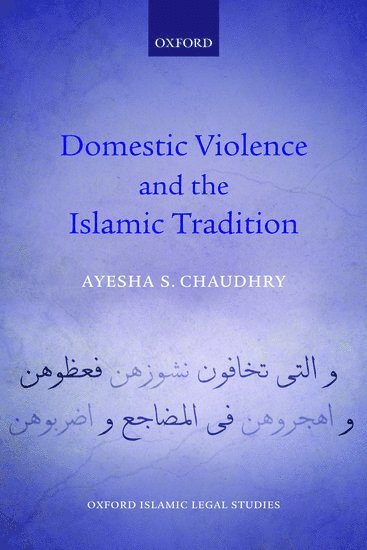
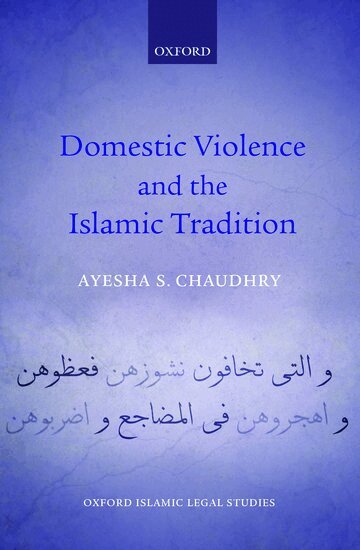
How do modern Muslims' attitudes to marital violence and patriarchy relate to the Islamic tradition? In recent years, discussion regarding the interpretation of the Qur'an has become highly controversial. Especially contentious is passage 4:34, which covers the legitimacy of marital violence and the subjugation of women within Islam. Scholarly opinion on the topic is heavily influenced by contemporary context, so the issue remains largely unsettled. While pre-colonial Islamic jurists permitted the use of violence against women, they still held ethical concerns about the disciplinary privileges of husbands. Consequently, the debate for these early scholars was focussed on the level of violence permitted, and how to apply the three disciplinary steps: admonishment, abandonment, and physical abuse. Ayesha Chaudhry argues that all living religious traditions are rooted in a patriarchal, social, and historical context, and they need ways to reconcile gender egalitarian values with religious tradition. Post-colonial, modern Islamic scholars that consult the Qu'ran for gender-egalitarian interpretations must confront a difficult and unique debate: equality vs authority. As in many religions, authority is derived from tradition, rebelling from which results in a loss of authority in the eyes of the community. Chaudhry reveals that Muslims do not speak with one voice about Islam. Instead, Muslim scholarly discourse is spirited and diverse. The voices of contemporary Muslim scholars enrich the scope of the 'Islamic tradition'.Many recent works on Islam strive to promote a 'public relations' image of Islam. This book deals with ethical problems of domestic violence as discussed in historic and contemporary Islamic religious doctrine. The stakes are high, and very real. The author confronts the significant issue of how modern Muslims can relate to Islamic tradition and the Qur'anic text.
Inbunden, Engelska, 2016
1 828 kr
Skickas inom 5-8 vardagar
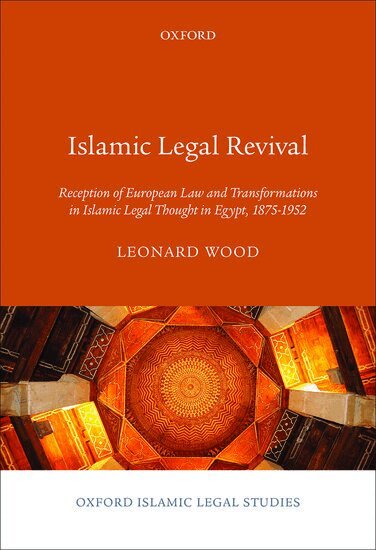
In this meticulously researched volume, Leonard Wood presents his ground breaking history of Islamic revivalist thought in Islamic law. Islamic Legal Revival: Reception of European Law and Transformations in Islamic Legal Thought in Egypt, 1879-1952 brings to life the tumultuous history of colonial interventions in Islamic legal consciousness during the nineteenth and early twentieth centuries. It tells the story of the rapid displacement of local Egyptian and Islamic law by transplanted European codes and details the evolution of resultant movements to revive Islamic law. Islamic legal revivalist movements strove to develop a modern version of Islamic law that could be codified and would replace newly imposed European laws. Wood explains in unparalleled depth and with nuance how cutting-edge trends in European legal scholarship inspired influential revivalists and informed their methods in legal thought.Timely and provocative, Islamic Legal Revival tells of the rich achievements of legal experts in Egypt who disrupted tradition in Islamic jurisprudence and created new approaches to Islamic law that were distinctively responsive to demands of the contemporary world. The story told bears important implications for understandings of Egyptian history, Islamic legal history, comparative law, and deeply contested and highly transformative interactions between European and Islamic thought.
Inbunden, Engelska, 2016
1 775 kr
Skickas inom 5-8 vardagar
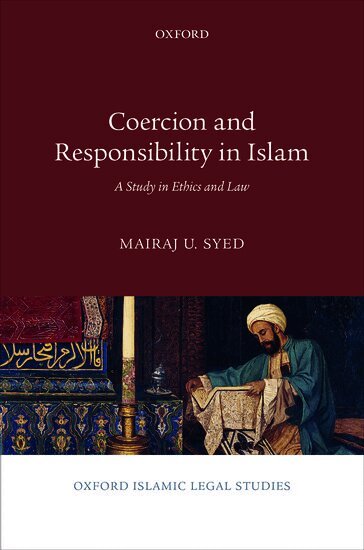
In Coercion and Responsibility in Islam, Mairaj Syed explores how classical Muslim theologians and jurists from four intellectual traditions argue about the thorny issues that coercion raises about responsibility for one's action. This is done by assessing four ethical problems: whether the absence of coercion or compulsion is a condition for moral agency; how the law ought to define what is coercive; coercion's effect on the legal validity of speech acts; and its effects on moral and legal responsibility in the cases of rape and murder.Through a comparative and historical examination of these ethical problems, the book demonstrates the usefulness of a new model for analyzing ethical thought produced by intellectuals working within traditions in a competitive pluralistic environment. The book compares classical Muslim thought on coercion with that of modern Western thinkers on these issues and finds significant parallels between them. The finding suggests that a fruitful starting point for comparative ethical inquiry, especially inquiry aimed at the discovery of common ground for ethical action, may be found in an examination of how ethicists from different traditions considered concrete problems.
Inbunden, Engelska, 2017
1 413 kr
Skickas inom 5-8 vardagar
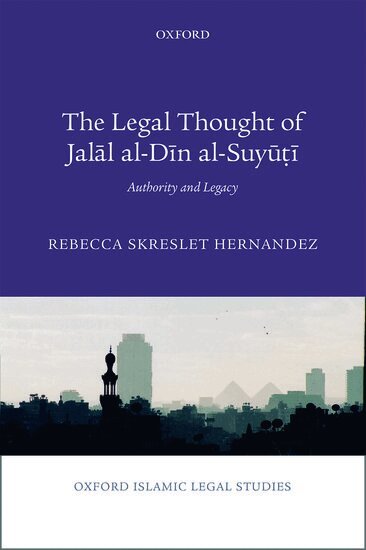
This book offers a new theoretical perspective on the thought of the great fifteenth-century Egyptian polymath, Jalal al-Din al-Suyuti (d. 1505). In spite of the enormous popularity that al-Suyuti's works continue to enjoy amongst scholars and students in the Muslim world, he remains underappreciated by western academia. This project contributes to the fields of Mamluk Studies, Islamic Studies, and Middle Eastern Studies not only an interdisciplinary analysis of al-Suyuti's legal writing within its historical context, but also a reflection on the legacy of the medieval jurist to modern debates. The study highlights the discursive strategies that the jurist uses to construct his own authority and frame his identity as a superior legal scholar during a key transitional moment in Islamic history. The approach aims for a balance between detailed textual analysis and 'big picture' questions of how legal identity and religious authority are constructed, negotiated and maintained.Al-Suyuti's struggle for authority as one of a select group of trained experts vested with the moral responsibility of interpreting God's law in society finds echoes in contemporary debates, particularly in his native land of Egypt. At a time when increasing numbers of people in the Arab world have raised their voices to demand democratic forms of government that nevertheless stay true to the principles of Shari'a, the issue of who has the ultimate authority to interpret the sources of law, to set legal norms, and to represent the 'voice' of Shari'a principles in society is still in dispute.
Inbunden, Engelska, 2013
1 274 kr
Skickas inom 7-10 vardagar
Modern scholars of most major religious traditions, who seek gender egalitarian interpretations of their scriptural texts, confront a common dilemma: how can they produce interpretations that are at once egalitarian and authoritative, within traditions that are deeply patriarchal? This book examines the challenges and resources that the Islamic tradition offers to Muslim scholars who seek to address this dilemma. This is achieved through extensive study of the intellectual history of a Qur'anic verse that has become especially contentious in the modern period: Chapter 4, Verse 34 (Q. 4:34) which can be read to permit the physical disciplining of disobedient wives at the hands of their husbands. Though this verse has been used by historical and contemporary Muslim scholars in multiple ways to justify the right of husbands to physically discipline their wives, progressive and reformist Muslim scholars and activists offer alternative and non-violent readings of the verse. The diverse and divergent interpretations of Q. 4:34 showcases the pivotal role of the reader in shaping the meaning and implications of scriptural texts.This book investigates the sophisticated and creative interpretive approaches to Q. 4:34, tracing the intellectual history of Muslim scholarship on this verse from the ninth century to the present day. Ayesha S. Chaudhry examines the spirited and diverse, and at times contradictory, readings of this verse to reveal how Muslims relate to their inherited tradition and the Qur'anic text.
Inbunden, Engelska, 2012
2 119 kr
Skickas inom 5-8 vardagar
In the critical period when Islamic law first developed, a new breed of jurists developed a genre of legal theory treatises to explore how the fundamental moral teachings of Islam might operate as a legal system. Seemingly rhetorical and formulaic, these manuals have long been overlooked for the insight they offer into the early formation of Islamic conceptions of law and its role in social life.In this book, Rumee Ahmed shatters the prevailing misconceptions of the purpose and form of the Islamic legal treatise. Ahmed describes how Muslim jurists used the genre of legal theory to argue for individualized, highly creative narratives about the application of Islamic law while demonstrating loyalty to inherited principles and general prohibitions. These narratives are revealed through careful attention to the nuanced way in which legal theorists defined terms and concepts particular to the legal theory genre, and developed pictures of multiple worlds in which Islamic law should ideally function. Ahmed takes the reader into the logic of Islamic legal theory to uncover diverse conceptions of law and legal application in the Islamic tradition, clarifying and making accessible the sometimes obscure legal theories of central figures in the history of Islamic law. The book offers important insights about the ways in which legal philosophy and theology mutually influenced premodern jurists as they formulated their respective visions of law, ethics, and theology.The volume is the first in the Oxford Islamic Legal Studies series. Satisfying the growing interest in Islam and Islamic law, the series speaks to both specialists and those interested in the study of a legal tradition that shapes lives and societies across the globe. The series features innovative and interdisciplinary studies that explore Islamic law as it operates in shaping private decision making, binding communities, and as domestic positive law. The series also sheds new light on the history and jurisprudence of Islamic law and provides for a richer understanding of the state of Islamic law in the contemporary Muslim world, including parts of the world where Muslims are minorities.
Inbunden, Engelska, 2012
2 441 kr
Skickas inom 5-8 vardagar
The question of tolerance and Islam is not a new one. Polemicists are certain that Islam is not a tolerant religion. As evidence they point to the rules governing the treatment of non-Muslim permanent residents in Muslim lands, namely the dhimmi rules that are at the center of this study. These rules, when read in isolation, are certainly discriminatory in nature. They legitimate discriminatory treatment on grounds of what could be said to be religious faith and religious difference. The dhimmi rules are often invoked as proof-positive of the inherent intolerance of the Islamic faith (and thereby of any believing Muslim) toward the non-Muslim. This book addresses the problem of the concept of 'tolerance' for understanding the significance of the dhimmi rules that governed and regulated non-Muslim permanent residents in Islamic lands. In doing so, it suggests that the Islamic legal treatment of non-Muslims is symptomatic of the more general challenge of governing a diverse polity. Far from being constitutive of an Islamic ethos, the dhimmi rules raise important thematic questions about Rule of Law, governance, and how the pursuit of pluralism through the institutions of law and governance is a messy business. As argued throughout this book, an inescapable, and all-too-often painful, bottom line in the pursuit of pluralism is that it requires impositions and limitations on freedoms that are considered central and fundamental to an individual's well-being, but which must be limited for some people in some circumstances for reasons extending well beyond the claims of a given individual. A comparison to recent cases from the United States, United Kingdom, and the European Court of Human Rights reveals that however different and distant premodern Islamic and modern democratic societies may be in terms of time, space, and values, legal systems face similar challenges when governing a populace in which minority and majority groups diverge on the meaning and implication of values deemed fundamental to a particular polity.
Inbunden, Engelska, 2013
1 903 kr
Skickas inom 3-6 vardagar
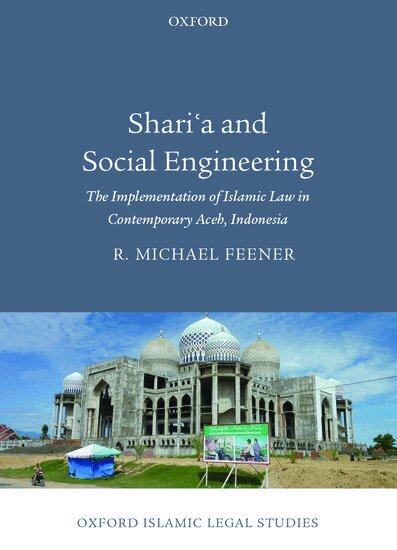
This book seeks to open new lines of discussion about how Islamic law is viewed as a potential tool for programs of social transformation in contemporary Muslim society. It does this through a critical examination of the workings of the state shari'a system as it was designed and implemented at the turn of the twenty-first century in Aceh, Indonesia. While the empirical details of these discussions are unique, this particular case presents a remarkable site for investigating the broader issue of the impact of instrumentalist, future-oriented visions of Islamic law on modern Muslim calls for the state implementation of Islamic law. In post-tsunami/post-conflict Aceh, the idea of shari'a as an exercise in social engineering was amplified through resonance with an increasingly pervasive rhetoric of 'total reconstruction'. Based upon extensive fieldwork as well as critical readings of a wide range of archival materials, official documents, and local publications this work focuses on the institutions and actors involved with this contemporary project for the state implementation of Islamic law. The individual chapters are structured to deal with the major components of this system to critically examine how these institutions have taken shape and how they work. It also shows how the overall system was informed not only by aspects of late twentieth-century da'wa discourses of Islamic reform, but also modern trends in sociological jurisprudence and the impact of global models of disaster relief, reconstruction, and development. All of these streams of influence have contributed significantly to shaping the ways in which the architects and agents of the state shari'a system have attempted to use Islamic legislation and legal institutions as tools to steer society in particular desired directions. This is an open access title available under the terms of a CC BY-NC-ND 4.0 International licence. It is free to read at Oxford Scholarship Online and offered as a free PDF download from OUP and selected open access locations.