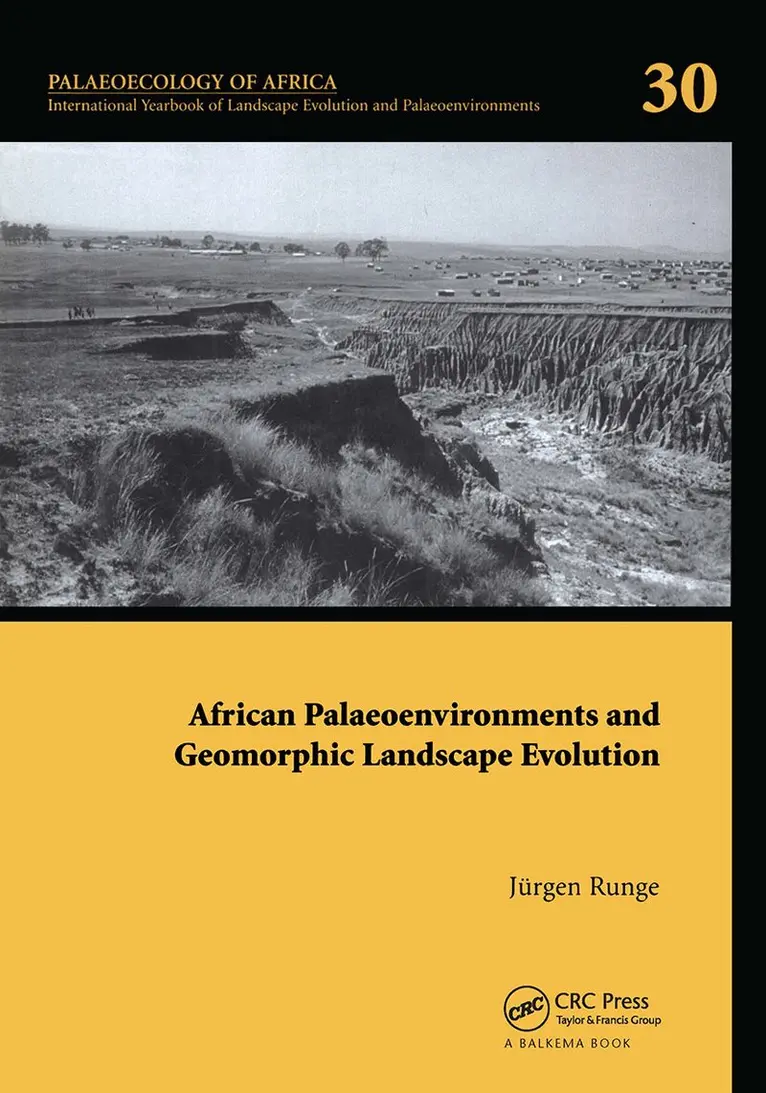
Palaeoecology of Africa – serie
Visar alla böcker i serien Palaeoecology of Africa. Handla med fri frakt och snabb leverans.
22 produkter
22 produkter
Häftad, Engelska, 2019
994 kr
Skickas inom 10-15 vardagar
This book is volume 33 of the yearbook series ‘Palaeoecology of Africa’ presenting the outcome of a ‘tribute conference’ to the internationally recognized South African researcher and palynologist Professor Louis Scott. He has recently retired, but is continuing his active research career. The conference proceedings and articles published here highlight and celebrate Prof. Scott’s contribution to palaeoscience and to the natural sciences in general. The conference was organized in July 2014 by the National Museum, Bloemfontein and the University of the Free State, South Africa, and focused on both past and present environments, ecosystems and climates of the arid regions of southern Africa, an area that serves as major focus of Prof. Scott's research.Louis Scott’s research interests include stratigraphic palynology, long-term continental environmental change during the Cainozoic, and interpretation of palaeoenvironmental records associated with archaeological sites. His research has contributed insights into the origin of our current environment by identifying long-term patterns of climate change. Results have been applied in numerical models of vegetation change in Africa and globally. The results of these studies are relevant across the fields of botany, geology, climatology, archaeology, anthropology and palaeontology.The chapters revisit and discuss the scientific work of Prof. Scott: among others the reconstructions of vegetation and climatic history in various areas of southern Africa, including the Tswaing Crater with a record of 200 000 years, that give insights into environmental conditions during the Last Glacial Period and the subsequent development of modern conditions. Some observations also provide key baseline information, contributing to understanding past human and environmental contexts and climatic change and the effects of global warming.
Häftad, Engelska, 2020
740 kr
Skickas inom 10-15 vardagar
During the Neogene – covering the last 23 Million years – the evolution of the environmental setting in Africa was subject to considerable changes. Natural shifts, slow and rapid, evidenced by modifications in palaeogeography, geodynamics, climate, and vegetation have caused repeated and strong changes of ecosystems in the lower latitudes. Using a variety of proxy data – researched and applied by many authors from numerous disciplines – an attempt is made to reconstruct African landscapes over space and time. Besides such spatio-temporal oscillations in recently humid, semi-humid, and dry areas of Africa, this volume of Palaeoecology of Africa (PoA) focuses on long term interrelationships between ecosystem dynamics and climate change, not ignoring the ever growing and ongoing influence of humans on natural ecosystems since the Quaternary. Regionally, this volume lays a strong focus on Nigeria (Niger Delta).Facing the omnipresent challenges of Global Change, an increasing number of African scientists is involved in palaeoenvironmental and palaeoclimatic research, both theoretical and applied. PoA systematically supports established as well as junior African scientists in the field of sustainable cooperation and academic capacity building.This book will be of interest to all concerned with or interested in up-to-date research on Neogene to Quaternary low latitudes ecosystem changes and their respective interpretation in the framework of natural climate and vegetation change evidenced by a variety of methods that allow to read and learn from the past by following the motto, "The geologic foretime as the key to the present, and possibly to the future." Palynologists, Geologists, Geographers, Archaeologists, and Geomorphologists will find this edition equally useful for their work.
Inbunden, Engelska, 2021
1 347 kr
Skickas inom 10-15 vardagar
This book celebrates the relaunch of the African Pollen Database, presents state-of-the-art of modern and ancient pollen data from sub-Saharan Africa, and promotes Open Access science. Pollen grains are powerful tools for the study of past vegetation dynamics because they preserve well within sedimentary deposits and have a huge diversity in ornamentation that allows different taxa to be determined. The reconstruction of past vegetation from the examination of ancient pollen records thus can be used to characterize the nature of past landscapes (e.g. abundance of forests vs. grasslands), provide insights into changes in biodiversity, and gain empirical evidence of vegetation response to climatic change and human activity. In this, the 35th Volume of "Palaeoecology of Africa", we bring together new data and extensive synthetic reviews to provide novel insights into the relationships between human evolution, human activity, climate change and vegetation dynamics during the Quaternary, the last 2.6 million years. Current and ongoing climate and land-use change is exerting pressure on modern vegetation formations and threatening the livelihoods and wellbeing of many peoples in Africa. In this book the focus is on the Quaternary because it is during this geological period that the modern vegetation formations developed into their current configurations against a backdrop of high magnitude global climate change (glacial-interglacial cycles), human evolution, and a growing human land-use footprint. In this book the latest information is presented and collated from around the African continent to parameterize past vegetation states, identify the drivers of vegetation change, and assess the vegetation resilience to change. To achieve this research from two broad themes are covered: (i) the present is the key to the past (i.e. studies which improve our understanding of modern environments so that we can better interpret evidence from the past), and (ii) the past is the key to the future (i.e. studies which unlock information on how and why vegetation changed in the past so one can better anticipate trajectories of future change). This Open Access book will provide a strong foundation for future research exploring past ecological, environmental and climatic change within Africa and the surrounding islands. The book is organized regionally (covering western, eastern, central, and southern Africa) and it contains specialized articles focused on particular topics (such as modern pollen-vegetation relationships and fire as a driver of vegetation change), as well as regional and pan-African syntheses drawing together decades of research to assess key scientific questions (including the role of climate in driving vegetation change and the role of vegetation change in human evolution). These articles will be useful to students and teachers from high school to the highest level of university who are interested in the origins and dynamics of vegetation in Africa. Furthermore, it is also meant to provide societally relevant information that can act as an inspiration for the development of sustainable management practices for the future.
Inbunden, Engelska, 2026
1 363 kr
Kommande
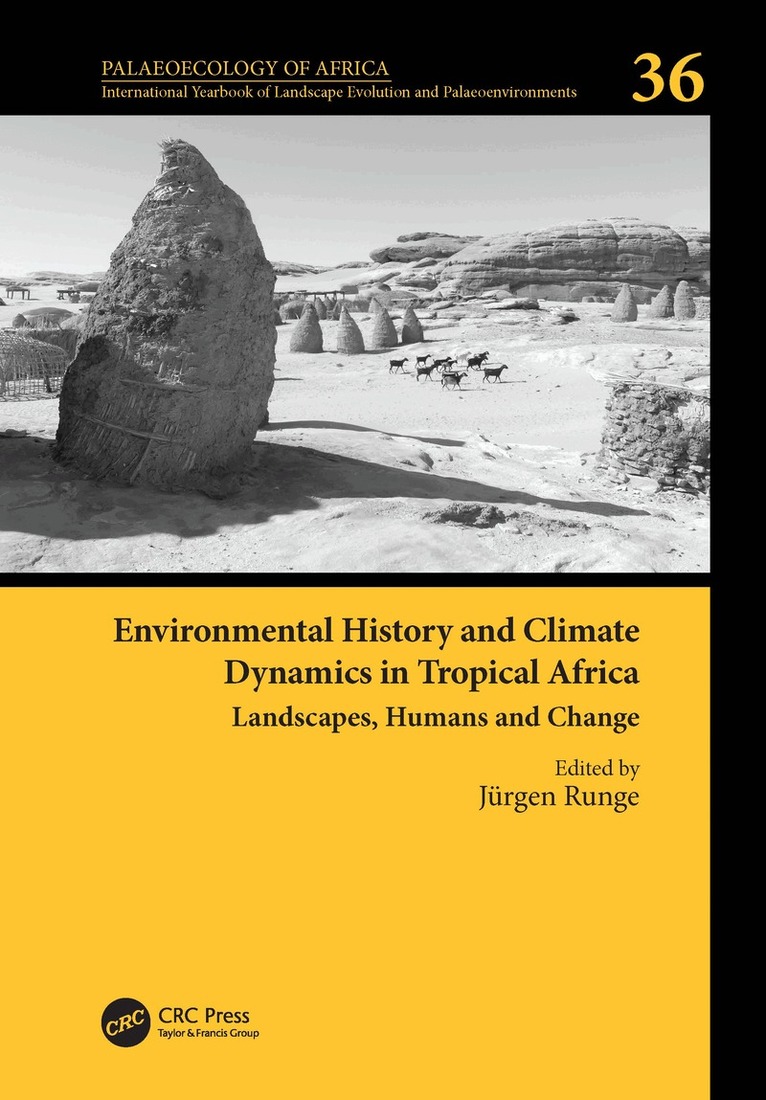
The African continent will be hit hardest by climate change, despite its people contributing the least to global warming. Indeed, African rural population has a long tradition of adapting their needs to the soil, vegetation and climate. This tradition is understudied yet is significant for adapting to climate change. This book provides insight into how these communities have lived and used their land in relation to climate and vegetation.The 36th volume of PoA presents an interdisciplinary perspective on the historical relationship between humans and their environment, as well as the evolution of the climate in sub-Saharan and tropical Africa. It also explores the challenge posed by climate change and its consequences. It covers a wide geographical area extending from west to east across the center of the African continent. Furthermore, this book covers a broad timeframe, from Pleistocene and Holocene epochs, through the Iron Age, to the last five millennia and end up to the present day. Using data and archaeological findings, this book sheds light on Africa’s environmental history and climate dynamics. Furthermore, natural resource exploitation, changes and degradation in vegetation, climate change and the relationship between humans and their environment are introduced and discussed by numerous case studies with the aim to stimulate the international climate debate and future sustainable management practices. Junior and established scientists from Germany, Switzerland, South Africa and Madagascar have strengthened their cooperation and networking in sub-Saharan Africa, a region rich in natural resources and home to a diversity of people, vegetation and animal species.This Open Access book established a strong foundation for future research into the climate and vegetation of sub-Saharan Africa, as well as the relationship between humans and natural resources. It enables us to understand the dynamics of climate change and how humans adapt to their natural environment. It will be of interest to anyone concerned with climate evolution, vegetation dynamics and the transformation of the natural environment by humans, particularly in the sub-Saharan and tropical regions.
Inbunden, Engelska, 2013
2 754 kr
Skickas inom 5-8 vardagar
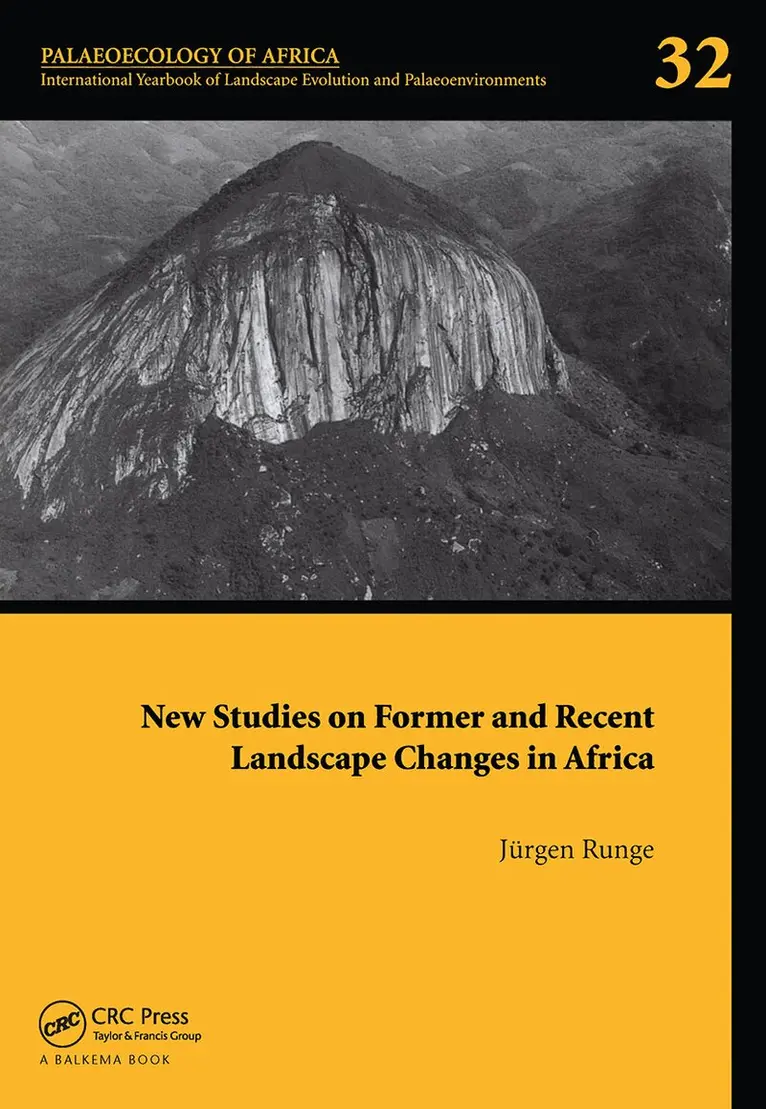
Volume 32 (2013) of the internationally recognized and acclaimed yearbook series ‘Palaeoecology of Africa’ publishes 9 new interdisciplinary scientific papers on former and recent landscape evolution and on past environments of the African continent (e.g. climate change, vegetation dynamics and growing impact of humans on ecosystems). These papers expand horizons and interconnections to various types and methodologies of research on environmental dynamics from the Pliocene up to the present: review articles and regional case studies cover Nigeria, Cameroon, selected areas of the Congo basin, Kenya, Malawi, Namibia and South Africa. This volume also gives space to researchers from Africa to present their findings to a wider international audience.Today, by growing awareness of the worldwide impact of Global Change, it has become obvious that aside of the northern and southern hemisphere Polar region also the environmental setting in Africa was subject to considerable changes over time. Natural shifts in climate at least since the Pliocene have caused repeated and strong modification in the area dynamics of ecosystems located in lower latitudes. By a variety of so-called ‘proxies’ – researched and applied by the different authors from numerous disciplines – an attempt is made to reconstruct the evolution of landscapes over space and time. Besides such spatio-temporal oscillations in forested and savanna areas of Africa this volume of ‘Palaeoecology of Africa’ also focuses on possible relationships between environmental change and human impact, also on the perception of this phenomenon of recent ‘climate changes’ by different stakeholders.This book will be of interest to all concerned with low latitudes ecosystem changes and their respective interpretation in the framework of natural climate and vegetation change evidenced by a variety of methods that allow us to read and learn from ‘proxy data’ archives. Archaeologists, Palynologists, Palaeobotanist, Geographers, Geologists and Geomorphologists will find this edition equally useful for their work.
Inbunden, Engelska, 2015
2 193 kr
Skickas inom 10-15 vardagar
This book is volume 33 of the yearbook series ‘Palaeoecology of Africa’ presenting the outcome of a ‘tribute conference’ to the internationally recognized South African researcher and palynologist Professor Louis Scott. He has recently retired, but is continuing his active research career. The conference proceedings and articles published here highlight and celebrate Prof. Scott’s contribution to palaeoscience and to the natural sciences in general. The conference was organized in July 2014 by the National Museum, Bloemfontein and the University of the Free State, South Africa, and focused on both past and present environments, ecosystems and climates of the arid regions of southern Africa, an area that serves as major focus of Prof. Scott's research.Louis Scott’s research interests include stratigraphic palynology, long-term continental environmental change during the Cainozoic, and interpretation of palaeoenvironmental records associated with archaeological sites. His research has contributed insights into the origin of our current environment by identifying long-term patterns of climate change. Results have been applied in numerical models of vegetation change in Africa and globally. The results of these studies are relevant across the fields of botany, geology, climatology, archaeology, anthropology and palaeontology.The chapters revisit and discuss the scientific work of Prof. Scott: among others the reconstructions of vegetation and climatic history in various areas of southern Africa, including the Tswaing Crater with a record of 200 000 years, that give insights into environmental conditions during the Last Glacial Period and the subsequent development of modern conditions. Some observations also provide key baseline information, contributing to understanding past human and environmental contexts and climatic change and the effects of global warming.
Inbunden, Engelska, 2017
1 982 kr
Skickas inom 10-15 vardagar
During the Neogene – covering the last 23 Million years – the evolution of the environmental setting in Africa was subject to considerable changes. Natural shifts, slow and rapid, evidenced by modifications in palaeogeography, geodynamics, climate, and vegetation have caused repeated and strong changes of ecosystems in the lower latitudes. Using a variety of proxy data – researched and applied by many authors from numerous disciplines – an attempt is made to reconstruct African landscapes over space and time. Besides such spatio-temporal oscillations in recently humid, semi-humid, and dry areas of Africa, this volume of Palaeoecology of Africa (PoA) focuses on long term interrelationships between ecosystem dynamics and climate change, not ignoring the ever growing and ongoing influence of humans on natural ecosystems since the Quaternary. Regionally, this volume lays a strong focus on Nigeria (Niger Delta).Facing the omnipresent challenges of Global Change, an increasing number of African scientists is involved in palaeoenvironmental and palaeoclimatic research, both theoretical and applied. PoA systematically supports established as well as junior African scientists in the field of sustainable cooperation and academic capacity building.This book will be of interest to all concerned with or interested in up-to-date research on Neogene to Quaternary low latitudes ecosystem changes and their respective interpretation in the framework of natural climate and vegetation change evidenced by a variety of methods that allow to read and learn from the past by following the motto, "The geologic foretime as the key to the present, and possibly to the future." Palynologists, Geologists, Geographers, Archaeologists, and Geomorphologists will find this edition equally useful for their work.
Inbunden, Engelska, 1993
2 674 kr
Skickas inom 5-8 vardagar
Containing 15 contributions. Vegetation associated with the protohistorical mound of 'Mouyssam II' (KNT2) in the Malian Sahel; Late Quaternary mammalian remains from central and eastern Sudan and their palaeoenvironmental significance; On the ages of humid Late Quaternary phases in southern African arid areas (Namibia, Botswana); Charcoal from Leliehoek shelter, eastern Orange Free State, South Africa.
Inbunden, Engelska, 1999
825 kr
Skickas inom 10-15 vardagar
This volume offers comprehensive and up-to-date information on research in many different disciplines which give an overall insight into the environmental history of Africa.
Inbunden, Engelska, 1979
2 899 kr
Skickas inom 5-8 vardagar
This text includes comprehensive and up-to-date information on research in many different disciplines giving an overall insight into the environmental history of Africa.
Inbunden, Engelska, 1982
1 972 kr
Skickas inom 5-8 vardagar
This reference provides up-to-date information on research in many different disciplines which give an overall insight into the environmental history of Africa.
Inbunden, Engelska, 1982
2 815 kr
Skickas inom 5-8 vardagar
This reference provides up-to-date information on research in many different disciplines which give an overall insight into the environmental history of Africa.
Inbunden, Engelska, 1984
2 031 kr
Skickas inom 5-8 vardagar
This text gives an environmental history of Africa, concentrating on 30 contributions on oceans and ocean margins, the Sahara and West Africa.
Inbunden, Engelska, 1986
2 674 kr
Skickas inom 5-8 vardagar
This volume covers topics such as geology, geomorphology, palynology, palaeontology and archaeology in the fynbos region, southern-most Africa.
Inbunden, Engelska, 2007
2 053 kr
Tillfälligt slut
This book consists of scientific papers resulting from an international workshop: ‘Environmental and Cultural Change in West- and Central Africa’ organized by the German Research Foundation (DFG) in Yaoundé, Cameroon, March 2006. Problems of Holocene and Late Pleistocene modifications of the rain forest savanna fringe and their possible influence on cultural innovations are discussed.The book will be of interest to all concerned with tropical forests and related development problems of third world countries, especially ecologists, botanists and earth scientists. It will be valuable for advanced undergraduates and postgraduates as a reference for review and overview articles as well as a source of information for new original manuscripts on the topic of Late Pleistocene and Holocene landscape evolution in the lower latitudes of Africa. Palaeobotanists, Palynologists and Quaternarists equally will find this edition useful for their work.
Inbunden, Engelska, 2009
1 789 kr
Tillfälligt slut
The environmental setting within the Central Sahara was subject to considerable changes during Late Quaternary, mainly driven by major global climate variations, although human impact increased constantly since Early Holocene.Such global events can be reconstructed with the help of reliefs, sediments and palaeosoils and their specific morphological, chemical and mineralogical properties. The project’s focus is to ascertain new and established data on climate variations and associated palaeoenvironmental changes within the Central Sahara and to systematically collate and correlate them to results obtained from the Afro-Asian dry land belt and adjacent areas. The joint analysis of Late Quaternary landscape development and present environmental conditions in the Central Sahara will result in the modelling of Late Pleistocene and Holocene palaeoenvironments, emphasising various aspects. This book will be of interest to all concerned with environmental changes in desert ecosystems in the past and at present and related development problems of Saharan countries, especially Ecologists, Botanists, Earth scientists and Climatologists. It will be valuable for advanced undergraduates and postgraduates as a reference for review and overview articles as well as a source of information for new original manuscripts on the topic of Late Pleistocene and Holocene landscape evolution in the lower latitudes of Africa. Palaeobotanists, Palynologists, Geomorphologists and Quaternarists will equally find this edition useful for their work.
Inbunden, Engelska, 2010
1 789 kr
Tillfälligt slut
This 30st jubilee volume (2010) of "Palaeoecology of Africa" looks back and reflects the "state of the art" of what is actually known on former African climates and ecosystems in the format of review articles authored by specialists in the field. New research articles on climate and ecosystem dynamics as well as applied topics on geomorphic hazards and future environmental trends in Africa are included.This book will be of interest to all concerned with ecosystems dynamics, tropical forests, savannahs, deserts and related development problems of third world countries, especially ecologists, botanists, earth scientists (e.g. Quaternary and recent climate change), regional planners. It will also be valuable for advanced undergraduates and postgraduates as a reference for review and overview articles as well as a source of information for new original manuscripts and reviews on the state of the art of long term and Quaternary and Holocene landscape evolution esp. in subsaharan Africa. Palaeobotanists, Palynologists and Quaternarists will equally find this edition useful for their work.
Inbunden, Engelska, 2012
1 657 kr
Tillfälligt slut
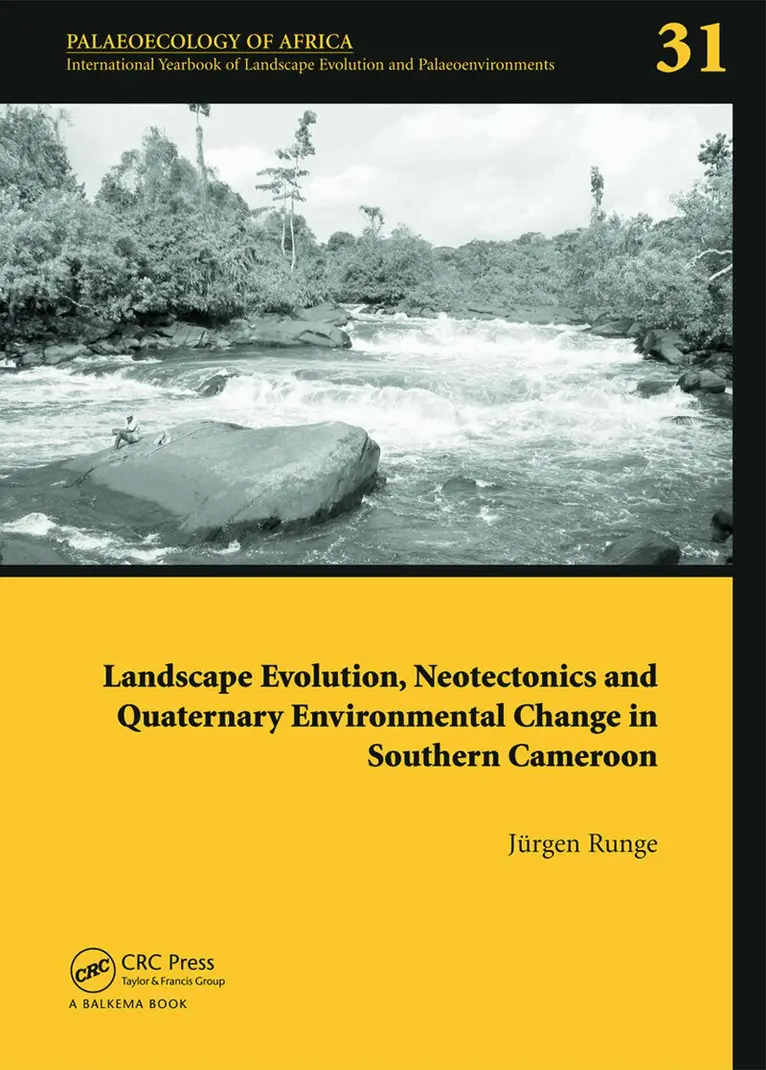
Founded in 1966, the internationally recognized and acclaimed Series ‘Palaeoecology of Africa’ publishes interdisciplinary scientific papers on landscape evolution and on former environments of the African continent. Beginning with topics such as changes in climate and vegetation cover, the papers expand horizons and interconnections to various types of environmental dynamics from the Cainozoic up to the present; moreover, the aspect of human influence since the Late Quaternary is related to many of the areas studied.Volume 31 presents four comprehensive papers on long- and short-term processes of landscape evolution (geological history, neotectonics and proxy Quaternary alluvia), as well as a recent regional perspective on environmental problems in Southern Cameroon. The book acts as a showcase for successful North-South cooperation and capacity building for empowering African Universities. It is problem oriented and applied, and illustrates how scientific and interdisciplinary cooperation can work. In the framework of the German Research Foundation’s (DFG, Deutsche Forschungsgemeinschaft) funded "Rain Forest Savanna Contact" project (2003-2009) two abbreviated English versions of PhD theses are here published, one by J. Eisenberg on neotectonics and the other by M. Sangen on river sediments in rain forest-savanna transitional zones. Complementary articles are an introduction on geological history, by B. Kankeu et al. and a paper on environmental risks by M. Tchindjang et al., together these complete the results of this joint German-Cameroonian research project.This book will be of interest to all concerned with ecosystems dynamics, tropical forests, savannas and related development problems of Third World countries, especially regional planners, ecologists, botanists, earth scientists and students of the Quaternary (e.g. LGM and Holocene ecosystem dynamics, Global Change). It will be valuable for advanced undergraduates and postgraduates as a reference for new research articles on the topic of long‐term geologic‐tectonic and Quaternary landscape evolution in an up‐to‐now not well explored marginal area of the Western Congo basin.
Inbunden, Engelska, 2001
1 921 kr
Tillfälligt slut
These papers derive from a workshop on "Quaternary Sedimentary Records in Central Africa and their Palaeoenvironmental Interpretation", held at the 15th INQUA Congress. They mainly cover the Late Quaternary to Holocene climate and environmental history of today's rainforest regions.
Inbunden, Engelska, 1978
2 119 kr
Tillfälligt slut
This reference provides up-to-date information on research in many different disciplines which give an overall insight into the environmental history of Africa.
Inbunden, Engelska, 1980
2 526 kr
Tillfälligt slut
This reference provides up-to-date information on research in many different disciplines which give an overall insight into the environmental history of Africa.
Inbunden, Engelska, 1989
2 119 kr
Tillfälligt slut
This volume contains 14 contributions on topics such as hydrology, palaeontology, pedology, sedimentology and glaciations, Holocene geomorphology, Plio/Pleistocene rift evolution in Sahara, Sahel, Kenya, Malawi & S Africa.