Paris Monographs in American Archaeology - Böcker
Visar alla böcker i serien Paris Monographs in American Archaeology. Handla med fri frakt och snabb leverans.
13 produkter
13 produkter
Del 45 - Paris Monographs in American Archaeology
Entre reyes y campesinos
Investigaciones arqueológicas en la antigua capital maya de Tamarindito
Häftad, Spanska, 2016
456 kr
Skickas
The Watery Scroll rulers selected the ancient Maya site of Tamarindito as their capital. First settled around 300 BC, the site served as their seat from the fifth through the eighth century AD. After the collapse, people continued to live at Tamarindito for several generations. Archaeological investigations provide a comprehensive perspective on social dynamics and change in an ancient Maya capital.
Del 46 - Paris Monographs in American Archaeology
Patrones de asentamiento del Malpaís de Zacapu (Michoacán, México) y de sus alrededores en el Posclásico
Häftad, Spanska, 2016
456 kr
Skickas
This publication presents the results of the archaeological studies relative to the settlement pattern, realized between 1983 and 1996 within the framework of the Michoacán Projects I and III led by the researchers of the Centre of Mexican and Centro-American studies (CEMCA). The Michoacán project (1983-1987) aimed at the realization of a study of all the perceptible demonstrations of the prehispanic occupations in the region. After the first three field’s seasons of the year 1983, dedicated essentially to survey and test pits, we directed all our efforts to the resolution of more specific objectives, the main objective being the settlement patterns study of the very numerous postclassical sites of the south region of the Project, located in the Tarascan Sierra and Malpais of Zacapu. The excavations directly connected to this subject were made in 1984 and 1985, but various test pits and surveys realized between 1983 and 1986 brought very useful data for the study. The author presented a doctoral thesis sustained in January 1991, in Paris I University on “The sites and residential and civic-ceremonial structures of the region of Zacapu, during the Postclassic”. This thesis constituted the first synthesis in French on this subject. As a consequence of the criticisms emitted during the defense of this thesis, and of insufficient data concerning the Early Postclassic occupation of the Zacapu Region, the Michoacán III (1993-1996) project was established. Both main purposes of this Project were the study of the transition between the Palacio phase (900-1200) and the Milpillas phase (1200-1450) as well as the systematic recording of sites and various structures of these sites localized in the Zacapu Malpais and dated from the Milpillas phase. This publication will present mainly the results of the surveys, surface collections and test-pits and allow inferences on the settlement patterns of the region of Zacapu and particularly the rapid growth in the Malpais of Zacapu of large sites at the beginning of Postclassic.
Del 48 - Paris Monographs in American Archaeology
Ancient Engineering: Selective Ceramic Processing in the Middle Balsas Region of Guerrero, Mexico
Häftad, Engelska, 2017
905 kr
Skickas
This volume has two main objectives: establishing a chronology of the Middle Balsas and detailing the region’s pottery production methods. The author posits that pottery intended for different functions was often deliberately made and/or decorated in ways that were chosen to make the vessels more appropriate for their intended functions. More specifically, this study determines whether any of the pottery production patterns identified in the region are linked to specific constraints imposed by the materials during the process of pottery manufacture. For example, it examines whether variables such as vessel shape and wall thickness correlate with the clay types and processing techniques determined during thin section analysis of the ancient sherds. Additionally, certain production behaviours are identified that are characteristic of the entire region and that can be used as markers of local tradition.
Del 49 - Paris Monographs in American Archaeology
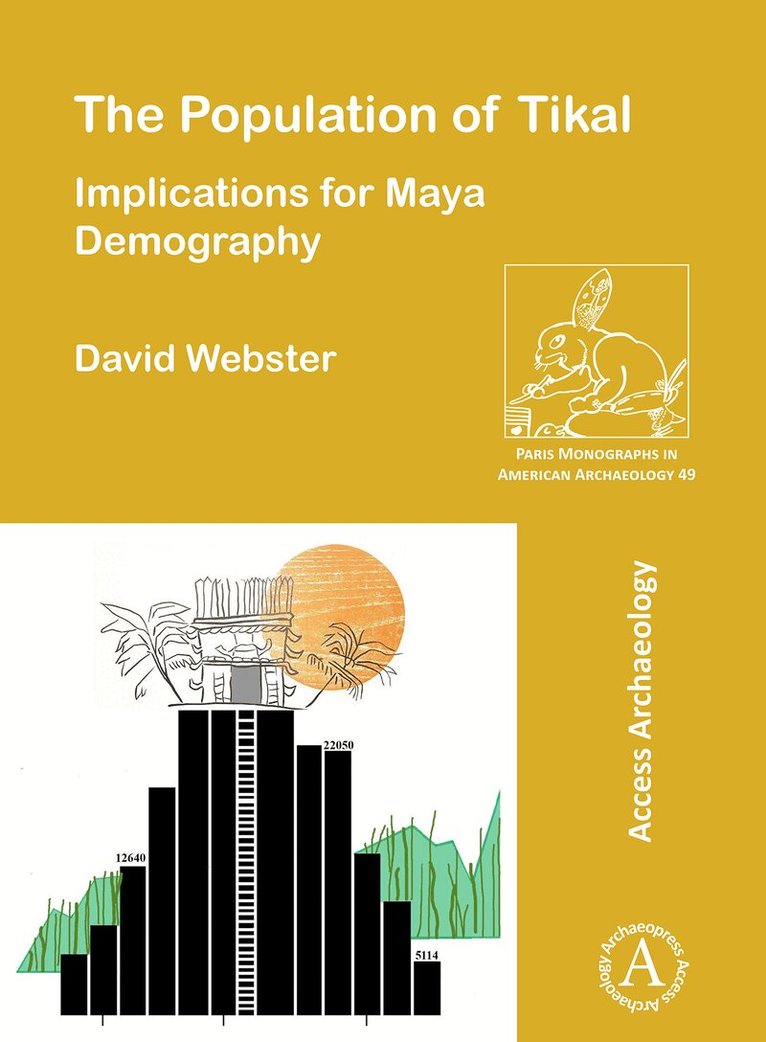
Population of Tikal: Implications for Maya Demography
Häftad, Engelska, 2018
516 kr
Skickas
The Classic Maya (AD 250-900) of central and southern Yucatan were long seen as exceptional in many ways. We now know that they did not invent Mesoamerican writing or calendars, that they were just as warlike as other ancient peoples, that many innovations in art and architecture attributed to them had diverse origins, and that their celebrated “collapse” is not what it seems. One exceptionalist claim stubbornly persists: the Maya were canny tropical ecologists who managed their fragile tropical environments in ways that supported extremely large and dense populations and still guaranteed resilience and sustainability. Archaeologists commonly assert that Maya populations far exceeded those of other ancient civilizations in the Old and New Worlds. The great center of Tikal, Guatemala, has been central to our conceptions of Maya demography since the 1960s. Re-evaluation of Tikal’s original settlement data and its implications, supplemented by much new research there and elsewhere, allows a more modest and realistic demographic evaluation. The peak Classic population probably was on the order of 1,000,000 people. This population scale helps resolve debates about how the Maya made a living, the nature of their sociopolitical systems, how they created an impressive built environment, and places them in plausible comparative context with what we know about other ancient complex societies.
Del 50 - Paris Monographs in American Archaeology
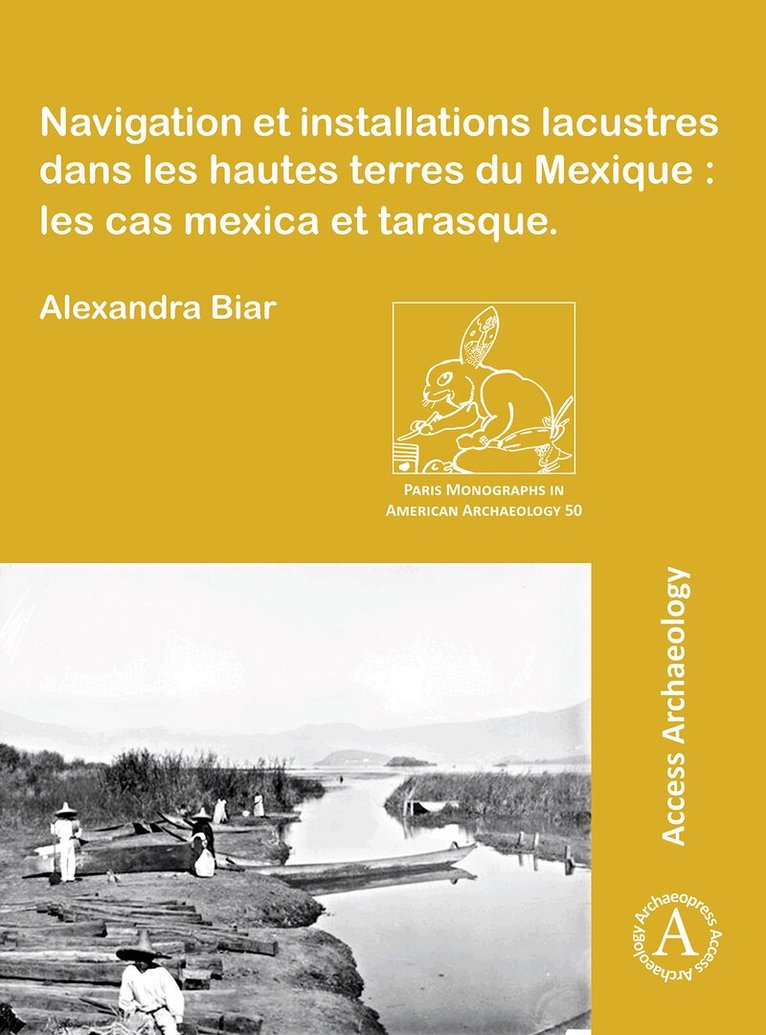
Navigation et installations lacustres dans les hautes terres du Mexique: les cas mexica et tarasque
Häftad, Franska, 2018
905 kr
Skickas
In a cultural area where geography conspires against ease of exchange, Mesoamerican societies discovered technical answers adapted to their needs. At a time when the exchange of merchandise and goods relied mainly on human transport, some civilizations turned to a mystical aquatic environment: lakes. This research focuses on the practice of lake navigation and specific facilities that are associated with it. Due to the need for a wholistic approach, this research is situated in a multidisciplinary framework that combines archaeology, ethnology and ethnohistory. Its primary objective is to elaborate the framework of a new research field from the analytical and systematic study of a corpus of eclectic data, about the exploitation of water as a means of transport. In Mesoamerica, the greatest concentration of lake systems lies in the Mexican highlands. However, only the Mexico and Pátzcuaro Basin were converted into real political economic and cultural centres, with the emergence of the Mexica Empire and Tarascan State in the Late Postclassic period (1350-1521). Why then do archaeologists, ethnologists and historians persist in ignoring the true importance of navigation in their study of the formation and organization of these two civilizations? To what extent can we extract, from the study of boats and lake installations, data that can open new research perspectives? | Dans une aire culturelle où la géographie conspire contre la fluidité des échanges, les sociétés mésoaméricaines ont su trouver des réponses techniques adaptées à leurs besoins. À une époque où l’acheminement de marchandises et de biens s’effectue principalement à dos d’homme, certaines civilisations vont se tourner vers un milieu aquatique mythique : les lacs. Ce travail de recherche s’intéresse donc à la pratique de la navigation lacustre et aux installations spécifiques qui lui sont associées. De par la nécessité d’une approche transversale, ce sujet se positionne dans un cadre pluridisciplinaire, entremêlant archéologie, ethnohistoire et ethnologie. Son objectif premier est de délimiter le cadre d’un nouveau champ de recherche à partir d’une étude analytique et systématique d’un corpus de données éclectiques, autour de l’exploitation d’un mode de transport aquatique. En Mésoamérique, c’est dans les hautes terres mexicaines que seuls les lacs des Bassins de Mexico et de Pátzcuaro ont été convertis en de véritables centres politiques, économiques et culturels à l’origine de l’émergence de l’Empire mexica et du Royaume tarasque à la période Postclassique (1350-1521). Pourquoi archéologues, historiens et ethnologues continuent donc d’ignorer la véritable importance de la navigation dans l’étude de la formation et de l’organisation de ces deux civilisations ? Dans quelle mesure les données que nous pourrons extraire de l’étude des embarcations et des installations lacustres peuvent-elles ouvrir de nouvelles perspectives de recherches ?
Del 51 - Paris Monographs in American Archaeology
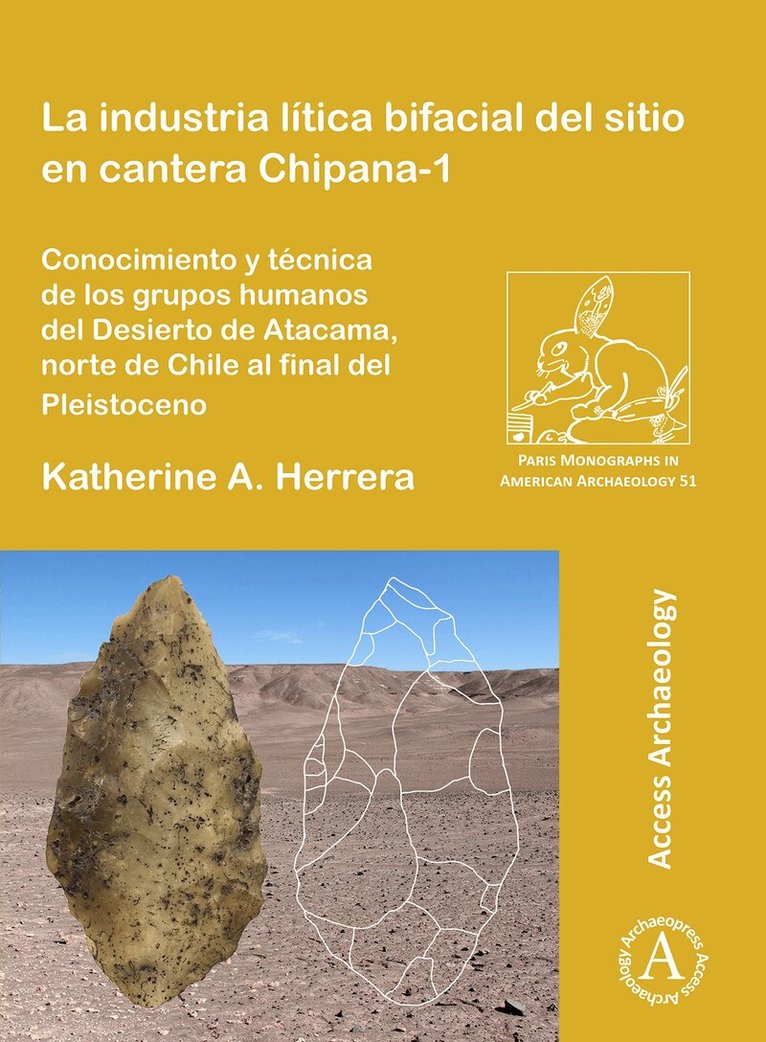
industria lítica bifacial del sitio en cantera Chipana-1
Conocimiento y técnica de los grupos humanos del Desierto de Atacama, norte de Chile al final del Pleistoceno
Häftad, Spanska, 2018
498 kr
Skickas
The site of Chipana-1 is located in the middle of the Atacama Desert, in the Pampa del Tamarugal (PdT), 1200 m asl. The site is a good example of past societies adaptation to hyper-arid environments, and provides new insights into the early human occupations of South America. The well-preserved stratigraphic record, together with 13 radiocarbon dates, show that the site was occupied around 11,480 cal BP. Chipana-1 is a lithic raw-material extraction and workshop site, of a silicified rock of good quality, mainly related to the production of bifacial tools (façonnage), and to a lesser extent, of flakes (débitage) on surface. This is the first site in northern Chile that provides information on the first stages of lithic production, such as raw-material selection and reduction (dégrossissage). In addition, flakes resulting from façonnage (shaping method) suggest the local elaboration of large bifacial pieces that have not been recovered on site, indicating that part of the production was probably exported elsewhere, within and outside the borders of the PdT. Some smaller flakes also suggest a local production of “Tuina” type projectile points, a morphotype well-known in the regions south of the Atacama Desert. One can highlight the presence of flakes of allochthonous raw-materials, imported from other areas, which have been flaked at Chipana-1 in order to produce bifacial tools. Chipana-1 was an important location for Late Pleistocene hunter-gatherer groups, poorly known until now, for the gathering of raw-materials and lithic production in the Atacama Desert. The site was integrated within a broader network of mobility that we are just starting to discover. | El sitio Chipana-1, situado en pleno corazón del Desierto de Atacama en la Pampa del Tamarugal (PdT) a 1200 msnm, refleja la adaptación de antiguas sociedades humanas a un ambiente hiper-árido, y aporta nuevos datos al debate sobre las primeras ocupaciones humanas en América del Sur. La buena conservación estratigráfica y 13 dataciones 14C muestran que el sitio fué frecuentado alrededor de los 11.480 cal BP. Chipana-1 es un sitio de producción lítica esencialmente de façonnage (modelado) bifacial, con un mínimo de débitage (desbaste) de lascas, observables en la superficie de esta gran cantera-taller de roca sílicificada de buena calidad. Este tipo de sitio es inédito dentro del norte de Chile, debido a que permite observar las etapas iniciales de elaboración como la selección cualitativa de la materia prima y su preparación (dégrossissage). Además, lascas del façonnage indican la elaboración de grandes piezas bifaciales no encontradas en el sitio, probablemente fueron exportadas a otras áreas dentro y fuera de la PdT. Algunas lascas más pequeñas señalan la producción de una punta de proyectil tipo “Tuina”, conocida en tierras altas hacia el sur del Atacama. Destacamos también la presencia de lascas de façonnage bifacial de materias primas alóctonas, que fueron importadas a la cantera como productos ya trabajados en otros sitios. Así Chipana-1 fue, para grupos de cazadores recolectores aún desconocidos al final del Pleistoceno, un punto importante de adquisición de roca tallable y de producción lítica en el Desierto de Atacama, insertado en un circuito de movilidad que recién comenzamos a develar.
Del 52 - Paris Monographs in American Archaeology
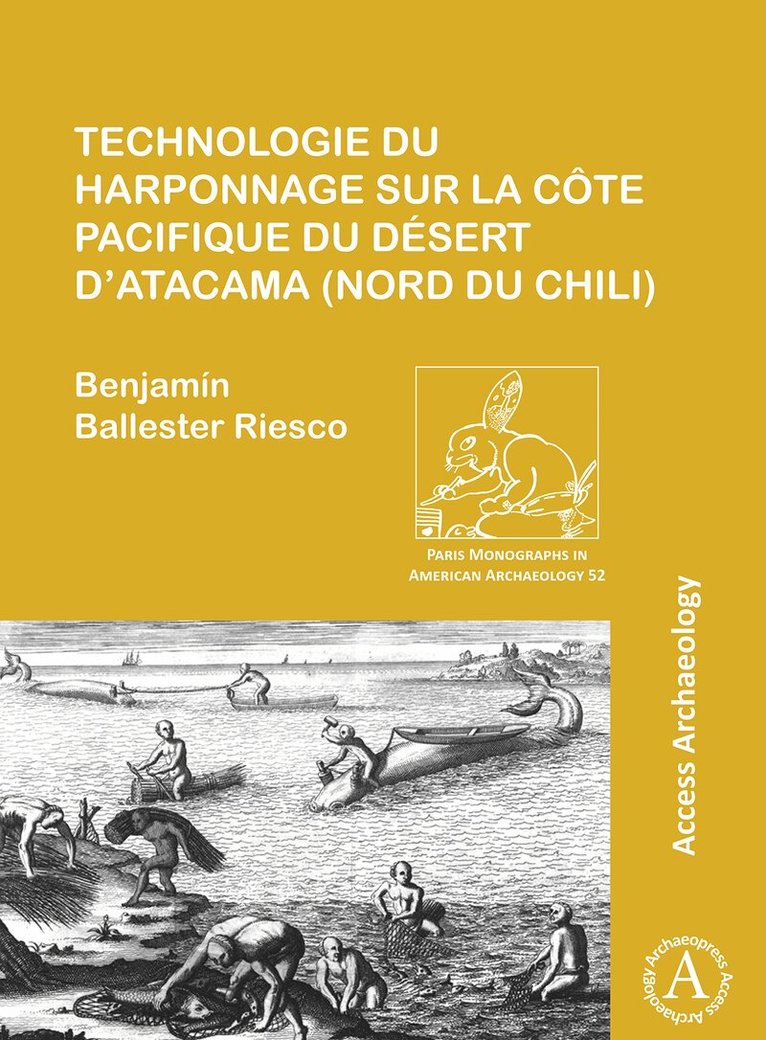
Technologie du harponnage sur la côte Pacifique du désert d’Atacama (nord du Chili)
Häftad, Franska, 2018
426 kr
Skickas
These objects do not have a single purpose. This is the central premise that guides the research within this book. Throughout the volume the reader will follow a representation of a marine hunter-gatherer society, a projection deriving from one of its iconic and most important material assets, the harpoon. This very technical object will be studied not only for its most evident function - hunting at sea – and the work delves into the structural, symbolic, technological and world-building aspects of the human societies that used them. To achieve this goal the text begins with a judgment about the role of marine hunting, its prey, and the agents involved in different coastal societies on the American continent, in order to create a comprehensive framework of reference for the subject. It continues by focussing on clarifying, defining and discussing the concept of harponage from technology compared with other historical and ethnographic cases of marine hunters across the globe. A typology of harpoon points from the Atacama Desert is presented, with classification based on their technical attributes, constituent units, composition features and articulation mechanisms, in order to evaluate the chronological scope and geographical distribution of each one of the types of harpoon heads from the last 7000 years of coastal history. The text then explores the multiple values and meanings of the harpoons of the Atacama Desert. The book finally examines the social reasons that influenced the development of an incredibly sophisticated and complex technology of marine hunting. Inferences that take it out of the sea and away from hunting, towards hypotheses that seek answers in the cultural determinism stemming from technical decisions, to utilise technology as another mechanism to establish and strengthen social bonds in the construction of worlds between different agents and collectives, and no longer as a simple tool to satisfy subsistence needs. | Les objets n’ont pas un seul objectif. Prémisse centrale qui guide le dénouement de ce livre. Dans les pages suivantes le lecteur trouvera une réflexion sur une société des chasseurs-collecteurs marins à partir d’un de ces biens matériaux iconiques et un des plus importantes, le harpon. Cet objet technique sera étudié hors de sa fonction la plus évidente, au-delà de la chasse marine, pour pénétrer les aspects structurels, symboliques, technologiques et de construction du monde de ces collectifs humains. Pour entreprendre ce défi, le texte nous submerge dans un premier temps dans une révision critique sur le rôle de la chasse marine, leurs proies et les agents impliqués dans ces activités et dans différentes sociétés côtières du continent américain, afin de pourvoir un cadre de référence adéquate sur cette thématique. Dans un deuxième moment, nous nous centrons dans l’éclaircissement, la définition et la concrétisation du concept de harponnage depuis la technologie comparée avec d’autres cas historiques et ethnographiques de chasseurs-cueilleurs du monde. Une typologie de têtes de harpon pour le désert d’Atacama est ensuite présentée, fondée sur leurs solutions techniques, leurs unités constitutives, leurs normes de composition et leurs mécanismes d’articulation, pour évaluer ensuite la portée chronologique et la distribution géographique de chaque type au cours des dernières 7000 années d’histoire littorale. Par la suite, le texte tente d’explorer les multiples valeurs et significations des harpons du désert d’Atacama. Dans sa partie finale, notre récit aborde les raisons sociales qui ont permis le développement d’une technologie de chasse marine aussi sophistiquée et complexe. Interprétations qui nous emmènent hors de la mer et loin de la chasse, vers des hypothèses qui cherchent des réponses sur les contraintes culturelles qui se trouvent derrière les décisions techniques, pour concevoir à la technologie comme un mécanisme employé afin d’établir les liens sociaux dans la construction des mondes et rapprocher différents agents sociaux et collectifs, plus que comme un simple outil destiné à satisfaire des besoins de subsistance. | Los objetos no tienen un solo objetivo. Esta es la premisa central que guía el desenlace de este libro. A lo largo de sus páginas el lector conocerá una reflexión acerca de una sociedad cazadora-recolectora marina a partir de uno de sus bienes materiales icónicos y más importantes, el arpón. Este objeto técnico será estudiado fuera de su función más evidente, más allá de la caza en el mar, para adentrarse en aspectos estructurales, simbólicos, tecnológicos y de construcción de mundo de estos colectivos humanos. Para llevar a cabo este programa, el texto se sumerge en una primera instancia en un juicio acerca del rol de la caza marina, sus presas y los agentes involucrados en diferentes sociedades costeras del continente americano, con tal de crear un marco de referencia comprensivo y adecuado sobre el tema. En segundo lugar, se aboca a clarificar, definir y concretizar el concepto de arponaje desde la tecnología comparada con otros casos históricos y etnográficos de cazadores marinos del planeta. Se presenta una tipología de cabezales para el desierto de Atacama fundada en sus soluciones técnicas, unidades constitutivas, normas de composición y mecanismos de articulación, para luego evaluar el alcance cronológico y la distribución geográfica de cada uno de los tipos de cabezales de arpón definidos para los últimos 7000 años de historia litoral. Posteriormente, el texto intenta explorar en torno a los múltiples valores y significados de los arpones del desierto de Atacama. El libro indaga en su desenlace final acerca de las razones sociales que dieron cabida al desarrollo de una tecnología de caza marina tan sofisticada y compleja. Inferencias que lo llevan fuera del mar y lejos de la caza, hacia hipótesis que buscan respuestas en las condicionantes culturales tras las decisiones técnicas, para concebir a la tecnología como un mecanismo más para entablar y estrechar lazos sociales en la construcción de mundos entre distintos agentes y colectivos, y ya no como una simple herramienta para satisfacer necesidades de subsistencia.
Del 53 - Paris Monographs in American Archaeology
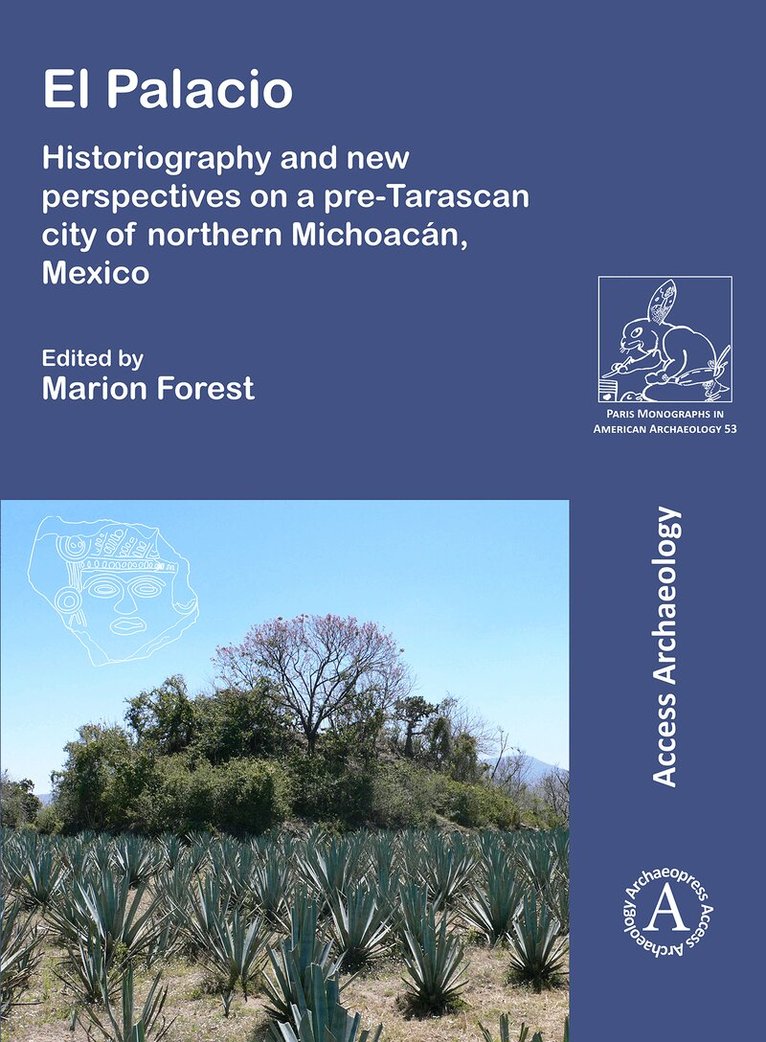
El Palacio: Historiography and new perspectives on a pre-Tarascan city of northern Michoacán, Mexico
Häftad, Engelska, 2020
755 kr
Skickas
11 contributions consider legacy and archive data (1896–1995) and results derived from recent archaeological investigations (2012–2017) to present a review and analysis of the chrono-stratigraphy, material culture, urbanism, and economic and ritual practices at El Palacio, northern Michoacán, Mexico, between A.D. 850 and 1521.
Del 58 - Paris Monographs in American Archaeology
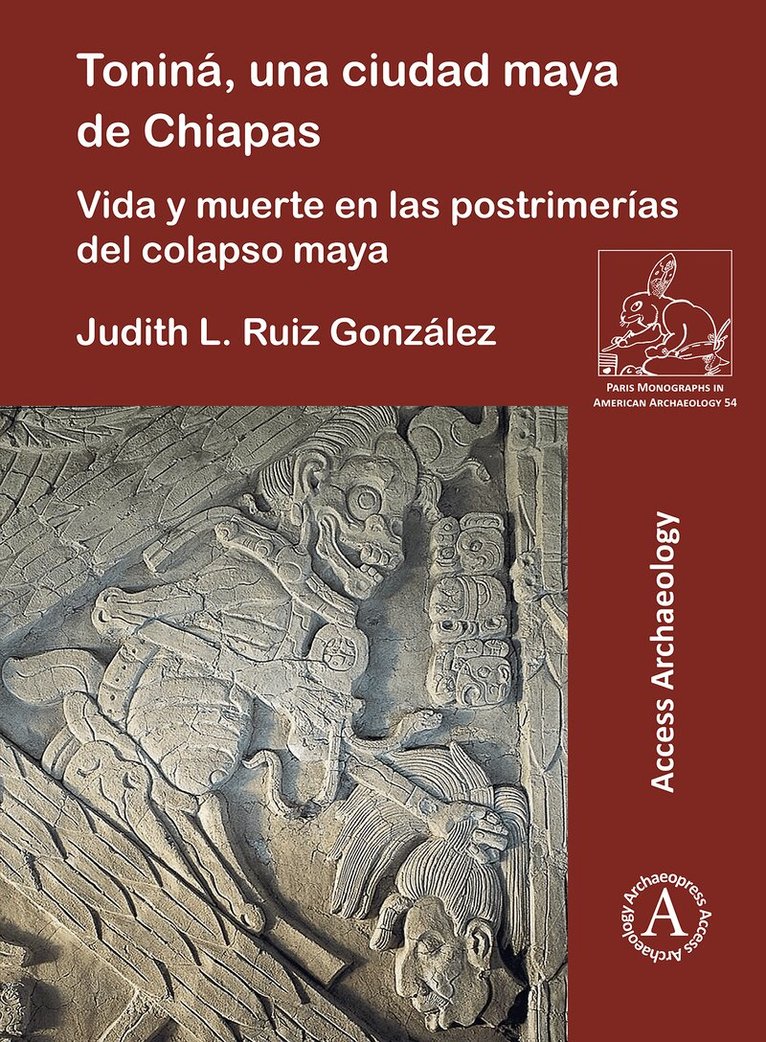
Toniná, una ciudad maya de Chiapas
Vida y muerte en las postrimerías del colapso maya
Häftad, Spanska, 2021
740 kr
Skickas
Toniná was a Mayan city, located between two cultural areas near the Chiapas Highlands. It has been widely proposed that the Maya collapse implied the disappearance and depopulation of many cities; this research addresses the survival of Toniná towards the threshold of the Postclassic.
Del 54 - Paris Monographs in American Archaeology
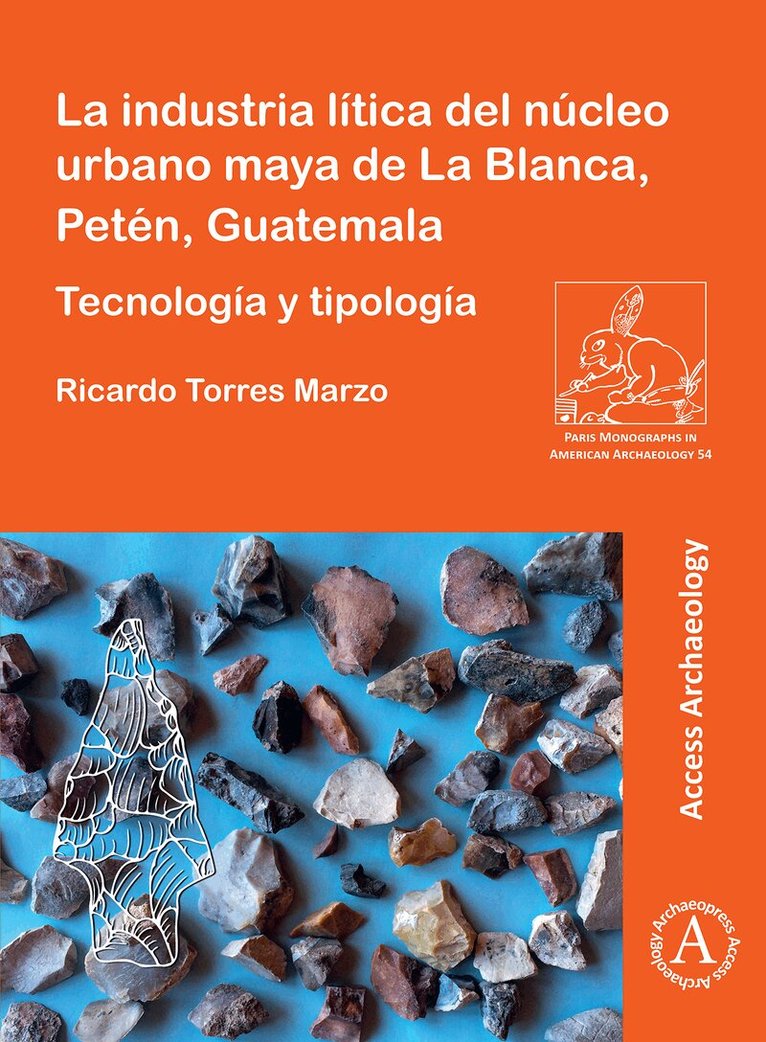
La industria lítica del núcleo urbano maya de La Blanca, Petén, Guatemala
Tecnología y tipología
Häftad, Spanska, 2021
456 kr
Skickas
The ancient Maya used mainly stone tools, made of either ground stone and chipped stone, to achieve their extraordinary development. This book presents the techno-typological analysis of lithic materials from La Blanca, located in the heart of the Southern Lowlands, which was mainly inhabited during the Late Classic and Terminal Classic periods.
Del 59 - Paris Monographs in American Archaeology
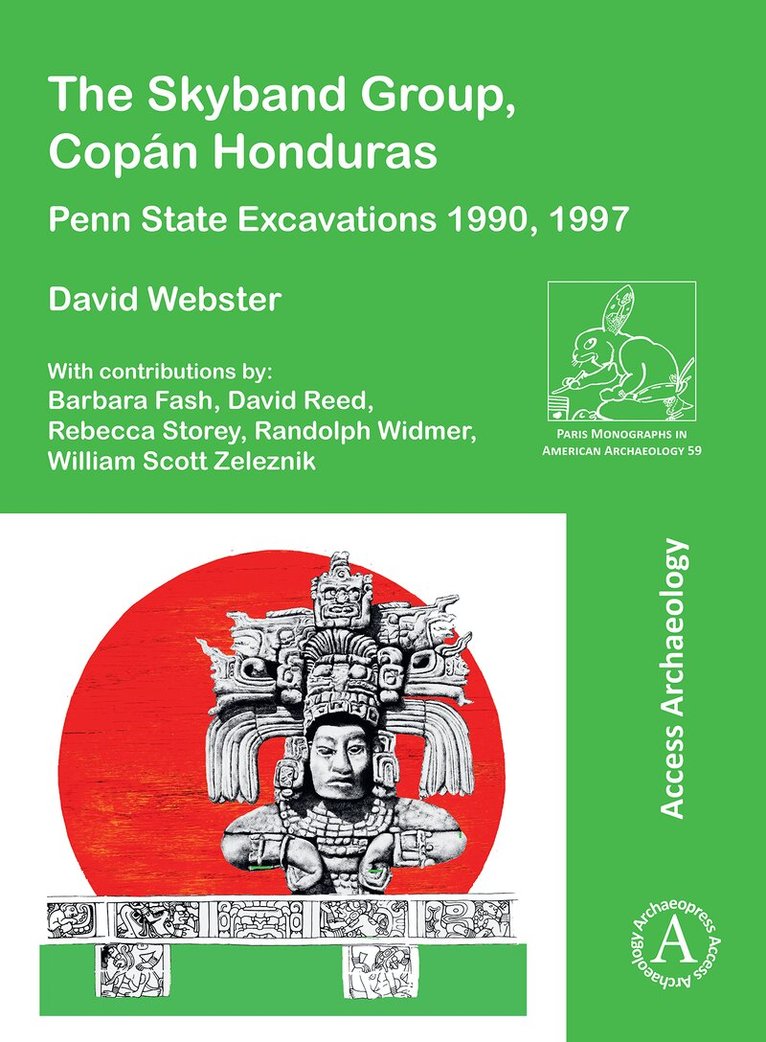
Skyband Group, Copán Honduras
Penn State Excavations 1990, 1997
Häftad, Engelska, 2023
830 kr
Skickas
The Skyband Group is an impressive elite site in the urban core of Copán, Honduras, which is dominated by the palatial compounds of Maya sub-royal nobles. Such grandees often bore court titles showing that they were clients and officials of kings, but also competitors for political power, especially just before the dynastic collapse around AD 800. Penn State University excavations in 1990 and 1997 revealed large vaulted buildings, richly embellished with facade sculpture, and an elaborate carved throne in the form of a sky band, replete with celestial images of the sun, moon, and Venus. Artifacts and burials retrieved from these buildings and smaller ancillary structures are characteristic of elite residences, but the iconography of the facades and the throne also reveals connections with Copán’s royal dynasty and efforts by the last ruler to shore up his faltering kingdom. Activity at the Skyband Group and other sites in the Copán valley continued after the abrupt political debacle, an example of the ‘slow collapse’ process that is increasingly evident among the great Maya centers in the southern lowlands of Mesoamerica.
Del 62 - Paris Monographs in American Archaeology
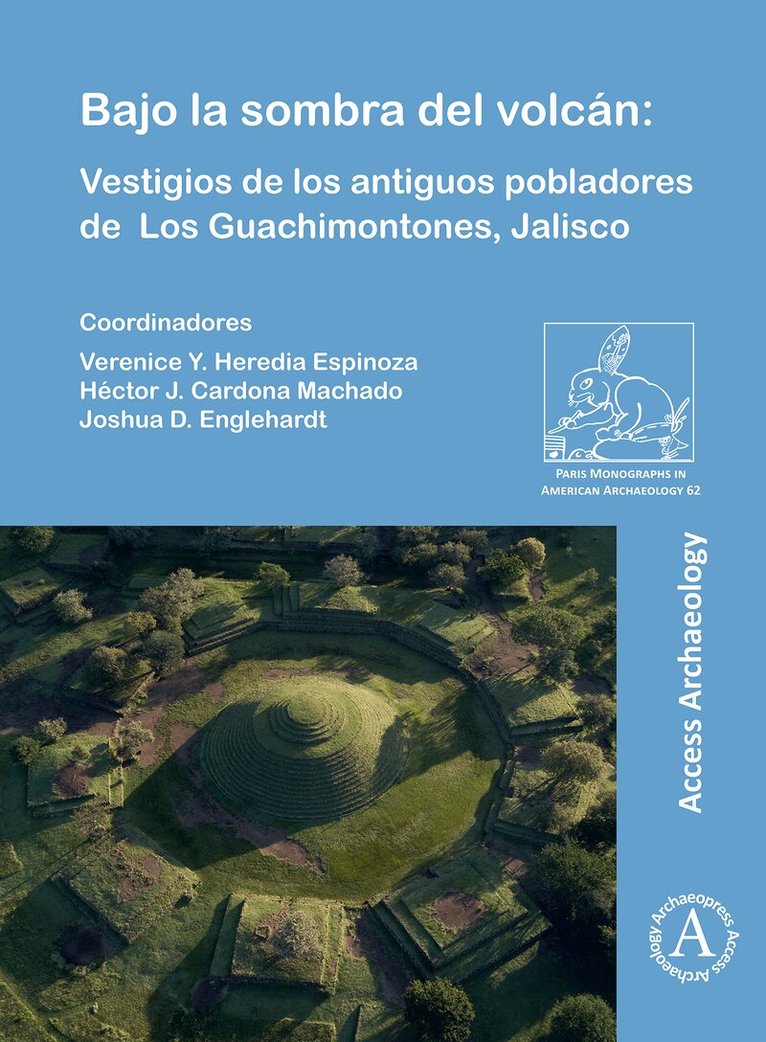
Bajo la sombra del volcán
Vestigios de los antiguos pobladores de Los Guachimontones, Jalisco
Häftad, Spanska, 2025
606 kr
Skickas
Los Guachimontones is one of the best known and most visited archaeological sites in western Mexico, recognised as a key center of complex societies in the region, especially as the epicentre of the Teuchitlán culture (ca. 300 B.C.E.-450 C.E.). Although its long history of occupation and outstanding architecture, characterized by circular pyramids, are considered exceptional – as are other sites in western Mesoamerica – it has been little studied and often marginalised. Despite its importance, there are few detailed publications about it and there has not been a complete catalogue of the most representative archaeological pieces. Bajo la sombra del volcán seeks to provide an accessible introduction to both scholars and general readers, presenting more than 100 colour photographs of the most impressive artefacts found at the site, accompanied by brief chapters written by leading experts.
Del 63 - Paris Monographs in American Archaeology
Essor Monumental et Dynamiques des Populations : la cité Maya de Naachtun (Guatemala) au Classique Ancien (150-550 apr. J.-C.)
Häftad, Engelska, 2025
1 353 kr
Skickas
Naachtun was a major Maya capital during the Early Classic period (150–550 CE), marked by impressive monumental architecture. This book explores how such construction influenced urban demographics, showing that architectural grandeur attracted and anchored a growing population.