Petroleum Research Series in Petrolem Economics & Politics – serie
Visar alla böcker i serien Petroleum Research Series in Petrolem Economics & Politics. Handla med fri frakt och snabb leverans.
3 produkter
3 produkter
Del 1 - Petroleum Research Series in Petrolem Economics & Politics
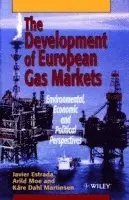
Development of European Gas Markets
Environmental, Economic and Political Perspectives
Inbunden, Engelska, 1995
3 939 kr
Skickas inom 7-10 vardagar
This volume studies the driving forces behind the development of the European gas market and the uncertainties facing the industry in Europe. There is widespread consensus within Europe about the advantages of natural gas to reduce air pollution and to enhance energy supply diversification. Thus taking into account these most fundamental prerequisites for increased gas demand, this volume addresses the more immediate question of how the conglomeration and organisation of European gas industries will be influenced by this latent demand potential. The purpose of this book is to focus both on the analysis of evolutionary organisational processes within the gas industry, and the pressures for change provoked by external forces such as interfuel competition, environmental imperatives and new trends in European economic policies. The potential for structural change in the organisation of the European gas industry is discussed, as well as the political, economic and commercial factors affecting its progress. With the present uncertainty as to whether the gas industry will take advantage of the obvious market opportunities that are opening up, this book takes a close look at the European gas industry at this time of change, and analyses how this process may develop and the possible implications this will have on the gas industry.
2 817 kr
Skickas inom 7-10 vardagar
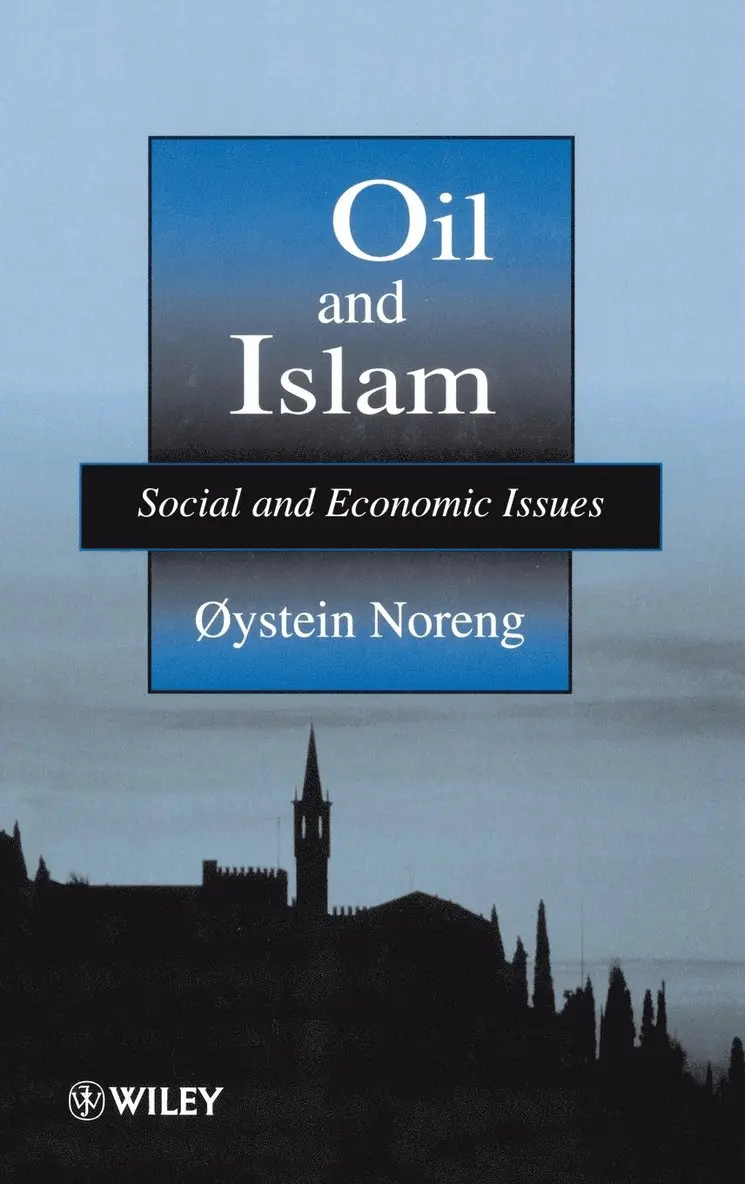
During the 1970s and early 1980s, the Middle East and North Africa were perceived as being exceptionally successful, but now the region is viewed as a resounding economic and social failure. Islam is not only a religion, but also a political and social project. A major pretext of this work is to demonstrate how the tensions within Islamic movements feed directly into the economic, social, political, historical and religious arena of the region, and vice versa. An introductory chapter sets the context of the book. The core chapters of the book comprise an in-depth examination of the varied forms of oil revenue abuse. For examples, the past mismanagement of the tremendous wealth provided by oil. Following Islamic beliefs, revenue from oil should not finance wasteful consumption, but used instead for public welfare. Abstaining from interest calculations, there should be a case for keeping more oil in the ground. Indeed, oil has also stifled industrial development, and with declining oil revenues, the conflict between civilian and military priorities intensifies. While western interests have promoted arms spending, high population-growth expenditure reinforces the reality of the count-down to the post-oil era upon the Middle Eastern and North African oil exporters. So far the governments seem unwilling or unable to adapt and react. Furthermore, in the past oil has been used as a substitute for democracy. While the large oil revenues of the 1970s and early 1980s strengthened the position of autocratic rulers and weakened the private sector,repressive regimes have made Islam a source of criticism and opposition for the Western world. Following on from this, the book then looks forward to the problem of uniting the divergent interests in the spheres of oil and Islam into a cohesive whole. The book proposes that ideally Islamic governments would synchronise the depletion of oil reserves with investment in new productive assets. Islamic governments could also find ways to combine private, domestic and foreign interests in the oil industry. The main readership for this book will be policy-makers and professionals involved in development issues for Middle Eastern and North African affairs, and those with an interest in oil politics and Islamic studies.
Del 2 - Petroleum Research Series in Petrolem Economics & Politics
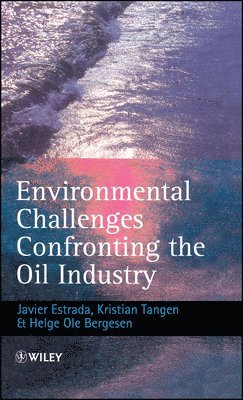
Environmental Challenges Confronting the Oil Industry
Inbunden, Engelska, 1997
3 277 kr
Skickas inom 7-10 vardagar
Since the late 1980s, when the current tide of environmentalconcern began to rise, every improvement made by the oil industryhas been followed by new demands for further progress. New problemshave been placed on top of the old ones; first smog in the innercities and oil spills on the beaches, then acid rain and forest dieback followed by major tank disasters and renewed attention tourban air quality and finally, climatic change. The purpose of thisbook is to investigate whether the oil industry is able to extendand renew its social legitimacy as it faces its toughest agenda ina century the challenges stemming from its impact on theenvironment and the consequent public questioning of its role insociety. To find out whether and how the oil industry has respondedto environmental issues in general and climatic change inparticular, five indicators of change vision & image, R&D,investments, and government relations have been selected. Thesehave been assumed to be expressions of an environmental strategywhich can be identified as reactive, cautious or creative. Theempirical analysis begins with case studies of the environmentalresponse of five major oil companies: Shell, Exxon, BP, Amoco andStatoil. The next step is a case study of the refinery sector,which is the most environmentally sensitive part of the industry inmany ways. In addition, a brief description of how three industryassociations have tackled the same environmental issues isincluded. The main readership for this book will be policy makers,planners and researchers in the oil industry, and environmentalconsultants.