Pinpoints - Böcker
Visar alla böcker i serien Pinpoints. Handla med fri frakt och snabb leverans.
5 produkter
5 produkter
230 kr
Skickas inom 7-10 vardagar
What meaning does the American public attach to images of key black political, social, and cultural figures? Considering photography’s role as a means of documenting historical progress, what is the representational currency of these images? How do racial icons “signify”? Nicole R. Fleetwood’s answers to these questions will change the way you think about the next photograph that you see depicting a racial event, black celebrity, or public figure. In On Racial Icons, Fleetwood focuses a sustained look on photography in documenting black public life, exploring the ways in which iconic images function as celebrations of national and racial progress at times or as a gauge of collective racial wounds in moments of crisis. Offering an overview of photography’s ability to capture shifting race relations, Fleetwood spotlights in each chapter a different set of iconic images in key sectors of public life. She considers flash points of racialized violence in photographs of Trayvon Martin and Emmett Till; the political, aesthetic, and cultural shifts marked by the rise of pop stars such as Diana Ross; and the power and precarity of such black sports icons as Serena Williams and LeBron James; and she does not miss Barack Obama and his family along the way. On Racial Icons is an eye-opener in every sense of the phrase.Images from the book. (http://rutgerspress.rutgers.edu/pages/Fleetwood.aspx)
233 kr
Skickas inom 10-15 vardagar
What’s in the dark? Countless generations have gazed up at the night sky and asked this question-the same question that cosmologists ask themselves as they study the universe. The answer turns out to be surprising and rich. The space between stars is filled with an exotic substance called “dark matter” that exerts gravity but does not emit, absorb, or reflect light. The space between galaxies is rife with “dark energy” that creates a sort of cosmic antigravity causing the expansion of the universe to accelerate. Together, dark matter and dark energy account for 95 percent of the content of the universe. News reporters and science journalists routinely talk about these findings using terms that they assume we have a working knowledge of, but do you really understand how astronomers arrive at their findings or what it all means?Cosmologists face a conundrum: how can we study substances we cannot see, let alone manipulate? A powerful approach is to observe objects whose motion is influenced by gravity. Einstein predicted that gravity can act like a lens to bend light. Today we see hundreds of cases of this-instances where the gravity of a distant galaxy distorts our view of a more distant object, creating multiple images or spectacular arcs on the sky. Gravitational lensing is now a key part of the international quest to understand the invisible substance that surrounds us, penetrates us, and binds the universe together. A Ray of Light in a Sea of Dark Matter offers readers a concise, accessible explanation of how astronomers probe dark matter. Readers quickly gain an understanding of what might be out there, how scientists arrive at their findings, and why this research is important to us. Engaging and insightful, Charles Keeton gives everyone an opportunity to be an active learner and listener in our ever-expanding universe.Watch a video with Charles Keeton:Watch video now. (http://www.youtube.com/watch?v=Uc3byXNS1G0).
247 kr
Skickas inom 10-15 vardagar
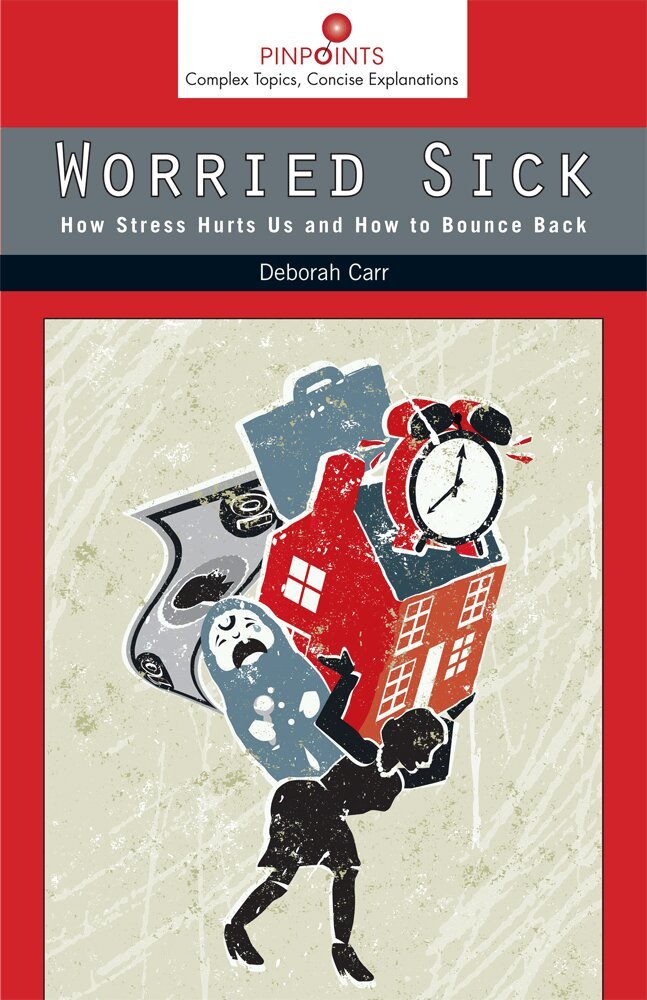
Comments like “I’m worried sick” convey the conventional wisdom that being “stressed out” will harm our health. Thousands of academic studies reveal that stressful life events (like a job loss), ongoing strains (like burdensome caregiving duties), and even daily hassles (like traffic jams on the commute to work) affect every aspect of our physical and emotional well-being. Cutting through a sea of scientific research and theories, Worried Sick answers many questions about how stress gets under our skin, makes us sick, and how and why people cope with stress differently. Included are several standard stress and coping checklists, allowing readers to gauge their own stress levels.We have all experienced stressful times-maybe a major work deadline or relocating cross-country for a new job-when we came out unscathed, feeling not only emotionally and physically healthy, but better than we did prior to the crisis. Why do some people withstand adversity without a scratch, while others fall ill or become emotionally despondent when faced with even a seemingly minor hassle? Without oversimplifying the discussion, Deborah Carr succinctly provides readers with key themes and contemporary research on the concept of stress. Understanding individuals’ own sources of strength and vulnerability is an important step toward developing personal strategies to minimize stress and its unhealthy consequences. Yet Carr also challenges the notion that merely reducing stress in our lives will help us to stay healthy. Many of the stressors that we face in everyday life are not our problems alone; rather, they are symptoms of much larger, sweeping problems in contemporary U.S. society.To readers interested in the broad range of chronic, acute, and daily life stressors facing Americans in the twenty-first century, as well as those with interest in the many ways that our physical and emotional health is shaped by our experiences, this brief book will be an immediate and quick look at these significant issues.View a three minute video of Deborah Carr speaking about Worried Sick.
147 kr
Skickas inom 5-8 vardagar
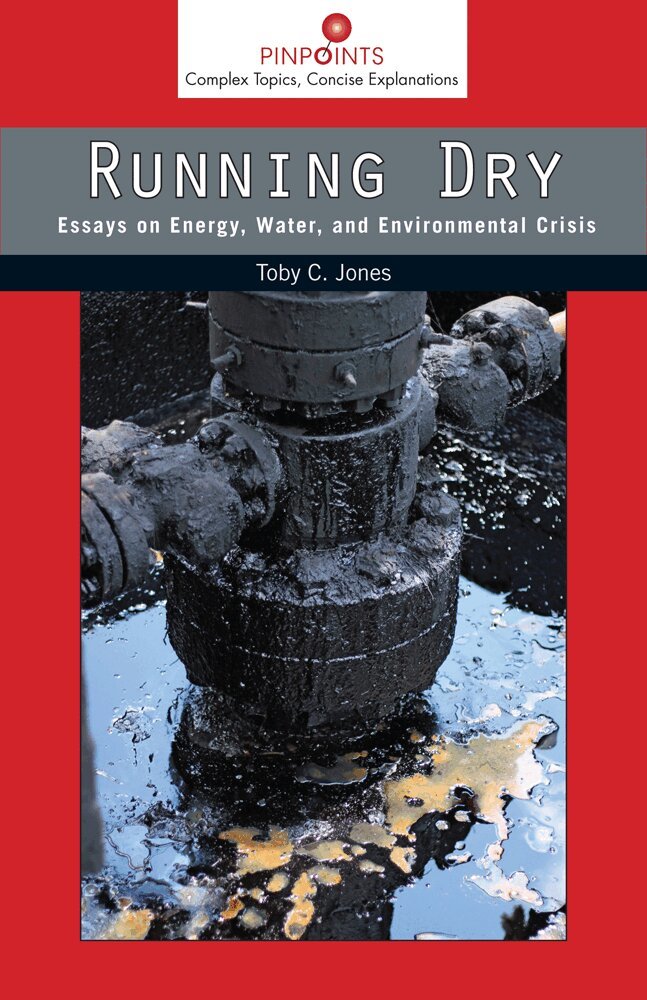
The world’s water is under siege. A combination of corporate greed, the elite pursuit of political power, and our unrelenting reliance on carbon-based energy is accerlating a broad range of environmental and political crises. Potentially catastrophic climate change, driven primarily by the consumption of oil and gas, threatens the environment in a variety of ways, including producing unprecedented patterns of heavy weather and superstorms in some places and droughts in others. Alongside intensifying environmental dangers posed by our reliance on carbon energy, the conditions of modern life, from happiness to the possibility of democratic politics, are also being undermined. In Running Dry, historian Toby Craig Jones explores how modern society’s unquenchable thirst for carbon-based energy is endangering the environment broadly, as well as the historical roots of this threat. This accessible book examines the history of the "energy-water nexus," the ways in which oil and gas extraction poison and dry up water resources, the role of corporate "science" in deflecting attention away from the emerging crises, and the ways in which the rush to capture more energy is also challenging America's democratic order.
233 kr
Skickas inom 10-15 vardagar
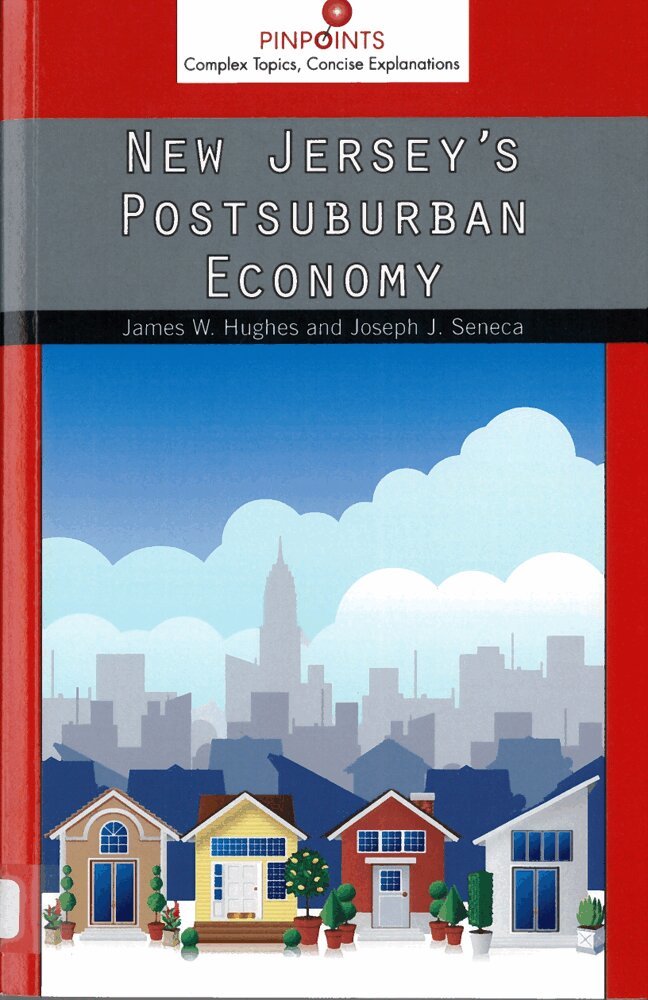
New Jersey has a long history of adapting to a changing economic climate. From its colonial origins to the present day, New Jersey's economy has continuously and successfully confronted the challenges and uncertainties of technological and demographic change, placing the state at the forefront of each national and global economic era. Based on James W. Hughes and Joseph J. Seneca’s nearly three-decade-long Rutgers Regional Report series, New Jersey’s Postsuburban Economy presents the issues confronting the state and brings to the forefront ideas for meeting these challenges.From the rural agricultural and natural resource based economy and lifestyle of the seventeenth century to today’s postindustrial, suburban-dominated, automobile-dependent economy, the economic drivers which were considered to be an asset are now viewed by many to be the state’s greatest disadvantage. On the brink of yet another transformation, this one driven by a new technology and an internet based global economy, New Jersey will have to adapt itself yet again-this time to a postsuburban digital economy. Hughes and Seneca describe the forces that are now propelling the state into yet another economic era. They do this in the context of historical economic transformations of New Jersey, setting out the technological, demographic, and transportation shifts that defined and drove them.