Platform Supply Chains in the AI Era – serie
Visar alla böcker i serien Platform Supply Chains in the AI Era. Handla med fri frakt och snabb leverans.
5 produkter
5 produkter
Inbunden, Engelska, 2026
562 kr
Skickas inom 10-15 vardagar
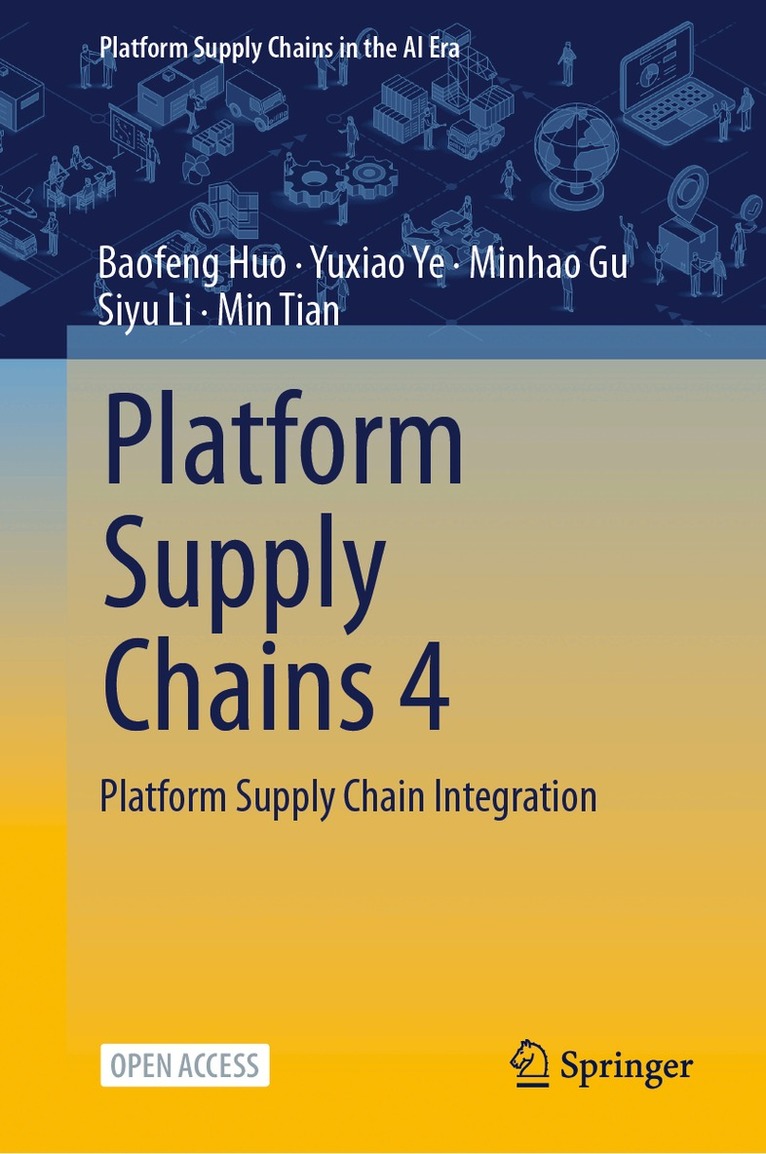
This open access book turns fragmented insights on platform supply chains into a practical integration framework and guidelines. It shows how to design and govern four interlocking pillars, technology, logistics, suppliers, and customers, in platform supply chains to remove value-creation bottlenecks and deliver measurable performance. Readers get clear design rules, governance options, and metrics they can apply across digital-intelligent, complex and end-to-end platform networks.What’s new is a platform-specific lens on integration. The book frames blockchain as a complex adaptive systems enabler and a governance substitute, explains how 3PL coordination scales into platform logistics orchestration, and unpacks trust–contract interactions under data-rich uncertainty, including the role of data breaches in supplier replacement. It also links cross-functional coordination to customer integration and free-trial strategies, clarifying when network effects amplify or erode value.The scope begins with foundations and the rise of platform supply chains, then develops a four-pillar framework: technology integration (from IT integration to blockchain-enabled coordination and performance effects), logistics integration (relational and economic mechanisms and platform models), supplier integration (balancing trust and contracts under platform-specific uncertainty), and customer integration (systems, processes, teams, and value creation via trials and communities). The intended readership includes advanced students and researchers in operations, supply chain, and information systems, as well as leaders in platform firms, logistics, and procurement. Core benefits are a unifying framework tailored to platforms, evidence-based governance choices across the pillars, and concise checklists and measures to test and refine integration decisions.
Inbunden, Engelska, 2026
915 kr
Kommande
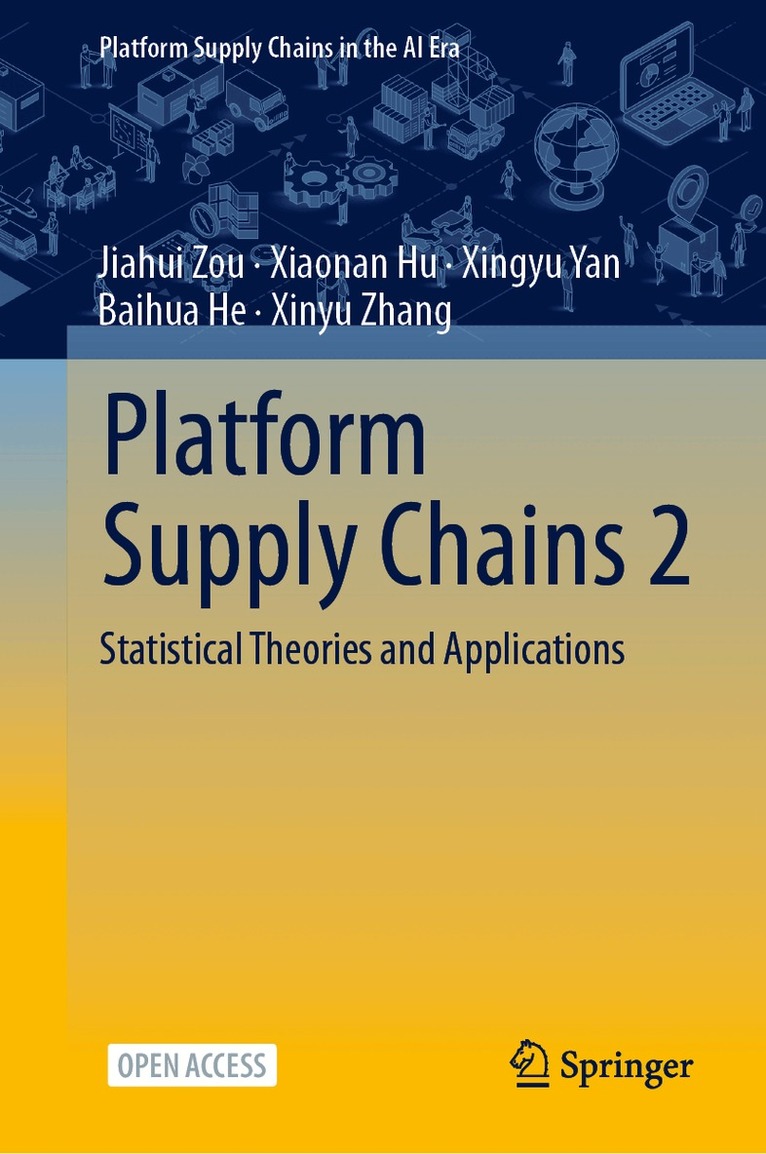
This open access book delves into methodologies for addressing prevalent statistical problems in supply chains—including prediction with multi-source data, density response prediction and ranking problems—leveraging model averaging techniques and numerical experiments. Its innovation lies in addressing uncertainty in model design and variable selection by integrating multiple viable candidate models instead of relying on a single one, while enhancing model performance through tailored model-averaging weight criteria.The intended readership of this book includes undergraduate students in universities, graduates, and academic researchers in the field of management science, data science and statistics. This book is suitable for those with a master's degree or above in management science or statistics.
Inbunden, Engelska, 2026
915 kr
Kommande
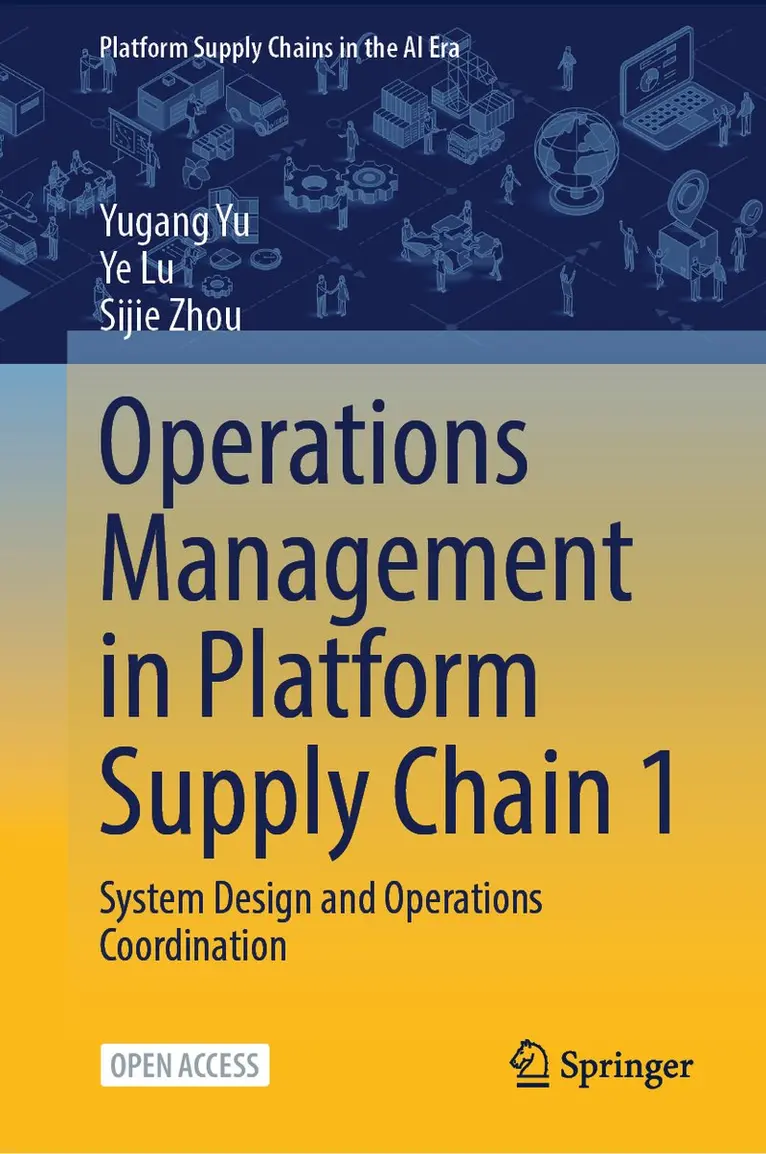
This open access book explores the network design and planning of platform-based supply chains in four chapters based on mathematical modeling, algorithm analysis, and numerical experiments. The main research methodologies in this book include mathematical modeling, linear programming, integer and combinatorial programming, and stochastic and robust optimization. What makes the book unique is the new insights into network design and planning for platform-based supply chains, which differ from those for traditional supply chains. This makes the subject in this book of significance, although there are abundant existing works on relevant topics for traditional supply chains. Another important feature of this book is the systematic perspective to unify network design in deterministic and uncertain settings for platform-based supply chains. By summarizing the new research results obtained from the implementation of a national project on platform-based supply chain, this provides a generalized scope on network design and planning for large-scale supply chains.
Inbunden, Engelska, 2027
915 kr
Kommande
This open access book provides a systematic and in-depth analysis of the critical risks inherent in modern platform-based supply chains. Employing rigorous analytical methods, including game theory and advanced, computationally efficient simulation techniques, it delves into three core areas: operational risks, information and data risks, and quality and compliance risks. The book moves beyond traditional supply chain paradigms to address challenges unique to the platform economy. This includes the strategic threat of platforms using seller data to launch competing products, the complex trade-offs in managing third-party product quality, the impact of reactive capacity on quality decisions, and the challenge of optimizing inventory across networks of unprecedented scale.It is an essential resource for graduate students, academic researchers, and advanced practitioners in the fields of operations management, supply chain management, and information systems. The content is suitable for readers with a graduate-level understanding of these disciplines.
Inbunden, Engelska, 2026
621 kr
Kommande
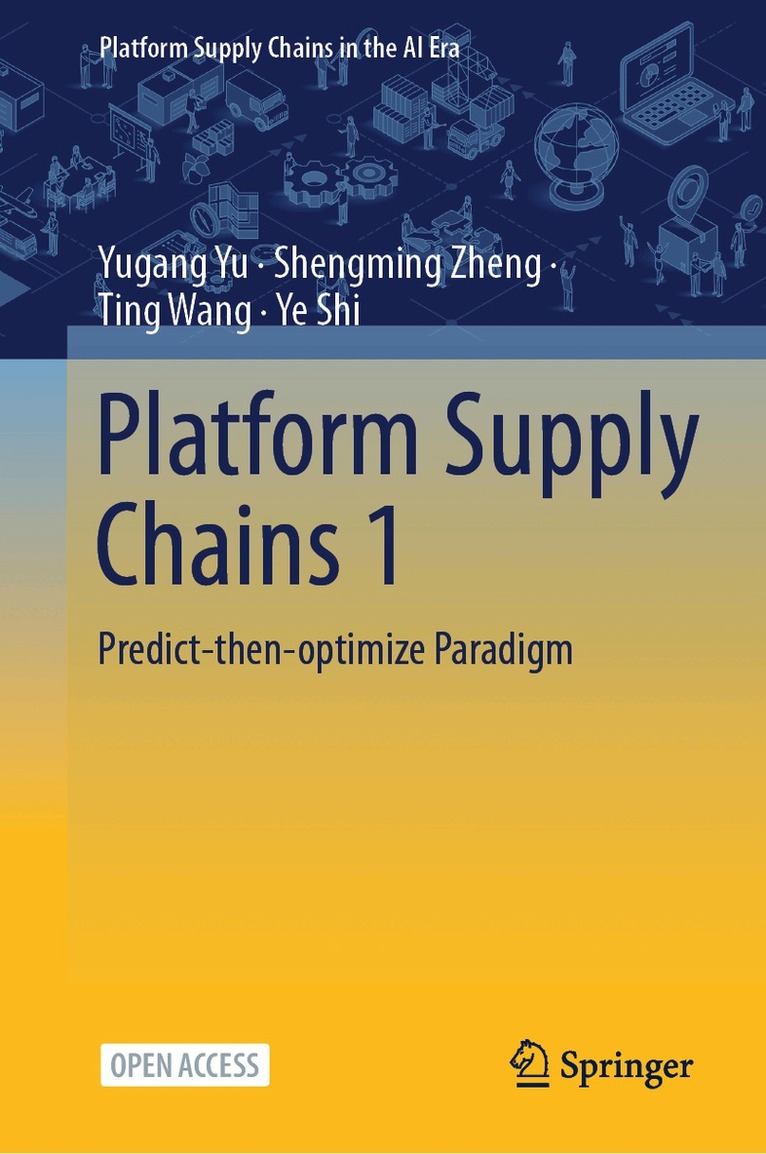
This open access book provides a cutting-edge framework for leveraging data-driven predictions to solve complex operational problems in platform-based supply chains. It moves beyond traditional models by integrating advanced machine learning with optimization techniques, enabling managers to make smarter, more adaptive decisions in dynamic digital environments.The approach bridges the gap between predictive analytics and operational decision-making, introducing a structured “predict-then-optimize” methodology tailored for platform ecosystems. This dual focus allows for more robust and realistic solutions than purely deterministic or intuition-based approaches.Key features and benefits include:A unified framework that integrates prediction and optimization models for end-to-end supply chain decision-making;Real-world case studies and examples that illustrate the application of the methodology in platform contexts;Practical guidance on implementing predictive and optimization techniques using modern computational tools.