POINT: Essays on Architecture - Böcker
Visar alla böcker i serien POINT: Essays on Architecture. Handla med fri frakt och snabb leverans.
3 produkter
3 produkter
283 kr
Skickas inom 7-10 vardagar
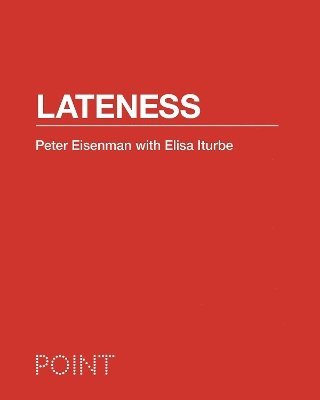
A provocative case for historical ambiguity in architecture by one of the field's leading theoristsConceptions of modernity in architecture are often expressed in the idea of the zeitgeist, or "spirit of the age," an attitude toward architectural form that is embedded in a belief in progressive time. Lateness explores how architecture can work against these linear currents in startling and compelling ways. In this incisive book, internationally renowned architect Peter Eisenman, with Elisa Iturbe, proposes a different perspective on form and time in architecture, one that circumvents the temporal constraints on style that require it to be "of the times"—lateness. He focuses on three twentieth-century architects who exhibited the qualities of lateness in their designs: Adolf Loos, Aldo Rossi, and John Hejduk. Drawing on the critical theory of Theodor Adorno and his study of Beethoven's final works, Eisenman shows how the architecture of these canonical figures was temporally out of sync with conventions and expectations, and how lateness can serve as a form of release from the restraints of the moment.Bringing together architecture, music, and philosophy, and drawing on illuminating examples from the Renaissance and Baroque periods, Lateness demonstrates how today's architecture can use the concept of lateness to break free of stylistic limitations, expand architecture's critical capacity, and provide a new mode of analysis.
283 kr
Skickas inom 7-10 vardagar
Art as we know it is dramatically changing, but popular and critical responses lag behind. In this trenchant illustrated essay, David Joselit describes how art and architecture are being transformed in the age of Google. Under the dual pressures of digital technology, which allows images to be reformatted and disseminated effortlessly, and the exponential acceleration of cultural exchange enabled by globalization, artists and architects are emphasizing networks as never before. Some of the most interesting contemporary work in both fields is now based on visualizing patterns of dissemination after objects and structures are produced, and after they enter into, and even establish, diverse networks. Behaving like human search engines, artists and architects sort, capture, and reformat existing content. Works of art crystallize out of populations of images, and buildings emerge out of the dynamics of the circulation patterns they will house.Examining the work of architectural firms such as OMA, Reiser + Umemoto, and Foreign Office, as well as the art of Matthew Barney, Ai Weiwei, Sherrie Levine, and many others, After Art provides a compelling and original theory of art and architecture in the age of global networks.
291 kr
Skickas inom 7-10 vardagar
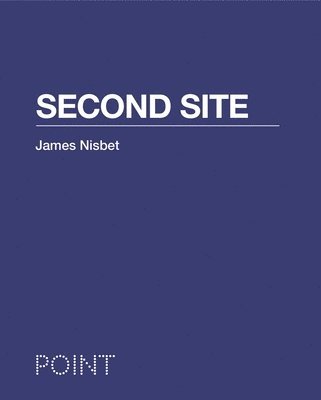
A meditation on how environmental change and the passage of time transform the meaning of site-specific artIn the decades after World War II, artists and designers of the land art movement used the natural landscape to create monumental site-specific artworks. Second Site offers a powerful meditation on how environmental change and the passage of time alter and transform the meanings—and sometimes appearances—of works created to inhabit a specific place.James Nisbet offers fresh approaches to well-known artworks by Ant Farm, Rebecca Belmore, Nancy Holt, Richard Serra, and Robert Smithson. He also examines the work of less recognized artists such as Agnes Denes, Bonnie Devine, and herman de vries. Nisbet tracks the vicissitudes wrought by climate change and urban development on site-specific artworks, taking readers from the plains of Amarillo, Texas, to a field of volcanic rock in Mexico City, to abandoned quarries in Finland.Providing vital perspectives on what it means to endure in an ecologically volatile world, Second Site challenges long-held beliefs about the permanency of site-based art, with implications for the understanding and conservation of artistic creation and cultural heritage.