Politics and Culture in the Twentieth-Century South Ser. – serie
430 kr
Läs direkt efter köp
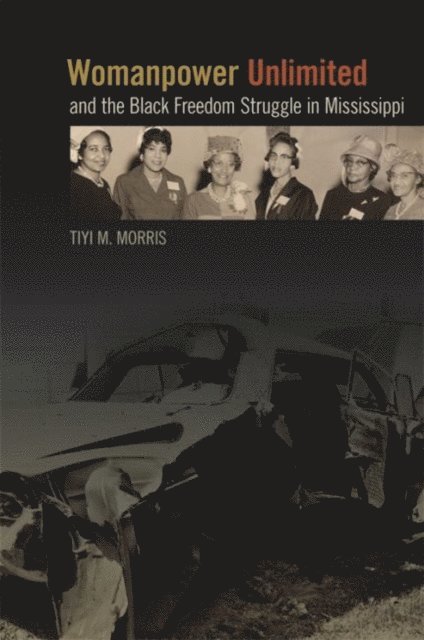
In Womanpower Unlimited and the Black Freedom Struggle in Mississippi, Tiyi M. Morris provides the first comprehensive examination of the Jackson, Mississippi–based women’s organization Womanpower Unlimited. Founded in 1961 by Clarie Collins Harvey, the organization was created initially to provide aid to the Freedom Riders who were unjustly arrested and then tortured in Mississippi jails. Womanpower Unlimited expanded its activism to include programs such as voter registration drives, youth education, and participation in Women Strike for Peace. Womanpower Unlimited proved to be not only a significant organization with regard to civil rights activism in Mississippi but also a spearhead movement for revitalizing black women’s social and political activism in the state.Womanpower Unlimited elucidates the role that the group played in sustaining the civil rights movement in Mississippi. Consistent with the recent scholarship that emphasizes the necessity of a bottom-up analysis for attaining a more comprehensive narrative of the civil rights movement, this work broadens our understanding of movement history in general by examining the roles of “local people” as well as the leadership women provided. Additionally, it contributes to a better understanding of how the movement developed in Mississippi by examining some of the lesserknown women upon whom activists, both inside and outside of the state, relied. Black women, and Womanpower specifically, were central to movement successes in Mississippi; and Womanpower’s humanist agenda resulted in its having the most diverse agenda of a Mississippi-based civil rights organization.
1 940 kr
Läs direkt efter köp
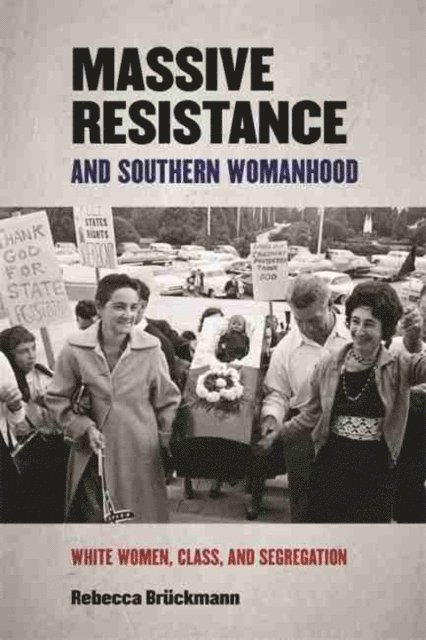
Massive Resistance and Southern Womanhood offers a comparative sociocultural and spatial history of white supremacist women who were active in segregationist grassroots activism in Little Rock, New Orleans, and Charleston from the late 1940s to the late 1960s. Through her examination, Rebecca Brückmann uncovers and evaluates the roles, actions, self-understandings, and media representations of segregationist women in massive resistance in urban and metropolitan settings. Brückmann argues that white women were motivated by an everyday culture of white supremacy, and they created performative spaces for their segregationist agitation in the public sphere to legitimize their actions. While other studies of mass resistance have focused on maternalism, Brückmann shows that women’s invocation of motherhood was varied and primarily served as a tactical tool to continuously expand these women’s spaces. Through this examination she differentiates the circumstances, tactics, and representations used in the creation of performative spaces by working-class, middle-class, and elite women engaged in massive resistance. Brückmann focuses on the transgressive “street politics” of working-class female activists in Little Rock and New Orleans that contrasted with the more traditional political actions of segregationist, middle-class, and elite women in Charleston, who aligned white supremacist agitation with long-standing experience in conservative women’s clubs, including the United Daughters of the Confederacy and the Daughters of the American Revolution. Working-class women’s groups chose consciously transgressive strategies, including violence, to elicit shock value and create states of emergency to further legitimize their actions and push for white supremacy.