Practical Laboratory Skills Training Guides - Böcker
Visar alla böcker i serien Practical Laboratory Skills Training Guides. Handla med fri frakt och snabb leverans.
6 produkter
6 produkter
1 187 kr
Skickas
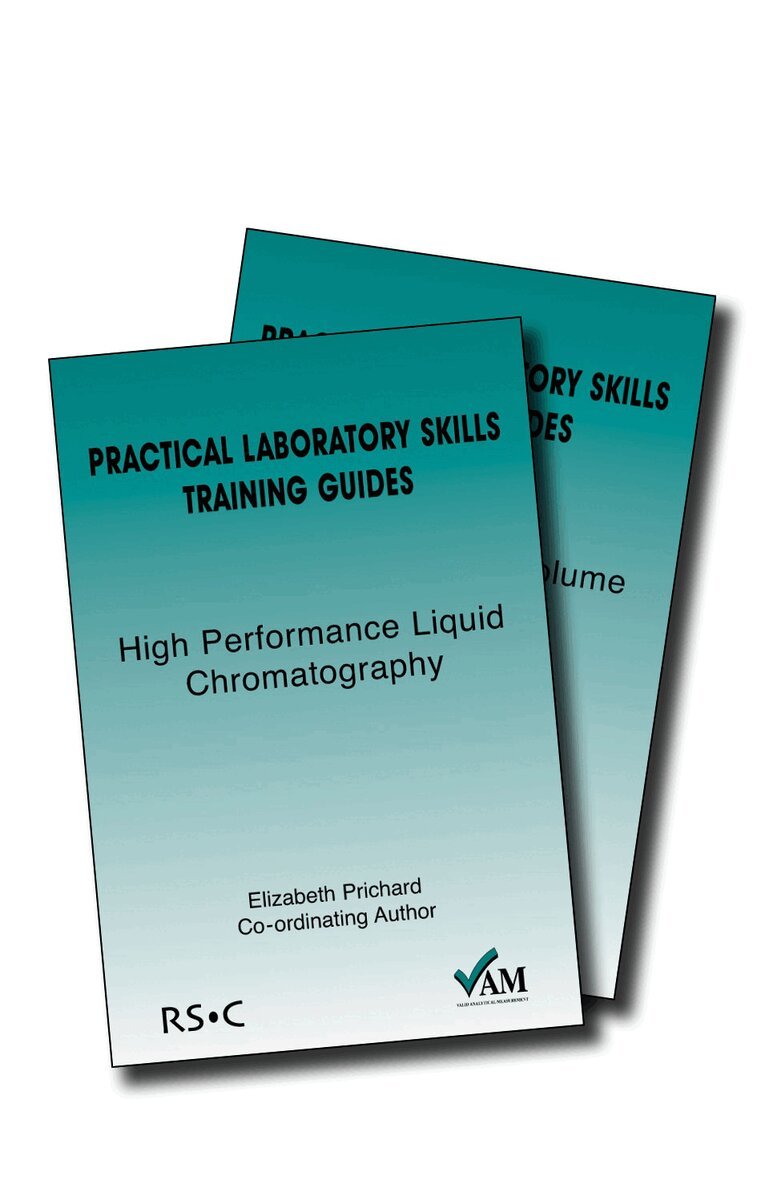
Practical Laboratory Skills Training Guides aim to make achieving best practice easy. These invaluable manuals will enable both experienced and inexperienced staff to get the essential basics of any experiment right simply by following the clear and easy to use instructions provided. The guides are written by experienced scientists and include minimal theory, plenty of practical exercises in order to assess competence, and trouble shooting information. Available for purchase separately or as a complete set, Practical Laboratory Skills Training Guides include the following titles: Measurement of Mass; Measurement of Volume; Measurement of pH; High Performance Liquid Chromatography; and Gas Chromatography. The measurement guides look at the principles and terminology of each technique and the choice of equipment. This is followed by a step-by-step guide and some practical exercises. The chromatography guides begin by looking at the basic theory of the technique, then the system and its components. Sections on calibration and problem solving are included. These guides are intended for laboratory technicians in industry, students at university or anyone needing a clear, concise and reliable guide to analytical procedures.
188 kr
Skickas inom 5-8 vardagar
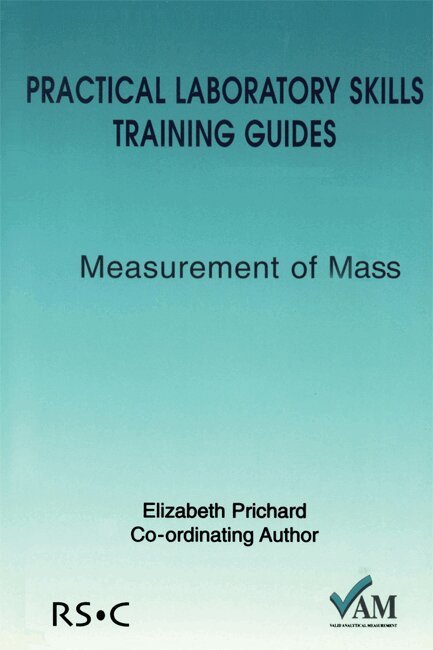
This guide explains the best methods for undertaking the measurement of mass, one of the most frequent operations in the analytical laboratory. It is a technique required when obtaining a known quantity of a sample for analysis; for preparation of analytical reagents; and for preparation of calibration standards etc. After an initial discussion of the units of mass and other terminology, the guide goes on to look at the types of balance and their features, followed by coverage of location, calibration, accuracy and use of the balance. Practical exercises are then provided. Measurement of Mass is one of the Practical Laboratory Skills Training Guides, a series that aims to make achieving best practice easy. These invaluable manuals will enable both experienced and inexperienced staff to get the essential basics of any experiment right simply by following the clear and easy to use instructions provided. The guides are written by experienced scientists and include minimal theory, plenty of practical exercises in order to assess competence, and trouble shooting information. The other titles are: Measurement of Volume; Measurement of pH; High Performance Liquid Chromatography; and Gas Chromatography.
188 kr
Skickas inom 5-8 vardagar
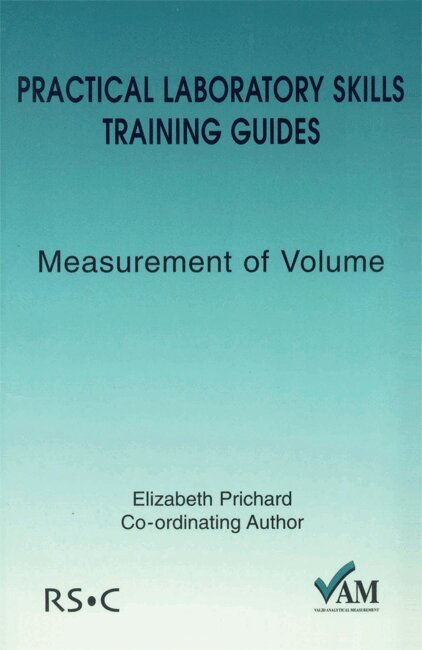
This guide explains the best methods for undertaking the measurement of volume, one of the most frequent operations in the laboratory. It is required when obtaining a known quantity of a sample for analysis; for preparation of analytical reagents; and for preparation of calibration standards and quantitative analysis by titrimetry. After an initial section covering the units of volume and other terminology, the various types of volume measuring apparatus are then described. Later sections cover the importance of temperature, calibration, accuracy and use of the different types of apparatus, and the uncertainty of volume measurements. A series of practical exercises are also provided. Measurement of Volume is one of the Practical Laboratory Skills Training Guides, a series that aims to make achieving best practice easy. These invaluable manuals will enable both experienced and inexperienced staff to get the essential basics of any experiment right simply by following the clear and easy to use instructions provided. The guides are written by experienced scientists and include minimal theory, plenty of practical exercises in order to assess competence, and trouble shooting information. Other titles are: Measurement of Mass; Measurement of pH; High Performance Liquid Chromatography; and Gas Chromatography.
188 kr
Skickas inom 5-8 vardagar
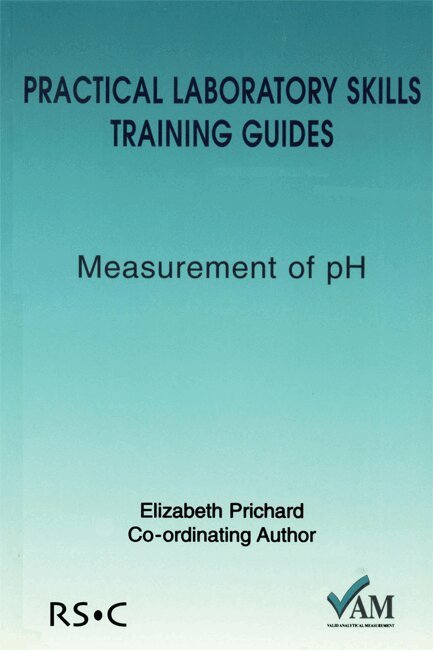
Whether pH is being used to test a sample against a legal requirement or specification; as part of an analytical method; for monitoring and controlling a reaction; as a process control in the chemical industry; or for the environmental monitoring of waste and effluents, it is important that all pH measurements are carried out in a logical and consistent manner, paying careful attention to experimental procedures, in order to obtain reliable results. This guide provides scientists with the knowledge of how to do just that, first by outlining the principles of pH measurement and buffer solutions. pH meters and electrodes are then discussed, including selection criteria and the care of electrodes. Finally, sections on making pH measurements and uncertainty are followed by a set of practical exercises. Measurement of pH is one of the Practical Laboratory Skills Training Guides, a series that aims to make achieving best practice easy. These invaluable manuals will enable both experienced and inexperienced staff to get the essential basics of any experiment right simply by following the clear and easy to use instructions provided. The guides are written by experienced scientists and include minimal theory, plenty of practical exercises in order to assess competence, and trouble shooting information. Other titles are: Measurement of Mass; Measurement of Volume; High Performance Liquid Chromatography; and Gas Chromatography.
363 kr
Skickas inom 5-8 vardagar
Gas chromatography has been the most widely used technique in analytical chemistry for over three decades. It offers unchallenged resolving power for closely related volatile compounds and high sensitivity and selectivity with many of the detector systems. This technique is very accurate and precise when used in the laboratory. This guide begins by looking at the basic theory behind gas chromatography, then goes on to examine injection and sampling methods and the chromatographic column. Sections on detection, data handling, calibration and standards are followed by problem-solving and practical exercises. Gas Chromatography is one of the Practical Laboratory Skills Training Guides, a series that aims to make achieving best practice easy. These invaluable manuals will enable both experienced and inexperienced staff to get the essential basics of any experiment right simply by following the clear and easy to use instructions provided. The guides are written by experienced scientists and include minimal theory, plenty of practical exercises in order to assess competence, and trouble shooting information. Other titles are: Measurement of Mass; Measurement of Volume; Measurement of pH; and High Performance Liquid Chromatography.
363 kr
Skickas inom 5-8 vardagar
For those new to this technique, this guide provides basic tips, key skills, awareness and guidance on good practice of High Performance Liquid Chromatography (HPLC). It will help build understanding of the important issues to consider during analysis and how to develop further skills. HPLC is one of the most widely used techniques in industry to separate and analyse compounds through the mass transfer of analytes between stationary and mobile phases. This guide will prove an invaluable introduction to the technique. Starting with a look at the basic theory, the guide goes on to describe HPLC components, system parameters, suitability checks and testing. Later sections cover calibration, problem solving and data handling. High Performance Liquid Chromatography is one of the Practical Laboratory Skills Training Guides, a series that aims to make achieving best practice easy. These invaluable manuals will enable both experienced and inexperienced staff to get the essential basics of any experiment right simply by following the clear and easy to use instructions provided. The guides are written by experienced scientists and include minimal theory, plenty of practical exercises in order to assess competence, and trouble shooting information.