President's Position: Debating the Issues – serie
Visar alla böcker i serien President's Position: Debating the Issues. Handla med fri frakt och snabb leverans.
9 produkter
9 produkter
Inbunden, Engelska, 2001
982 kr
Skickas inom 10-15 vardagar
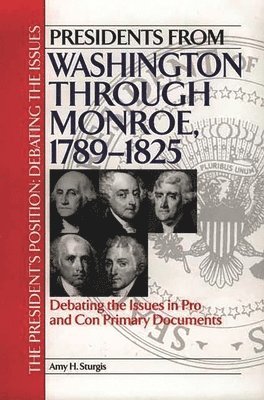
This work offers the best of both worlds: broad analysis of the first five presidential administrations and specific excerpts from original documents supporting and opposing the presidents' positions. George Washington, John Adams, Thomas Jefferson, James Madison, and James Monroe speak for themselves as they argue for their positions on the key political, social, and economic issues of their time in excerpts from primary sources. Excerpts from opposing positions on each issue give the presidents' critics a voice. An explanatory overview of each issue will help students to understand the argument and the context of the issue and to apply critical thinking skills to their understanding. The section on each president includes entries on 4-5 key issues of his administration, from the president's title at the beginning of Washington's administration to American Indian removal at the close of Monroe's term.Primary documents include presidential memoirs, speeches, and letters, congressional speeches, Supreme Court decisions, newspaper editorials, and comments from prominent private citizens. An introductory overview of each president's administration provides a useful window through which to assess the specific debates and documents addressed. A timeline provides a chronological backdrop for the subject, and recommended readings following each section offer helpful direction for further study. Though the founding presidents remain revered today for their pioneering accomplishments in the early nation, this work reminds readers that the first executives faced ongoing opposition from members of the legislature, judiciary, and general public. Readers will gain a grounded understanding of the contested issues of the young nation and the way early decisions impacted our political system across time.
Inbunden, Engelska, 2001
982 kr
Skickas inom 10-15 vardagar
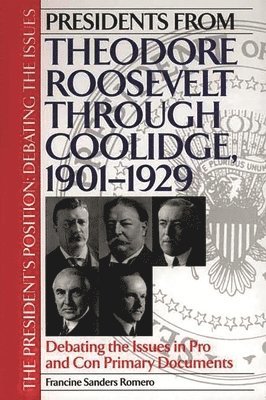
Students will be able to debate the key political, social, and economic issues and initiatives of each President covered here by using this rich source of pro and con primary documents contemporary to the time. Carefully selected presidential statements and opposition statements on each major issue of the presidents' administrations, along with accompanying explanatory material, will help students to debate the issues and apply critical thinking skills to their understanding of U.S. history. This volume covers the Presidencies of Theodore Roosevelt, William Howard Taft, Woodrow Wilson, Warren G. Harding, and Calvin Coolidge. The section on each president includes entries on 5-9 key issues of his administration, from enforcing anti-trust legislation at the beginning of Roosevelt's administration to arguments over the value of the Kellogg-Briand Peace Pact to outlaw war that closed the Coolidge era. Primary documents include presidential speeches, letters, memoirs and autobiographies, congressional speeches, Supreme Court decisions, statements by opposition groups, newspaper editorials, and comments from prominent private citizens.Students will be able to trace ongoing arguments over significant political, social and economic issues during the course of these five administrations that comprise the Progressive Era, the war years, and the postwar return to normalcy, years that witnessed perhaps the greatest period of transformation in U.S. history. These presidents took varying positions on the increasingly activist role of government, the growing power of business, the issue of tariffs, the rights of workers, women, and children, the problems of minority groups, the question of immigration, the issue of isolationism or intervention abroad, and the growing concern over the environment. The section on each president features an introductory overview of the key issues of his administration, followed by an entry on each issue. Each entry contains an overview of the issue and discussion of the opposing viewpoints, followed by a statement from the president and the text of a document taking an opposing point of view. The section on each president concludes with suggested reading for further study. A timeline of the period puts all the issues in chronological context.
Inbunden, Engelska, 2001
982 kr
Skickas inom 10-15 vardagar
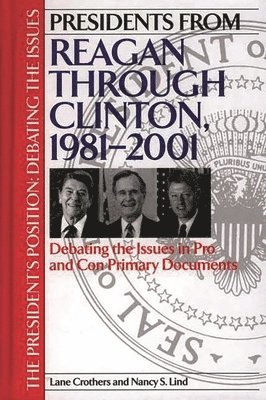
This one-stop resource for debating the central issues that shaped the Reagan, Bush, and Clinton presidencies provides the text of pro and con primary documents from the presidents and their opponents, plus helpful analysis to put the issues in context. With this work, students will be able to debate the issues and apply critical thinking skills to their understanding of contemporary American politics and government. The work examines a set of issues and initiatives central to each president's time in office and presents issue-specific introductions that place the issues in political context.Domestic and economic policy, as well as military and foreign policy, of each president are covered. The entry on each issue contains an overview of the issue and discussion of opposing viewpoints, followed by a statement from the president and the text of an opponent's dissenting point of view. Coverage of the Reagan presidency includes the first Reagan economic program, the 1986 tax reform, peacekeeping in Lebanon, the Strategic Defense Initiative, and the Iran Contra scandal. Issues from the Bush presidency include drug control, the Americans with Disabilities Act, Clarence Thomas' nomination to the Supreme Court, and the Persian Gulf War. The Clinton presidency topics include homosexuals in the military, health care reform, the Starr investigation and Clinton's impeachment, peacekeeping in Bosnia, and the bombing of Kosovo. The section on each president concludes with recommended reading for further study. An introductory overview to the period and a timeline put all the issues in chronological context.
Presidents from Hoover through Truman, 1929-1953
Debating the Issues in Pro and Con Primary Documents
Inbunden, Engelska, 2001
982 kr
Skickas inom 10-15 vardagar
Should Hoover have taken more aggressive action to combat the Great Depression? Did Roosevelt's New Deal go too far? Should Truman have ordered the atomic bomb dropped on Hiroshima? These and other controversial issues stamped the presidencies of Herbert Hoover, Franklin D. Roosevelt, and Harry Truman, and the crises they addressed marked a series of watersheds in American history. This rich resource of primary documents and commentary is a one-stop source for debating the central issues that shaped the Hoover, Roosevelt, and Truman presidencies. In their own words, these presidents articulate their positions on the key issues of their presidencies. Juxtaposed to their statements are relevant and interesting original source statements by the opposition. These opposing documents, along with introductions which place the issues in political context, will enable students to debate the great issues of the day.This resource covers thirty-seven key issues and initiatives of the Hoover, Roosevelt, and Truman presidencies. The entry on each issue contains an overview of the issue and discussion of opposing viewpoints, followed by a statement from the president and the text of an opponent's dissenting point of view. Among the issues covered are Hoover's legislative attempts to deal with the Great Depression; Roosevelt's formation of New Deal agencies, his effort to pack the Supreme Court, and the actions he took that led the United States into war; Truman's momentous decision to drop the bomb, his efforts to rebuild Europe after the war, his firing of General MacArthur, and his efforts to deal with labor disputes. The section on each president concludes with suggested reading for further study. An introductory overview to the period and a timeline place the issues in chronological context.
Inbunden, Engelska, 2002
900 kr
Skickas
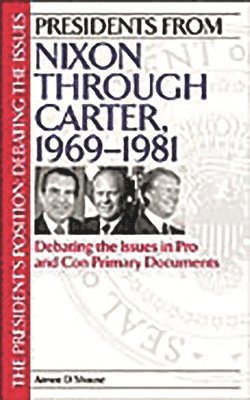
This invaluable student resource provides an historical overview on the most controversial issues of the Nixon, Ford, and Carter administrations, allowing the presidents and their opponents to speak for themselves through primary documents. Also included are a timeline, bibliographies, and an index.When Richard Nixon was elected president in 1968, the United States was mired in Vietnam. In 1981, as Jimmy Carter was preparing to leave office, American citizens were hostages in Iran. The intervening years were no less turbulent. Nixon was forced to resign, the United States boycotted the Olympic games, an energy crisis struck the country, and skyrocketing rates of inflation and stagnating growth hampered the economy. The nation was torn over the forced desegregation of schools, Ford's pardon of Nixon, the relinquishment of the Panama Canal to Panama, and a host of environmental issues.
Inbunden, Engelska, 2002
912 kr
Skickas inom 10-15 vardagar
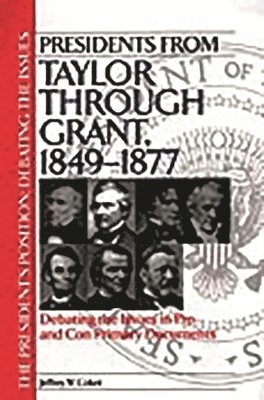
The years 1849-1877 were among the most pivotal in the nation's history. Over the course of three decades, the United States endured a catastrophic civil war, abolished slavery, expanded westward and added eight states to the Union, and witnessed the beginnings of industrialization. In politics, the era saw the demise of one national party, the birth of another, and the historic leadership of Abraham Lincoln. The country also faced difficult questions of state sovereignty and federal responsibility answered ultimately by secession and war. In short, it was a time of growth, consolidation, tragedy, and triumph for a dynamic and youthful nation. This resource of primary documents and commentary covers the Taylor through Grant administrations by selecting and describing five to ten of the foremost issues of the day and showing the actual text of the president's position along with the opposing viewpoint.The presidents from 1849-1877 were men of varied backgrounds and talents. Northerners and Southerners and even Northerners with Southern sensibilities occupied the White House. The period began and ended with war heroes as presidents; among the other men who served as president were a former textile worker, a country lawyer, and lifelong diplomat. Most of the chief executives struggled and perhaps even failed to overcome the immense challenges placed before them. By providing helpful background information and commentary about the presidents and the issues of the day in addition to the primary sources, this reference guide accurately depicts this fractious time in the country's past and provides an invaluable resources to any student of American history.
Inbunden, Engelska, 2005
843 kr
Skickas inom 10-15 vardagar
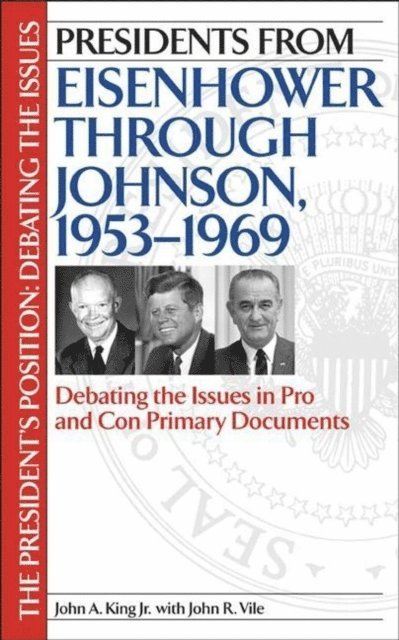
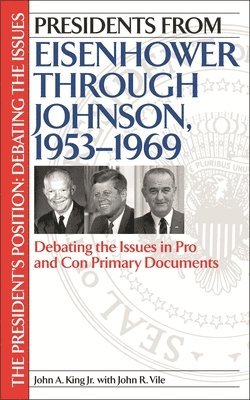
Throughout the 1950s and 1960s Communism and the Cold War pervaded almost every aspect of American policy and concern. Eisenhower's Highway Act sought to strengthen America with the sort of roads system and military advantage Germany's Autobahn provided in World War II; Kennedy looked to space, the Peace Corps, and the schools to improve America's actual and perceived status in the eyes of the world; LBJ continually found concerns about Southeast Asia pressing in upon him notwithstanding his desire to found a new Great Society in the United States. However, despite the Cold War and demands of international politics, these three presidents were continually involved in critical debates about the domestic future of America, and their roles and victories in these debates have left deep impressions upon American society. This volume provides readers with access to the primary documents—both foreign and domestic—that reflect the debates that have had such a strong influence in shaping the United States.This resource covers thirty-two key issues and initiatives of the Eisenhower, Kennedy, and Johnson presidencies. An introductory overview of each president's administration provides a useful window through which to assess the specific debates and documents addressed, and each of these individual issues is also supplemented by a brief introductory discussion. Among the issues covered are: Eisenhower's attempt to establish a new look for national defense, the Eisenhower doctrine, and the National Defense Education Act; Kennedy's Alliance for Progress and Peace Corps programs, his role in Cuba, his plans for America in space, and his work on arms control and the Limited Test Ban Treaty; and Johnson's Civil Rights Act, Model Cities Program, war on poverty, and role in the ground and air wars in Vietnam. A timeline provides a chronological backdrop for the subject, and recommended readings following each section offer helpful direction for further study.
Inbunden, Engelska, 2003
912 kr
Skickas inom 10-15 vardagar
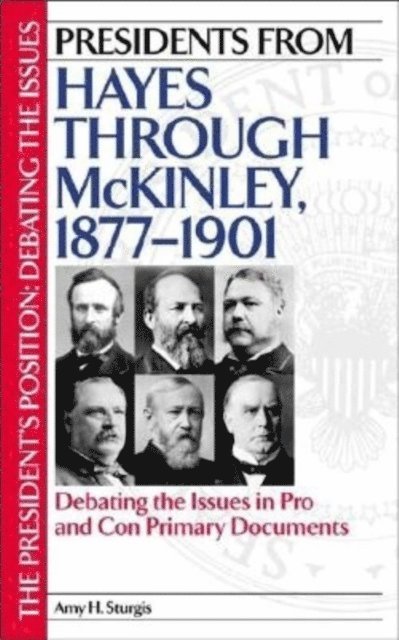
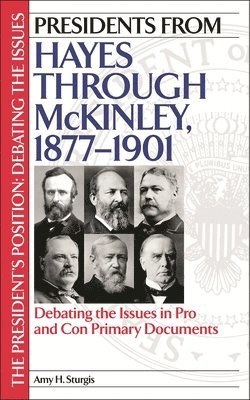
This resource of primary documents and commentary spans the Hayes and McKinley administrations, selecting and describing five to ten of the foremost issues of the day. The actual texts of the presidents' positions, along with the opposing viewpoints, are presented. Helpful background information and commentary clarifies the primary sources, accurately depicting this dynamic time in the country's past and providing an invaluable resource to any student of American history.The period from 1877 to 1901 marked the end of one United States-a country still reeling from the Civil War, a divided nation of Reconstruction, a land of economic depression, sectional hostility, and governmental corruption. A new United States was emerging. It was an empire, an international power that both negotiated with and fought against European nations with great success, and a country with a rebounding economy, vigorous industry, and restored faith. During this Gilded Age, the nation expanded as settlers moved west and displaced native populations. Immigrants entered at the highest rate in the country's history. Geographic expansion gave rise to mighty railroads, and industrial expansion brought corporations, company towns, and monopolies. This unprecedented industrialism bolstered urban growth, yet economic hardships afflicted rural countrysides. Labor and agrarian interests organized.
Inbunden, Engelska, 2005
843 kr
Skickas inom 10-15 vardagar
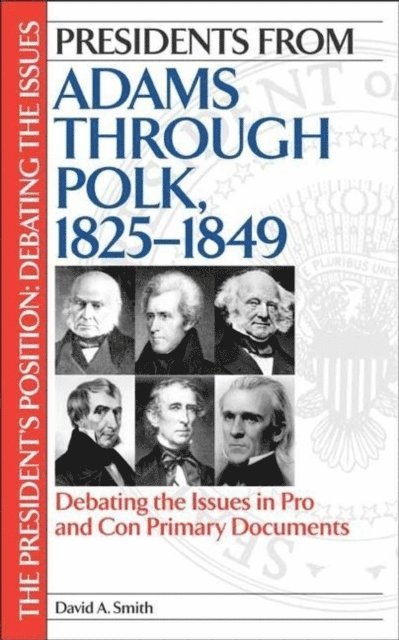
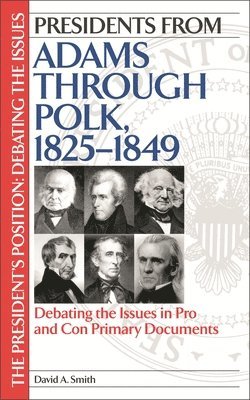
It was the Era of Good Feelings, but all was not well with the young Republic. From 1825 to 1849, presidents John Quincy Adams, Andrew Jackson, Martin Van Buren, William Henry Harrison, John Tyler, and James K. Polk grappled with the legacy of the Monroe Doctrine, Indian removal, territorial expansion, the National Bank, tariffs, economic depressions, War with Mexico, near war with Great Britain, and the place of slavery in the growing nation. As one would expect from confident citizens of the burgeoning young country, conflicting arguments swirled around the hot-button issues of the day. This rich resource of primary documents enables students to read these arguments first hand, and feel the passions and study the logic driving their often forceful positions.All of the primary documents are annotated and placed into historical context. A thorough index concludes the work.