Princeton Series in Modern Observational Astronomy - Böcker
Visar alla böcker i serien Princeton Series in Modern Observational Astronomy. Handla med fri frakt och snabb leverans.
3 produkter
3 produkter
837 kr
Skickas inom 7-10 vardagar
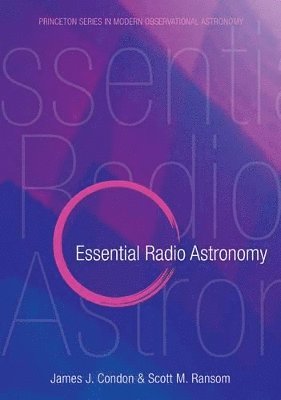
Essential Radio Astronomy is the only textbook on the subject specifically designed for a one-semester introductory course for advanced undergraduates or graduate students in astronomy and astrophysics. It starts from first principles in order to fill gaps in students' backgrounds, make teaching easier for professors who are not expert radio astronomers, and provide a useful reference to the essential equations used by practitioners. This unique textbook reflects the fact that students of multiwavelength astronomy typically can afford to spend only one semester studying the observational techniques particular to each wavelength band. Essential Radio Astronomy presents only the most crucial concepts--succinctly and accessibly. It covers the general principles behind radio telescopes, receivers, and digital backends without getting bogged down in engineering details. Emphasizing the physical processes in radio sources, the book's approach is shaped by the view that radio astrophysics owes more to thermodynamics than electromagnetism. Proven in the classroom and generously illustrated throughout, Essential Radio Astronomy is an invaluable resource for students and researchers alike.* The only textbook specifically designed for a one-semester course in radio astronomy* Starts from first principles* Makes teaching easier for astronomy professors who are not expert radio astronomers* Emphasizes the physical processes in radio sources* Covers the principles behind radio telescopes and receivers* Provides the essential equations and fundamental constants used by practitioners* Supplementary website includes lecture notes, problem sets, exams, and links to interactive demonstrations* An online illustration package is available to professors
743 kr
Skickas inom 7-10 vardagar
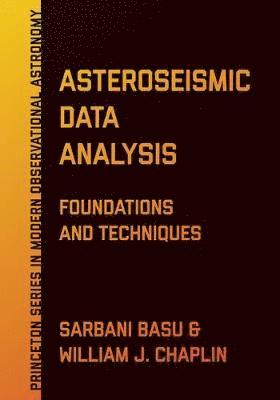
Studies of stars and stellar populations, and the discovery and characterization of exoplanets, are being revolutionized by new satellite and telescope observations of unprecedented quality and scope. Some of the most significant advances have been in the field of asteroseismology, the study of stars by observation of their oscillations. Asteroseismic Data Analysis gives a comprehensive technical introduction to this discipline. This book not only helps students and researchers learn about asteroseismology; it also serves as an essential instruction manual for those entering the field. The book presents readers with the foundational techniques used in the analysis and interpretation of asteroseismic data on cool stars that show solar-like oscillations. The techniques have been refined, and in some cases developed, to analyze asteroseismic data collected by the NASA Kepler mission. Topics range from the analysis of time-series observations to extract seismic data for stars to the use of those data to determine global and internal properties of the stars. Reading lists and problem sets are provided, and data necessary for the problem sets are available online.The first book to describe in detail the different techniques used to analyze the data on stellar oscillations, Asteroseismic Data Analysis offers an invaluable window into the hearts of stars. * Introduces the asteroseismic study of stars and the theory of stellar oscillations* Describes the analysis of observational (time-domain) data* Examines how seismic parameters are extracted from observations* Explores how stellar properties are determined from seismic data* Looks at the "inverse problem," where frequencies are used to infer internal structures of stars
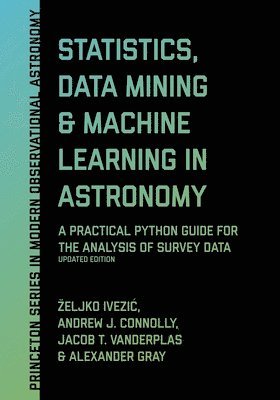
Statistics, Data Mining, and Machine Learning in Astronomy
A Practical Python Guide for the Analysis of Survey Data, Updated Edition
Inbunden, Engelska, 2019
790 kr
Skickas inom 7-10 vardagar
Statistics, Data Mining, and Machine Learning in Astronomy is the essential introduction to the statistical methods needed to analyze complex data sets from astronomical surveys such as the Panoramic Survey Telescope and Rapid Response System, the Dark Energy Survey, and the Large Synoptic Survey Telescope. Now fully updated, it presents a wealth of practical analysis problems, evaluates the techniques for solving them, and explains how to use various approaches for different types and sizes of data sets. Python code and sample data sets are provided for all applications described in the book. The supporting data sets have been carefully selected from contemporary astronomical surveys and are easy to download and use. The accompanying Python code is publicly available, well documented, and follows uniform coding standards. Together, the data sets and code enable readers to reproduce all the figures and examples, engage with the different methods, and adapt them to their own fields of interest.An accessible textbook for students and an indispensable reference for researchers, this updated edition features new sections on deep learning methods, hierarchical Bayes modeling, and approximate Bayesian computation. The chapters have been revised throughout and the astroML code has been brought completely up to date.Fully revised and expandedDescribes the most useful statistical and data-mining methods for extracting knowledge from huge and complex astronomical data setsFeatures real-world data sets from astronomical surveysUses a freely available Python codebase throughoutIdeal for graduate students, advanced undergraduates, and working astronomers