Progress in Colloid and Interface Science - Böcker
Visar alla böcker i serien Progress in Colloid and Interface Science. Handla med fri frakt och snabb leverans.
16 produkter
16 produkter
906 kr
Skickas inom 10-15 vardagar
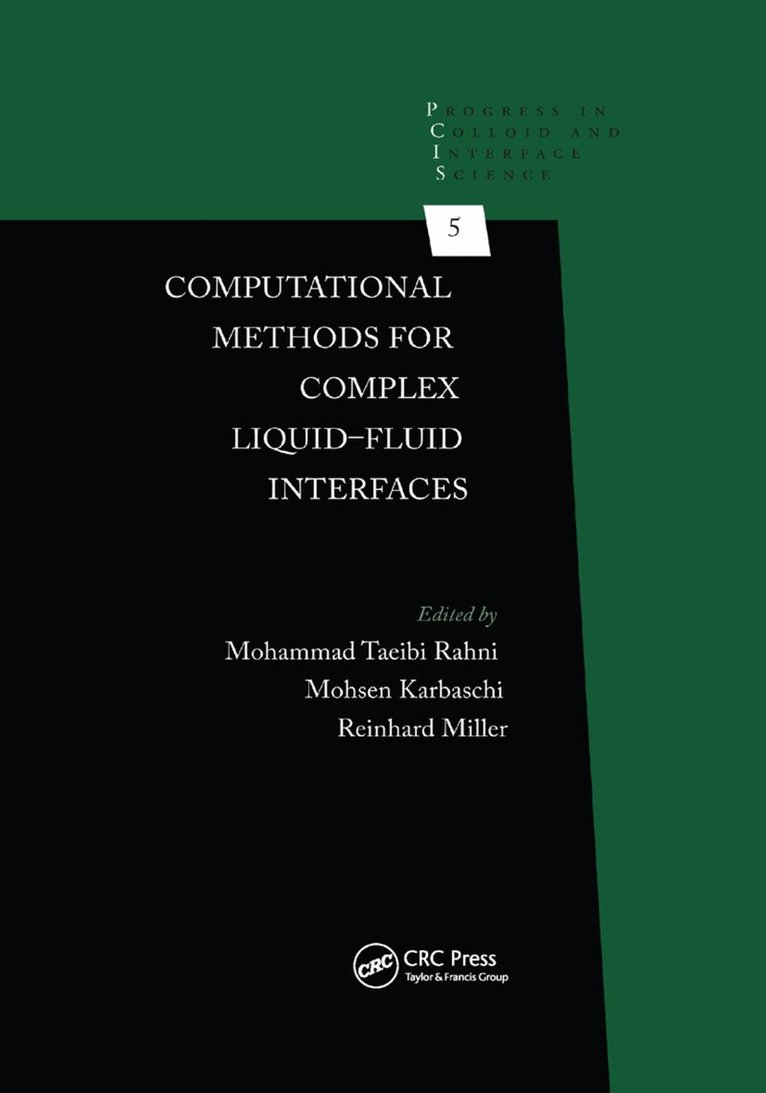
Computational Methods for Complex Liquid-Fluid Interfaces highlights key computational challenges involved in the two-way coupling of complex liquid-fluid interfaces. The book covers a variety of cutting-edge experimental and computational techniques ranging from macro- to meso- and microscale approaches (including pivotal applications). As examples, the text:defines the most important interfacial quantities and their experimental investigations, providing theoretical background and detailed solutions,describes vital techniques used in interfacial flow problems, such as modern meshless numerical methods and conventional computational fluid dynamics methods, anddiscusses the technicalities of correctly using the computational methods developed for interfacial flows, as well as the simulation of interesting interfacial flow physics. Edited and authored by leading scientists and researchers, Computational Methods for Complex Liquid-Fluid Interfaces offers an authoritative and state-of-the-art overview of computational methodologies and simulation techniques for the quantification of interfacial quantities.
933 kr
Skickas inom 10-15 vardagar
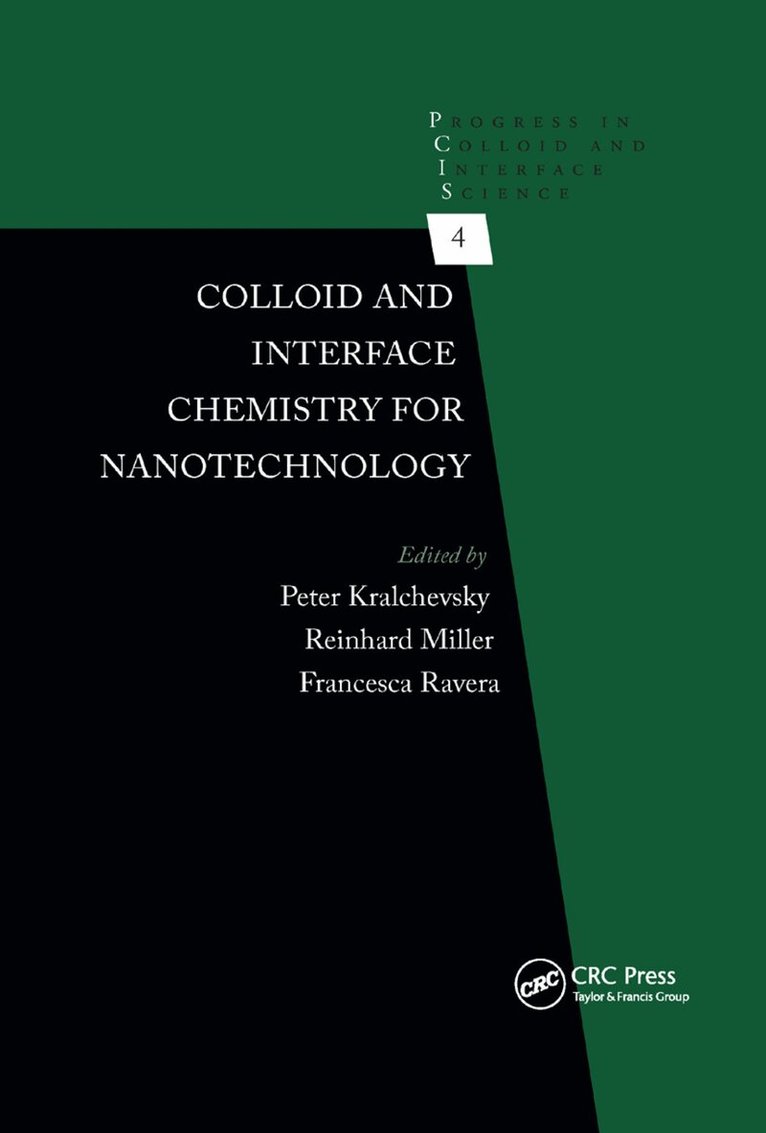
Colloid and interface science dealt with nanoscale objects for nearly a century before the term nanotechnology was coined. An interdisciplinary field, it bridges the macroscopic world and the small world of atoms and molecules. Colloid and Interface Chemistry for Nanotechnology is a collection of manuscripts reflecting the activities of research teams that have been involved in the networking project Colloid and Interface Chemistry for Nanotechnology (2006–2011), Action D43, the European Science Foundation. The project was a part of the intergovernmental framework for Cooperation in Science and Technology (COST), allowing the coordination of nationally funded research across Europe.With contributions by leading experts, this book covers a wide range of topics. Chapters are grouped into three sections: "Nanoparticle Synthesis and Characterization," "New Experimental Tools and Interpretation," and "Nanocolloidal Dispersions and Interfaces." The topics covered belong to six basic research areas: (1) The synthesis of nanostructured materials of well-defined size and function; (2) Analytical methods and tools for control and characterization of synthesized nanomaterials; (3) Self-assembly of nanomaterials, such as microemulsions and micelles, and their applications; (4) Bioinspired nanostructured materials—structure, properties, and applications; (5) Design of active, soft functional interfaces with unique properties for sensors, catalysts, and biomedical assays; and (6) Nanoscale elements in soft nanoscale devices for applications in analytical and biomedical sciences.This book describes highlights in nanotechnology based on state-of-the-art principles in colloid and interface science, demonstrating how great progress in the various branches of nanotechnology can be achieved. The application of these principles allows for the development of new experimental and theoretical tools.
933 kr
Skickas inom 10-15 vardagar
The third volume in a series dedicated to colloids and interfaces, Drops and Bubbles in Contact with Solid Surfaces presents an up-to-date overview of the fundamentals and applications of drops and bubbles and their interaction with solid surfaces. The chapters cover the theoretical and experimental aspects of wetting and wettability, liquid–solid interfacial properties, and spreading dynamics on different surfaces, including a special section on polymers.The book examines issues related to interpretation of contact angle from nano to macro systems. Expert contributors discuss interesting peculiarities, such as the phenomena of super-spreading and super-hydrophobicity. They discuss specific solid surfaces—for example, reactions and wetting of liquid metals at high temperatures—and the interaction between nano-bubbles at solid surface and nano-particles at liquid interfaces. The book also includes a chapter on electro-wetting.Given the range of topics covered in this volume, the state-of-art content is useful to readers looking for an introductory overview as well as those looking for in-depth exploration of material related to the interaction of fluids with solid surfaces. It is a valuable contribution to the field of characterization of solid surfaces and can be used as a working tool or to stimulate further study for researchers and students.
906 kr
Skickas inom 10-15 vardagar
This is the first book on interfacial rheology. It aims to describe both its history as well as the current, most frequently used experimental techniques for studying dilational and shear rheology of layers at liquid/gas and liquid/liquid interfaces. The book opens with a chapter on the fundamentals of interfacial rheology. All (16) contributions include the theoretical basis for the presented methodologies, and experimental examples are given.
701 kr
Skickas inom 10-15 vardagar
This book describes in detail the scientific philosophy of the formation and stabilization-destabilization of foams. It presents all hierarchical steps of a foam, starting from the properties of adsorption layers formed by foaming agents, discussing the properties of foam films as the building blocks of a foam, and then describing details of real foams, including many fields of application. The information presented in the book is useful to people working on the formulation of foams or attempting to avoid or destruct foams in unwanted situations.
701 kr
Skickas inom 10-15 vardagar
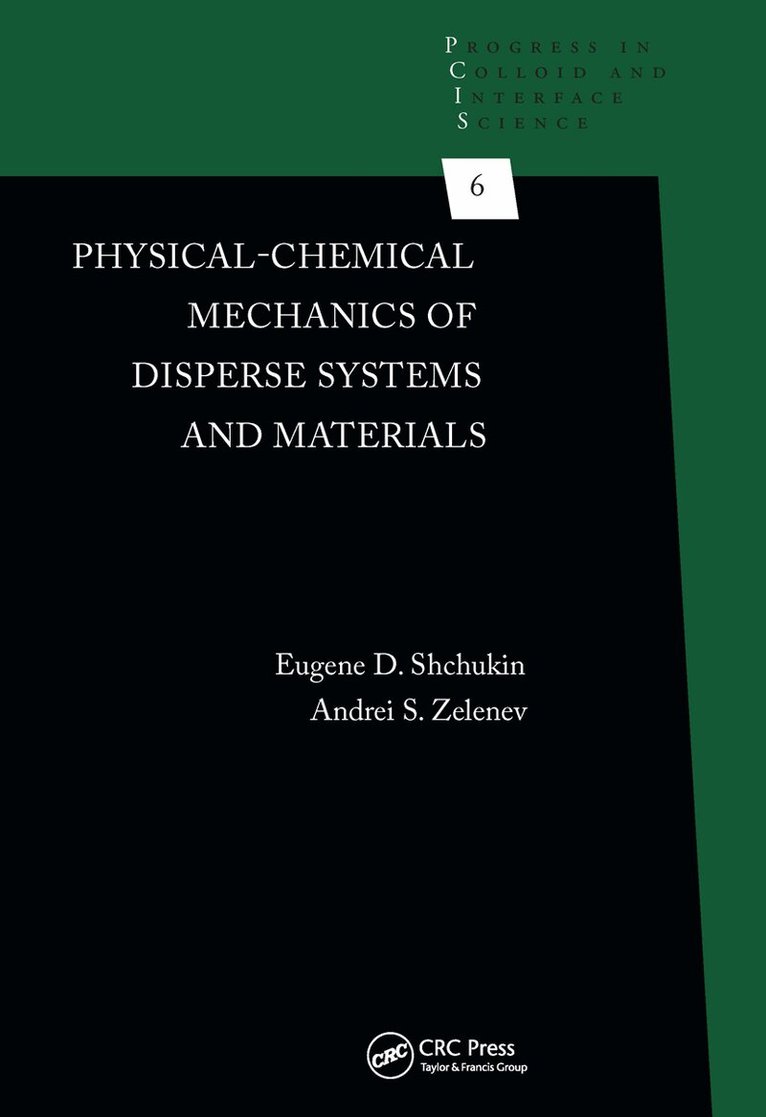
Physical–Chemical Mechanics of Disperse Systems and Materials is a novel interdisciplinary area in the science of the disperse state of matter. It covers the broad spectrum of objects and systems with dimensions ranging from nanometers to millimeters and establishes a fundamental basis for controlling and tuning the properties of these systems as well as the processes taking place in them.Physical–chemical mechanics focuses on the analysis of the complex physical–chemical interfacial phenomena taking place both in the transition of a dispersed system into a material, such as in the course of pressing, sintering, hydration hardening, and sol-gel transitions, and in the course of the dispersion of bulk materials taking place in milling, mechanical treatment, friction and wear, and fracturing. These studies are based on thorough experimental investigation of contact interactions between particles in these processes.The book is divided into two sections. The first section covers basic principles of the formation, stability and rupture of contacts between particles in different media and in surfactant solutions, as well as the properties of coagulation structures and their rheology. The second section covers surface phenomena taking place in solid-like structures with phase contacts and in compact bodies with an emphasis on several applications and processes as well as the special role of the Rehbinder effect. Where appropriate and relevant, the book presents essays on specific significant and principal studies, such as the damageability of crystal and glass surfaces, the strength of industrial catalysts, the nano-mechanisms of cement hardening, the role of the structure-mechanical barrier in the stabilization of fluorinated systems, and contact interactions in papermaking. It also devotes attention to experimental methods used in physical–chemical mechanics, the direct measurement of contact strength, and relevant instrumentations.The book utilizes the content used over many years in lecture courses and includes fundamental material on colloid and surface chemistry, the strength of materials, rheology, and tensors, which makes it well suited for novices and experts in the field.
2 098 kr
Skickas inom 10-15 vardagar
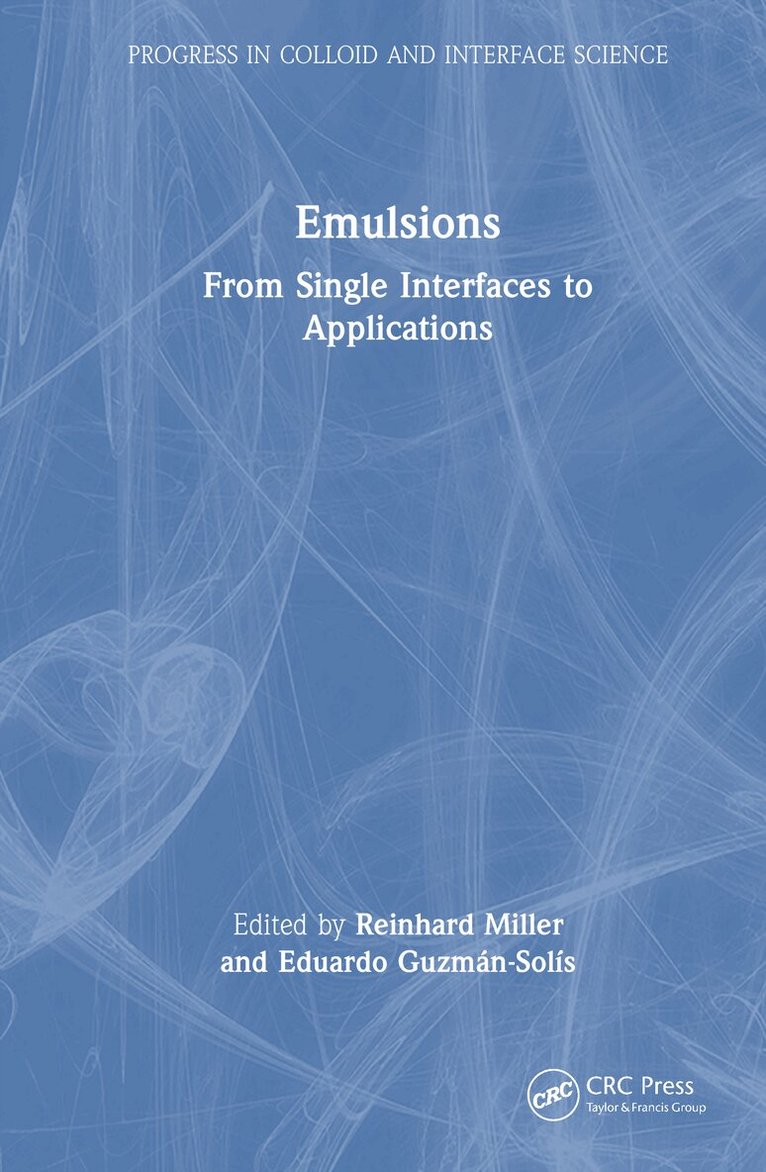
This book presents a comprehensive investigation of the complex scientific principles and practical applications of emulsions, offering valuable references for researchers, industry professionals, and advanced students in the fields of physical chemistry, material sciences, and engineering. The book is structured in three sections, which allow the readers to explore the fundamental principles of interfacial phenomena, the methodologies for emulsion preparation, and the diverse applications of emulsions in various industrial branches in depth.The initial section establishes the fundamental principles, with a particular focus on the physico-chemical characterization of interfaces pertinent to emulsion stabilization. The book meticulously examines several topics, including adsorption dynamics, particle-laden interfaces and thin liquid films. It supports these discussions with a combination of experimental techniques and theoretical insights. The second section shifts focus to the practical aspects of emulsion production, examining state-of-the-art methods, the role of stabilizers, and strategies for enhancing their stability, including innovations in nanoemulsions and aqueous two-phase systems. The final section presents several real-world applications, demonstrating the significant role that emulsions play in a number of fields, including the petroleum industry, pest control and pharmaceutical formulations.This text, featuring contributions from leading experts, synthesizes foundational knowledge and cutting-edge research, thereby bridging the gap between theory and practice. With an interdisciplinary scope, the book addresses both academic and industrial perspectives, and is therefore an indispensable addition to the library of anyone working with emulsions. It provides the tools and understanding required to advance work in the development of new materials, optimization of formulations, and investigation of the mechanics of interfacial systems.
2 705 kr
Skickas inom 10-15 vardagar
Innovations in Ionic Liquid-Based Surfactants and Interfacial Phenomena" offers a comprehensive exploration of ionic liquid-based surfactants (ILBSs) and their transformative potential. This book is divided into three sections. Section I establishes the fundamental properties of ionic liquids (ILs) and ILBSs, emphasizing their unique structures, environmental advantages, and flexible design. It details the diverse types of ILBSs, highlighting their individual characteristics and applications. Section II delves into the crucial interfacial behavior of ILBSs, examining their role in reducing interfacial tension, influencing micelle formation, enhancing emulsification processes, and modifying surface wettability. The mechanisms underlying these phenomena are thoroughly investigated, with particular attention paid to the impact of the structure of ILBSs on their performance. Section III showcases the broad applicability of ILBSs across various industries. Specific applications discussed include the stabilization of particle dispersions, the improvement of extraction techniques, and the significant enhancement of oil recovery from challenging reservoirs. This book bridges the gap between fundamental principles and practical applications, equipping the readers with the necessary knowledge to harness the revolutionary potential of ILBSs. It serves as an invaluable resource for researchers, academics, and professionals in this rapidly evolving field.
1 042 kr
Skickas inom 10-15 vardagar
This book describes the most important experimental methods for characterizing liquid interfaces, such as drop profile analysis, bubble pressure and drop volume tensiometry, capillary pressure technique, and oscillating drops and bubbles. It presents practical experimental details as well as the underlying theoretical bases. In addition, the book covers a number of applications based on drops and bubbles, such as rising bubbles and the complex process of flotation. It also offers a discussion on wetting, characterized by the dynamics of advancing contact angles.
2 300 kr
Skickas inom 7-10 vardagar
Physical–Chemical Mechanics of Disperse Systems and Materials is a novel interdisciplinary area in the science of the disperse state of matter. It covers the broad spectrum of objects and systems with dimensions ranging from nanometers to millimeters and establishes a fundamental basis for controlling and tuning the properties of these systems as well as the processes taking place in them.Physical–chemical mechanics focuses on the analysis of the complex physical–chemical interfacial phenomena taking place both in the transition of a dispersed system into a material, such as in the course of pressing, sintering, hydration hardening, and sol-gel transitions, and in the course of the dispersion of bulk materials taking place in milling, mechanical treatment, friction and wear, and fracturing. These studies are based on thorough experimental investigation of contact interactions between particles in these processes.The book is divided into two sections. The first section covers basic principles of the formation, stability and rupture of contacts between particles in different media and in surfactant solutions, as well as the properties of coagulation structures and their rheology. The second section covers surface phenomena taking place in solid-like structures with phase contacts and in compact bodies with an emphasis on several applications and processes as well as the special role of the Rehbinder effect. Where appropriate and relevant, the book presents essays on specific significant and principal studies, such as the damageability of crystal and glass surfaces, the strength of industrial catalysts, the nano-mechanisms of cement hardening, the role of the structure-mechanical barrier in the stabilization of fluorinated systems, and contact interactions in papermaking. It also devotes attention to experimental methods used in physical–chemical mechanics, the direct measurement of contact strength, and relevant instrumentations.The book utilizes the content used over many years in lecture courses and includes fundamental material on colloid and surface chemistry, the strength of materials, rheology, and tensors, which makes it well suited for novices and experts in the field.
2 705 kr
Skickas inom 10-15 vardagar
Colloid and interface science dealt with nanoscale objects for nearly a century before the term nanotechnology was coined. An interdisciplinary field, it bridges the macroscopic world and the small world of atoms and molecules. Colloid and Interface Chemistry for Nanotechnology is a collection of manuscripts reflecting the activities of research teams that have been involved in the networking project Colloid and Interface Chemistry for Nanotechnology (2006–2011), Action D43, the European Science Foundation. The project was a part of the intergovernmental framework for Cooperation in Science and Technology (COST), allowing the coordination of nationally funded research across Europe.With contributions by leading experts, this book covers a wide range of topics. Chapters are grouped into three sections: "Nanoparticle Synthesis and Characterization," "New Experimental Tools and Interpretation," and "Nanocolloidal Dispersions and Interfaces." The topics covered belong to six basic research areas: (1) The synthesis of nanostructured materials of well-defined size and function; (2) Analytical methods and tools for control and characterization of synthesized nanomaterials; (3) Self-assembly of nanomaterials, such as microemulsions and micelles, and their applications; (4) Bioinspired nanostructured materials—structure, properties, and applications; (5) Design of active, soft functional interfaces with unique properties for sensors, catalysts, and biomedical assays; and (6) Nanoscale elements in soft nanoscale devices for applications in analytical and biomedical sciences.This book describes highlights in nanotechnology based on state-of-the-art principles in colloid and interface science, demonstrating how great progress in the various branches of nanotechnology can be achieved. The application of these principles allows for the development of new experimental and theoretical tools.
2 705 kr
Skickas inom 10-15 vardagar
The third volume in a series dedicated to colloids and interfaces, Drops and Bubbles in Contact with Solid Surfaces presents an up-to-date overview of the fundamentals and applications of drops and bubbles and their interaction with solid surfaces. The chapters cover the theoretical and experimental aspects of wetting and wettability, liquid–solid interfacial properties, and spreading dynamics on different surfaces, including a special section on polymers.The book examines issues related to interpretation of contact angle from nano to macro systems. Expert contributors discuss interesting peculiarities, such as the phenomena of super-spreading and super-hydrophobicity. They discuss specific solid surfaces—for example, reactions and wetting of liquid metals at high temperatures—and the interaction between nano-bubbles at solid surface and nano-particles at liquid interfaces. The book also includes a chapter on electro-wetting.Given the range of topics covered in this volume, the state-of-art content is useful to readers looking for an introductory overview as well as those looking for in-depth exploration of material related to the interaction of fluids with solid surfaces. It is a valuable contribution to the field of characterization of solid surfaces and can be used as a working tool or to stimulate further study for researchers and students.
3 414 kr
Skickas inom 10-15 vardagar
This book describes in detail the scientific philosophy of the formation and stabilization-destabilization of foams. It presents all hierarchical steps of a foam, starting from the properties of adsorption layers formed by foaming agents, discussing the properties of foam films as the building blocks of a foam, and then describing details of real foams, including many fields of application. The information presented in the book is useful to people working on the formulation of foams or attempting to avoid or destruct foams in unwanted situations.
2 570 kr
Skickas inom 10-15 vardagar
Computational Methods for Complex Liquid-Fluid Interfaces highlights key computational challenges involved in the two-way coupling of complex liquid-fluid interfaces. The book covers a variety of cutting-edge experimental and computational techniques ranging from macro- to meso- and microscale approaches (including pivotal applications). As examples, the text:defines the most important interfacial quantities and their experimental investigations, providing theoretical background and detailed solutions,describes vital techniques used in interfacial flow problems, such as modern meshless numerical methods and conventional computational fluid dynamics methods, anddiscusses the technicalities of correctly using the computational methods developed for interfacial flows, as well as the simulation of interesting interfacial flow physics. Edited and authored by leading scientists and researchers, Computational Methods for Complex Liquid-Fluid Interfaces offers an authoritative and state-of-the-art overview of computational methodologies and simulation techniques for the quantification of interfacial quantities.
3 177 kr
Skickas inom 10-15 vardagar
This book describes the most important experimental methods for characterizing liquid interfaces, such as drop profile analysis, bubble pressure and drop volume tensiometry, capillary pressure technique, and oscillating drops and bubbles. It presents practical experimental details as well as the underlying theoretical bases. In addition, the book covers a number of applications based on drops and bubbles, such as rising bubbles and the complex process of flotation. It also offers a discussion on wetting, characterized by the dynamics of advancing contact angles.
2 705 kr
Skickas inom 10-15 vardagar
This is the first book on interfacial rheology. It aims to describe both its history as well as the current, most frequently used experimental techniques for studying dilational and shear rheology of layers at liquid/gas and liquid/liquid interfaces. The book opens with a chapter on the fundamentals of interfacial rheology. All (16) contributions include the theoretical basis for the presented methodologies, and experimental examples are given.