Psychotherapy 2.0 - Böcker
Visar alla böcker i serien Psychotherapy 2.0. Handla med fri frakt och snabb leverans.
2 produkter
2 produkter
495 kr
Skickas inom 10-15 vardagar
The digital age is both exciting and challenging for psychotherapy, opening the door to clients groups previously not able to access psychological help, whilst also providing the challenges caused by social media and internet abuse and how these impact on the consulting room. Psychotherapy 2.0 blows open the consulting room doors and shows successful pathways for attracting new clients to gain access to psychological help, as well as demonstrating that despite initial scepticism, working online as a psychotherapist or counsellor can be as effective as 'face2face' work: the therapeutic relationship may be different but it remains the centrally important feature for successful psychotherapy. It follows therefore that all psychotherapists and counsellors need to be fully informed about the impact of the digital age on their clinical practice. Psychotherapy 2.0 covers the key issues for psychotherapists and counsellors who are, or are thinking of, working online, include thinking about psychotherapy in the digital age, the requirements to modify training both for working online and also the digital issues as they arise within the face2face consulting room.This book is intended as a first volume in this fast changing field, with further volumes intended to concentrate on existing and emerging research, as well the diverse ways in which online work is already being developed and implemented worldwide. It is possibly the greatest moment of change for psychotherapy since Freud: there is no going back, and just as we cannot put toothpaste back in the tube, psychotherapy practice is changed for ever with the advent of the digital age.
522 kr
Skickas inom 10-15 vardagar
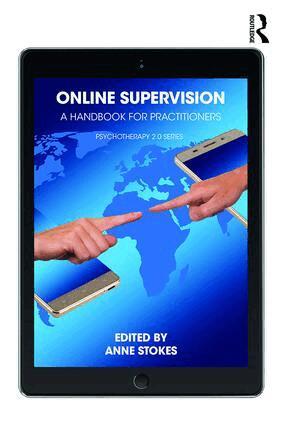
This book considers a range of aspects of online supervision and is suitable for therapists who already offer this means of delivering supervision as well as those who may be curious about it. As online therapy becomes more mainstream, the importance of using a means of supervision which parallels this is increasingly being recognised by practitioners and the professional bodies. To date, very little has been written about this newly developing way of working. Online Supervision covers a wide range of issues, from the practical aspects of how it happens, through research, legal and ethical issues to specific therapeutic settings and issues. Existing models of supervision are considered in the context of the online setting and some new models which have been developed for specifically for supervising online are explored. All chapters are authored by experienced online therapists and supervisors, who bring their considerable knowledge from their practice to illuminate this growing area of the profession. While the book aims to develop the practice of online supervision, it is recognised that there are circumstances which mean that some practitioners may choose to engage in online supervision of their face-to-face work. This is recognised and so guidelines for offering and engaging in online supervision are discussed. Many practitioners begin to offer online supervision without specialised training and the final chapter centres on a discussion about the value and necessity of undertaking preparation for working in a new medium. Above all, the work aims to be readable and accessible to both experienced practitioners and newcomers to this field.