Purdue Studies in Romance Literature – serie
Visar alla böcker i serien Purdue Studies in Romance Literature. Handla med fri frakt och snabb leverans.
5 produkter
5 produkter
Inbunden, Engelska, 1997
522 kr
Skickas inom 3-6 vardagar
In French literary history Nicolas Boileau (1636-17'1) has enjoyed legendary status as the great codifier of French classicism, the discerning critic who could demolish or elevate several generations of French poets. This view of Boileau's role has lead to an emphasis on his poetics, not his poems, which in turn has generated general disdain for his poetic art. Robert Corum dispels these misconceptions about Boileau by focusing rigorous critical attention on Boileau's first nine Satires and the accompanying "Discours au toy," 11 composed between 1657 and 1668. His reading takes into account a number of factors, including sources, genesis, relation to one another, coherence, and continuity of argument. This examination reveals Boileau to be a gifted poet, not just a talented versifier or a strait-laced mouthpiece for French classical doctrine.
Inbunden, Engelska, 2001
709 kr
Skickas inom 11-20 vardagar
Signs of Science: Literature, Science, and Spanish Modernity since 1868 traces how Spanish culture represented scientific activity from the mid-nineteenth century onward. The book combines the global perspective afforded by historical narrative with detailed rhetorical analyses of images of science in specific literary and scientific texts. As literary criticism it seeks to illuminate similarities and differences in how science and scientists are pictured; as cultural history it follows the course of a centuries-long dialogue about Spain and science.
Häftad, Engelska, 2007
511 kr
Skickas inom 11-20 vardagar
Earthly Treasures maps the presence, position and use in the narrative of a variety of material objects in Marguerite de Navarre's Heptameron. There is a wide selection of objects, ranging from tapestries with scripture passages woven into the borders, fine arts paintings, chalices incised with proverbs, emblems, table linens, copies of Bibles or manuscripts, clothing, masks, stage props, jewelry, furniture and foodstuffs. Although the presence of such material objects seems paradoxical, given the scriptural mandate to disregard things of this world, and to ""store up treasure"", rather, in heaven, Marguerite found license to use such objects both in the Bible and in the daily life-oriented and artifact-studded sermons and writings collected in the Table Talk of Martin Luther.
Häftad, Engelska, 2008
848 kr
Skickas inom 3-6 vardagar
The Mexican government's brutal repression of the Student Movement of 1968 in the infamous Massacre of Tlatelolco exposed and exacerbated a serious crisis of political legitimacy. This study examines the cultural impact of this watershed event through historically contextualized readings of five paradigmatic novels: Carlos Fuentes' La region mas transparente (1958), Fernando del Paso's Jose Trigo (1966), Maria Luisa Mendoza's Con El, conmigo, con nosotros tres (1971), Jorge Aguilar Mora's Si muero lejos de ti (1979), and Hector Aguilar Camin's Morir en el golfo (1986).
Häftad, Spanska, 2017
563 kr
Skickas inom 10-15 vardagar
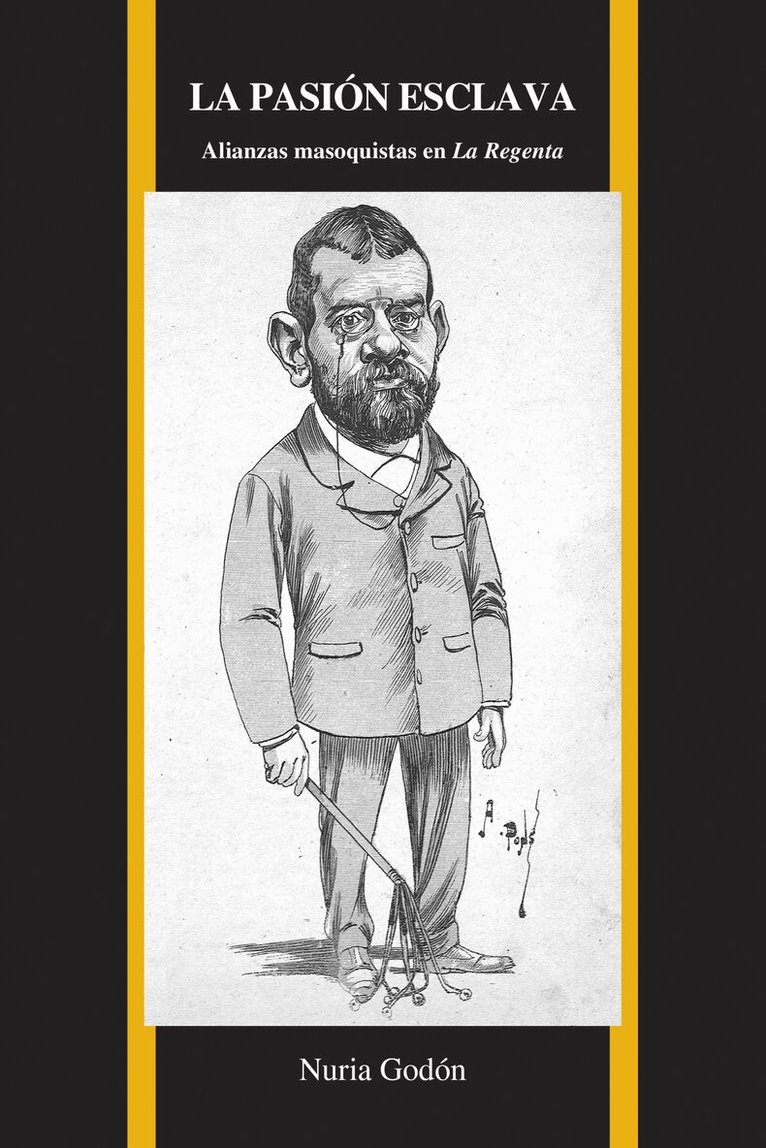
La Pasión Esclava addresses the masochist discursivity of La Regenta (1884–1885) by Leopoldo Alas, Clarín, as a subversive strategy of dominance and submission through which the foundations of liberal thinking on education, agency, and freedom of the modern subject are refuted. Differing from studies that prioritize the Freudian psychoanalytic focus and link masochism with perverse and passive behaviors, this book offers a pluralist approach, where cultural, clinical-historical, and literary perspectives are essential to relocate masochism to the area of passions, while emphasizing the agency and creativity upon which the discursive meaning of transgressive masochism in fin-de-siècle narrative is articulated.Nuria Godón shows how La Regenta challenges the models of partnership in modern society by displaying a reformulation of the masochist contract that parodies the marital contract, satirizes Rousseau’s social contract, and places the wheels of Krause’s educational machine under scrutiny. Likewise, she explores Catholicism’s impact on the masochist dynamic in other contemporary texts by authors such as Emilia Pardo Bazán and Armando Palacio Valdés, without excluding Leopold von Sacher-Masoch—the Austrian writer from whom the term masochism was coined—to further disclose how religion’s influence shapes the dialectic of female and filial masochism in the Spanish context represented in Alas’s masterpiece. In this sense, La Pasión Esclava invites one to reconsider masochism as a tool that tears apart the mechanisms of gender subjection, which are observable not only in the Spanish literary texts analyzed in this book, but also in other cultural productions.La Pasión Esclava aborda la discursividad masoquista en La Regenta (1884–1885) de Leopoldo Alas, Clarín, como una estrategia subversiva de dominio y sumisión mediante la cual se rebaten los fundamentos del pensamiento liberal sobre la educación, la agencia y la libertad del sujeto moderno. Frente a las investigaciones que priman el enfoque psicoanalítico de tradición freudiana y vinculan el masoquismo a conductas perversas y pasivas, este estudio brinda una aproximación pluralista –donde destaca la perspectiva cultural, histórica-clínica y literaria— gracias a la cual es posible reubicar el masoquismo en el amplio terreno de las pasiones y subrayar la agencia y creatividad sobre las que se conforma el sentido discursivo del masoquismo transgresor en la narrativa finisecular. Nuria Godón muestra cómo la novela cumbre de Alas problematiza las propuestas de compañerismo en la sociedad moderna presentando una reformulación del contrato masoquista que parodia el contrato matrimonial, satiriza el contrato social rousseriano y cuestiona el engranaje del sistema educativo krausista. Asimismo, explora el impacto del catolicismo en la dinámica masoquista en otros textos de autores contemporáneos entre los cuales figuran Emilia Pardo Bazán y Armando Palacio Valdés, sin olvidar a Leopold von Sacher-Masoch—autor sobre el que se acuña el término de masoquismo—para explicar posteriormente cómo la influencia religiosa da forma al despliegue de la dialéctica del masoquismo femenino y filial en el contexto español trazado en La Regenta. En este sentido, La Pasión Esclava invita a una reconsideración del masoquismo como herramienta que hace saltar los mecanismos de sujeción genérica, susceptibles de ser observados no solo en el ámbito literario español que el libro presenta sino también dentro de otras producciones culturales.