Research Handbooks in Climate Law series - Böcker
Visar alla böcker i serien Research Handbooks in Climate Law series. Handla med fri frakt och snabb leverans.
16 produkter
16 produkter
3 738 kr
Skickas inom 7-10 vardagar
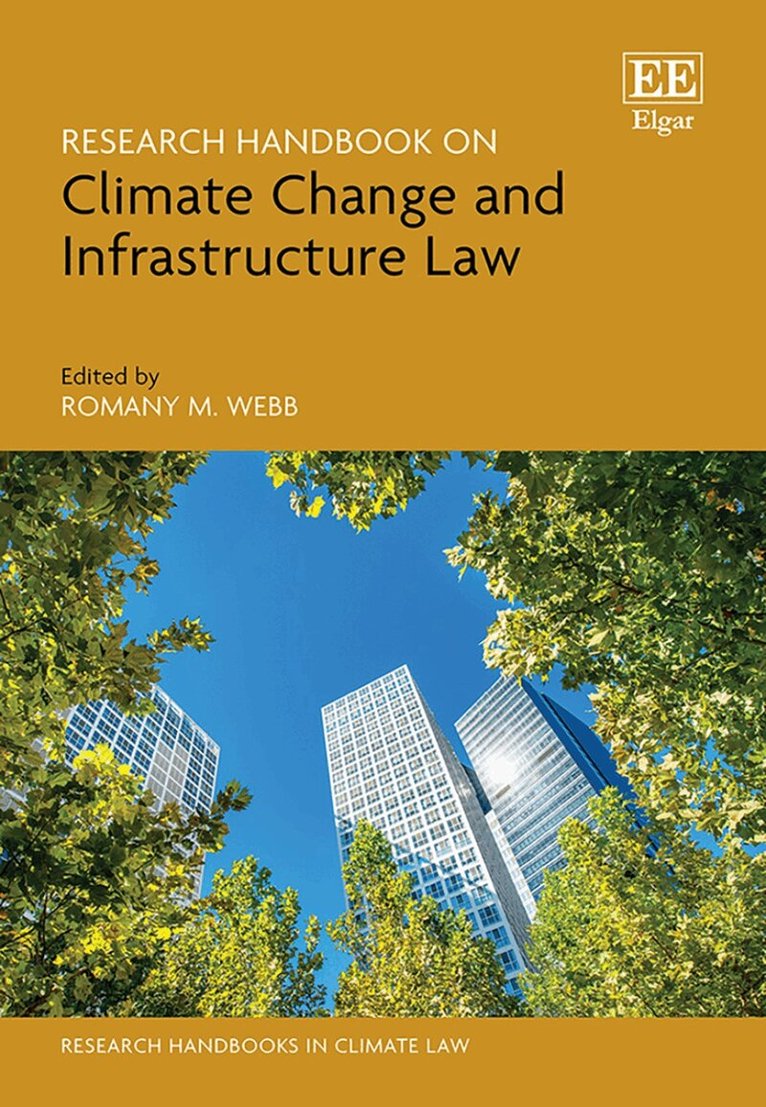
This timely Research Handbook argues that climate change is, at its core, a problem of infrastructure and that vast amounts of new climate-compatible infrastructure will need to be developed in order to effectively mitigate and adapt to it. The book analyses the frameworks governing such development and the legal tools different countries have used to support, and sometimes hinder, the transition to climate-compatible infrastructure.Bringing together a diverse array of leading experts, the Research Handbook compares experiences with climate-compatible infrastructure development across countries in the Global North and Global South. Contributors explore a broad range of infrastructure, from the facilities used to produce energy, to roads, railways, airports, and other transportation systems, to the buildings and other facilities that make up cities and enable urban development. The book also discusses a number of cross-cutting issues that are relevant to various climate infrastructure projects, for example, planning, financing and benefit sharing.The Research Handbook on Climate Change and Infrastructure Law is a vital read for academics, researchers and students of environmental law, constitutional and administrative law and public international law. Policymakers and developers of climate infrastructure projects and their lawyers will also find the book’s theoretical and practical insights interesting.
3 006 kr
Skickas inom 7-10 vardagar
REDD+ (Reducing Emissions of greenhouse gases from Deforestation and Forest Degradation) is an important tool under the UNFCCC for incentivizing developing countries to adopt and scale up climate mitigation actions in the forest sector and for capturing and channeling the financial resources to do so.This handbook eloquently examines the methodological guidance and emerging governance arrangements for REDD+, analyzing how and to what extent it is embedded in the international legal framework.Organized coherently into five parts, contributions from legal experts, international relations scholars, climate change negotiators and activists explore the history and design of REDD+ in the UN climate regime, as well as linkages between REDD+ and other international agreements. The book also considers global governance for REDD+, its financial dimensions including markets and investment and future developments and legal challenges. Detailed analysis from a range of angles illustrates the interplay of international norms and institutions and maps out a legal research agenda for identifying best practice solutions.Shedding light on one of the most vibrant and fast-moving fields in international law, this comprehensive Handbook is essential reading for scholars of international law and international relations, policy makers in the area of climate change, REDD+ and land sector experts and NGOs.Contributors: R.R. Barrer, M.-C. Cordonier Segger, J. Costenbader, A. de Leon, F. Ferreira, M. Gehring, K. Gover, J. Gupta, K. Hite, P. Horne, S. Jodoin, P. Keenlyside, A.G.M. La Viña, A. Long, C.L. McDermott, E. Roessing Neto, C. Parker, A. Savaresi, M. Schwedeler, C. Streck, H. van Asselt, C. Voigt, A. Wardell, M.A. Young, O.R. Young
3 797 kr
Skickas inom 7-10 vardagar
The interaction between climate change and trade has grown in prominence in recent years. This Research Handbook contains authoritative original contributions from leading experts working at the interface between climate change and trade rules. Regional as well as international perspectives are taken into account to inform the complex questions that arise and redirect research efforts towards newly emerging issues.The Research Handbook on Climate Change and Trade Law discusses some of the most important challenges regarding conflicting interests at the intersection of trade, climate change and investment. The insightful chapters map from both regional and global perspectives the state of affairs in such diverse areas as: carbon credits and taxes, sustainable standard-setting, and trade in 'green' goods and services. This timely book redefines the interrelationship of trade and climate change for future scholarship and offers specific suggestions for much-needed research in topics such as energy, carbon taxes and credits, food, standardization, and investment.This Research Handbook will be essential reading for researchers and advanced students in international trade and investment law. It will also be an invaluable resource for practitioners and policymakers in this dynamic and highly significant area of law.Contributors include: M. Alder, P. Arnaiz, S. Bigdeli, J. Chaisse, T. Cottier, P. Delimatsis, A. Dimopoulos, F. Fleurke, A. Gourgourinis, A.H. Lim, J. McMahon, S. Melnyk, J. Munro, K. Nadakavukaren Schefer, R. Partain, T. Payosova, V. Pogoretskyy, D. Ramos, E. Reid, M. Rimmer, L. Tamiotti, J.P. Trachtman, A. vanDuzer, E. Vranes, M. Wu, M. Young, R. Zhang
2 663 kr
Skickas inom 7-10 vardagar
The Research Handbook on Emissions Trading examines the origins, implementation challenges and international dimensions of emissions trading. It pursues an interdisciplinary approach drawing upon law, economics and, at times, political science, to present relevant research strands in a clear and multifaceted way. Its comprehensive mix of theoretical analysis and experiences from existing trading systems offers insights that can be applied around the world.The expert contributors bring together views from different disciplinary and geographic perspectives. This multifaceted examination of economic and legal origins, implementation problems and the emerging international aspect of emissions trading identifies key bodies of research for both upcoming and seasoned academics in the field and highlights future research opportunities. Its broad and accessible approach touches on climate law, environmental law and environmental governance. This Research Handbook will appeal strongly to academics and postgraduate students, as well as providing valuable insights for regulators, government officials and practitioners who are involved in emissions trading.Contributors include: H. Chen, D.H. Cole, C. de Perthuis, A.F. Gubina, F. Gullì, B. Hinterman, K. Holzer, C. Kettner, E. Kosolapova, A. Nentjes, K. Nield, M. Peeters, R. Pereira, K.S. Rogge, R. Trotignon, A. Tuerk, J. van Zeben
2 902 kr
Skickas inom 7-10 vardagar
Bringing together scholars from across the globe, this timely book astutely untangles the climate-food web and critically explores the nexus between climate change, agriculture and law, upon which food security and climate resilient development depends.Focusing through the lens of various domestic and international legal systems, this book addresses conceptual notions such as 'systems thinking' and climate change governance, as well as practical matters such as payments for ecosystem services and government subsidies for biofuels. Concerning itself with the vulnerability and resilience of both people and agro-ecosystems, it shows how climate action can yield high returns for agriculture as the primary source of economic activity for poor populations. Far reaching, this book also explores under-researched areas, including the linkages between invasive species law, climate change and agricultural law and the underlying dynamics of agroecosystem vulnerability. Assessing the strengths and weaknesses in existing agricultural laws and policies, it assesses new and innovative tools for addressing climate change mitigation and adaptation in the agricultural sector, before laying out a future research agenda. Scholars in the fields of climate change law, land use and agricultural law will find this key publication essential reading, as will practitioners desiring a deeper understanding of the agriculture and climate change nexus.Contributors include: R.W. Adler, M.J. Angelo, R.M. Bratspies, A. Cosby, L.H. Gunderson, C. Häberli, K.H. Hirokawa, A. Kennedy, R. Kibugi, E. Le Gal, P. Martin, M. Nowlin, A. Odoemene, J.P. Pietrafesa , P.A. Pietrafesa, J.B. Ruhl, S. Sauer, E. Spiegel, J. Verschuuren
3 006 kr
Skickas inom 7-10 vardagar
Concerns have arisen in recent decades about the impact of climate change on human mobility. Many people affected by climate change are forced or otherwise decide to migrate within or across international borders. Despite its clear importance, many questions remain open regarding the nature of the climate-migration nexus and its implications for laws and institutions. In the face of such uncertainty, this Research Handbook offers a comprehensive picture of laws and institutions relevant to climate migration and the multiple, often contradictory perspectives on the topic.Carefully edited chapters by leading scholars in the field provide a cross section of the various debates on what laws do, can do and should do in relation to the impacts of climate change on migration. A first part analyses the relations between climate change and migration. A second part explores how existing laws and institutions address the climate-migration nexus. In the final part, the chapters discuss possible ways forward.This timely Research Handbook provides much-needed insight into this complex issue for graduate and post-graduate students in climate change or migration law. It will also appeal to students and scholars in political science, international relations, environmental studies and migration studies, as well as policymakers and advocates.Contributors include: G. Appave, F. Biermann, I. Boas, M. Burkett, M. Byrne, C. Cournil, F. Crepeau, F. De Salles Cavedon-Capdeville, C. Farbotko, E. Ferris, F. Gemenne, K. Hansen, J. Hathaway, C. Hong, D. Ionesco, A.O. Jegede, S. Jodoin, S. Kagan, M. Leighton, S. Martin, B. Mayer, S. Mcinerney-Lankford, R. Mcleman, I. Millar, D. Mokhnacheva, C.T.M. Nicholson, E. Pires Ramos, A. Randall, A. Sironi, M. Traore Chazalnoel, C. Vlassopoulos, K. Wilson, K.M. Wyman
3 230 kr
Skickas inom 7-10 vardagar
Climate change has thrust us into a ''no-analog'' future in which climate disasters threaten to cause extraordinary damage, with little precedent to guide policymakers and private actors. Addressing such risks requires a firm grounding in disaster risk reduction, climate change policy, and environmental law. This Research Handbook provides readers with that integrated foundation, investigating topics in international law as well as domestic programs from countries around the world. Because climate disasters affect both government and non-government actors, the Research Handbook covers issues of both public and private law. We know from the scientific literature and recent experience that the laws addressing natural disasters are insufficient to confront disasters amplified by climate change. The Research Handbook acknowledges that the majority of disasters are susceptible in some way to changes in the earth's climate and explores the barriers to, and opportunities for, finding legal solutions to the risks posed by such disasters. It shows that climate change must be considered in order to fully understand disaster risk and the respective legal and policy responses.The Research Handbook also emphasizes the moral responsibility we have to move as quickly as possible to create a carbon-free economy.This work will be of great appeal to legal scholars, practitioners, and policymakers who are interested in environmental law or climate change as it relates to international and domestic law and policy.Contributors include: C.A. Arnold, C. Bakker, M. Burkett, S. Donald, J.D. Echeverria, D.A. Farber, M. Faure, M.B. Gerrard, Q. He, R. Kundis Craig, S. Kuo, D.A. Kysar, R. Lyster, T. Parejo-Navajas, J. Peel, L. Rajamani, S. Shapiro, T. Stephens, L.G. Sun, K. Tracy, R.R.M. Verchick, J. Verschuuren
3 156 kr
Skickas inom 7-10 vardagar
This thought-provoking Research Handbook offers a critical survey of the law and governance issues facing the world's oceans and coasts in this era of Anthropocentric climate change. It discusses the biophysical impacts that climate change is having upon our oceans and coasts, as well as the various ways that international, national and sub-national laws have sought to respond. With contributions from scientists and lawyers, this comprehensive Research Handbook provides cutting edge analysis of the marine governance responses to climate change and how this will need to adapt in a rapidly changing world. It reflects on the interaction of climate change with regional marine governance regimes and analyses the likely impacts on maritime and national security. Illustrating the up-to-date treatment of interactions between climate and oceans regimes, this incisive Research Handbook examines the possible adaptation options to address specific issues for our oceans and coasts.The Research Handbook on Climate Change, Oceans and Coasts will be a key resource for students, scholars and practitioners of climate change, water law and environmental law and policy, while also being of benefit to researchers in the cross-cutting fields of human rights and disaster law.
2 887 kr
Skickas inom 7-10 vardagar
Climate change is causing a geological transition, defining a new era in which the Earth System is configured through human action. The emergence of a global polity through physical, economic and social interaction demands a global response to this phenomenon which cannot be modelled on traditional political and legal concepts centred around the nation-state. This Research Handbook explores the implementation of climate constitutionalism on a global scale, considering both language and substance in order to design adequate normative patterns for addressing climate change. Against the narrative of the Anthropocene and its implications for the law, carefully curated chapters provide a critical approach to global environmental constitutionalism, analysing the problems of sustainability and global equity that are so necessarily intertwined with the causes and consequences of climate change. Recognising the adaptation and mitigation demands implied by climate change, this astute Handbook explores how to develop constitutional discourses and strategies to address these issues, and thereby tackle the negative effects of climate change whilst also advancing a more sustainable, equitable and responsible global society. Timely and engaging, this Research Handbook will prove vital reading for students and scholars of environmental, constitutional and administrative law and policy. Climate change practitioners, policy makers and activists will also find its insights highly informative.Contributors include: S. Atapattu, S. Borràs, K. Bosselmann, E. Cocciolo, G.M. Cuadros, E. Daly, P. de Araujo Ayala, B.H. Desai, R.J. Heffron, A. Hornborg, J. Jaria-Manzano, L.J. Kotzé, J.R. May, D. McCauley, K. Morrow, M. Powers, J.M. Pureza, B.K. Sidhu, A. Sinden
3 499 kr
Skickas inom 7-10 vardagar
This timely Research Handbook offers an insightful review of how legal systems – whether domestic, international or transnational – can and should adjust to fairly and effectively support loss and damage (L&D) claims in climate change law. International contributors guide readers through a detailed assessment of the history and current state of L&D provisions under the UN climate regime and consider the opportunities to fund L&D claims both within and outside the UN climate system. Split into four parts, the Research Handbook investigates the current legal frameworks for L&D across both public international law and domestic law. Chapters explore foundational issues including equity and justice and give a critical assessment of the current state and potential future evolution of international legal systems. The contributing authors also discuss the challenges faced by different legal systems in dealing effectively and fairly with L&D.Providing a comprehensive overview of this important topic, this Research Handbook will be an excellent resource for climate lawyers and policymakers. It will also be an invaluable read for academics and students researching environmental and climate issues.
2 917 kr
Skickas inom 7-10 vardagar
This timely Research Handbook explores the rapidly evolving landscape of climate finance and investment law. Leading experts examine the effectiveness of finance and investment frameworks in achieving climate policy objectives, as well as identifying legal trends and future research topics in the field.Key topics in this Research Handbook include institutional climate finance under the United Nations Framework Convention on Climate Change (UNFCCC) and other international arrangements, the implications of trade and investment treaties, and the mechanics of project finance. By analysing the practical aspects of project implementation and finance, contributors outline developments in international financial institutions, climate risk disclosure, and insurance mechanisms. With a forward-looking approach, the Research Handbook provides critical insights into the future of climate finance and investment from a legal and institutional perspective.The Research Handbook on Climate Finance and Investment Law is an essential resource for scholars and students in the fields of climate law and policy. Bridging legal scholarship with practical insight, it is also of great benefit to policymakers and practitioners working at the intersection of climate change, law, investment, and finance.
3 424 kr
Skickas inom 7-10 vardagar
This Research Handbook tackles the intersecting crises of biodiversity loss and climate change from a legal perspective, delivering cutting edge insights into the evolution of these laws, and their shortfalls and opportunities. Experts critically analyse international and regional laws and institutions that were designed to protect biodiversity. They highlight the ways in which legal frameworks are being challenged by climate change and historical biodiversity loss, and the potential for these laws to transition or be transformed in anticipation of ongoing change.The contributing authors examine what biodiversity laws need to achieve as the climate continues to change, and outline innovations within conservation, climate mitigation and adaptation research and practice. They focus on emerging legal gaps, and explore civil litigation rules and industry arrangements such as international fishing regulations and invasive species management. They examine core international and transboundary environmental law regimes, as well as multilateral environment agreements, and review how domestic legal instruments contribute to implementing international rules and targets. The chapters in this Research Handbook cover a broad range of sectors, disciplines and jurisdictions, including NGO, government and industry-led approaches, providing insights into the potential of legal strategies to address threats posed by climate-driven biodiversity loss.The Research Handbook on Climate Change and Biodiversity Law is invaluable to students and academics in climate change and environmental law, conveying a clear understanding of how multiple legal regimes interact and instigate legal, political and governance reform. Policymakers, lawmakers and litigators seeking to enforce international and domestic laws will also find it a key resource.
2 663 kr
Skickas inom 7-10 vardagar
This thoroughly revised Research Handbook on Climate Change Adaptation Law brings together leading scholars in the field to summarise and assess key topics including tort and insurance law, disaster law, water law and marine law as well as biodiversity law and pollution control. Providing a comprehensive review of new challenges faced as a result of a changing climate, this Second Edition considers the adaptation necessary to address the ongoing impacts from the warming of the Earth’s atmosphere at international, regional and domestic levels. It also analyses the legal instruments that go beyond helping societies to adapt to the changing climate, and assist in compensating victims of climate change damage. Chapters suggest forward-thinking approaches for how future policies and laws could help to create more climate resilient and stable societies, and offer a new insight into how climate change can affect both the local and international dimensions of security. With its transnational and multilevel approach, this Research Handbook is an essential resource for academics in the field of climate change policy and law as well as policy makers, NGOs and other government officials working in the field of climate change.
3 365 kr
Skickas inom 7-10 vardagar
This comprehensive Research Handbook sets out a systematic analysis of the Paris Agreement taking into account developments since it entered into force in 2016. It explores the treaty’s capacity, as an instrument of international law, to compel state action to address the universal threat of climate change.Highlighting the strengths and weaknesses of the Paris Agreement in light of state practice, each chapter contains a critical examination of a separate aspect of the treaty in order to aid understanding of its legal force. Eminent scholars with experience in Paris Agreement law explore how the Agreement’s efficacy relies heavily upon the goodwill of states, sui generis domestic initiatives, forceful climate law at the domestic level, and other contextual factors such as international peace and cooperation. Acknowledging the weak legal substance of the Paris Agreement, the expert contributors propose new avenues of scholarly inquiry as well as new directions in the fight against climate change.The Research Handbook on the Law of the Paris Agreement will prove beneficial for scholars, researchers, and students of law, environmental studies, and politics and public policy. Legal practitioners, ministries of foreign affairs, and international NGOs concerned with environmental issues and human rights will also benefit from the book’s practical implications.
3 439 kr
Skickas inom 7-10 vardagar
This Research Handbook provides a comprehensive depiction of the various stages, opportunities and challenges of climate change litigation at national and international levels from an innovative practice-oriented perspective. Bringing together expert authors from a range of legal backgrounds, the Research Handbook features contributions not only from experienced academics researching in the field, but also from strategic planning specialists and legal coordinators for organizations involved in climate-related litigation. It follows the entire journey of climate-related disputes, from an examination of the approaches and decisions made before initiating legal proceedings, through the various procedural and legal hurdles and challenges during proceedings, to an exploration of the post-litigation challenges that may arise. The climate litigation process is also analyzed in the context of different international forums, such as the International Court of Justice (ICJ), the International Tribunal for the Law of the Sea (ITLOS), and the World Heritage Convention, among others. The Research Handbook on Climate Change Litigation is a vital resource for scholars and students in arbitration and dispute resolution, climate change law and environmental law. Practitioners such as judges, lawyers, legal advisers for NGOs and public servants in administration will also find this book beneficial.
1 058 kr
Skickas
This meticulously revised second edition provides a comparative overview of climate change mitigation issues and international regulatory approaches, bringing together expert contributors to analyse key sectors such as energy, transport, cities, industry, land use, agriculture and waste.Governments around the world have been investigating techniques to reduce greenhouse gas emissions for decades. This detailed Research Handbook considers the spectrum of legal and market-based instruments, as well as strategies and policies adopted around the world, to propose more effective, comprehensive and responsive ways of managing climate change mitigation. As well as taking stock of the current and proposed legal instruments, the book investigates the wider policy and economic aspects of coping with climate change. It provides a comparative overview of key issues across Europe, the United States, Asia-Pacific and the BRICS countries, and discusses domestic, regional and international law and governance. Important issues such as carbon trading, financing and litigation are also addressed.This timely Research Handbook will be an authoritative resource for scholars of climate change law and policy, whilst also providing a rigorous overview for upper-level students. Policymakers will gain insights from the comparative perspectives, and practitioners will appreciate the broad range of practical issues addressed.