Research Handbooks in Geography series – serie
Visar alla böcker i serien Research Handbooks in Geography series. Handla med fri frakt och snabb leverans.
11 produkter
11 produkter
4 533 kr
Skickas inom 7-10 vardagar
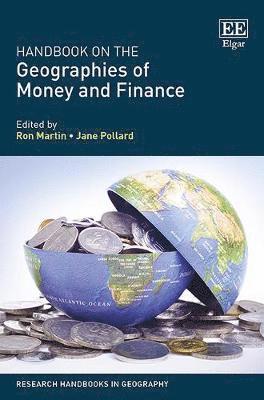
Developments in recent decades have led to money and finance assuming unprecedented influence over almost every aspect of economic and social life. Making the case for a geography of money, this multidisciplinary Handbook argues it is necessary to think spatially about the constitution and expressions of money and financial systems in the wake of the 2007–-2008 Global Financial Crisis.High-quality, research-based contributions from leading international scholars illustrate how the operation and regulation of monetary and financial systems both shape and are shaped by local, national and global developments. Examining four key dimensions of this geography, they consider the different spaces of monetary relations and instabilities, how money and finance contribute to geographically uneven economic development, the regulatory spaces of money, and the emergence of alternative forms and circuits of finance outside the established banking system. Timely and discerning, this book will be of particular importance to geographers, political scientists, sociologists, economists and planners. It will also be of great interest to all those concerned with how money shapes and reshapes socio-economic space, as well as how it conditions local and regional development.Contributors: M.B. Aalbers, D.S. Bieri, D. Bryan, B. Christophers, G.L. Clark, J. Corpateaux, O. Crevoisier, K. Datta, A.D. Dixon, S. Dörry, G.A. Dymski, M. Gray, B. Klagge, J. Knox-Hayes, S. Köppe, G. Marandola, R. Martin, P. North, P. O'Brien, L. Papi, A. Pike, M. Pilkington, J. Pollard, M. Pryke, M. Rafferty, L. Rethel, E. Sarno, B.A. Searle, M. Shabani, T.J. Sinclair, E. Slack, P. Sunley, T. Theurillat, T. Wainwright, D. Wigan, D. Wójcik, G. Yeung, A. Zazzaro, B. Zhang
3 706 kr
Skickas inom 7-10 vardagar
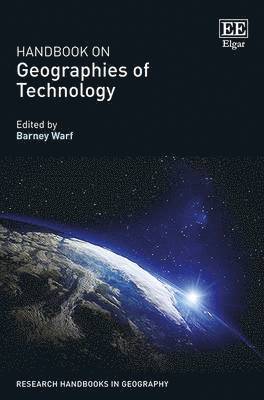
This Handbook offers an insightful and comprehensive overview from a geographic perspective of the numerous and varied technologies that are shaping the contemporary world. It shows how geography and technology are intimately linked by examining the origins, growth, and impacts of 27 different technologies and highlighting how they influence the structure and spatiality of society. Following summaries of important conceptual issues such as diffusion, gender and science studies, the book explores various technologies, which are grouped into six main categories: Computational: code, location-based services and virtual realityCommunications: fiber optics, satellites, the internet, radio, cell phones and televisionTransportation: automobiles, aviation, drones, railroads, and shipping and portsEnergy: biofuels, dams, fracking, geothermal energy, pipelines, solar energy and LEED buildingsManufacturing: robotics, just-in-time systems and nanotechnology Life sciences: new technologies of health care, biotechnology and biometrics. Significantly, the book includes in-depth explorations of new technologies that have so far received very little attention from geographers. This much-needed Handbook offers a comprehensive and state-of-the-art summary of the geographies of major technologies and how they affect society, economies, geographies and everyday life. It will appeal to academics and advanced students interested in geography, planning and the social sciences in general.Contributors include: R. Baghel, M. Batty, R.E. Baxter, T. Birtchnell, M.J. Blair, L. Cabral, K.E. Calvert, M. Chen, J. Cidell, J.C. Comer, D. Comfort, S.W. Cunningham, M. Dodge, A.R. Goetz, A. Golub, A. Grech, D. Hillier, A. Holl, J.P. Howell, A. Johnson, P. Jones, A. Kellerman, L. Kurdgelashvili, L. Li, H. Lin, R. Lobato, B.P.Y. Loo, A. López Peláez, E. Louie, S. Maalsen, W.E. Mabee, J.D. Makholm, J. McLean, M. Nüsser, G. Popescu, R. Rama, P.L. Robertson, J.-P. Rodrigue, M.W. Rosenberg, B. Solomon, J.D. Stephen, D. Sui, G. Timilsina, N. Waldbrook, B. Warf, T.A. Wikle, C. Wilkinson
3 268 kr
Skickas inom 7-10 vardagar
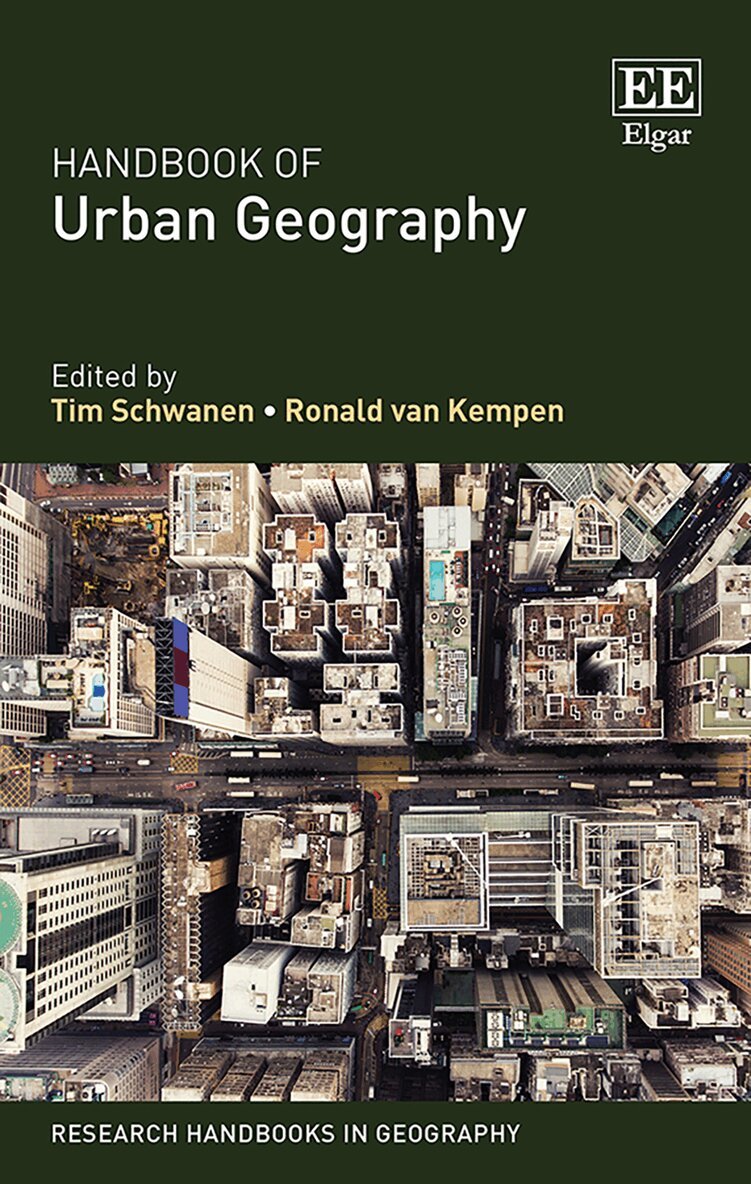
This Handbook provides an authoritative overview of the diversity of contemporary geographical research on cities and urbanization. It demonstrates the vibrancy of current research, and the exciting future of the field. Bringing together different philosophical, theoretical, and methodological approaches to the study of the city and the urban, chapters incorporate elements from different disciplines with international perspectives to create an extensive reference on contemporary urban geography research. The Handbook of Urban Geography consists of thirty chapters written by the leading experts and recognized specialists in the field. Organized into seven parts, this Handbook explores recent theories and methodologies, urban networks, redevelopment, inequality, socialities in the city, urban politics, and sustainability. Recognizing the interdisciplinary nature of the field, contributing authors are from across disciplinary boundaries, expanding the horizons for future geography research.Researchers and academics in geography, urban studies, and related disciplines will find this Handbook offers succinct overviews of recent developments in the literature. Graduate and undergraduate students will also find this an accessible and useful reference work.
3 333 kr
Skickas inom 7-10 vardagar
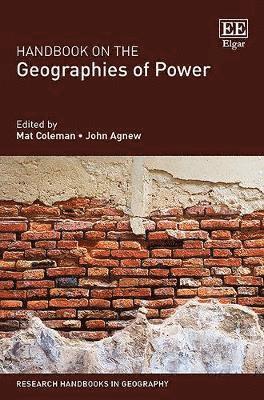
The so-called ‘'spatial turn’' in the social sciences has led to an increased interest in what can be called the spatialities of power, or the ways in which power as a medium for achieving goals is related to where it takes place. This unique and intriguing Handbook argues that the spatiality of power is never singular and easily modeled according to straightforward theoretical bullet-points, but instead is best approached as plural, contextually emergent and relational.The Handbook on the Geographies of Power consists of a series of cutting edge chapters written by a diverse range of leading geographers working both within and beyond political geography. It is organized thematically into the main areas in which contemporary work on the geographies of power is concentrated: bodies, economy, environment and energy, and war. The Handbook maintains a careful connection between theory and empirics, making it a valuable read for students, researchers and scholars in the fields of political and human geography. It will also appeal to social scientists more generally who are interested in contemporary conceptions of power.Contributors include: J. Agnew, J. Allen, I. Ashutosh, J. Barkan, N. Bauch, L. Bhungalia, G. Boyce, B. Braun, M. Brown, P. Carmody, N. Clark, M. Coleman, A. Dixon, V. Gidwani, N. Gordon, M. Hird, P. Hubbard, J. Hyndman, J. Loyd, A. Moore, L. Muscarà, N. Perugini, C. Rasmussen, P. Steinberg, K. Strauss, S. Wakefield, K. Yusoff
3 527 kr
Skickas inom 7-10 vardagar
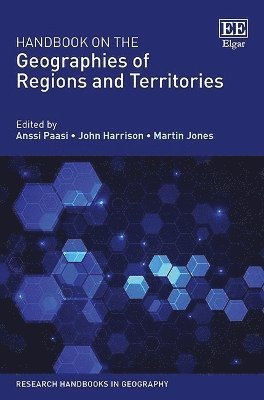
This major international Handbook offers the most up-to-date and original viewpoints on critical debates relating to the rapidly transforming geographies of regions and territories, as well as related key concepts such as place, scale, networks and regionalism.This interdisciplinary Handbook brings together renowned specialists who have extensively theorized these spatial concepts and contributed to rich empirical research in disciplines such as geography, sociology, political science and international relations. It offers fresh, cutting-edge, and contextual insights on the significance of regions and territories in today’s dynamic world.This is a timely and vital resource for both students and researchers of human geography and regional studies. Political geographers and international relations scholars will also benefit from reading the Handbook as it offers a comprehensive yet accessible examination of the geography of regions and territories.Contributors include: J. Agnew, B.T. Asheim, S. Ayres, A. Beer, I. Braverman, G. Bristow, J. Bryson, I. Calzada, R. Castriota, J. Clark, A. Cochrane, R. Comunian, K.R. Cox, M. Deciancio, K. Dodds, M. Dunford, L. England, J.N. Entrikin, D. Gibbs, M. Glass, J. Harrison, A. Hemmings, Y. Herrera, R. Huggins, B. Jessop, A.E.G. Jonas, A. Jones, M. Jones, R. Jones, J.M. Kanai, D. Kofanov, D.F. Kogler, W. Liu, J. Loughlin, F. Mattheis, S. Moisio, R.L. Monte-Mór, C. Nine, A. Paasi, M. Pace, K. Peters, P. Riggirozzi, D. Rwehumbiza, S. Schindler, A. Shirikov, C. Sohn, D. Storey, N.-L. Sum, K. Terlouw, P. Thompson, I. Turok, L. Van Langenhove, A. Whittle
2 895 kr
Skickas inom 7-10 vardagar
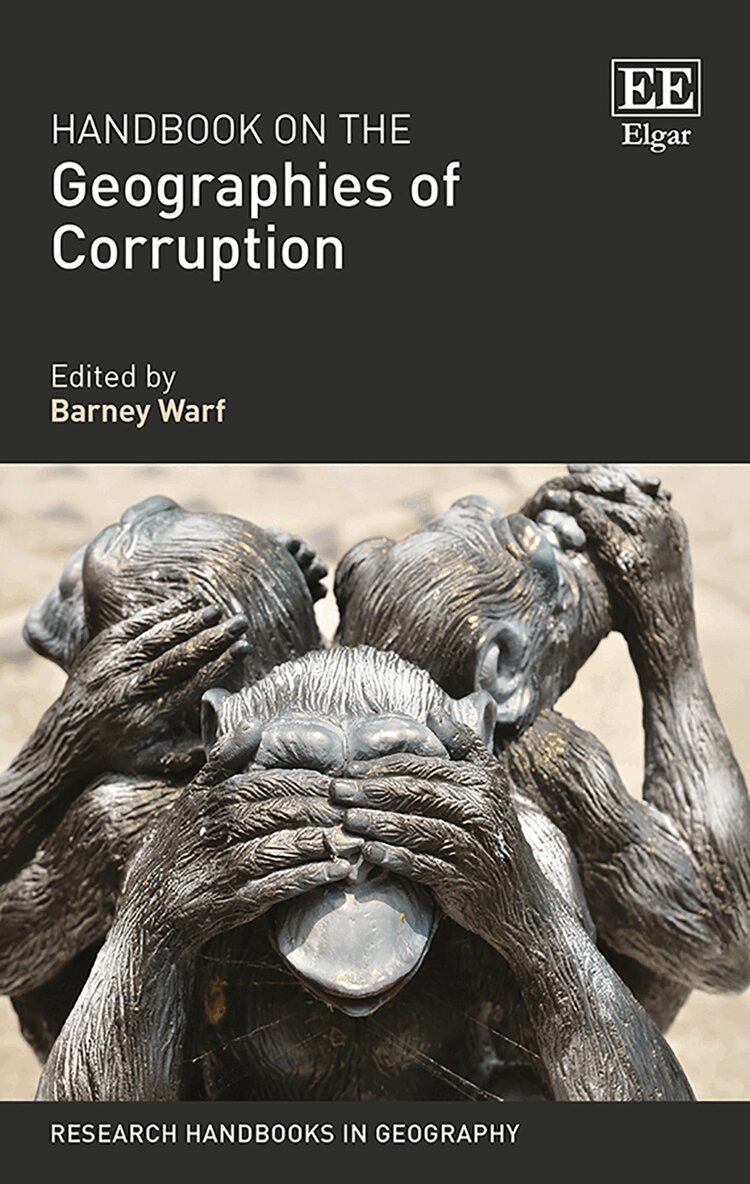
The Handbook on the Geographies of Corruption is a comprehensive overview of corruption, exploring the immense variation of corruption among nations, and how this reflects levels of wealth, the centralization of power, colonial legacies, and different national cultures.In this Handbook, Barney Warf brings together a multidisciplinary and interdisciplinary collection of original new chapters from established researchers and leading academics to examine corruption from a spatial perspective. The Handbook opens with a series of thematic chapters on the causes and consequences of corruption, its geography, the connection between corruption and gender, and the role of e-government in mitigating current corruption issues. Further chapters offer a series of national case studies, on countries including Mexico, Brazil, South Africa, Turkey, Russia, Pakistan, China, Indonesia, Ukraine, Bangladesh, and the Philippines from which to draw lessons. This Handbook will be a valuable read for human geography scholars and corruption researchers, wishing to gain a more in depth understanding of how and why corruption levels differ across the world. Practitioners concerned with combatting corruption would also greatly benefit from reading this given its real-world insights.Contributors include: A. Batory, S. Bayraktar, C. Calimbahin, S. Dabbous, D. Danieli, E. Dimant, N.G. Elbahnasawy, D.H. Enste, M. Eren, A. Guizani, C. Heldman, A. Jiménez, F.F. Khan, J. Leitner, J.M. Luiz, M. Marktanner, H. Meissner, K.Z. Meyer, M. Mietzner, S. Morris, M. Nurunnabi, V. Pesqué-Cela, G.G. Schulze, K. Senters, A. Sghaier, H.O. Stensöta, L. Wängnerud, B. Warf, M. Wilson, M.S. Winters, N. Zakharov
3 527 kr
Skickas inom 7-10 vardagar
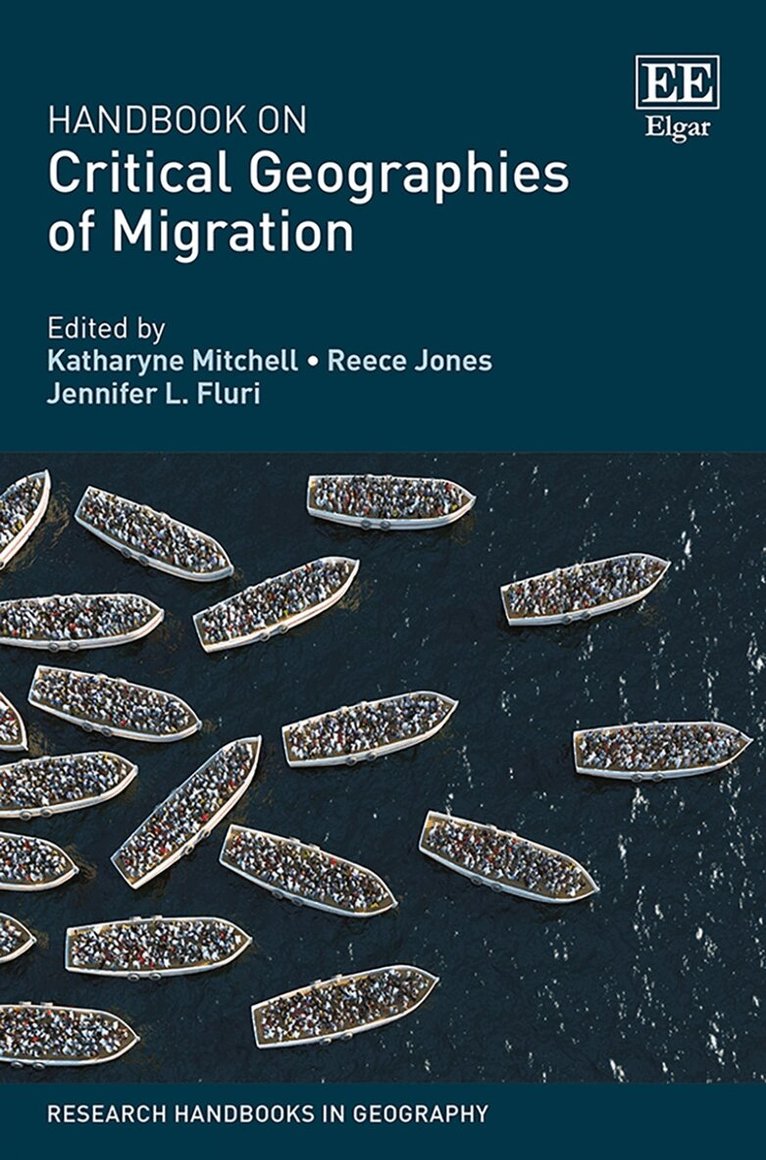
Border walls, shipwrecks in the Mediterranean, separated families at the border, island detention camps: migration is at the centre of contemporary political and academic debates. This ground-breaking Handbook offers an exciting and original analysis of critical research on themes such as these, drawing on cutting-edge theories from an interdisciplinary and international group of leading scholars. With a focus on spatial analysis and geographical context, this volume highlights a range of theoretical, methodological and regional approaches to migration research, while remaining attuned to the underlying politics that bring critical scholars together.Divided into six thematic sections, including new areas in critical migration research, the book covers the key questions galvanizing migration scholars today, such as issues surrounding refugees and border militarization. Each chapter explores new themes, expanding on core theories to convey fresh insight to contemporary research.A key resource for migration, refugee and border studies this Handbook provides an in-depth analysis of the topic, covering a vast array of research ideas with a specific focus on the geographical aspects of migration. Scholars working on migration, refugees, asylum, transnationalism, humanitarianism and borders will find this an invaluable read.Contributors: J. Allsopp, I. Ataç, N. Bagheri, A. Blunt, J. Bonnerjee, A. Burridge, M. Casas-Cortes, A. Chikanda, S. Cobarrubias, K. Coddington, M. Collyer, D. Conlon, J. Crush, T. Davies, S. Dhesi, P. Ehrkamp, J.L. Fluri, G. Garelli, N. Gill, M. Gilmartin, C. Goh, M. Griffiths, E. Ho, J. Hyndman, A. Isakjee, R. Jones, B. Kasparek, P. Kelly, S. Kok, A.-K. Kuusisto-Arponen, R.B. Lacy, J. Loyd, K. MacFarlane, C. Maharaj, L. Martin, D.E. Martinez, E. Mavroudi, C. Menjívar, K. Mitchell, B. Muller, P. Pallister-Wilkins, N. Paszkiewicz, T. Raeymaekers, R. Rogers, R. Rotter, A. Sabhlok, R. Sampson, M. Schmidt-Sembdner, A. Secor, J. Slack, E. Steinhilper, S.D. Walsh, H. van Houtum, M. Walton-Roberts, K. Wee, Y. Weima, B. Yeoh
844 kr
Skickas inom 7-10 vardagar
Developments in recent decades have led to money and finance assuming unprecedented influence over almost every aspect of economic and social life. Making the case for a geography of money, this multidisciplinary Handbook argues it is necessary to think spatially about the constitution and expressions of money and financial systems in the wake of the 2007–-2008 Global Financial Crisis.High-quality, research-based contributions from leading international scholars illustrate how the operation and regulation of monetary and financial systems both shape and are shaped by local, national and global developments. Examining four key dimensions of this geography, they consider the different spaces of monetary relations and instabilities, how money and finance contribute to geographically uneven economic development, the regulatory spaces of money, and the emergence of alternative forms and circuits of finance outside the established banking system. Timely and discerning, this book will be of particular importance to geographers, political scientists, sociologists, economists and planners. It will also be of great interest to all those concerned with how money shapes and reshapes socio-economic space, as well as how it conditions local and regional development.Contributors: M.B. Aalbers, D.S. Bieri, D. Bryan, B. Christophers, G.L. Clark, J. Corpateaux, O. Crevoisier, K. Datta, A.D. Dixon, S. Dörry, G.A. Dymski, M. Gray, B. Klagge, J. Knox-Hayes, S. Köppe, G. Marandola, R. Martin, P. North, P. O'Brien, L. Papi, A. Pike, M. Pilkington, J. Pollard, M. Pryke, M. Rafferty, L. Rethel, E. Sarno, B.A. Searle, M. Shabani, T.J. Sinclair, E. Slack, P. Sunley, T. Theurillat, T. Wainwright, D. Wigan, D. Wójcik, G. Yeung, A. Zazzaro, B. Zhang
716 kr
Skickas inom 7-10 vardagar
The so-called ‘'spatial turn’' in the social sciences has led to an increased interest in what can be called the spatialities of power, or the ways in which power as a medium for achieving goals is related to where it takes place. This unique and intriguing Handbook argues that the spatiality of power is never singular and easily modeled according to straightforward theoretical bullet-points, but instead is best approached as plural, contextually emergent and relational.The Handbook on the Geographies of Power consists of a series of cutting edge chapters written by a diverse range of leading geographers working both within and beyond political geography. It is organized thematically into the main areas in which contemporary work on the geographies of power is concentrated: bodies, economy, environment and energy, and war. The Handbook maintains a careful connection between theory and empirics, making it a valuable read for students, researchers and scholars in the fields of political and human geography. It will also appeal to social scientists more generally who are interested in contemporary conceptions of power.Contributors include: J. Agnew, J. Allen, I. Ashutosh, J. Barkan, N. Bauch, L. Bhungalia, G. Boyce, B. Braun, M. Brown, P. Carmody, N. Clark, M. Coleman, A. Dixon, V. Gidwani, N. Gordon, M. Hird, P. Hubbard, J. Hyndman, J. Loyd, A. Moore, L. Muscarà, N. Perugini, C. Rasmussen, P. Steinberg, K. Strauss, S. Wakefield, K. Yusoff
790 kr
This major international Handbook offers the most up-to-date and original viewpoints on critical debates relating to the rapidly transforming geographies of regions and territories, as well as related key concepts such as place, scale, networks and regionalism.This interdisciplinary Handbook brings together renowned specialists who have extensively theorized these spatial concepts and contributed to rich empirical research in disciplines such as geography, sociology, political science and international relations. It offers fresh, cutting-edge, and contextual insights on the significance of regions and territories in today’s dynamic world.This is a timely and vital resource for both students and researchers of human geography and regional studies. Political geographers and international relations scholars will also benefit from reading the Handbook as it offers a comprehensive yet accessible examination of the geography of regions and territories.Contributors include: J. Agnew, B.T. Asheim, S. Ayres, A. Beer, I. Braverman, G. Bristow, J. Bryson, I. Calzada, R. Castriota, J. Clark, A. Cochrane, R. Comunian, K.R. Cox, M. Deciancio, K. Dodds, M. Dunford, L. England, J.N. Entrikin, D. Gibbs, M. Glass, J. Harrison, A. Hemmings, Y. Herrera, R. Huggins, B. Jessop, A.E.G. Jonas, A. Jones, M. Jones, R. Jones, J.M. Kanai, D. Kofanov, D.F. Kogler, W. Liu, J. Loughlin, F. Mattheis, S. Moisio, R.L. Monte-Mór, C. Nine, A. Paasi, M. Pace, K. Peters, P. Riggirozzi, D. Rwehumbiza, S. Schindler, A. Shirikov, C. Sohn, D. Storey, N.-L. Sum, K. Terlouw, P. Thompson, I. Turok, L. Van Langenhove, A. Whittle
723 kr
Skickas inom 7-10 vardagar
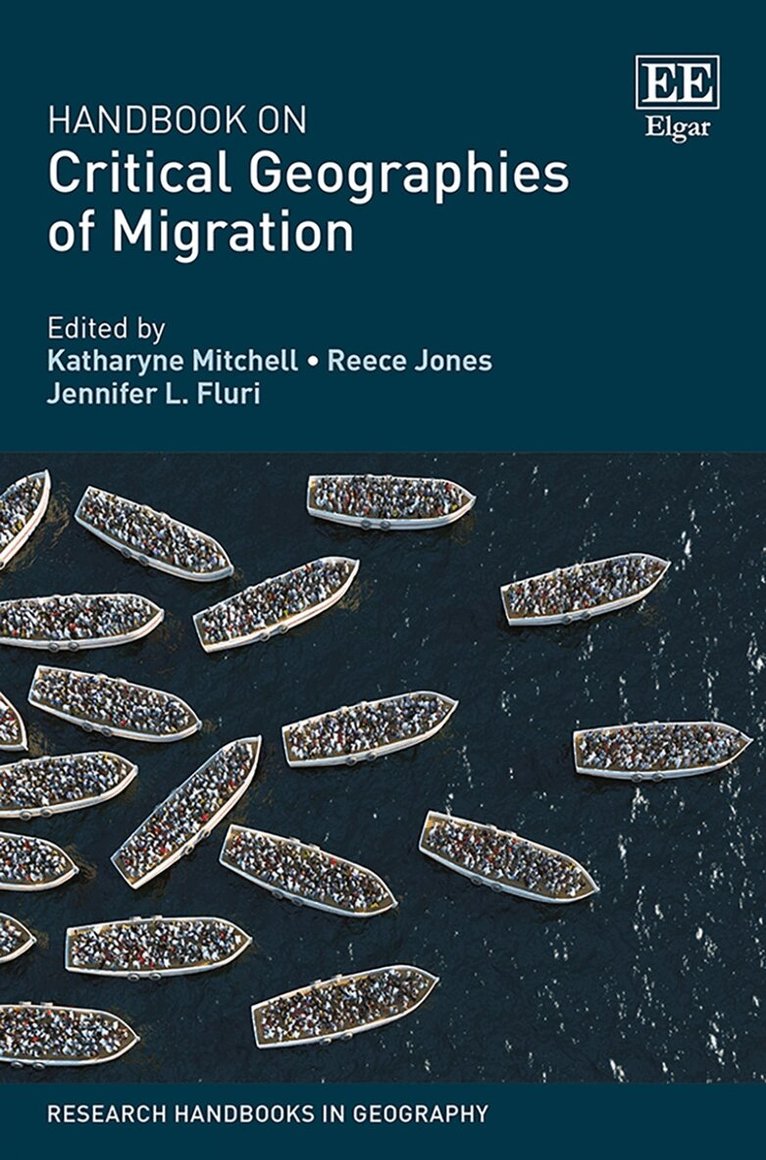
Border walls, shipwrecks in the Mediterranean, separated families at the border, island detention camps: migration is at the centre of contemporary political and academic debates. This ground-breaking Handbook offers an exciting and original analysis of critical research on themes such as these, drawing on cutting-edge theories from an interdisciplinary and international group of leading scholars. With a focus on spatial analysis and geographical context, this volume highlights a range of theoretical, methodological and regional approaches to migration research, while remaining attuned to the underlying politics that bring critical scholars together.Divided into six thematic sections, including new areas in critical migration research, the book covers the key questions galvanizing migration scholars today, such as issues surrounding refugees and border militarization. Each chapter explores new themes, expanding on core theories to convey fresh insight to contemporary research.A key resource for migration, refugee and border studies this Handbook provides an in-depth analysis of the topic, covering a vast array of research ideas with a specific focus on the geographical aspects of migration. Scholars working on migration, refugees, asylum, transnationalism, humanitarianism and borders will find this an invaluable read.Contributors: J. Allsopp, I. Ataç, N. Bagheri, A. Blunt, J. Bonnerjee, A. Burridge, M. Casas-Cortes, A. Chikanda, S. Cobarrubias, K. Coddington, M. Collyer, D. Conlon, J. Crush, T. Davies, S. Dhesi, P. Ehrkamp, J.L. Fluri, G. Garelli, N. Gill, M. Gilmartin, C. Goh, M. Griffiths, E. Ho, J. Hyndman, A. Isakjee, R. Jones, B. Kasparek, P. Kelly, S. Kok, A.-K. Kuusisto-Arponen, R.B. Lacy, J. Loyd, K. MacFarlane, C. Maharaj, L. Martin, D.E. Martinez, E. Mavroudi, C. Menjívar, K. Mitchell, B. Muller, P. Pallister-Wilkins, N. Paszkiewicz, T. Raeymaekers, R. Rogers, R. Rotter, A. Sabhlok, R. Sampson, M. Schmidt-Sembdner, A. Secor, J. Slack, E. Steinhilper, S.D. Walsh, H. van Houtum, M. Walton-Roberts, K. Wee, Y. Weima, B. Yeoh