Richard Hampton Jenrette Series in Architecture and the Decorative Arts – serie
Visar alla böcker i serien Richard Hampton Jenrette Series in Architecture and the Decorative Arts. Handla med fri frakt och snabb leverans.
7 produkter
7 produkter
434 kr
Skickas inom 10-15 vardagar
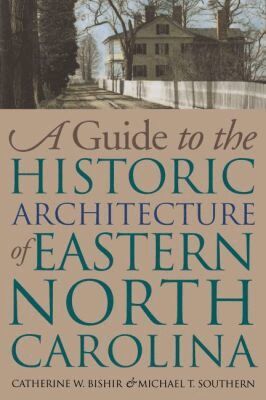
Eastern North Carolina boasts some of the oldest and most distinctive architecture in the state, from colonial churches and antebellum plantation houses to the imperiled lighthouses of the late nineteenth century. The more recent history of this predominantly agricultural region includes landscapes of small farmsteads, country churches, factories, tobacco barns, quiet maritime villages, and market towns. In their guide to this rich and diverse architectural heritage, Catherine Bishir and Michael Southern introduce readers to more than 1,700 buildings in forty-one counties from the coast to Interstate 95. Written for travelers and residents alike, the book emphasizes buildings visible from the road and indicates which sites are open to the public. Featuring more than 400 photographs and 30 maps, the guide is organized by counties, which are grouped geographically. Sections typically begin with the county seat and work outward with concise entries that treat notable buildings, neighborhoods, and communities. The text highlights key architectural features and trends and relates buildings to the local and regional histories they represent. A project of the North Carolina State Historic Preservation Office of the Division of Archives and History, the book reflects more than twenty-five years of fieldwork and research in the agency's statewide architectural survey and National Register of Historic Places programs. Two future volumes will cover western and piedmont North Carolina.
434 kr
Skickas inom 10-15 vardagar
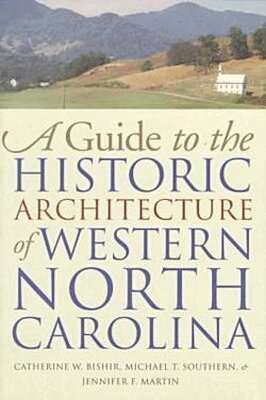
This portable field guide to the historic architecture of western North Carolina covers 1,200 historic buildings in 25 counties in the foothills and mountains. It introduces readers to the region's rich and diverse architectural heritage--from the log farmstead to the opulent mountain retreat, and from ancient earthen mounds of the Cherokee to twentieth-century hydroelectric dams and the Blue Ridge Parkway. Featuring more than 370 photographs and 36 maps, the guide is written for travelers and residents alike. It offers concise entries on notable buildings, neighborhoods, and communities, emphasizing buildings that are visible from the road and indicating sites that are open to the public. A project of the North Carolina State Historic Preservation Office of the Division of Archives and History and its western office in Asheville, the book reflects more than twenty-five years of fieldwork and research in the agency's statewide architectural survey and National Register of Historic Places programs. A previous volume covers eastern North Carolina and a future volume will cover the piedmont region. |This illustrated field guide to the historic architecture of western North Carolina covers 1200 buildings in 25 counties, from Cherokee mounds to the Biltmore House.
434 kr
Skickas inom 10-15 vardagar
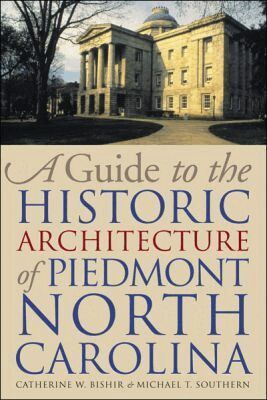
Central North Carolina boasts a rich and varied architectural landscape - from the early plantation houses and farms of its northeastern reaches, to the red brick textile mills and tobacco factories that line railroads across the region, to the glamorous New South skyscrapers of downtown Charlotte. This richly illustrated guide offers a fascinating look at the Piedmont's historic architecture, covering more than 2,000 sites in 34 counties. Highlights include cabins and stone houses dating to the region's early settlement; mill villages and main streets that depict its subsequent industrial and agricultural growth; and twentieth-century landmarks such as Durham's Duke University and Winston-Salem's Wachovia Building. As North Carolina faces massive changes in its economy and landscape, residents and travelers alike will value this unparalleled portrait of an American region, which traces its history and culture through its buildings and communities. A project of the North Carolina State Historic Preservation Office of the Division of Archives and History, this book completes a three-volume series. The project reflects more than twenty-five years of fieldwork and research in the agency's statewide architectural survey and National Register of Historic Places programs.
613 kr
Skickas inom 10-15 vardagar
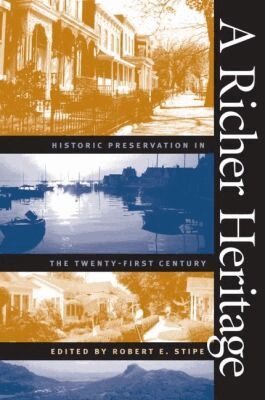
Surveying the past, present, and future of historic preservation in America, this book features fifteen essays by some of the most important voices in the field. A Richer Heritage will be an essential, thought-provoking guide for professionals as well as administrators, volunteers, and policy makers involved in preservation efforts. An introduction traces the evolution of historic preservation in America, highlighting the principle ideas and events that have shaped and continue to shape the movement. The book also describes the workings - legal, administrative, and fiscal - of the layered federal, state, and local government partnership put in place by Congress in 1966. Individual chapters explore the preservation of designed and vernacular landscapes, the relationship between historic preservation and the larger environmental and land-trust movements, the role of new private and nonprofit players, racial and ethnic interests in historic preservation, and the preservation of our intangible cultural values. A concluding chapter analyzes the present state of the historic preservation movement and suggests future directions for the field in the twenty-first century. Contributors include preservationists, local-government citizen activists, architects, landscape architects, environmentalists, an archaeologist, a real-estate developer, historians, a Native American tribal leader, an ethnologist, and lawyers.
393 kr
Skickas inom 10-15 vardagar
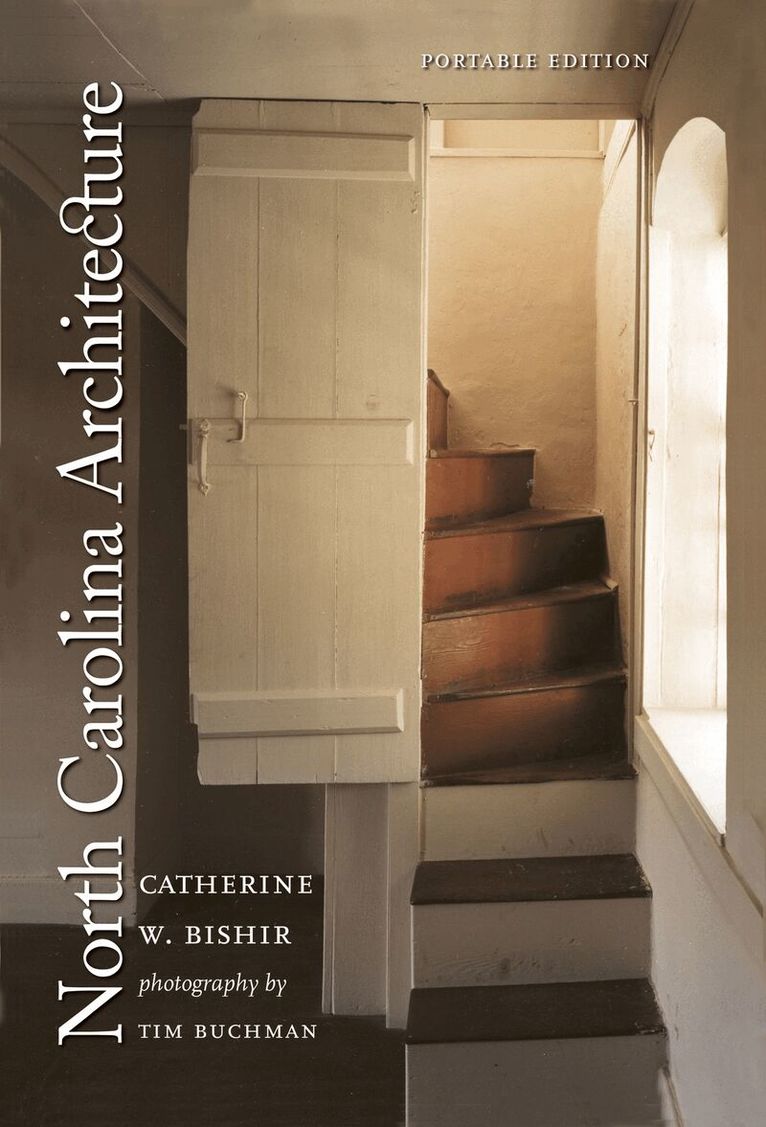
This book presents the North Carolina history through the built world. Now, in a convenient new format, this portable edition of the award-winning, lavishly illustrated history presents the wide range of North Carolina's architectural heritage, from colonial times to the beginning of World War II. ""North Carolina Architecture, Portable Edition"" addresses the state's grand public and private buildings that have become familiar landmarks, but it also focuses on the quieter beauty of more common structures: farmhouses, barns, urban dwellings, log houses, mills, factories, and churches. These buildings, like the people who created them and who have used them, are central to the character of North Carolina. Retaining all of the text of the original edition, as well as hundreds of halftones by master photographer Tim Buchman, the portable edition of ""North Carolina Architecture"" is the perfect glove-compartment or armchair companion. Catherine Bishir's narrative analyzes construction and design techniques, and locates the structures in their cultural, political, and historical contexts. This extraordinary history of North Carolina's built world presents a unique and valuable portrait of the state.
434 kr
Skickas inom 10-15 vardagar
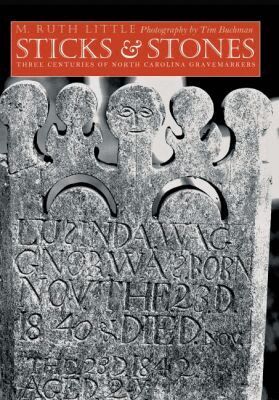
An old graveyard, writes Ruth Little, is a cultural encyclopedia--an invaluable source of insight and information about the families, traditions, and cultural connections that shape a community. But although graveyards and gravemarkers have long been recognized as vital elements of the material culture of New England, they have not received the same attention in the South. Sticks and Stones is the first book to consider the full spectrum of gravemarkers, both plain and fancy, in a southeastern state.From gravehouses to cedar boards to seashell mounds to tomb-tables to pierced soapstones to homemade concrete headstones, an incredibly rich collection of gravemarker types populates North Carolina's graveyards. Exploring the cultural, economic, and material differences that gave rise to such variation, Little traces three major parallel developments: a tradition of headstones crafted of native materials by country artisans; a series of marble monuments created by metropolitan stonecutters; and a largely twentieth-century legacy of wood and concrete markers made within the African American community.With more than 230 illustrations, including 120 stunning photographs by Tim Buchman, Sticks and Stones offers an illuminating look at an important facet of North Carolina's cultural heritage.
569 kr
Skickas inom 10-15 vardagar
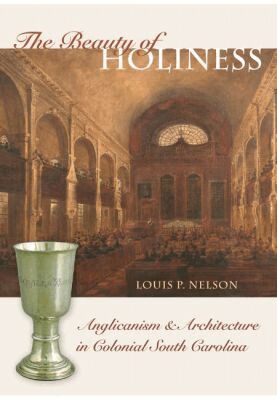
Intermingling architectural, cultural, and religious history, Louis Nelson reads Anglican architecture and decorative arts as documents of eighteenth-century religious practice and belief. In The Beauty of Holiness, he tells the story of the Church of England in colonial South Carolina, revealing how the colony's Anglicans negotiated the tensions between the persistence of seventeenth-century religious practice and the rising tide of Enlightenment thought and sentimentality. Nelson begins with a careful examination of the buildings, grave markers, and communion silver fashioned and used by early Anglicans. Turning to the religious functions of local churches, he uses these objects and artifacts to explore Anglican belief and practice in South Carolina. Chapters focus on the role of the senses in religious understanding, the practice of the sacraments, and the place of beauty, regularity, and order in eighteenth-century Anglicanism. The final section of the book considers the ways church architecture and material culture reinforced social and political hierarchies. Richly illustrated with more than 250 architectural images and photographs of religious objects, The Beauty of Holiness depends on exhaustive fieldwork to track changes in historical architecture. Nelson imaginatively reconstructs the history of the Church of England in colonial South Carolina and its role in public life, from its early years of ambivalent standing within the colony through the second wave of Anglicanism beginning in the early 1750s.