Roman Relations – serie
Visar alla böcker i serien Roman Relations. Handla med fri frakt och snabb leverans.
3 produkter
3 produkter
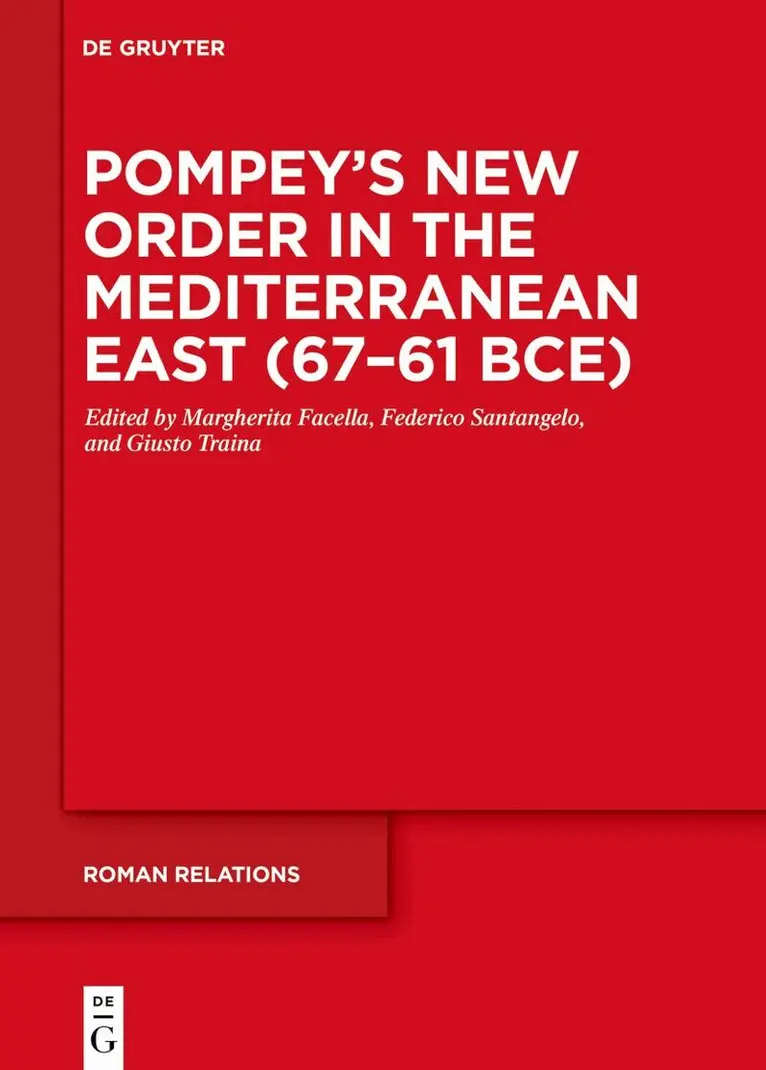
Pompey’s New Order in the Mediterranean East (67–61 BCE)
Part I: Sources and Historical Questions
Inbunden, Engelska, 2025
1 386 kr
Skickas inom 7-10 vardagar
This book provides a collaborative reassessment of Pompey’s campaigns in the Greek East, the ensuing political settlement, and the consequences they had in Rome and in Italy. An international group of scholars offers a fresh reconsideration of a dossier that has received much attention over the centuries, albeit usually through the somewhat limiting (if crucially informative) prism of Greek and Latin textual sources. By adopting a more capacious approach, encompassing traditions that found room in Jewish, Byzantine, and Syriac authors, and providing new discussions of the epigraphical and numismatic evidence, this volume brings into sharper focus the ambition and significance of Pompey’s intervention. The long-term engagement of the Roman commander in the region emerges as a moment that had profound implications to the history of the Roman empire, marked a controversial turning point in internal politics, and set the Roman presence in the Eastern Mediterranean on a new footing. It was the opening act of a new season of Roman geopolitics that would go on to shape the longer-term trajectory of the empire.
1 656 kr
Skickas inom 3-6 vardagar
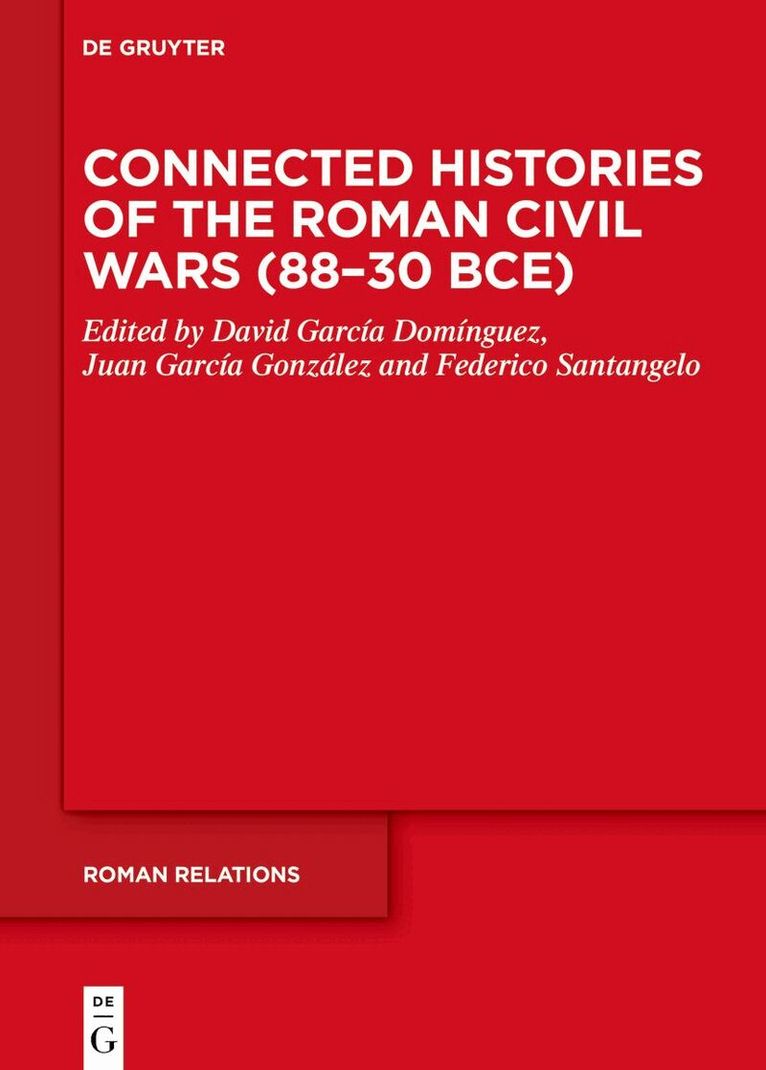
This book offers a distinctive take on the civil wars that unfolded in the Late Roman Republic. It frames their discussion against the backdrop of the Mediterranean contexts in which they were fought, and sets out to bring to the centre of the debate the significance of provincial agency on a traumatic and complex process, which cannot be understood through an exclusive focus on Roman and Italian developments. The study of the late Republican civil wars can be productively read as an exercise of ‘connected history’, in which the fundamental interdependence of the Mediterranean world comes to the fore through a set of case studies that await to be understood through a properly integrative approach. Our project brings together an international and diverse lineup of scholars, who engage with a wide range of literary, documentary, and archaeological material, and make a collective contribution to the reframing of a problem that requires a collaborative and interdisciplinary outlook, and can yield invaluable insights to the understanding of the Roman imperial project.
1 863 kr
Skickas inom 7-10 vardagar
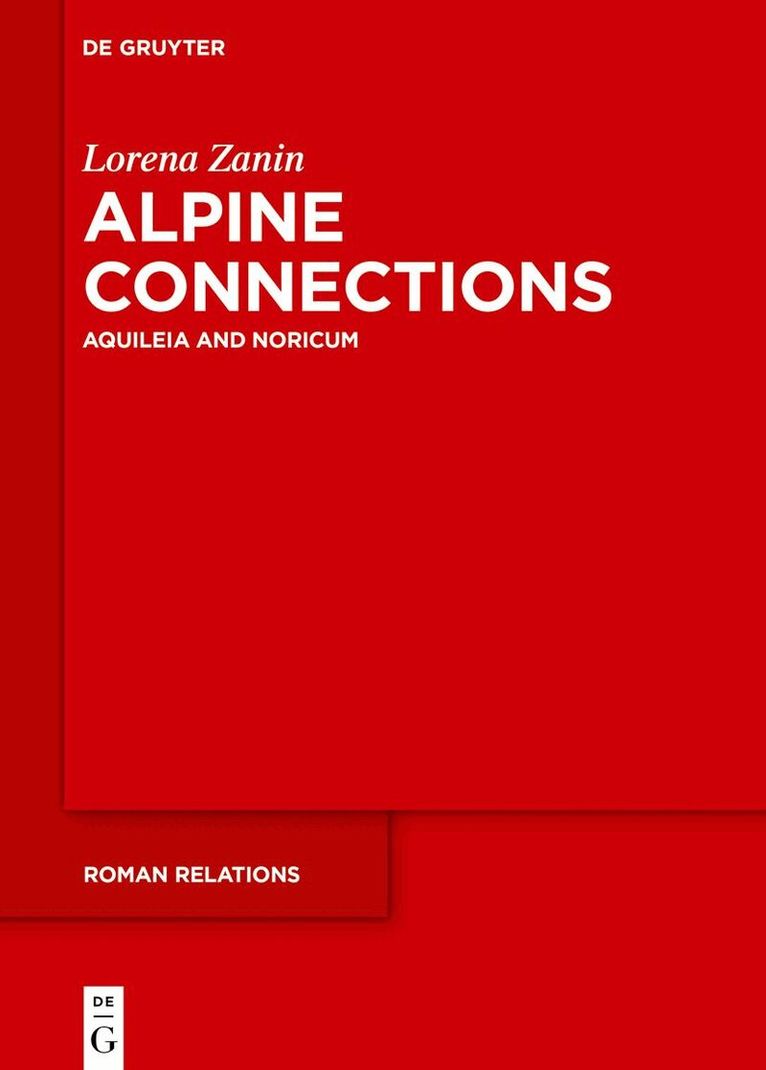
This research represents a pivotal advancement in our understanding of the complex interactions between Rome and Noricum. Initially integrated as a kingdom, Noricum underwent a formal transition to Roman rule several decades later. Notably, the spread of Roman culture did not originate from Rome itself, but rather from Aquileia, a key center situated near Noricum’s southern border, which had established exchanges with Noricum even before its annexation into the Empire Central to this study is Aquileia, a Latin colony founded in 181 BC in northeastern Italy. The rich epigraphic and archaeological records from Aquileia, along with findings from southern Noricum, illuminate the evolving ties between these areas—from their pre-Roman relations to early Roman interactions, through their annexation, and into the following centuries. Noricum's strategic location on the Empire's northern edge, rich in natural resources, allowed this research to encompass multiple sectors such as trade, customs, mining, military distribution, religious syncretism, and artistic influences. Aquileia's vibrant environment fostered significant cultural and economic exchanges, enabling citizens to pursue diverse opportunities in business, military, and public service, which transformed the local context. By integrating diverse historical scholarship, this study deepens our understanding of Noricum’s cultural evolution, revealing the profound impact of its relationships with Aquileia. Such interactions laid the groundwork for essential political, economic, and cultural transitions throughout Noricum’s history, extending into the Severan period. This research provides not only a wealth of information but also offers fresh perspectives and inspire further inquiry into the complexities of Roman provincial life. Whether one is seeking to understand the nuances of local governance, the significance of archaeological findings, or the interplay of cultural exchanges in the region, The Alpine Connections: Aquileia and Noricum serves as a vital reference that enriches our understanding of the Roman Empire's enduring legacy and its far-reaching influences.