Routledge Advances in Sustainable Fashion – serie
Visar alla böcker i serien Routledge Advances in Sustainable Fashion. Handla med fri frakt och snabb leverans.
4 produkter
4 produkter
Häftad, Engelska, 2026
649 kr
Kommande
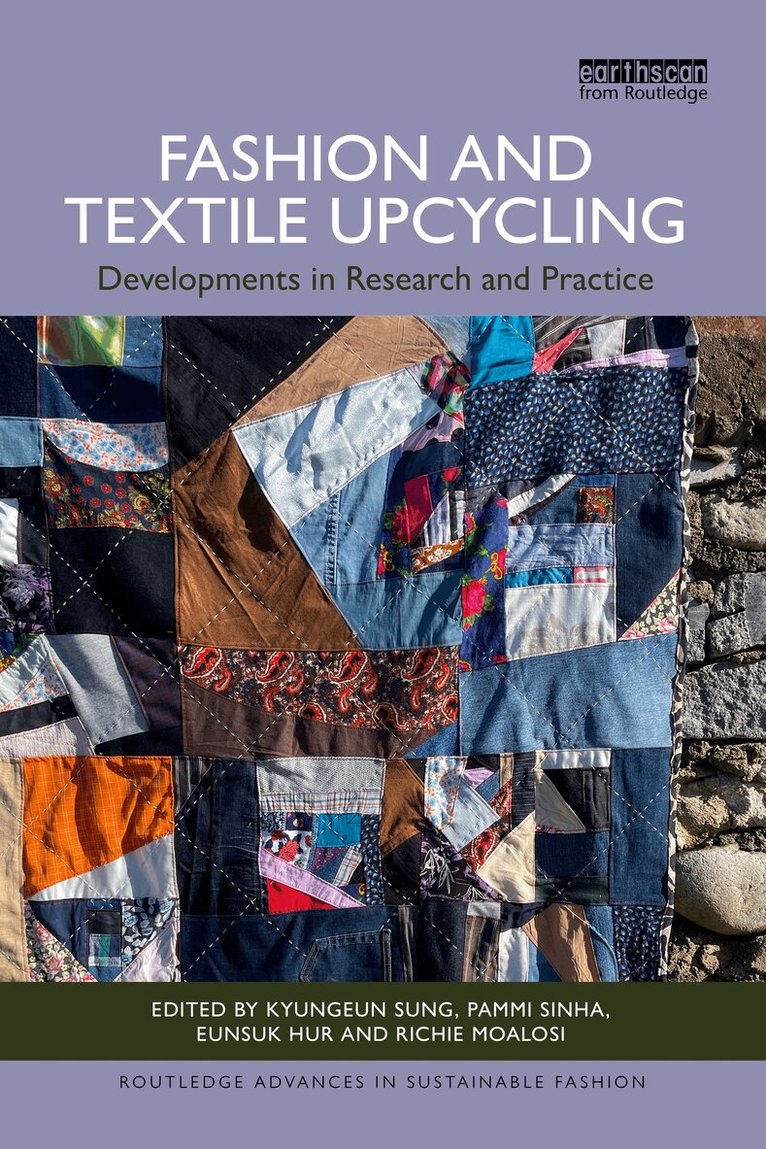
Presenting cutting-edge research, innovative technologies, and new practices from global experts in the field, this book highlights the changes being made to make the fashion industry more sustainable through fashion and textile upcycling.While the fashion industry provides essential clothing and fashion products to consumers worldwide and is a major source of employment in many countries, it is notoriously wasteful and environmentally damaging. Recognising the industry's negative impact on the environment, particularly through the lens of fast fashion and throwaway consumer culture, this book identifies emerging and established leaders working to make the industry more sustainable and circular. Showcasing a collection of creative material practices that transform textile waste into new products and materials of equal or higher quality or value than the constituent elements, it includes coverage of upcycling theories, traditional and contemporary practices, and experiments from practitioners and other stakeholders around the world. Through a variety of innovative approaches, scientific findings and practical outcomes, the book proposes a way forward for sustainable and circular fashion and textiles. Encouraging readers to rethink the status quo, it prompts a reimagining of the future, where the fashion industry is the largest and most successful contributor to a circular economy.The book will be a key resource for students, academics, practitioners and policymakers on how to reduce fashion and textile waste, conserve resources, reduce environmental impact, create economic opportunities, foster innovation, and promote social and cultural value in the circular economy.
Inbunden, Engelska, 2026
2 375 kr
Kommande
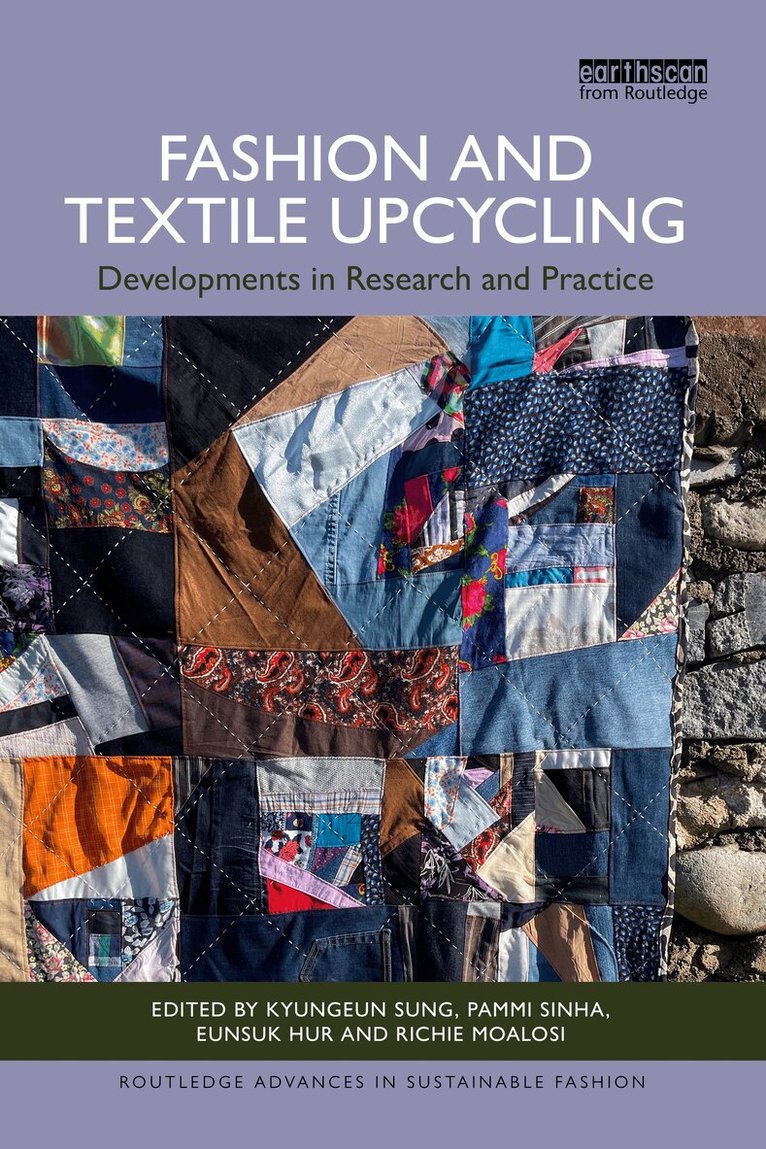
Presenting cutting-edge research, innovative technologies, and new practices from global experts in the field, this book highlights the changes being made to make the fashion industry more sustainable through fashion and textile upcycling.While the fashion industry provides essential clothing and fashion products to consumers worldwide and is a major source of employment in many countries, it is notoriously wasteful and environmentally damaging. Recognising the industry's negative impact on the environment, particularly through the lens of fast fashion and throwaway consumer culture, this book identifies emerging and established leaders working to make the industry more sustainable and circular. Showcasing a collection of creative material practices that transform textile waste into new products and materials of equal or higher quality or value than the constituent elements, it includes coverage of upcycling theories, traditional and contemporary practices, and experiments from practitioners and other stakeholders around the world. Through a variety of innovative approaches, scientific findings and practical outcomes, the book proposes a way forward for sustainable and circular fashion and textiles. Encouraging readers to rethink the status quo, it prompts a reimagining of the future, where the fashion industry is the largest and most successful contributor to a circular economy.The book will be a key resource for students, academics, practitioners and policymakers on how to reduce fashion and textile waste, conserve resources, reduce environmental impact, create economic opportunities, foster innovation, and promote social and cultural value in the circular economy.
Häftad, Engelska, 2026
679 kr
Kommande
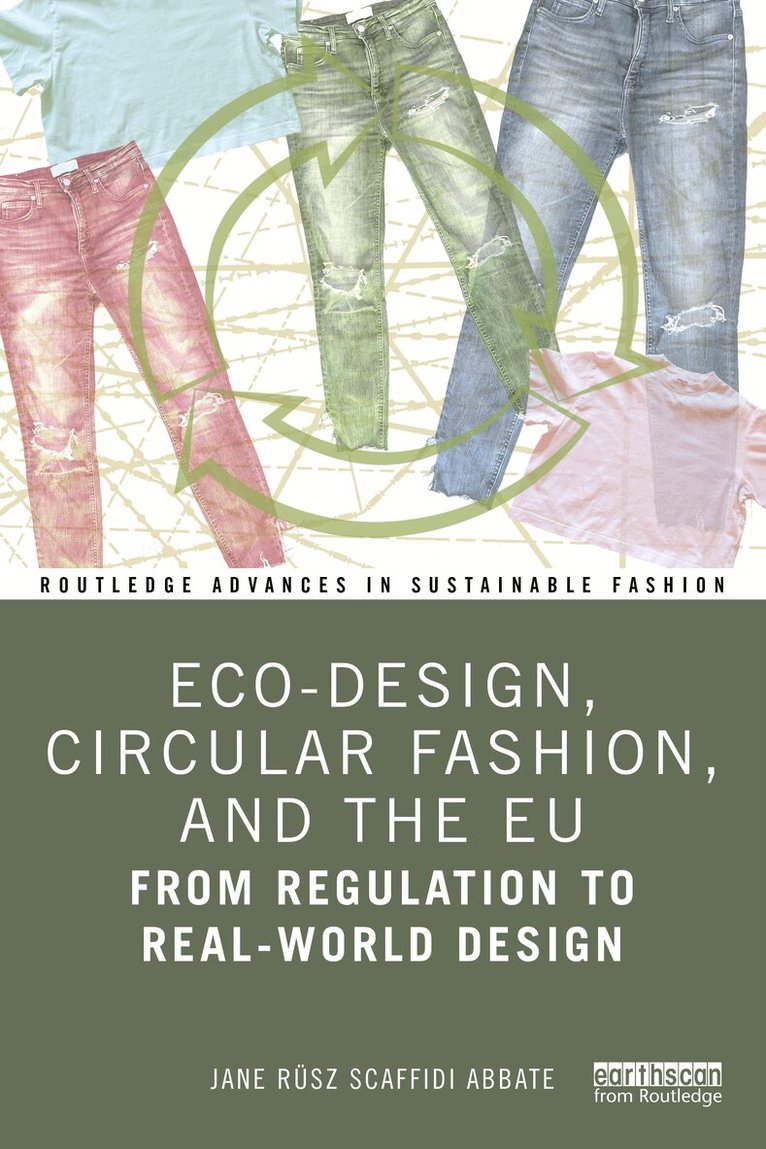
Addressing the growing gap between sustainability theory and real-world design and production practice, this book provides a practical and design-led framework for implementing eco-design and circular fashion within contemporary fashion systems shaped by European regulation, digital transformation, and evolving sustainability expectations.Fashion designers and product teams are increasingly required to respond to regulatory frameworks such as the Ecodesign for Sustainable Products Regulation (ESPR), Digital Product Passports (DPP), Extended Producer Responsibility (EPR), and traceability obligations, while continuing to operate within complex global supply chains. Yet existing literature often explains what circular fashion is without demonstrating how it can be implemented inside real design workflows, material decisions, and production systems. This book responds to that challenge by placing the designer at the centre of interconnected ecological, technical, and organisational systems. Drawing on systems thinking, circular design methodologies, material innovation, and Industry 4.0 technologies, the book offers visual frameworks, case-based insights, and practical tools that support the transition from linear to circular fashion systems. Topics include material health and monomaterial design, upcycling and regeneration at scale, digital prototyping and smart production, traceability and data flows, and circular business models for both start-ups and established brands. Bridging creativity, policy literacy, and operational decision-making, this book offers a structured and applied contribution to sustainable fashion education and practice.This book will be of interest to postgraduate and advanced undergraduate students in sustainable fashion and design, as well as fashion professionals, educators, and sustainability practitioners seeking applied, EU-aligned approaches to circular design and product development.
Inbunden, Engelska, 2026
2 634 kr
Kommande
Addressing the growing gap between sustainability theory and real-world design and production practice, this book provides a practical and design-led framework for implementing eco-design and circular fashion within contemporary fashion systems shaped by European regulation, digital transformation, and evolving sustainability expectations.Fashion designers and product teams are increasingly required to respond to regulatory frameworks such as the Ecodesign for Sustainable Products Regulation (ESPR), Digital Product Passports (DPP), Extended Producer Responsibility (EPR), and traceability obligations, while continuing to operate within complex global supply chains. Yet existing literature often explains what circular fashion is without demonstrating how it can be implemented inside real design workflows, material decisions, and production systems. This book responds to that challenge by placing the designer at the centre of interconnected ecological, technical, and organisational systems. Drawing on systems thinking, circular design methodologies, material innovation, and Industry 4.0 technologies, the book offers visual frameworks, case-based insights, and practical tools that support the transition from linear to circular fashion systems. Topics include material health and monomaterial design, upcycling and regeneration at scale, digital prototyping and smart production, traceability and data flows, and circular business models for both start-ups and established brands. Bridging creativity, policy literacy, and operational decision-making, this book offers a structured and applied contribution to sustainable fashion education and practice.This book will be of interest to postgraduate and advanced undergraduate students in sustainable fashion and design, as well as fashion professionals, educators, and sustainability practitioners seeking applied, EU-aligned approaches to circular design and product development.