Routledge Classic Texts in Anthropology - Böcker
Visar alla böcker i serien Routledge Classic Texts in Anthropology. Handla med fri frakt och snabb leverans.
12 produkter
12 produkter
632 kr
Skickas inom 10-15 vardagar
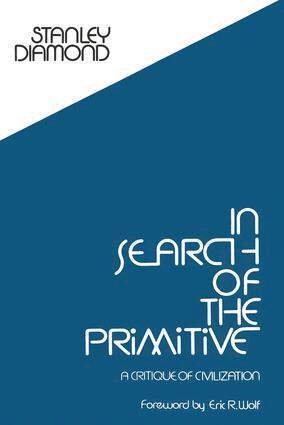
Anthropology is a kind of debate between human possibilities—a dialectical movement between the anthropologist as a modern man and the primitive peoples he studies. In Search of the Primitive is a tough-minded book containing chapters ranging from encounters in the field to essays on the nature of law, schizophrenia and civilization, and the evolution of the work of Claude Lévi-Strauss. Above all it is reflective and self-critical, critical of the discipline of anthropology and of the civilization that produced that discipline. Diamond views the anthropologist who refuses to become a searching critic of his own civilizations as not merely irresponsible, but a tool of Western civilization. He rejects the associations which have been made in the ideology of our civilization, consciously or unconsciously, between Western dominance and progress, imperialism and evolution, evolution and progress.
2 113 kr
Skickas inom 10-15 vardagar
Anthropology is a kind of debate between human possibilities—a dialectical movement between the anthropologist as a modern man and the primitive peoples he studies. In Search of the Primitive is a tough-minded book containing chapters ranging from encounters in the field to essays on the nature of law, schizophrenia and civilization, and the evolution of the work of Claude Lévi-Strauss. Above all it is reflective and self-critical, critical of the discipline of anthropology and of the civilization that produced that discipline. Diamond views the anthropologist who refuses to become a searching critic of his own civilizations as not merely irresponsible, but a tool of Western civilization. He rejects the associations which have been made in the ideology of our civilization, consciously or unconsciously, between Western dominance and progress, imperialism and evolution, evolution and progress.
2 113 kr
Skickas inom 10-15 vardagar
While the world has undoubtedly been shrinking, at the same time it has grown more complex. The likelihood of culture clashes leading to outright conflict is high, perhaps higher than ever. As Andrea L. Smith convincingly argues in her new introduction to this classic work, certain questions are as valid today as in 1949, when Mirror for Man was first published. Can anthropology break down prejudices that exist between peoples and nations? Can knowledge of past human behavior help solve the world’s modern problems? What effect will American attitudes likely have on the future of the world?In Mirror for Man, Clyde Kluckhohn scrutinizes anthropology, showing how the discipline can contribute to the reconciliation of conflicting cultures. He questions age-old race theories, shows how people came to be as they are, and examines limitations in how human beings can be molded. Taking up one of the most vital questions in the post-World War II world, whether international order can be achieved by domination, Kluckhohn demonstrates that cultural clashes drive much of the world’s conflict, and shows how we can help resolve it if only we are willing to work for joint understanding.By interpreting human behavior, Kluckhohn reveals that anthropology can make a practical contribution through its predictive power in the realm of politics, social attitudes, and group psychology. Andrea L. Smith’s new introduction provides convincing evidence for the continuing importance of one of the earliest “public intellectuals.”
Cultural Intimacy
Social Poetics and the Real Life of States, Societies, and Institutions
Inbunden, Engelska, 2016
2 113 kr
Skickas inom 10-15 vardagar
In the third edition of this important and influential book, Michael Herzfeld revisits the idea of ‘cultural intimacy’. The chapters examine a range of topics touching on the relationship between state and citizen, and the notion of ‘national character’. Herzfeld provides a developed theoretical framework and additional clarification of core concepts such as disemia, social poetics and structural nostalgia. The text has been fully updated in light of recent scholarship and events, including comment on Greece and the European Union. There is new material drawn from regions such as Thailand and China, and further consideration of religious intimacy and its impact on cities. The book improves our understanding of how states, societies and institutions function and illustrates the relevance of anthropology to contemporary issues such as globalization, censorship, ethnic conflict and nationalism.
Cultural Intimacy
Social Poetics and the Real Life of States, Societies, and Institutions
Häftad, Engelska, 2016
659 kr
Skickas inom 10-15 vardagar
In the third edition of this important and influential book, Michael Herzfeld revisits the idea of ‘cultural intimacy’. The chapters examine a range of topics touching on the relationship between state and citizen, and the notion of ‘national character’. Herzfeld provides a developed theoretical framework and additional clarification of core concepts such as disemia, social poetics and structural nostalgia. The text has been fully updated in light of recent scholarship and events, including comment on Greece and the European Union. There is new material drawn from regions such as Thailand and China, and further consideration of religious intimacy and its impact on cities. The book improves our understanding of how states, societies and institutions function and illustrates the relevance of anthropology to contemporary issues such as globalization, censorship, ethnic conflict and nationalism.
632 kr
Skickas inom 10-15 vardagar
In this ambitious and accomplished work, Taussig explores the complex and interwoven concepts of mimesis, the practice of imitation, and alterity, the opposition of Self and Other. The book moves from the nineteenth-century invention of mimetically capacious machines, such as the camera, to the fable of colonial ‘first contact’ and the alleged mimetic power of ‘primitives’. Twenty years after the original publication, Taussig revisits the work in a new preface which contextualises the impact of Mimesis and Alterity. Drawing on the ideas of Benjamin, Adorno and Horckheimer and ethnographic accounts of the Cuna, Taussig demonstrates how the history of mimesis is deeply tied to colonialism and the idea of alterity has become increasingly unstable. Vigorous and unorthodox, this cross-cultural discussion continues to deepen our understanding of the relationship between ethnography, racism and society.
2 113 kr
Skickas inom 10-15 vardagar
Adam Kuper’s iconoclastic intellectual history argues that the idea of “primitive society” is a western myth. The “primitive” is imagined as the opposite of the “civilised”. But this is a protean myth. As ideas about civilisation change, so the image of primitive society must be adjusted. By way of fascinating account of classic texts in anthropology, ancient history and law, Kuper reveals how this myth underpinned academic research and inspired political programmes. Its ancestry is traced back to classical western beliefs about barbarians and savages, and Kuper also tackles the latest version of the myth, the idea of a global identity of “indigenous peoples”. The Reinvention of Primitive Society is a key text in the history of anthropology, and will interest anyone who has puzzled about the very idea of “primitive society” – and so, by implication, about “civilisation”.
659 kr
Skickas inom 10-15 vardagar
Adam Kuper’s iconoclastic intellectual history argues that the idea of “primitive society” is a western myth. The “primitive” is imagined as the opposite of the “civilised”. But this is a protean myth. As ideas about civilisation change, so the image of primitive society must be adjusted. By way of fascinating account of classic texts in anthropology, ancient history and law, Kuper reveals how this myth underpinned academic research and inspired political programmes. Its ancestry is traced back to classical western beliefs about barbarians and savages, and Kuper also tackles the latest version of the myth, the idea of a global identity of “indigenous peoples”. The Reinvention of Primitive Society is a key text in the history of anthropology, and will interest anyone who has puzzled about the very idea of “primitive society” – and so, by implication, about “civilisation”.
2 113 kr
Skickas inom 10-15 vardagar
In this ambitious and accomplished work, Taussig explores the complex and interwoven concepts of mimesis, the practice of imitation, and alterity, the opposition of Self and Other. The book moves from the nineteenth-century invention of mimetically capacious machines, such as the camera, to the fable of colonial ‘first contact’ and the alleged mimetic power of ‘primitives’. Twenty years after the original publication, Taussig revisits the work in a new preface which contextualises the impact of Mimesis and Alterity. Drawing on the ideas of Benjamin, Adorno and Horckheimer and ethnographic accounts of the Cuna, Taussig demonstrates how the history of mimesis is deeply tied to colonialism and the idea of alterity has become increasingly unstable. Vigorous and unorthodox, this cross-cultural discussion continues to deepen our understanding of the relationship between ethnography, racism and society.
727 kr
Skickas inom 10-15 vardagar
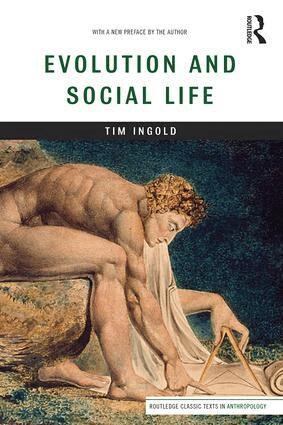
Evolution is among the most central and most contested of ideas in the history of anthropology. This book charts the fortunes of the idea from the mid-nineteenth century to recent times. By comparing biological, historical, and anthropological approaches to the study of human culture and social life, it lays the foundation for their effective synthesis. Far ahead of its time when first published, the book anticipates debates at the forefront of contemporary thinking. Revisiting the work after almost thirty years, Tim Ingold offers a substantial new preface that describes how the book came to be written, how it was received and its bearing on later developments. Unique in scope and breadth of theoretical vision, Evolution and Social Life cuts across the boundaries of natural science and the humanities to provide a major contribution both to the history of anthropological and social thought, and to contemporary debate on the relationship between human nature, culture, and social life.
2 113 kr
Skickas inom 10-15 vardagar
Evolution is among the most central and most contested of ideas in the history of anthropology. This book charts the fortunes of the idea from the mid-nineteenth century to recent times. By comparing biological, historical, and anthropological approaches to the study of human culture and social life, it lays the foundation for their effective synthesis. Far ahead of its time when first published, the book anticipates debates at the forefront of contemporary thinking. Revisiting the work after almost thirty years, Tim Ingold offers a substantial new preface that describes how the book came to be written, how it was received and its bearing on later developments. Unique in scope and breadth of theoretical vision, Evolution and Social Life cuts across the boundaries of natural science and the humanities to provide a major contribution both to the history of anthropological and social thought, and to contemporary debate on the relationship between human nature, culture, and social life.
578 kr
Skickas inom 10-15 vardagar
While the world has undoubtedly been shrinking, at the same time it has grown more complex. The likelihood of culture clashes leading to outright conflict is high, perhaps higher than ever. As Andrea L. Smith convincingly argues in her new introduction to this classic work, certain questions are as valid today as in 1949, when Mirror for Man was first published. Can anthropology break down prejudices that exist between peoples and nations? Can knowledge of past human behavior help solve the world’s modern problems? What effect will American attitudes likely have on the future of the world?In Mirror for Man, Clyde Kluckhohn scrutinizes anthropology, showing how the discipline can contribute to the reconciliation of conflicting cultures. He questions age-old race theories, shows how people came to be as they are, and examines limitations in how human beings can be molded. Taking up one of the most vital questions in the post-World War II world, whether international order can be achieved by domination, Kluckhohn demonstrates that cultural clashes drive much of the world’s conflict, and shows how we can help resolve it if only we are willing to work for joint understanding.By interpreting human behavior, Kluckhohn reveals that anthropology can make a practical contribution through its predictive power in the realm of politics, social attitudes, and group psychology. Andrea L. Smith’s new introduction provides convincing evidence for the continuing importance of one of the earliest “public intellectuals.”