Routledge Geopolitics Series – serie
Visar alla böcker i serien Routledge Geopolitics Series. Handla med fri frakt och snabb leverans.
19 produkter
19 produkter
Inbunden, Engelska, 2019
2 133 kr
Skickas inom 10-15 vardagar
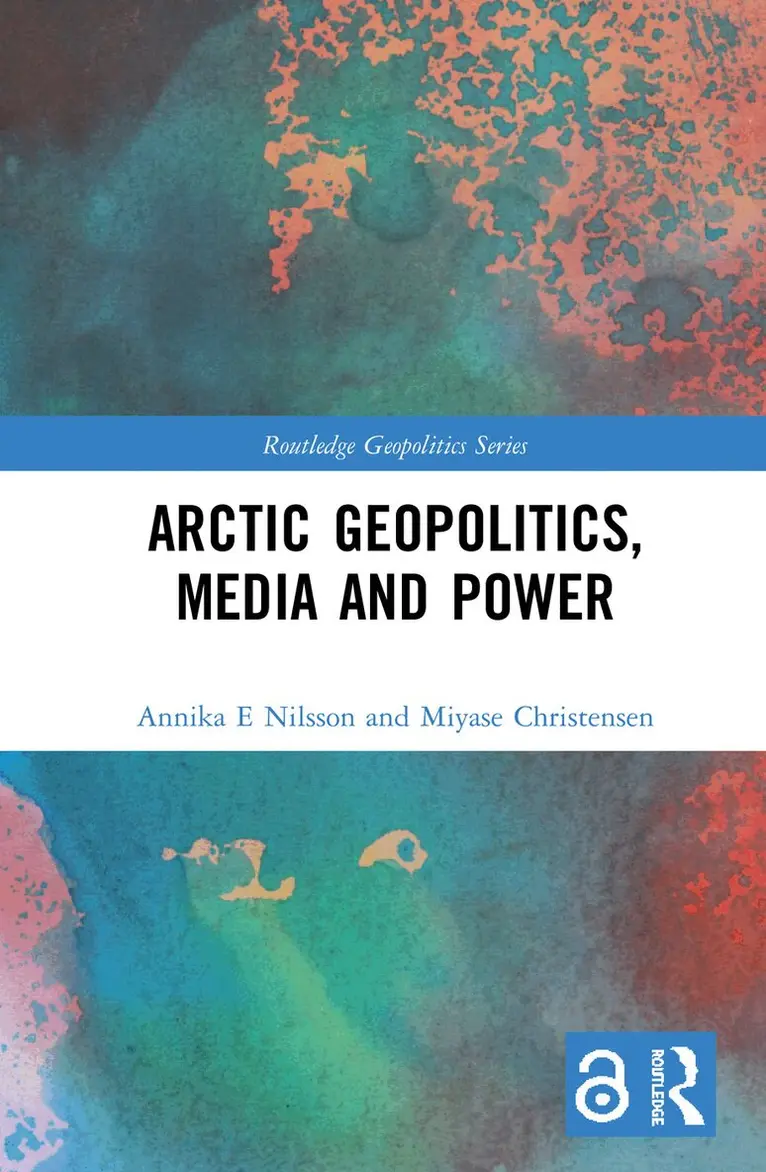
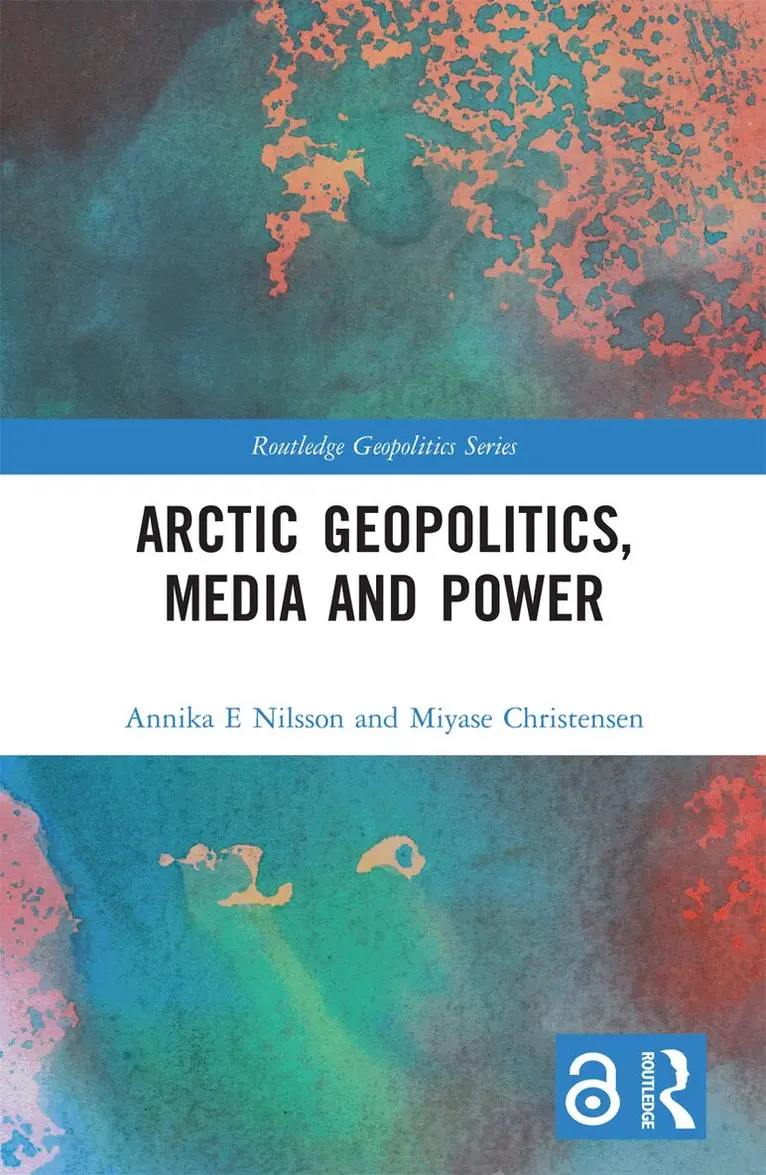
Arctic Geopolitics, Media and Power provides a fresh way of looking at the potential and limitations of regional international governance in the Arctic region. Far-reaching impacts of climate change, its wealth of resources and potential for new commercial activities have placed the Arctic region into the political limelight. In an era of rapid environmental change, the Arctic provides a complex and challenging case of geopolitical interplay. Based on analyses of how actors from within and outside the Arctic region assert their interests and how such discourses travel in the media, this book scrutinizes the social and material contexts within which new imaginaries, spatial constructs and scalar preferences emerge. It places ground-breaking attention to shifting media landscapes as a critical component of the social, environmental and technological change. It also reflects on the fundamental dilemmas inherent in democratic decision making at a time when an urgent need for addressing climate change is challenged by conflicting interests and growing geopolitical tensions. This book will be of great interest to geography academics, media and communication studies and students focusing on policy, climate change and geopolitics, as well as policy-makers and NGOs working within the environmental sector or with the Arctic region.The Open Access version of this book, available at http://www.tandfebooks.com/doi/view/10.4324/9780367189822 has been made available under a Creative Commons Attribution-Non Commercial-No Derivatives 4.0 license.
Inbunden, Engelska, 2020
2 133 kr
Skickas inom 10-15 vardagar
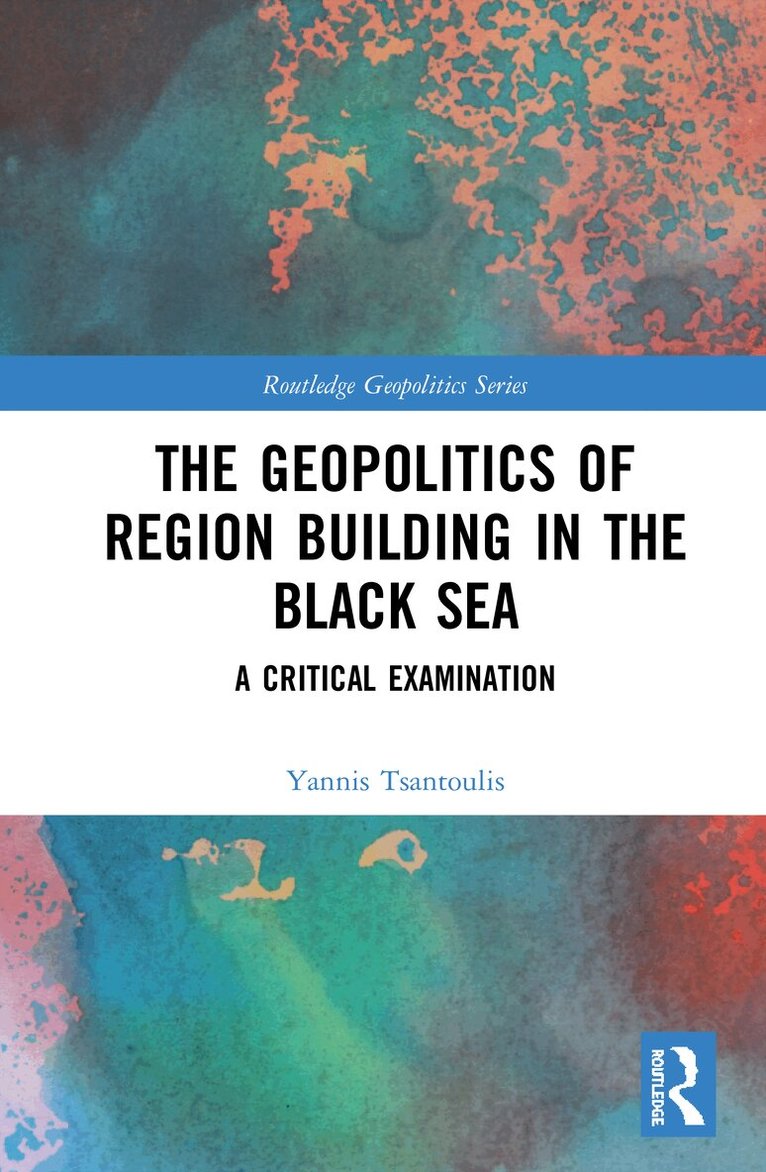
Offering theoretical insights on region building, this book explores the attempts to formulate a political and institutional vision for the Black Sea region in the post-9/11 era and in the context of the enlargements of the EU and NATO. It investigates in depth these attempts, viewed as a failure by the key actors involved, in order to understand how regions emerge in international politics as well as how and why they may fail to come into being. To this end, the book explores a range of factors that impacted region building in the Black Sea, considering the role of region builders involved, their practices and the context of their actions, and the spatial representations and security discourses that were integral to the region building process. Hence, attention is paid to how these factors both enabled and constrained the discursive construction of the Black Sea region, thus identifying the elements that distinguish the Black Sea from other successful cases of region building. Based on critical approaches towards international relations and political geography, this book both expands and deepens the scope and understanding of regions and will thus appeal to academics and students in the fields of International Relations, Security Studies, Political Geography, and Regional Integration.
Inbunden, Engelska, 2020
2 133 kr
Skickas inom 10-15 vardagar
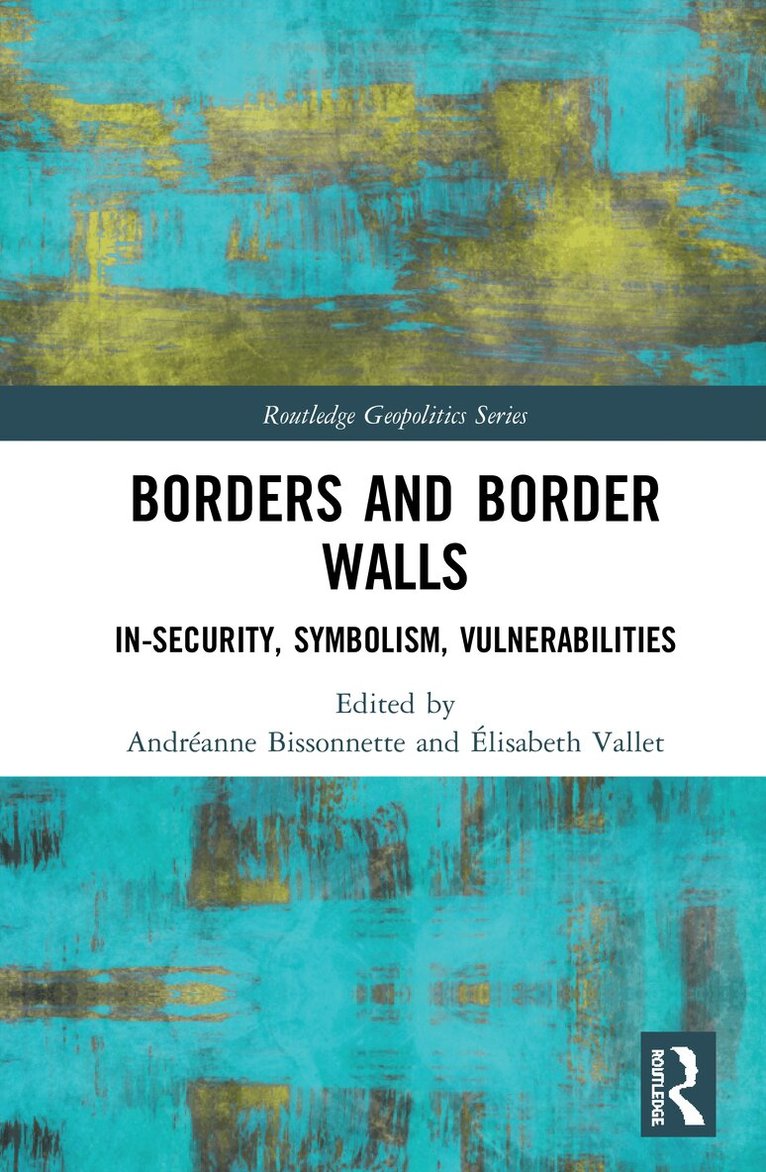
This book addresses the recent evolution of borderlines around the world as an attempt to control transnational movements with a view to securitization of borders rooted in the need to control mobility and preserve national identities.This book moves beyond physical borders and studies new manifestations of borders such as technological and symbolic walls. It brings together scholars from various academic fields such as geography, political science, and border studies to examine the various movements, functions and articulations of international borders. It explores two main issues: how international borders have become enforced lines of demarcation and division, reinforcing national identity and impacting national and regional dynamics; and the material and immaterial, discursive and concrete expressions of borders and the impacts of the transformation of bodies into threat to be monitored, as daily lives become sites of border enforcement.Offering multidisciplinary insights on the growing phenomenon of border walls, this book will be of interest to undergraduate and postgraduate students of Border Studies, European Studies, International Relations, Political Geography, and Regional Studies.
Häftad, Engelska, 2022
624 kr
Skickas inom 10-15 vardagar
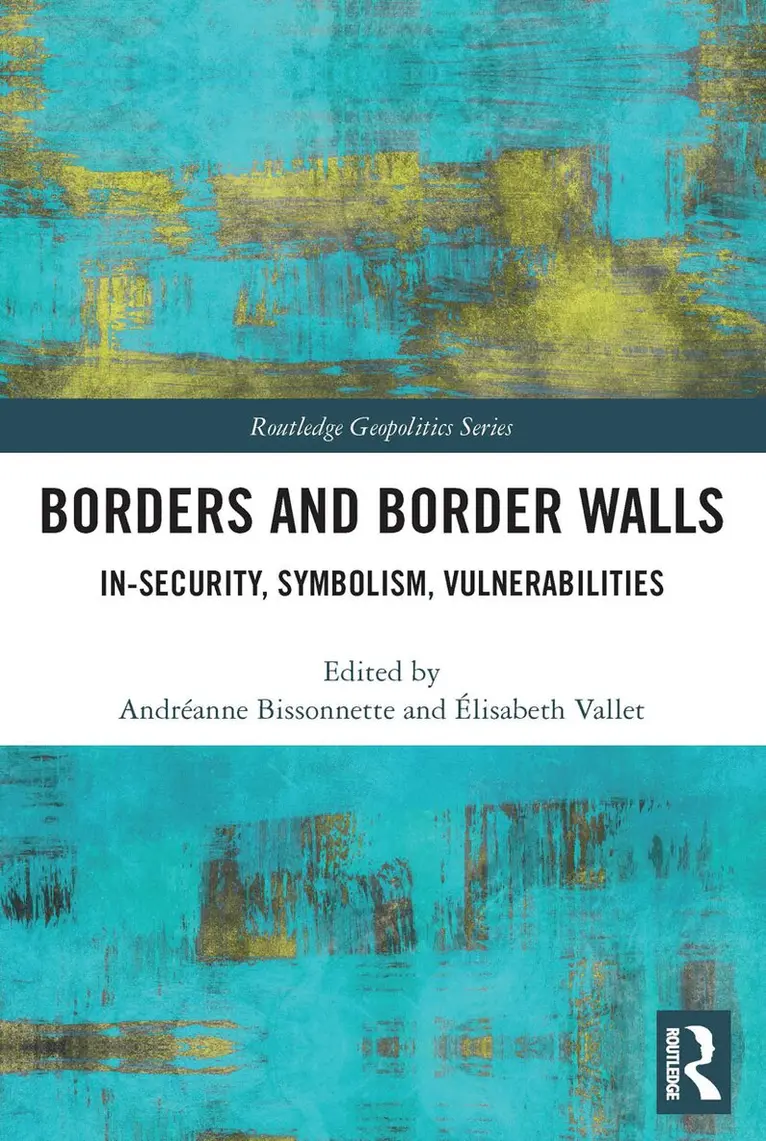
This book addresses the recent evolution of borderlines around the world as an attempt to control transnational movements with a view to securitization of borders rooted in the need to control mobility and preserve national identities.This book moves beyond physical borders and studies new manifestations of borders such as technological and symbolic walls. It brings together scholars from various academic fields such as geography, political science, and border studies to examine the various movements, functions and articulations of international borders. It explores two main issues: how international borders have become enforced lines of demarcation and division, reinforcing national identity and impacting national and regional dynamics; and the material and immaterial, discursive and concrete expressions of borders and the impacts of the transformation of bodies into threat to be monitored, as daily lives become sites of border enforcement.Offering multidisciplinary insights on the growing phenomenon of border walls, this book will be of interest to undergraduate and postgraduate students of Border Studies, European Studies, International Relations, Political Geography, and Regional Studies.
Häftad, Engelska, 2020
624 kr
Skickas inom 10-15 vardagar
This book brings together scholars from across a variety of academic disciplines to assess the current state of the subfield of popular geopolitics. It provides an archaeology of the field, maps the flows of various frameworks of analysis into (and out of) popular geopolitics, and charts a course forward for the discipline. It explores the real-world implications of popular culture, with a particular focus on the evolving interdisciplinary nature of popular geopolitics alongside interrelated disciplines including media, cultural, and gender studies.
Häftad, Engelska, 2023
624 kr
Skickas inom 10-15 vardagar
Offering theoretical insights on region building, this book explores the attempts to formulate a political and institutional vision for the Black Sea region in the post-9/11 era and in the context of the enlargements of the EU and NATO. It investigates in depth these attempts, viewed as a failure by the key actors involved, in order to understand how regions emerge in international politics as well as how and why they may fail to come into being. To this end, the book explores a range of factors that impacted region building in the Black Sea, considering the role of region builders involved, their practices and the context of their actions, and the spatial representations and security discourses that were integral to the region building process. Hence, attention is paid to how these factors both enabled and constrained the discursive construction of the Black Sea region, thus identifying the elements that distinguish the Black Sea from other successful cases of region building. Based on critical approaches towards international relations and political geography, this book both expands and deepens the scope and understanding of regions and will thus appeal to academics and students in the fields of International Relations, Security Studies, Political Geography, and Regional Integration.
Inbunden, Engelska, 2022
2 133 kr
Skickas inom 10-15 vardagar
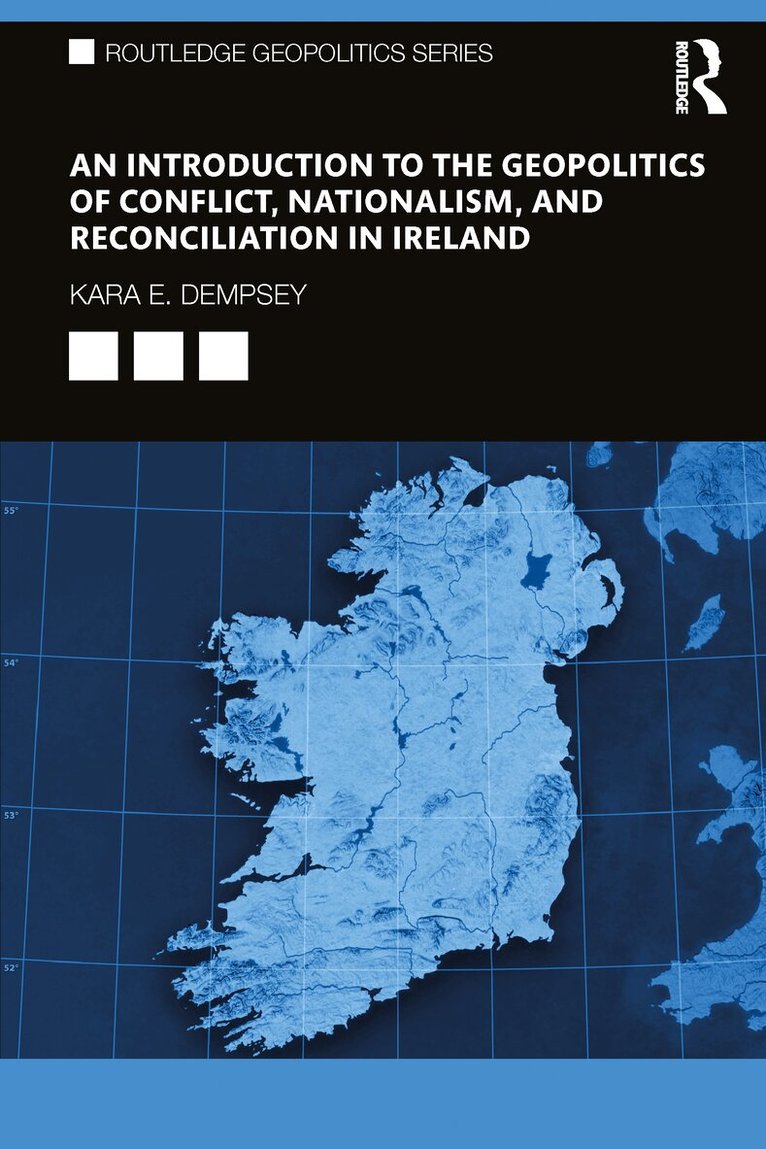
This book examines ethnoterritorial conflict and reconciliation in Ireland from the 1916 Rising to Brexit (2021), including the production and consequences of the island’s two distinct political units. Highlighting key geographic themes of bordering, unity, division, and national narratives, it explores how geopolitical space has been employed over time to (re)define divided national allegiances throughout Ireland and within Irish–British relations. The analysis draws from in-depth interviews and archival research, and spans supranational, state, municipal, neighborhood, and individual scales. The book pays particular attention to uneven power structures, statecraft, perceived truths, lived experiences, reconciliation efforts, and renegotiations of national narratives in the production of symbolic landscapes, divided cities, and "shared" space. An Introduction to the Geopolitics of Conflict, Nationalism, and Reconciliation in Ireland provides readers with an analysis of geopolitical power relations and different spatial productions of conflict and peacebuilding in Ireland. Offering deeper understanding of these historic and contemporary geopolitical intersections, this book makes a valuable contribution to the fields of Political Geography, Border Studies, Irish Studies, European Studies, International Relations, Cultural Geography, and Regional Studies.
Häftad, Engelska, 2022
652 kr
Skickas inom 10-15 vardagar
This book examines ethnoterritorial conflict and reconciliation in Ireland from the 1916 Rising to Brexit (2021), including the production and consequences of the island’s two distinct political units. Highlighting key geographic themes of bordering, unity, division, and national narratives, it explores how geopolitical space has been employed over time to (re)define divided national allegiances throughout Ireland and within Irish–British relations. The analysis draws from in-depth interviews and archival research, and spans supranational, state, municipal, neighborhood, and individual scales. The book pays particular attention to uneven power structures, statecraft, perceived truths, lived experiences, reconciliation efforts, and renegotiations of national narratives in the production of symbolic landscapes, divided cities, and "shared" space. An Introduction to the Geopolitics of Conflict, Nationalism, and Reconciliation in Ireland provides readers with an analysis of geopolitical power relations and different spatial productions of conflict and peacebuilding in Ireland. Offering deeper understanding of these historic and contemporary geopolitical intersections, this book makes a valuable contribution to the fields of Political Geography, Border Studies, Irish Studies, European Studies, International Relations, Cultural Geography, and Regional Studies.
Häftad, Engelska, 2020
624 kr
Skickas inom 10-15 vardagar
Arctic Geopolitics, Media and Power provides a fresh way of looking at the potential and limitations of regional international governance in the Arctic region. Far-reaching impacts of climate change, its wealth of resources and potential for new commercial activities have placed the Arctic region into the political limelight. In an era of rapid environmental change, the Arctic provides a complex and challenging case of geopolitical interplay. Based on analyses of how actors from within and outside the Arctic region assert their interests and how such discourses travel in the media, this book scrutinizes the social and material contexts within which new imaginaries, spatial constructs and scalar preferences emerge. It places ground-breaking attention to shifting media landscapes as a critical component of the social, environmental and technological change. It also reflects on the fundamental dilemmas inherent in democratic decision making at a time when an urgent need for addressing climate change is challenged by conflicting interests and growing geopolitical tensions. This book will be of great interest to geography academics, media and communication studies and students focusing on policy, climate change and geopolitics, as well as policy-makers and NGOs working within the environmental sector or with the Arctic region.The Open Access version of this book, available at http://www.tandfebooks.com/doi/view/10.4324/9780367189822 has been made available under a Creative Commons Attribution-Non Commercial-No Derivatives 4.0 license.
Inbunden, Engelska, 2018
2 133 kr
Skickas inom 10-15 vardagar
This book brings together scholars from across a variety of academic disciplines to assess the current state of the subfield of popular geopolitics. It provides an archaeology of the field, maps the flows of various frameworks of analysis into (and out of) popular geopolitics, and charts a course forward for the discipline. It explores the real-world implications of popular culture, with a particular focus on the evolving interdisciplinary nature of popular geopolitics alongside interrelated disciplines including media, cultural, and gender studies.
Häftad, Engelska, 2023
624 kr
Skickas inom 10-15 vardagar
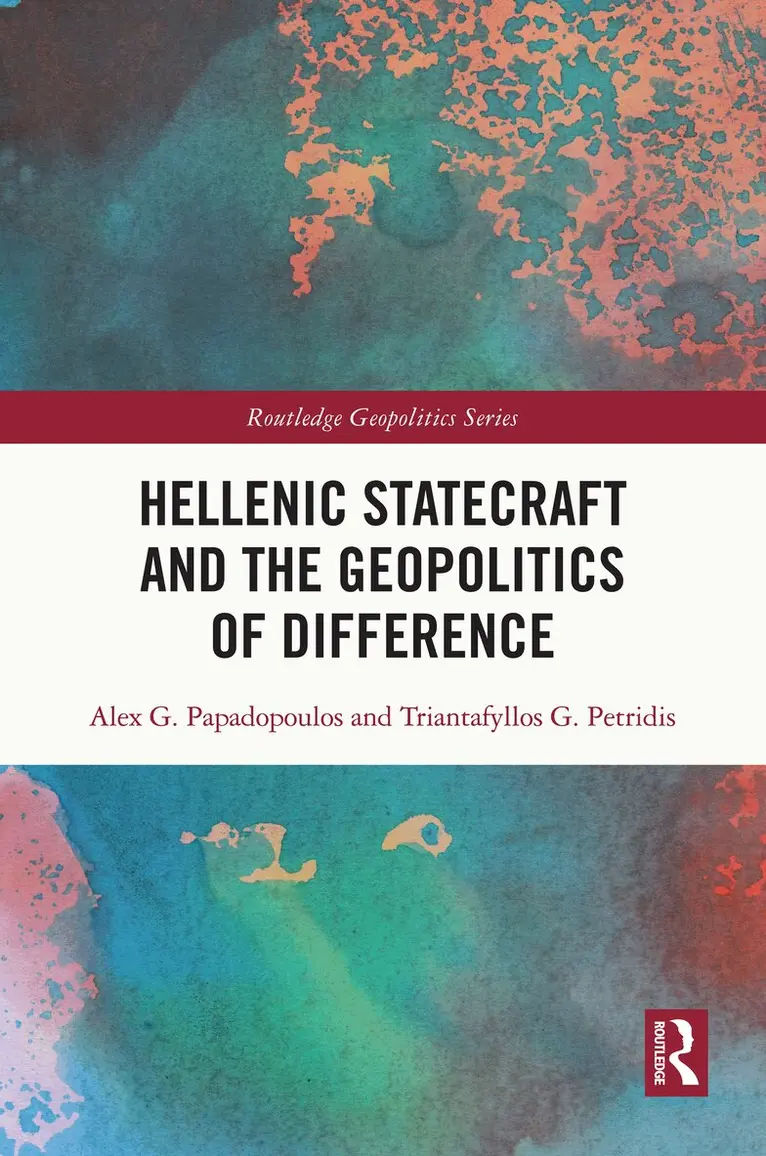
This book explores competing definitions of Hellenism in the making of the Greek state by drawing on critical historical and geopolitical perspectives and their intersection with difference and exclusion. It examines Greece’s central role in shaping the state system, regional security, and nationalisms of the Balkans, the Black Sea, and the Eastern Mediterranean regions. Understanding the Greek State's social constitution helps learn about the past and present intentions and strategies as well as local, national, and European notions of security and identity. The book looks at the relation of subaltern communities to state power and the state’s ability and willingness to negotiate difference. It also explores how the State’s identity politics shaped regional geopolitics in the past two centuries. Chapters present case studies that shed light on the Hellenization of Jewish Thessaloniki, the Treaty of Lausanne’s making of Western Thrace’s Muslim minority, the role and modes of settlement, urbanization, and ‘bordering-as-statecraft’ in Eastern Macedonia and Western Thrace, and the politics of erecting the Athens Mosque, the first officially-licensed mosque outside Western Thrace since Greek Independence.With examples from fieldwork in Greek cities and borderlands, this book offers a wealth of primary research from geographers and historians on the modern history of Greek statehood. It will be of key interest to scholars of political geography, international relations, and European history.
Inbunden, Engelska, 2022
1 928 kr
Skickas inom 10-15 vardagar
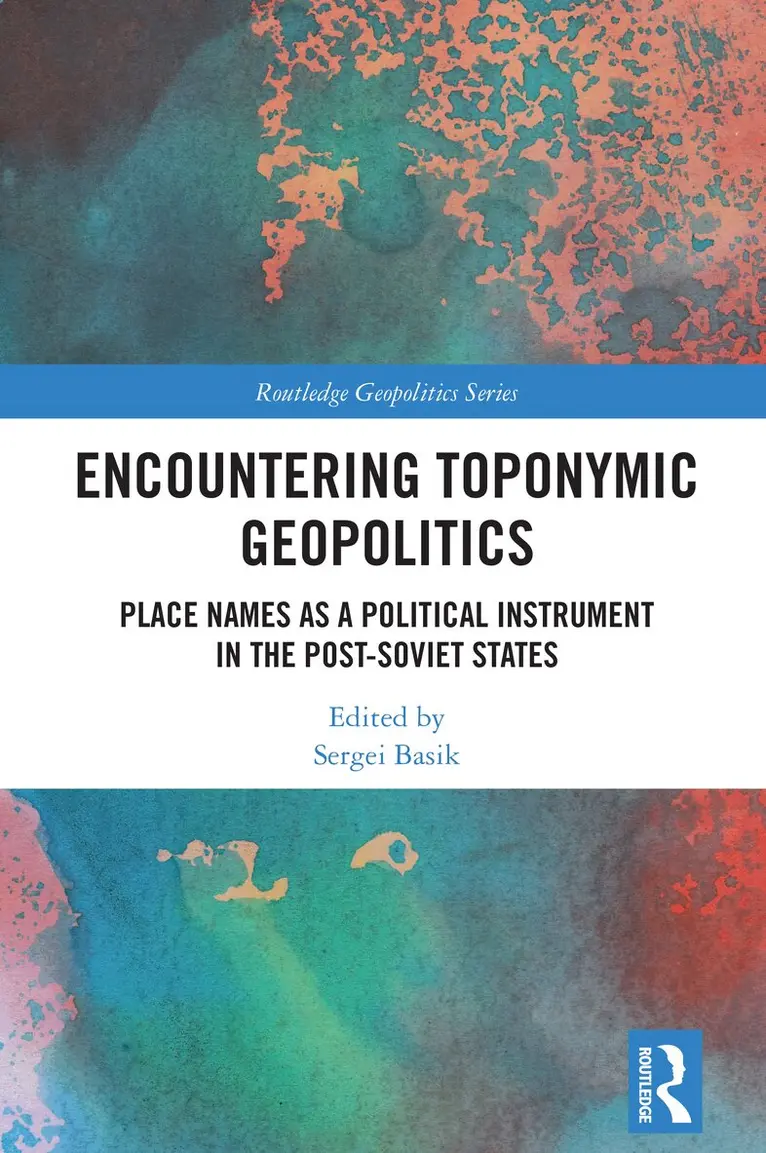
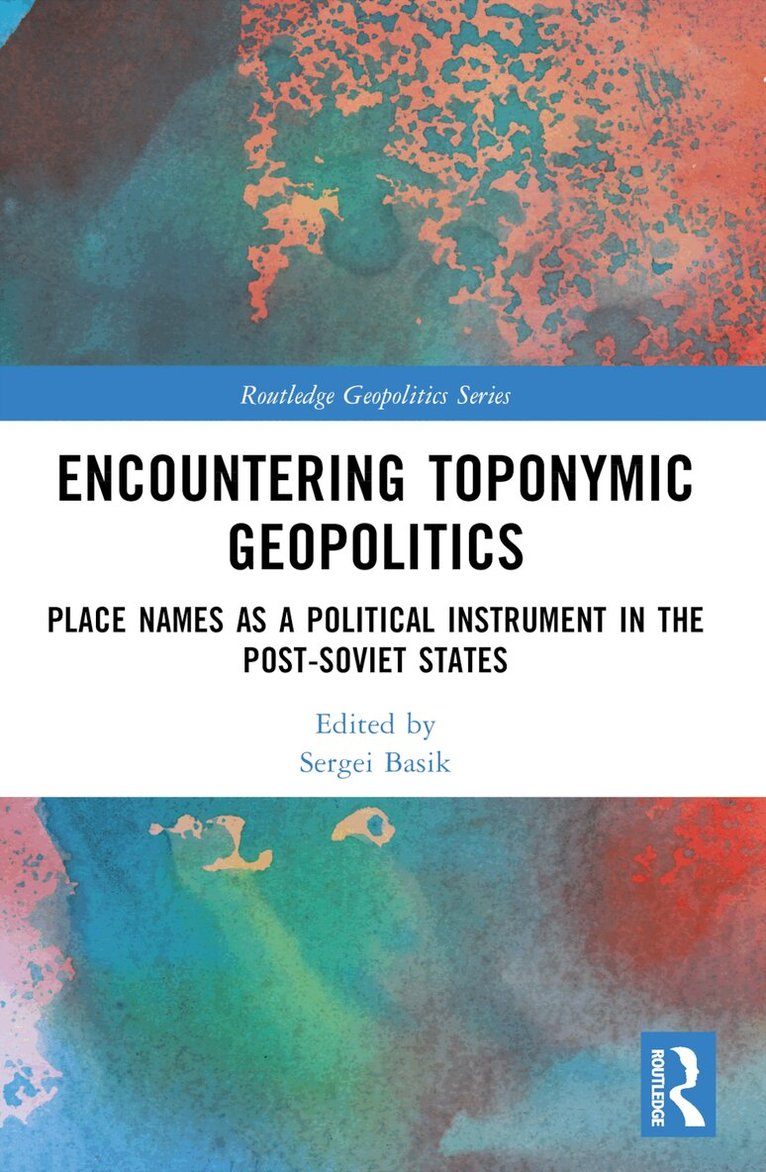
This book provides cutting-edge insights on contemporary geopolitical toponymic policy and practice in post-Soviet countries. It examines the political features of place naming as a reflection of contemporary political discourse. With multidisciplinary insights from leading scholars, chapters explore a range of topics drawing on critical political toponymy and traditional methods. Contributions examine how the toponymic system can act as a symbol of national identity, the regional geopolitics of toponymy, and geopolitical patterns in contemporary renaming. The historical roots of toponymic decolonization are analyzed, as well as indigenous toponymy and politics, and toponymic aspects of people's daily lives. The book explores a wide range of processes in the post-Soviet realm, including power, identity, economy, social order, and how political power is changing/transforming. It considers how these processes are distributed through various geopolitical and political-economic technologies. Offering empirically rich research from a variety of regions to give insights beyond "Western" perspectives, this book is the first to provide an in-depth exploration of post-Soviet place naming. It will appeal to students and researchers in human geography, politics, sociology, Eastern European studies, onomastics and cultural studies.
Häftad, Engelska, 2024
584 kr
Skickas inom 10-15 vardagar
This book provides cutting-edge insights on contemporary geopolitical toponymic policy and practice in post-Soviet countries. It examines the political features of place naming as a reflection of contemporary political discourse. With multidisciplinary insights from leading scholars, chapters explore a range of topics drawing on critical political toponymy and traditional methods. Contributions examine how the toponymic system can act as a symbol of national identity, the regional geopolitics of toponymy, and geopolitical patterns in contemporary renaming. The historical roots of toponymic decolonization are analyzed, as well as indigenous toponymy and politics, and toponymic aspects of people's daily lives. The book explores a wide range of processes in the post-Soviet realm, including power, identity, economy, social order, and how political power is changing/transforming. It considers how these processes are distributed through various geopolitical and political-economic technologies. Offering empirically rich research from a variety of regions to give insights beyond "Western" perspectives, this book is the first to provide an in-depth exploration of post-Soviet place naming. It will appeal to students and researchers in human geography, politics, sociology, Eastern European studies, onomastics and cultural studies.
Inbunden, Engelska, 2023
2 133 kr
Skickas inom 10-15 vardagar
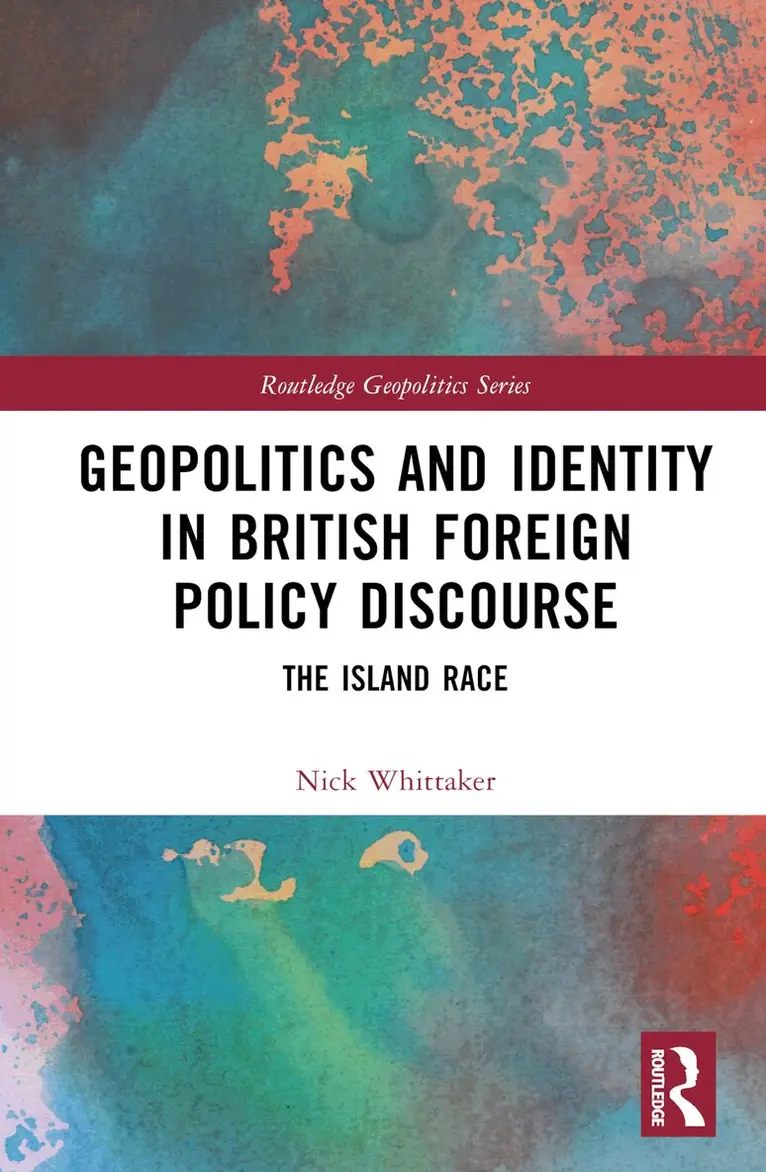
This is the first book to examine Britain’s geopolitical identity and how it is expressed in foreign policy discourse. It demonstrates how British imperial thought, related to its island status, has remained important for British Members of Parliament in their debates of contemporary issues.It presents an exciting and provocative new reading of modern British foreign policy that decentres traditional notions of rationalism and pragmatism by foregrounding the much-neglected aspects of identity and geopolitical space. As British foreign policy-makers wrestle with how to define Britishness outside of the EU, this analysis provides a fresh perspective. It presents a much-needed historical contextualisation of long-standing concepts such as insularity from Europe and a universal aspect on world affairs.This book will be highly relevant for students, researchers and professionals that are seeking to understand British foreign policy. It will be of interest to those researching and working within geopolitics, identity, sociology, foreign policy analysis and international relations.
Häftad, Engelska, 2024
584 kr
Skickas inom 10-15 vardagar
This is the first book to examine Britain’s geopolitical identity and how it is expressed in foreign policy discourse. It demonstrates how British imperial thought, related to its island status, has remained important for British Members of Parliament in their debates of contemporary issues.It presents an exciting and provocative new reading of modern British foreign policy that decentres traditional notions of rationalism and pragmatism by foregrounding the much-neglected aspects of identity and geopolitical space. As British foreign policy-makers wrestle with how to define Britishness outside of the EU, this analysis provides a fresh perspective. It presents a much-needed historical contextualisation of long-standing concepts such as insularity from Europe and a universal aspect on world affairs.This book will be highly relevant for students, researchers and professionals that are seeking to understand British foreign policy. It will be of interest to those researching and working within geopolitics, identity, sociology, foreign policy analysis and international relations.
Inbunden, Engelska, 2024
2 133 kr
Skickas inom 10-15 vardagar
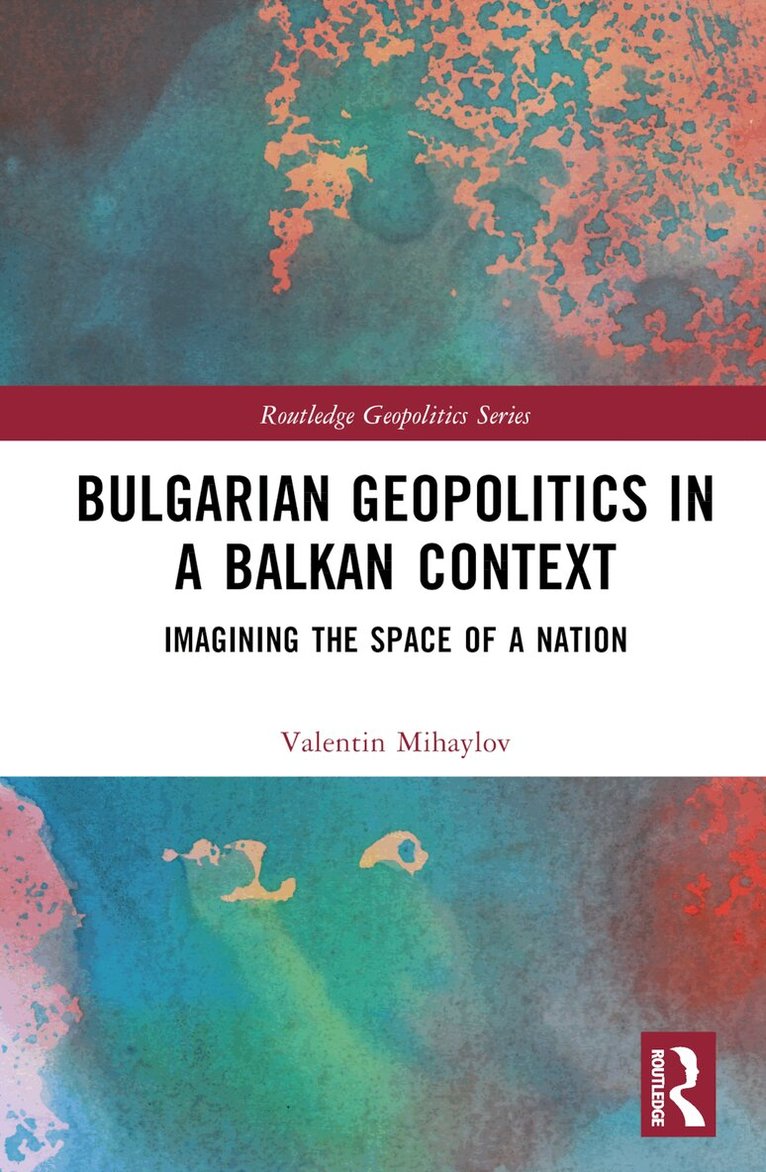
This book is about the geographic space as an inseparable component of a nation’s historical memory, territorial awareness, geopolitical visions, and obsessions.The empirical part of the book focuses on the critical analysis of first-hand sources containing representations of the imagined spaces and places of Bulgaria and Bulgarians from a long-term perspective. The research results are structured in accordance with the author’s model of an imagined national space. It contains three general domains: possessed national space, the ethnogeopolitical neighbourhood, and ancient and legendary spaces. The book also explores how Bulgarians’ historical and ethnic spaces are linked with specific geopolitics, such as passive internal geopolitics, soft revisionism, non-intervening geopolitical claims, blocking international integration as a disguised form of old territorial claims, and emerging historical geopolitics. It examines how the imagined national space is approached by statesmen, politicians, academics, and other creators of ‘high’ geopolitics. The book also pays attention to the role of spatial imaginations in growing ‘low’ (popular) geopolitics, which includes media, popular culture, and national mythology.Written in an interdisciplinary manner, this timely book will attract the interest of scholars and students in geopolitics, human geography, international relations, nationalism studies, and ethnic history.
Häftad, Engelska, 2025
639 kr
Skickas inom 10-15 vardagar
This book is about the geographic space as an inseparable component of a nation’s historical memory, territorial awareness, geopolitical visions, and obsessions.The empirical part of the book focuses on the critical analysis of first-hand sources containing representations of the imagined spaces and places of Bulgaria and Bulgarians from a long-term perspective. The research results are structured in accordance with the author’s model of an imagined national space. It contains three general domains: possessed national space, the ethnogeopolitical neighbourhood, and ancient and legendary spaces. The book also explores how Bulgarians’ historical and ethnic spaces are linked with specific geopolitics, such as passive internal geopolitics, soft revisionism, non-intervening geopolitical claims, blocking international integration as a disguised form of old territorial claims, and emerging historical geopolitics. It examines how the imagined national space is approached by statesmen, politicians, academics, and other creators of ‘high’ geopolitics. The book also pays attention to the role of spatial imaginations in growing ‘low’ (popular) geopolitics, which includes media, popular culture, and national mythology.Written in an interdisciplinary manner, this timely book will attract the interest of scholars and students in geopolitics, human geography, international relations, nationalism studies, and ethnic history.
Inbunden, Engelska, 2026
2 133 kr
Skickas inom 10-15 vardagar
Geopolitics, the State, and Political Science offers the first comprehensive intellectual history of Rudolf Kjellén (1864–1922), the founder of geopolitics who formulated a systematic organic theory of the state. Kjellén played a decisive role in shaping both the institutional emergence of political science and the conceptual evolution of international relations and political theory.Through extensive archival research and employing the contextualist methodology of the Cambridge school, this book discovers and rethinks the contexts in which Kjellén’s work developed. It situates his theories within early twentieth-century academic debates over political science and its emancipation from law, history, and philosophy. The work demonstrates how the foundations of political science were forged through concrete academic disputes, methodological controversies, and institutional struggles, while reaffirming the enduring value of historical contextualization for understanding both the origins and contested legacies of the modern state.Much more than a biography, this study is an important contribution to the intellectual history of political theory, international relations, and the social sciences. It is of interest to historians, political scientists, geographers, political philosophers, and international lawyers.
Inbunden, Engelska, 2021
2 133 kr
Skickas inom 10-15 vardagar
This book explores competing definitions of Hellenism in the making of the Greek state by drawing on critical historical and geopolitical perspectives and their intersection with difference and exclusion. It examines Greece’s central role in shaping the state system, regional security, and nationalisms of the Balkans, the Black Sea, and the Eastern Mediterranean regions. Understanding the Greek State's social constitution helps learn about the past and present intentions and strategies as well as local, national, and European notions of security and identity. The book looks at the relation of subaltern communities to state power and the state’s ability and willingness to negotiate difference. It also explores how the State’s identity politics shaped regional geopolitics in the past two centuries. Chapters present case studies that shed light on the Hellenization of Jewish Thessaloniki, the Treaty of Lausanne’s making of Western Thrace’s Muslim minority, the role and modes of settlement, urbanization, and ‘bordering-as-statecraft’ in Eastern Macedonia and Western Thrace, and the politics of erecting the Athens Mosque, the first officially-licensed mosque outside Western Thrace since Greek Independence.With examples from fieldwork in Greek cities and borderlands, this book offers a wealth of primary research from geographers and historians on the modern history of Greek statehood. It will be of key interest to scholars of political geography, international relations, and European history.