Routledge Handbooks of Classics and Theory – serie
Visar alla böcker i serien Routledge Handbooks of Classics and Theory. Handla med fri frakt och snabb leverans.
5 produkter
5 produkter
3 435 kr
Skickas inom 10-15 vardagar
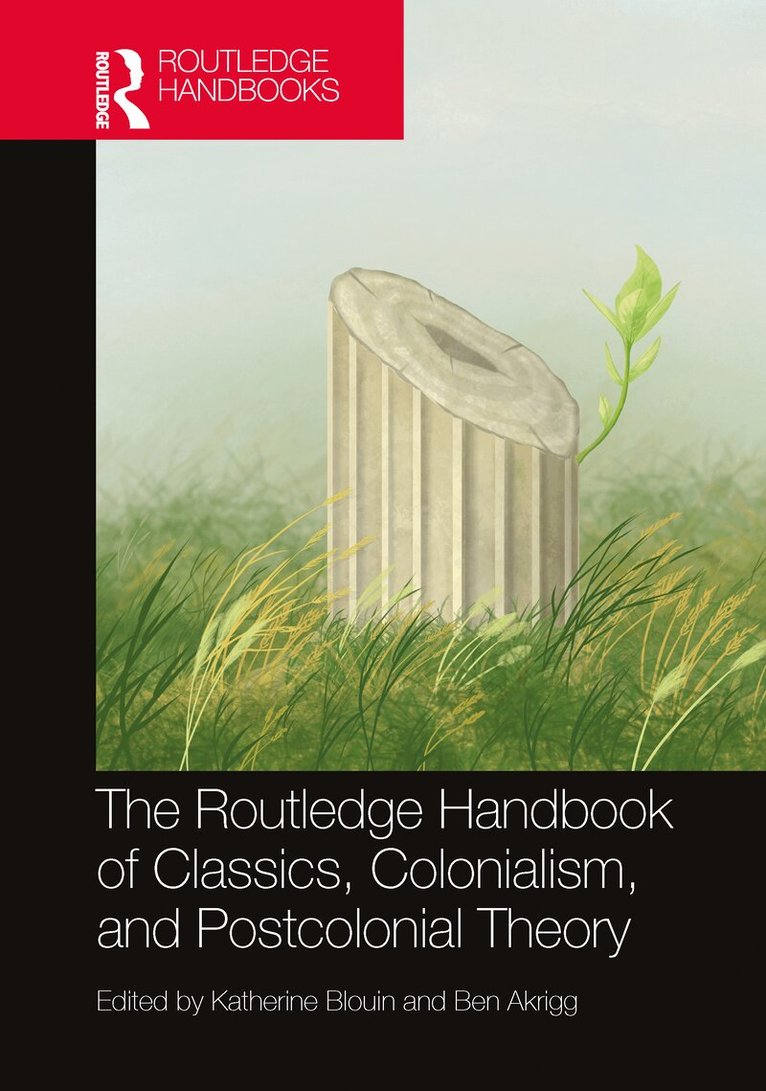
This handbook explores the ways in which histories of colonialism and postcolonial thought and theory cast light on our understanding of the ancient Mediterranean world and the discipline of Classics, utilizing a wide body of case studies and providing avenues for future research and discussion.It brings together chapters by a wide, international, and intersectional range of scholars coming from a variety of backgrounds and sub-disciplinary perspectives, and from across the chronological and geographical scope of Classics. Chapters cover the state of current research into ancient Mediterranean and South, Central, and West Asian histories. They provide case studies to illustrate both how postcolonial thought has already illuminated our understanding of the ancient Mediterranean world and beyond, as well as its potential for the future. Chapters also provide opportunities for reflection on the current state of the discipline. An introduction by the volume editors offers a survey of the development of postcolonial theory, its relationship to other bodies of theory, and its connections to Classics. Toward the end of the book, three scholars with different career and disciplinary perspectives provide short reflections on the themes of the volume and the directions of future research.The Routledge Handbook of Classics, Colonialism, and Postcolonial Theory offers an impressive collection of current research and thought on the subject for students and scholars in classical studies understood in its larger sense as well as in related disciplines such as Archaeology, Ancient History, Imperial History and the History of Colonialism, Reception Studies, and Museum Studies. For anyone interested in classical antiquity, it provides an engaging introduction to a potentially bewildering, but ultimately vital and enriching, body of thought and theory.
707 kr
Skickas inom 10-15 vardagar
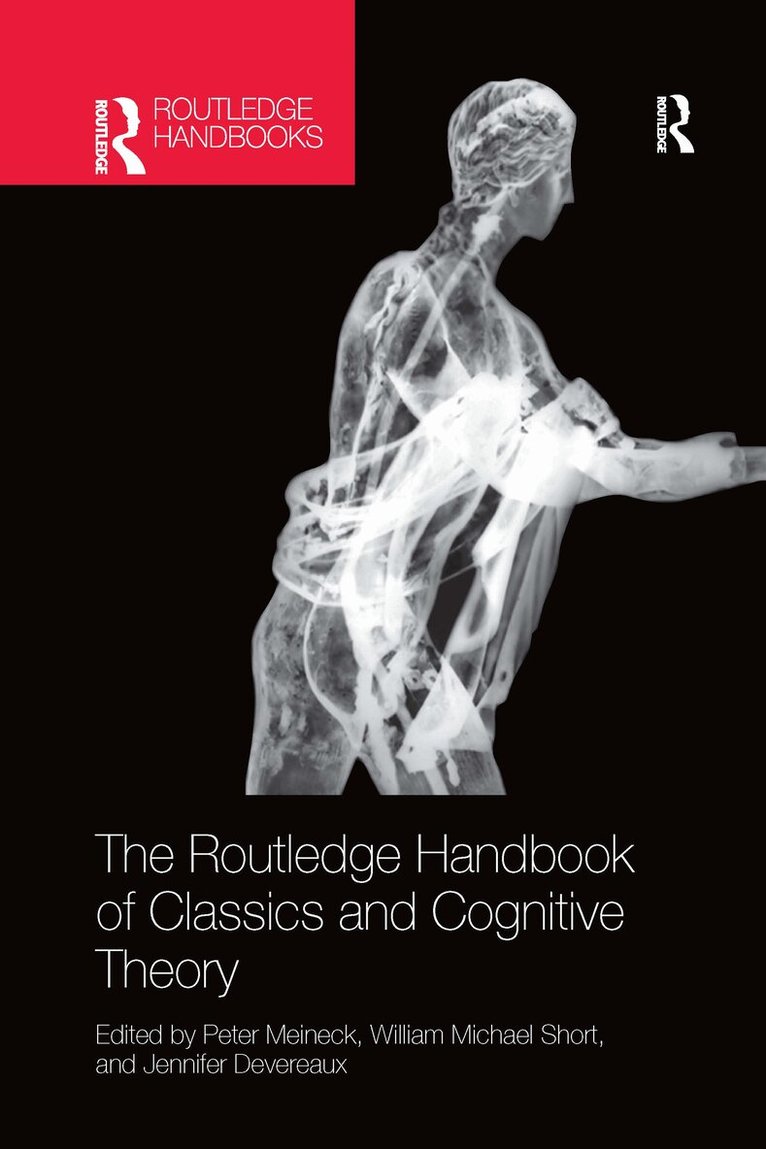
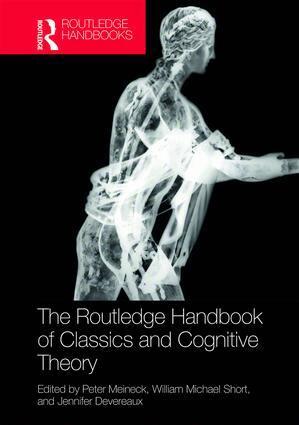
The Routledge Handbook of Classics and Cognitive Theory is an interdisciplinary volume that examines the application of cognitive theory to the study of the classical world, across several interrelated areas including linguistics, literary theory, social practices, performance, artificial intelligence and archaeology. With contributions from a diverse group of international scholars working in this exciting new area, the volume explores the processes of the mind drawing from research in psychology, philosophy, neuroscience, and anthropology, and interrogates the implications of these new approaches for the study of the ancient world. Topics covered in this wide-ranging collection include: cognitive linguistics applied to Homeric and early Greek texts, Roman cultural semantics, linguistic embodiment in Latin literature, group identities in Greek lyric, cognitive dissonance in historiography, kinesthetic empathy in Sappho, artificial intelligence in Hesiod and Greek drama, the enactivism of Roman statues and memory and art in the Roman Empire.This ground-breaking work is the first to organize the field, allowing both scholars and students access to the methodologies, bibliographies and techniques of the cognitive sciences and how they have been applied to classics.
3 680 kr
Skickas inom 10-15 vardagar
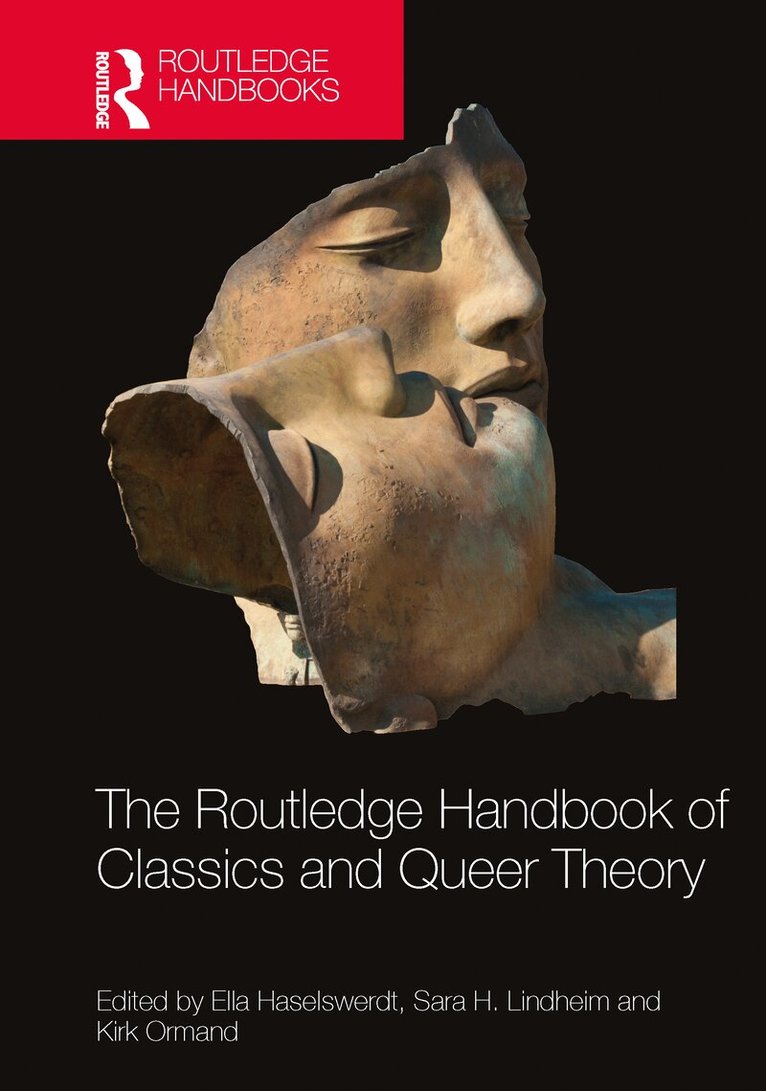
New directions in queer theory continue to trouble the boundaries of both queerness and the classical, leading to an explosion of new work in the vast—and increasingly uncharted—intersection between these disciplines, which this interdisciplinary volume seeks to explore.This handbook convenes an international group of experts who work on the classical world and queer theory. The discipline of Classics has been involved with, and implicated in, queer theory from the start. By placing front and center the rejection of heteronormativity, queer theory has provided Classics with a powerful tool for analyzing non-normative sexual and gender relations in the ancient West, while Classics offers queer theory ancient material (such as literature, visual arts, and social practices) that challenges a wide range of modern normative categories. The collection demonstrates the vitality of this particular moment in queer classical studies, featuring an expansive array of methodologies applied to the interdisciplinary field of Classics. Embracing the indeterminacy that lies at the core of queer studies, the essays in this volume are organized not by chronology or genre, but rather by overlapping categories under the following rubrics: queer subjectivities, queer times and places, queer kinships, queer receptions, and ancient pasts/queer futures.The Routledge Handbook of Classics and Queer Theory offers an invaluable collection for anyone working on queer theory, especially as it applies to premodern periods; it will also be of interest to scholars engaging with the history of sexuality, both in the ancient world and more broadly.
805 kr
Skickas inom 10-15 vardagar
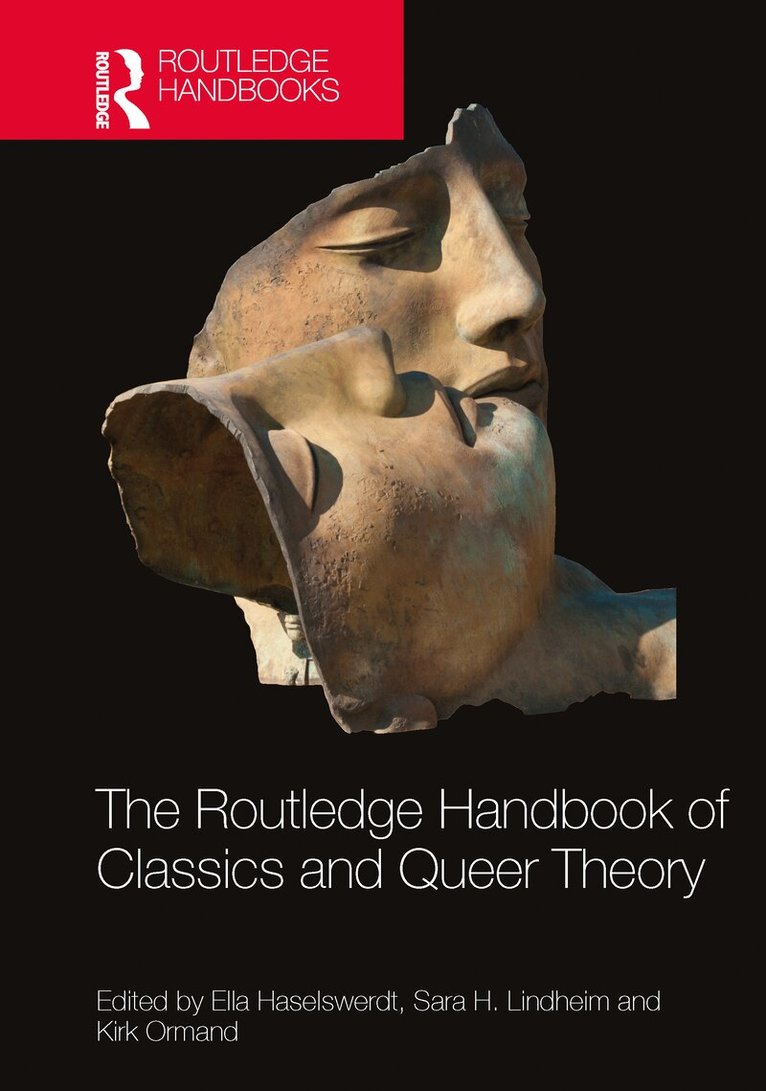
New directions in queer theory continue to trouble the boundaries of both queerness and the classical, leading to an explosion of new work in the vast—and increasingly uncharted—intersection between these disciplines, which this interdisciplinary volume seeks to explore.This handbook convenes an international group of experts who work on the classical world and queer theory. The discipline of Classics has been involved with, and implicated in, queer theory from the start. By placing front and center the rejection of heteronormativity, queer theory has provided Classics with a powerful tool for analyzing non-normative sexual and gender relations in the ancient West, while Classics offers queer theory ancient material (such as literature, visual arts, and social practices) that challenges a wide range of modern normative categories. The collection demonstrates the vitality of this particular moment in queer classical studies, featuring an expansive array of methodologies applied to the interdisciplinary field of Classics. Embracing the indeterminacy that lies at the core of queer studies, the essays in this volume are organized not by chronology or genre, but rather by overlapping categories under the following rubrics: queer subjectivities, queer times and places, queer kinships, queer receptions, and ancient pasts/queer futures.The Routledge Handbook of Classics and Queer Theory offers an invaluable collection for anyone working on queer theory, especially as it applies to premodern periods; it will also be of interest to scholars engaging with the history of sexuality, both in the ancient world and more broadly.
3 435 kr
Skickas inom 10-15 vardagar
The Routledge Handbook of Classics and Cognitive Theory is an interdisciplinary volume that examines the application of cognitive theory to the study of the classical world, across several interrelated areas including linguistics, literary theory, social practices, performance, artificial intelligence and archaeology. With contributions from a diverse group of international scholars working in this exciting new area, the volume explores the processes of the mind drawing from research in psychology, philosophy, neuroscience, and anthropology, and interrogates the implications of these new approaches for the study of the ancient world. Topics covered in this wide-ranging collection include: cognitive linguistics applied to Homeric and early Greek texts, Roman cultural semantics, linguistic embodiment in Latin literature, group identities in Greek lyric, cognitive dissonance in historiography, kinesthetic empathy in Sappho, artificial intelligence in Hesiod and Greek drama, the enactivism of Roman statues and memory and art in the Roman Empire.This ground-breaking work is the first to organize the field, allowing both scholars and students access to the methodologies, bibliographies and techniques of the cognitive sciences and how they have been applied to classics.