Routledge Research on Urban Asia – serie
Visar alla böcker i serien Routledge Research on Urban Asia. Handla med fri frakt och snabb leverans.
14 produkter
14 produkter
Inbunden, Engelska, 2020
2 244 kr
Skickas inom 10-15 vardagar
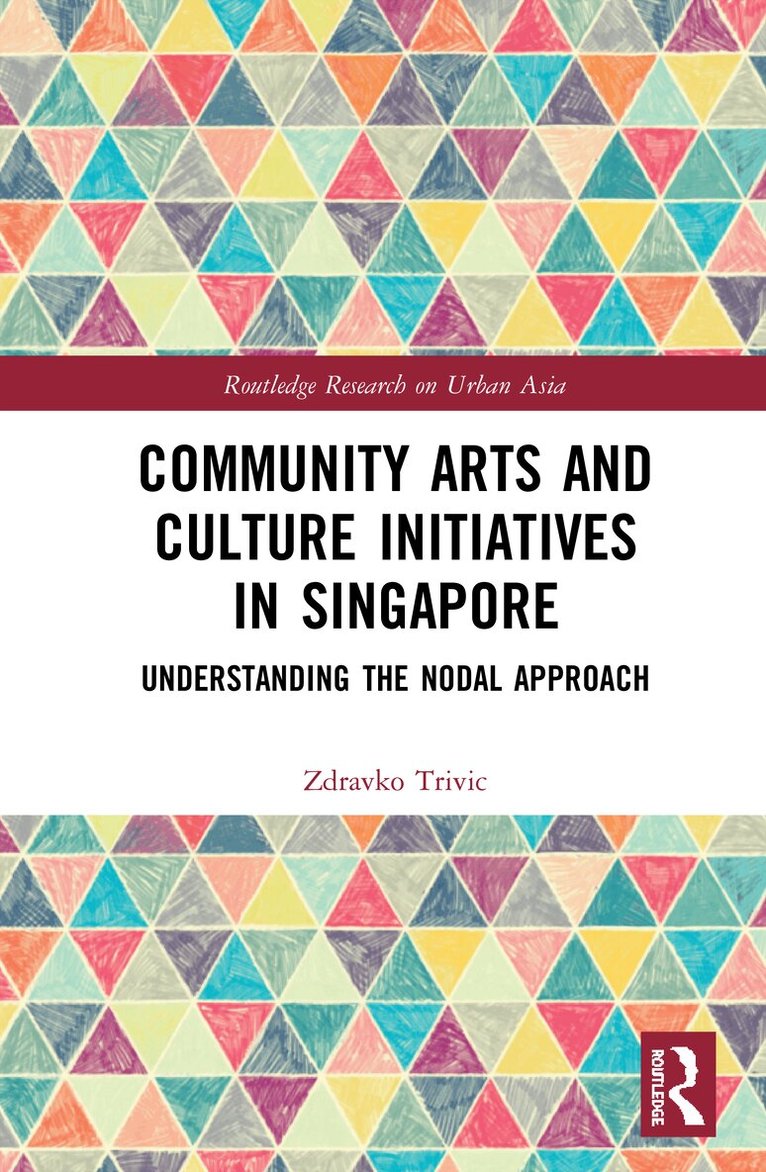
What Can Space Do for the Arts?; What Can Arts Do for Space?; and What Can Arts and Space Do for the Community?Through the lenses of creative placemaking and neighbourhood arts ecology, Trivic re-examines the position of community arts in the spatial, social and cultural landscape. Emphasising urban design considerations of complex interdependent relationships between arts, space and people, he re-explores the role of community-based arts activities in shaping urban neighbourhoods, enriching public life and empowering communities. This is divided into an analysis of spatial opportunities for the arts in the neighbourhood; and a study of the impacts of bringing arts and culture activities into local neighbourhoods and communities, using Singapore’s nodal approach as a developed case study. Using spatial opportunity analysis, the book demonstrates a step-by-step procedure for identification and evaluation of the neighbourhood spaces that work best for community arts and culture activities. In the study of impacts, Trivic proposes a holistic framework for capturing and evaluating the non-economic impacts of arts and culture, on space, society, well-being, education and participation. An invaluable template for arts event organisers and artists to assess and maximise the outcomes of their creative efforts in local neighbourhoods, as well as an important reading for students and practitioners of neighbourhood planning, urban design, and creative placemaking.
Inbunden, Engelska, 2022
2 179 kr
Skickas inom 10-15 vardagar
In this book, Prasad Khanolkar offers a new way of thinking about ‘slums’ and southern cities based on a grounded engagement with the relationship between media, objects, spaces, and people in the everyday life of slum localities in Mumbai, India. Over the past few decades, Mumbai, like many cities in the global South, has experienced a series of overarching governmental missions to program it into an interoperable and profitable city. Its ‘slums’, which house a majority of its population don’t fit within the dominant registers and continue to be deemed as excess. Urban residents inhabiting Mumbai’s slum localities thus find themselves in the middle of missions, policies, and programs that are not of their making, just as often that they find themselves localized by lack of resources, caste system, communal conflicts, and territorial jurisdictions. Drawing on extensive fieldwork in slum localities of Mumbai, this book explores how its residents engage in different forms of play in order to extend and expand their field of possibilities, despite the limitations and fixities. The book attends to some of these playacts: imparting stories with different thicknesses, rehearsing roles on and offscreen, engaging in deceptive performances, experimenting with repetitive everyday rhythms, and recycling matter and forms. Through these playacts, urban residents explore the virtual abilities of different mediums to put bodies, objects, and spaces into new forms of relationships and create passages to depart from programmed urban futures. By attending to these proliferating urban passages of different residents in slum localities, the book makes a case for rethinking southern cities as mediums for urban lives to converge and depart without an overarching framework.The book makes a significant contribution in the field of urban studies, urban anthropology, urban geography, and urban sociology. It will be of interest to scholars and students working on postcolonial cities, Southern urbanisms, infrastructure studies, and urban planning in the global South.
Inbunden, Engelska, 2022
2 179 kr
Skickas inom 10-15 vardagar
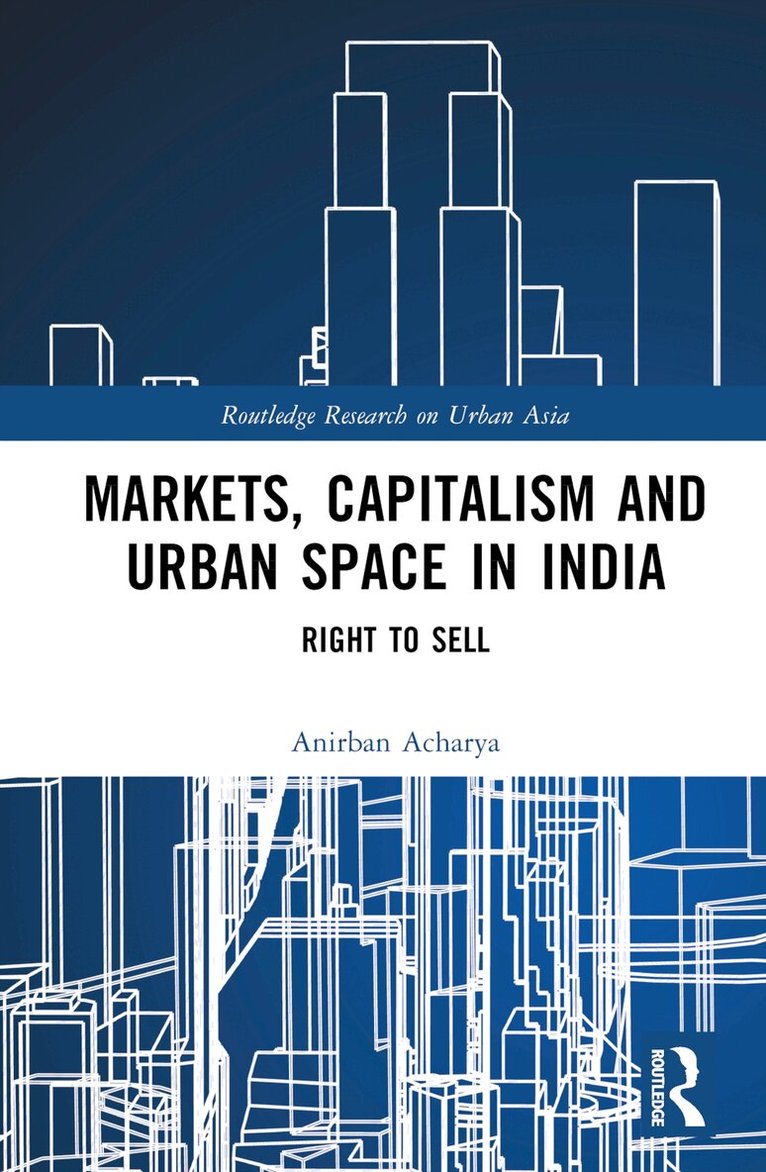
This book analyses the question of the right to the city, informal economies and the non-western shape of neoliberal governance in India through a new analytic: the right to sell. The book examines why and how states attempt to curb, control, and eliminate markets of urban informal street vendors. Focusing on Kolkata, the author provides a theoretical explanation of this puzzle by distilling and analysing the inherent tensions among the constitutive elements of neoliberal governance, namely, growth imperative, market activism, and corporatization, and demonstrates its implications for the formal/informal boundaries of the economy. A useful addition to the existing literatures on the right to the city, informal economies, and the shapes that neoliberalism takes in the non-west, the book provides a non-western counter to accounts of neoliberalism and will be of interest to academics working in the fields of South Asian Studies, Urban Studies, and Political Economy.
Häftad, Engelska, 2024
581 kr
Skickas inom 10-15 vardagar
In this book, Prasad Khanolkar offers a new way of thinking about ‘slums’ and southern cities based on a grounded engagement with the relationship between media, objects, spaces, and people in the everyday life of slum localities in Mumbai, India. Over the past few decades, Mumbai, like many cities in the global South, has experienced a series of overarching governmental missions to program it into an interoperable and profitable city. Its ‘slums’, which house a majority of its population don’t fit within the dominant registers and continue to be deemed as excess. Urban residents inhabiting Mumbai’s slum localities thus find themselves in the middle of missions, policies, and programs that are not of their making, just as often that they find themselves localized by lack of resources, caste system, communal conflicts, and territorial jurisdictions. Drawing on extensive fieldwork in slum localities of Mumbai, this book explores how its residents engage in different forms of play in order to extend and expand their field of possibilities, despite the limitations and fixities. The book attends to some of these playacts: imparting stories with different thicknesses, rehearsing roles on and offscreen, engaging in deceptive performances, experimenting with repetitive everyday rhythms, and recycling matter and forms. Through these playacts, urban residents explore the virtual abilities of different mediums to put bodies, objects, and spaces into new forms of relationships and create passages to depart from programmed urban futures. By attending to these proliferating urban passages of different residents in slum localities, the book makes a case for rethinking southern cities as mediums for urban lives to converge and depart without an overarching framework.The book makes a significant contribution in the field of urban studies, urban anthropology, urban geography, and urban sociology. It will be of interest to scholars and students working on postcolonial cities, Southern urbanisms, infrastructure studies, and urban planning in the global South.
Inbunden, Engelska, 2023
2 038 kr
Skickas inom 10-15 vardagar
This book explores the relationship between the production of new urban spaces and illiberal community-making in contemporary India. It is based on an ethnographic study in Noida, a city at the eastern fringe of the state of Uttar Pradesh, bordering national capital Delhi. The book demonstrates a flexible planning approach being central to the entrepreneurial turn in India’s post-liberalisation urbanisation, whereby a small-scale industrial township is transformed into a real-estate driven modern city. Its real point of departure, however, is in the argument that this turn can enable a form of illiberal community-making in new cities that are quite different from older metropolises. Exclusivist forms of solidarity and symbolic boundary construction - stemming from the differences across communities as well as their internal heterogeneities - form the crux of this process, which is examined in three distinct but often interspersed socio-spatial forms: planned middle-class residential quarters, ‘urban villages’ and migrant squatter colonies. The book combines radical geographical conceptualisations of social production of space and neoliberal urbanism with sociological and anthropological approaches to urban community-making. It will be of interest to researchers in development studies, sociology, urban studies, as well as readers interested in society and politics of contemporary India/South Asia.
Häftad, Engelska, 2022
656 kr
Skickas inom 10-15 vardagar
What Can Space Do for the Arts?; What Can Arts Do for Space?; and What Can Arts and Space Do for the Community?Through the lenses of creative placemaking and neighbourhood arts ecology, Trivic re-examines the position of community arts in the spatial, social and cultural landscape. Emphasising urban design considerations of complex interdependent relationships between arts, space and people, he re-explores the role of community-based arts activities in shaping urban neighbourhoods, enriching public life and empowering communities. This is divided into an analysis of spatial opportunities for the arts in the neighbourhood; and a study of the impacts of bringing arts and culture activities into local neighbourhoods and communities, using Singapore’s nodal approach as a developed case study. Using spatial opportunity analysis, the book demonstrates a step-by-step procedure for identification and evaluation of the neighbourhood spaces that work best for community arts and culture activities. In the study of impacts, Trivic proposes a holistic framework for capturing and evaluating the non-economic impacts of arts and culture, on space, society, well-being, education and participation. An invaluable template for arts event organisers and artists to assess and maximise the outcomes of their creative efforts in local neighbourhoods, as well as an important reading for students and practitioners of neighbourhood planning, urban design, and creative placemaking.
Häftad, Engelska, 2024
595 kr
Skickas inom 10-15 vardagar
This book explores the relationship between the production of new urban spaces and illiberal community-making in contemporary India. It is based on an ethnographic study in Noida, a city at the eastern fringe of the state of Uttar Pradesh, bordering national capital Delhi. The book demonstrates a flexible planning approach being central to the entrepreneurial turn in India’s post-liberalisation urbanisation, whereby a small-scale industrial township is transformed into a real-estate driven modern city. Its real point of departure, however, is in the argument that this turn can enable a form of illiberal community-making in new cities that are quite different from older metropolises. Exclusivist forms of solidarity and symbolic boundary construction - stemming from the differences across communities as well as their internal heterogeneities - form the crux of this process, which is examined in three distinct but often interspersed socio-spatial forms: planned middle-class residential quarters, ‘urban villages’ and migrant squatter colonies. The book combines radical geographical conceptualisations of social production of space and neoliberal urbanism with sociological and anthropological approaches to urban community-making. It will be of interest to researchers in development studies, sociology, urban studies, as well as readers interested in society and politics of contemporary India/South Asia.
Häftad, Engelska, 2020
656 kr
Skickas inom 10-15 vardagar
At this western corner of the confluence of the Bay of Bengal and the busy river Hooghly, West Bengal in eastern India lies a geography that has hosted many outsiders – traders, merchants, colonial masters, missionaries and wanderers. This book is fundamentally concerned with the relations among the theoretical categories of time, space and capital in India and shows registers of temporality and spatiality generated by historical phases of interaction with industrial capital. Based on extensive ethnographic fieldwork in Howrah, the author examines the form of urbanism that is not linked to the city-form of spatial organization, a "hinterland urbanism". The book brings out the theoretical implications by showing the relations among time, space and capital. Through a series of encounters and interceptions with a number of voices arising, the book sheds light on the issue and identifies the state of an ethnographer who is ensconced in the field – in wonder, conceit and sometimes physical discomfort. This book is, thus, an exploration of such historical layering of space by forces of time and speed afforded by the logics of capital, through limited acts of witnessing of production and access of historical sensation.An invitation to scholars and students of cultural anthropology to consider the question of scale in the making of ethical, political, and aesthetic selves, this book is an intervention in political anthropology that connects aesthetics, desire, and emotion to political imagination and action. The book makes a significant contribution in anthropology of space, urban anthropology and anthropology of capital as well as urban studies.
Häftad, Engelska, 2020
665 kr
Skickas inom 10-15 vardagar
Jakarta is being transformed in an unknown speed and manner by new types of urban authorities and drivers of transformation. These actors are moving in a field of opportunity that was created by recent and severe changes in the economic, socio-political and natural environment of Jakarta. Including chapters written by contributors who have lived and worked in Jakarta for years, this book shows how urban space in Jakarta is increasingly created by the entanglement of different layers that co-exist in political and socio-economic life, with actors criss-crossing between formal and informal spheres. In each case the authors explore who are the drivers of urban change, and what are the processes in shaping the current and future city of Jakarta. Not denying that former elites are still a critical force in shaping Jakarta, the book analyses to what extent former stakeholders are undermined, and what types of new authorities or social institutions are emerging. It examines how drivers of transformation claim their right to space in the city and how their actions and strategies reflect their vision on the future of Jakarta.An important addition to the discussion of urban change and development, this book will be of interest to scholars interested in Indonesia, South-East Asia, urbanization, development research, anthropology and globalization.
E-bok
Engelska, 2018702 kr
Läs direkt efter köp
At this western corner of the confluence of the Bay of Bengal and the busy river Hooghly, West Bengal in eastern India lies a geography that has hosted many outsiders – traders, merchants, colonial masters, missionaries and wanderers. This book is fundamentally concerned with the relations among the theoretical categories of time, space and capital in India and shows registers of temporality and spatiality generated by historical phases of interaction with industrial capital. Based on extensive ethnographic fieldwork in Howrah, the author examines the form of urbanism that is not linked to the city-form of spatial organization, a "hinterland urbanism". The book brings out the theoretical implications by showing the relations among time, space and capital. Through a series of encounters and interceptions with a number of voices arising, the book sheds light on the issue and identifies the state of an ethnographer who is ensconced in the field – in wonder, conceit and sometimes physical discomfort. This book is, thus, an exploration of such historical layering of space by forces of time and speed afforded by the logics of capital, through limited acts of witnessing of production and access of historical sensation.An invitation to scholars and students of cultural anthropology to consider the question of scale in the making of ethical, political, and aesthetic selves, this book is an intervention in political anthropology that connects aesthetics, desire, and emotion to political imagination and action. The book makes a significant contribution in anthropology of space, urban anthropology and anthropology of capital as well as urban studies.
E-bok
PDF, Engelska, 2018702 kr
Läs direkt efter köp
At this western corner of the confluence of the Bay of Bengal and the busy river Hooghly, West Bengal in eastern India lies a geography that has hosted many outsiders – traders, merchants, colonial masters, missionaries and wanderers. This book is fundamentally concerned with the relations among the theoretical categories of time, space and capital in India and shows registers of temporality and spatiality generated by historical phases of interaction with industrial capital. Based on extensive ethnographic fieldwork in Howrah, the author examines the form of urbanism that is not linked to the city-form of spatial organization, a "hinterland urbanism". The book brings out the theoretical implications by showing the relations among time, space and capital. Through a series of encounters and interceptions with a number of voices arising, the book sheds light on the issue and identifies the state of an ethnographer who is ensconced in the field – in wonder, conceit and sometimes physical discomfort. This book is, thus, an exploration of such historical layering of space by forces of time and speed afforded by the logics of capital, through limited acts of witnessing of production and access of historical sensation.An invitation to scholars and students of cultural anthropology to consider the question of scale in the making of ethical, political, and aesthetic selves, this book is an intervention in political anthropology that connects aesthetics, desire, and emotion to political imagination and action. The book makes a significant contribution in anthropology of space, urban anthropology and anthropology of capital as well as urban studies.
Häftad, Engelska, 2024
581 kr
Skickas inom 10-15 vardagar
This book analyses the question of the right to the city, informal economies and the non-western shape of neoliberal governance in India through a new analytic: the right to sell. The book examines why and how states attempt to curb, control, and eliminate markets of urban informal street vendors. Focusing on Kolkata, the author provides a theoretical explanation of this puzzle by distilling and analysing the inherent tensions among the constitutive elements of neoliberal governance, namely, growth imperative, market activism, and corporatization, and demonstrates its implications for the formal/informal boundaries of the economy. A useful addition to the existing literatures on the right to the city, informal economies, and the shapes that neoliberalism takes in the non-west, the book provides a non-western counter to accounts of neoliberalism and will be of interest to academics working in the fields of South Asian Studies, Urban Studies, and Political Economy.
Inbunden, Engelska, 2018
2 249 kr
Skickas inom 10-15 vardagar
Jakarta is being transformed in an unknown speed and manner by new types of urban authorities and drivers of transformation. These actors are moving in a field of opportunity that was created by recent and severe changes in the economic, socio-political and natural environment of Jakarta. Including chapters written by contributors who have lived and worked in Jakarta for years, this book shows how urban space in Jakarta is increasingly created by the entanglement of different layers that co-exist in political and socio-economic life, with actors criss-crossing between formal and informal spheres. In each case the authors explore who are the drivers of urban change, and what are the processes in shaping the current and future city of Jakarta. Not denying that former elites are still a critical force in shaping Jakarta, the book analyses to what extent former stakeholders are undermined, and what types of new authorities or social institutions are emerging. It examines how drivers of transformation claim their right to space in the city and how their actions and strategies reflect their vision on the future of Jakarta.An important addition to the discussion of urban change and development, this book will be of interest to scholars interested in Indonesia, South-East Asia, urbanization, development research, anthropology and globalization.
Inbunden, Engelska, 2018
2 244 kr
Skickas inom 10-15 vardagar
At this western corner of the confluence of the Bay of Bengal and the busy river Hooghly, West Bengal in eastern India lies a geography that has hosted many outsiders – traders, merchants, colonial masters, missionaries and wanderers. This book is fundamentally concerned with the relations among the theoretical categories of time, space and capital in India and shows registers of temporality and spatiality generated by historical phases of interaction with industrial capital. Based on extensive ethnographic fieldwork in Howrah, the author examines the form of urbanism that is not linked to the city-form of spatial organization, a "hinterland urbanism". The book brings out the theoretical implications by showing the relations among time, space and capital. Through a series of encounters and interceptions with a number of voices arising, the book sheds light on the issue and identifies the state of an ethnographer who is ensconced in the field – in wonder, conceit and sometimes physical discomfort. This book is, thus, an exploration of such historical layering of space by forces of time and speed afforded by the logics of capital, through limited acts of witnessing of production and access of historical sensation.An invitation to scholars and students of cultural anthropology to consider the question of scale in the making of ethical, political, and aesthetic selves, this book is an intervention in political anthropology that connects aesthetics, desire, and emotion to political imagination and action. The book makes a significant contribution in anthropology of space, urban anthropology and anthropology of capital as well as urban studies.