Routledge Series on Digital Spaces - Böcker
Visar alla böcker i serien Routledge Series on Digital Spaces. Handla med fri frakt och snabb leverans.
6 produkter
6 produkter
2 100 kr
Skickas inom 10-15 vardagar
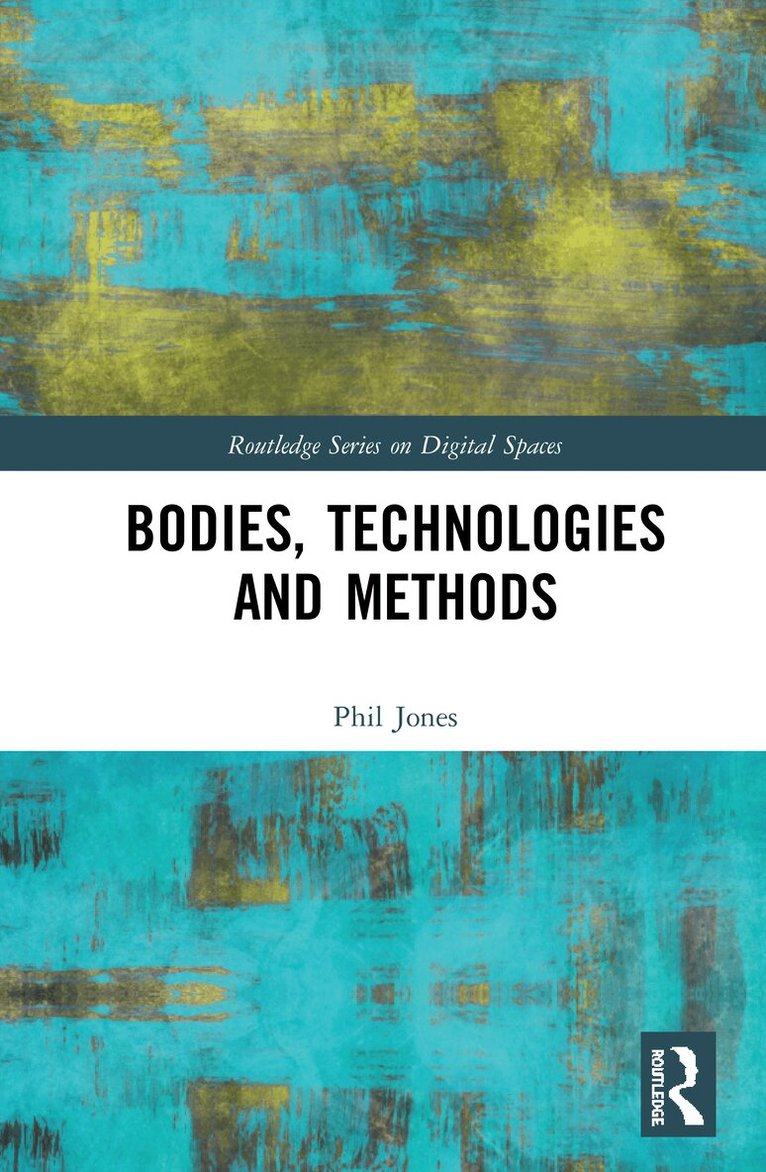
This book examines how different technologies can be used to enhance research methods in the social sciences and humanities. The boundary between the body and the digital has become increasingly blurred in recent years due to the rise of technologies that capture and reshape our embodied selves. New technologies all too often reflect the attitudes of the privileged white men who dominate the tech sector. This book thus, in part, considers how critical researchers can employ new technologies while challenging some of the problematic assumptions that underpin their design. It also includes a series of case studies that examine the dynamic use of different techniques to explore key questions around the intersection of embodiment and the digital.With a playful, experimental approach to conducting research today, this book offers new, cutting-edge methods that respond to the potential of different technologies. It will be invaluable reading for undergraduate and post-graduate students of social sciences and humanities to explore ways in which this approach can bring new insights to a range of interdisciplinary research questions.
Algorithms and the Assault on Critical Thought
Digitalized Dilemmas of Automated Governance and Communitarian Practice
Inbunden, Engelska, 2022
1 954 kr
Skickas inom 10-15 vardagar
This book examines the digitalization of longstanding problems of technological advance that produce inequalities and automated governance, which relieves subjects of agency and critical thought, and prompts a need to weaponize thoughtfulness against technocratic designs.The book situates digital-era problems relative to those of previous sociotechnical milieux and argues that technical advance perennially embeds corrosive effects on social relations and relations of production, recognizing variation across contexts and relative to entrenched societal hierarchies of race and other axes of difference and their intersections. Societal tolerance, despite abundant evidence for harmful effects of digital technologies, requires attention. The book explains blindness to social injustice by technocratic thinking delivered through education as well as truths embraced in the data sciences coupled with governance in universities and the private sector that protect these truths from critique. Institutional inertia suggests benefits of communitarianism, which strives for change emanating from civil society. Scaling postcapitalist communitarian values through communitybased peer production presents opportunities. However, enduring problems require critical reflection, continual revision of strategies, and active participation among diverse community citizens.This book is written with critical geographic sensibilities for an interdisciplinary audience of scholars and graduate and undergraduate students in the social sciences, humanities, and data sciences.
Algorithms and the Assault on Critical Thought
Digitalized Dilemmas of Automated Governance and Communitarian Practice
Häftad, Engelska, 2022
549 kr
Skickas inom 10-15 vardagar
This book examines the digitalization of longstanding problems of technological advance that produce inequalities and automated governance, which relieves subjects of agency and critical thought, and prompts a need to weaponize thoughtfulness against technocratic designs.The book situates digital-era problems relative to those of previous sociotechnical milieux and argues that technical advance perennially embeds corrosive effects on social relations and relations of production, recognizing variation across contexts and relative to entrenched societal hierarchies of race and other axes of difference and their intersections. Societal tolerance, despite abundant evidence for harmful effects of digital technologies, requires attention. The book explains blindness to social injustice by technocratic thinking delivered through education as well as truths embraced in the data sciences coupled with governance in universities and the private sector that protect these truths from critique. Institutional inertia suggests benefits of communitarianism, which strives for change emanating from civil society. Scaling postcapitalist communitarian values through communitybased peer production presents opportunities. However, enduring problems require critical reflection, continual revision of strategies, and active participation among diverse community citizens.This book is written with critical geographic sensibilities for an interdisciplinary audience of scholars and graduate and undergraduate students in the social sciences, humanities, and data sciences.
614 kr
Skickas inom 10-15 vardagar
This book examines how different technologies can be used to enhance research methods in the social sciences and humanities. The boundary between the body and the digital has become increasingly blurred in recent years due to the rise of technologies that capture and reshape our embodied selves. New technologies all too often reflect the attitudes of the privileged white men who dominate the tech sector. This book thus, in part, considers how critical researchers can employ new technologies while challenging some of the problematic assumptions that underpin their design. It also includes a series of case studies that examine the dynamic use of different techniques to explore key questions around the intersection of embodiment and the digital.With a playful, experimental approach to conducting research today, this book offers new, cutting-edge methods that respond to the potential of different technologies. It will be invaluable reading for undergraduate and post-graduate students of social sciences and humanities to explore ways in which this approach can bring new insights to a range of interdisciplinary research questions.
2 100 kr
Skickas inom 10-15 vardagar
Digital technologies, now ubiquitous around the world, can promote positive values, as well as support those that are less socially acceptable. To better understand such technologies’ impact on ethics and sustainability, this book situates digital technologies within a cultural context, arguing that the technology is received differently in different cultural contexts. The book contains chapters on state-of-the-art digital technologies such as artificial intelligence from various countries including Japan and Sweden to highlight the multifarious ways in how ethical and sustainability issues are being manifested in certain cultural contexts.The book contributes to furthering understandings on the similarities and differences between digital technology implementations in different cultures, promoting a cross-cultural dialogue on desired values and how they are promoted or downplayed by such technologies. The book is divided into two parts: the former focuses on how individuals relate to new digital technologies, and the latter focuses on those who develop digital technologies. The book targets scholars, businesspeople and policymakers interested in the interconnection between digital technologies, ethics and sustainability from various cultural viewpoints. It provides new case studies on a range of digital technologies and discussions about digital technology implementations in cultural contexts.
628 kr
Skickas inom 10-15 vardagar
Digital technologies, now ubiquitous around the world, can promote positive values, as well as support those that are less socially acceptable. To better understand such technologies’ impact on ethics and sustainability, this book situates digital technologies within a cultural context, arguing that the technology is received differently in different cultural contexts. The book contains chapters on state-of-the-art digital technologies such as artificial intelligence from various countries including Japan and Sweden to highlight the multifarious ways in how ethical and sustainability issues are being manifested in certain cultural contexts.The book contributes to furthering understandings on the similarities and differences between digital technology implementations in different cultures, promoting a cross-cultural dialogue on desired values and how they are promoted or downplayed by such technologies. The book is divided into two parts: the former focuses on how individuals relate to new digital technologies, and the latter focuses on those who develop digital technologies. The book targets scholars, businesspeople and policymakers interested in the interconnection between digital technologies, ethics and sustainability from various cultural viewpoints. It provides new case studies on a range of digital technologies and discussions about digital technology implementations in cultural contexts.