Routledge Studies in Ecosystem Services - Böcker
Visar alla böcker i serien Routledge Studies in Ecosystem Services. Handla med fri frakt och snabb leverans.
8 produkter
8 produkter
2 098 kr
Skickas inom 10-15 vardagar
Humankind benefits from a multitude of resources and processes that are supplied by ecosystems, and collectively these benefits are known as ecosystem services. Interest in this topic has grown exponentially over the last decade, as biologists and economists have tried to quantify these benefits to justify management interventions. Yet, as this book demonstrates, the implications for justice and injustice have rarely been explored and works on environmental justice are only now addressing the importance of ecosystem services. The authors establish important new middle ground in arguments between conservationists and critics of market-based interventions such as Payment for Ecosystem Services. Neither can environmental management be separated from justice concerns, as some conservationists like to believe, nor is it in fundamental opposition to justice, as critics like to put it. The book develops this novel interpretation of justice in environmental management through analyses of prominent governance interventions and the conceptual underpinnings of the ecosystem services framework. Key examples described are revenue-sharing around protected areas and REDD+ for forest ecosystems. The analyses demonstrate that interventions create opportunities for enhancing social justice, yet also reveal critical design features that cause ostensibly technical interventions to generate injustices.
701 kr
Skickas inom 10-15 vardagar
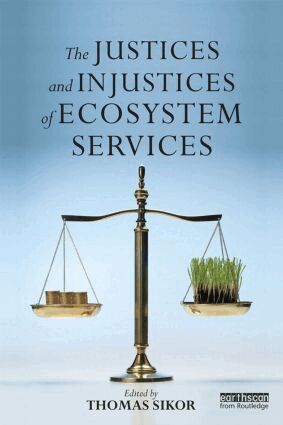
Humankind benefits from a multitude of resources and processes that are supplied by ecosystems, and collectively these benefits are known as ecosystem services. Interest in this topic has grown exponentially over the last decade, as biologists and economists have tried to quantify these benefits to justify management interventions. Yet, as this book demonstrates, the implications for justice and injustice have rarely been explored and works on environmental justice are only now addressing the importance of ecosystem services. The authors establish important new middle ground in arguments between conservationists and critics of market-based interventions such as Payment for Ecosystem Services. Neither can environmental management be separated from justice concerns, as some conservationists like to believe, nor is it in fundamental opposition to justice, as critics like to put it. The book develops this novel interpretation of justice in environmental management through analyses of prominent governance interventions and the conceptual underpinnings of the ecosystem services framework. Key examples described are revenue-sharing around protected areas and REDD+ for forest ecosystems. The analyses demonstrate that interventions create opportunities for enhancing social justice, yet also reveal critical design features that cause ostensibly technical interventions to generate injustices.
674 kr
Skickas inom 10-15 vardagar
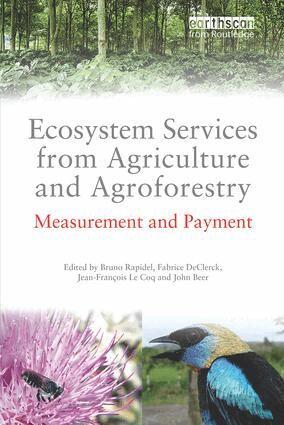
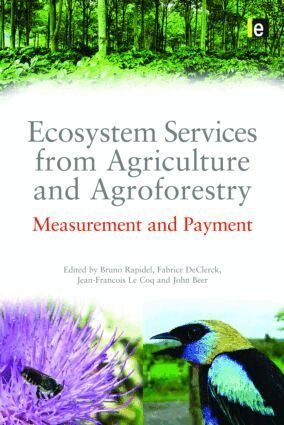
Agricultural systems are no longer evaluated solely on the basis of the food they provide, but also on their capacity to limit impacts on the environment, such as soil conservation, water quality and biodiversity conservation, as well as their contribution to mitigating and adapting to climate change. In order to cope with these multiple service functions, they must internalize the costs and benefits of their environmental impact. Payments for ecosystem services are hoped to encourage and promote sustainable practices via financial incentives. The authors show that while the principle is straightforward, the practice is much more complicated. Whereas scenic beauty and protection of water sources provide benefits to the local population, carbon sequestration and biodiversity conservation can be considered international public goods, rendering potential payment schemes more complex. Few examples exist where national or international bodies have been able to set up viable mechanisms that compensate agricultural systems for the environmental services they provide. However this book provides several examples of successful programs, and aims to transfer them to other regions of the world. The authors show that a product can be sold if it is clearly quantified, there exists a means to determine the service's values, and there is a willing buyer. The first two sections of the book present methodological issues related to the quantification and marketing of ecosystem services from agriculture, including agroforestry. The third and final section presents case studies of practical payments for ecosystem services and experiences in Central and South America, and draws some lessons learnt for effective and sustainable development of ecosystem services compensation mechanisms.
Ecosystem Services and Poverty Alleviation (OPEN ACCESS)
Trade-offs and Governance
Inbunden, Engelska, 2018
2 098 kr
Skickas inom 10-15 vardagar
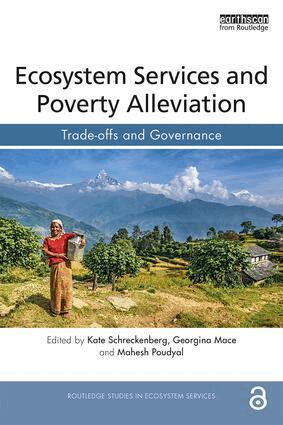
Understanding how to sustain the services that ecosystems provide in support of human wellbeing is an active and growing research area. This book provides a state-of-the-art review of current thinking on the links between ecosystem services and poverty alleviation. In part it showcases the key findings of the Ecosystem Services for Poverty Alleviation (ESPA) programme, which has funded over 120 research projects in more than 50 countries since 2010. ESPA’s goal is to ensure that ecosystems are being sustainably managed in a way that contributes to poverty alleviation as well as to inclusive and sustainable growth. As governments across the world map how they will achieve the 17 ambitious Sustainable Development Goals, most of which have poverty alleviation, wellbeing and sustainable environmental management at their heart, ESPA’s findings have never been more timely and relevant. The book synthesises the headline messages and compelling evidence to address the questions at the heart of ecosystems and wellbeing research. The authors, all leading specialists, address the evolving framings and contexts for the work, review the impacts of ongoing drivers of change, present new ways to achieve sustainable wellbeing, equity, diversity, and resilience, and evaluate the potential contributions from conservation projects, payment schemes, and novel governance approaches across scales from local to national and international. The cross-cutting, thematic chapters challenge conventional wisdom in some areas, and validate new methods and approaches for sustainable development in others. The book will provide a rich and important reference source for advanced students, researchers and policy-makers in ecology, environmental studies, ecological economics and sustainable development. The Open Access version of this book, available at https://www.taylorfrancis.com/books/e/9780429016295, has been made available under a Creative Commons Attribution-Non Commercial-No Derivatives 4.0 license.
Ecosystem Services and Poverty Alleviation (OPEN ACCESS)
Trade-offs and Governance
Häftad, Engelska, 2018
674 kr
Skickas inom 10-15 vardagar
Understanding how to sustain the services that ecosystems provide in support of human wellbeing is an active and growing research area. This book provides a state-of-the-art review of current thinking on the links between ecosystem services and poverty alleviation. In part it showcases the key findings of the Ecosystem Services for Poverty Alleviation (ESPA) programme, which has funded over 120 research projects in more than 50 countries since 2010. ESPA’s goal is to ensure that ecosystems are being sustainably managed in a way that contributes to poverty alleviation as well as to inclusive and sustainable growth. As governments across the world map how they will achieve the 17 ambitious Sustainable Development Goals, most of which have poverty alleviation, wellbeing and sustainable environmental management at their heart, ESPA’s findings have never been more timely and relevant. The book synthesises the headline messages and compelling evidence to address the questions at the heart of ecosystems and wellbeing research. The authors, all leading specialists, address the evolving framings and contexts for the work, review the impacts of ongoing drivers of change, present new ways to achieve sustainable wellbeing, equity, diversity, and resilience, and evaluate the potential contributions from conservation projects, payment schemes, and novel governance approaches across scales from local to national and international. The cross-cutting, thematic chapters challenge conventional wisdom in some areas, and validate new methods and approaches for sustainable development in others. The book will provide a rich and important reference source for advanced students, researchers and policy-makers in ecology, environmental studies, ecological economics and sustainable development. The Open Access version of this book, available at https://www.taylorfrancis.com/books/e/9780429016295, has been made available under a Creative Commons Attribution-Non Commercial-No Derivatives 4.0 license.
2 098 kr
Skickas inom 10-15 vardagar
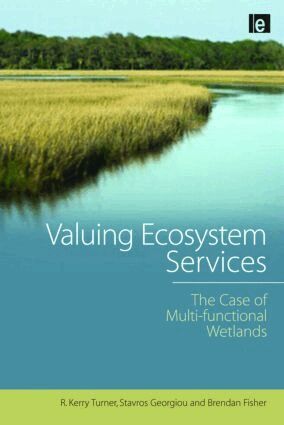
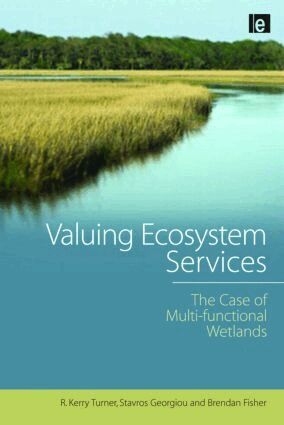
Ecosystem services can be broadly defined as the aspects of ecosystems that provide benefits to people. This book provides guidance on the valuation of ecosystem services, using the case of multifunctional wetlands to illustrate and make recommendations regarding the methods and techniques that can be applied to appraise management options. It provides a review of ecosystem service valuation rationale, including its importance from both a policy and project appraisal perspective, and a useful reference when considering policy and appraisal of ecosystem management options. It shows how legal obligations and other high-level management targets should be taken into account in valuation exercises, thus giving important policy context to the management options. The authors set out what they call an Ecosystem Services Approach to the full appraisal of the role of ecosystem services in the economy and society. Although concentrating on wetlands, the approaches suggested provide an assessment framework that can be applied to other types of ecosystem assets.
2 098 kr
Skickas inom 10-15 vardagar
Agricultural systems are no longer evaluated solely on the basis of the food they provide, but also on their capacity to limit impacts on the environment, such as soil conservation, water quality and biodiversity conservation, as well as their contribution to mitigating and adapting to climate change. In order to cope with these multiple service functions, they must internalize the costs and benefits of their environmental impact. Payments for ecosystem services are hoped to encourage and promote sustainable practices via financial incentives. The authors show that while the principle is straightforward, the practice is much more complicated. Whereas scenic beauty and protection of water sources provide benefits to the local population, carbon sequestration and biodiversity conservation can be considered international public goods, rendering potential payment schemes more complex. Few examples exist where national or international bodies have been able to set up viable mechanisms that compensate agricultural systems for the environmental services they provide. However this book provides several examples of successful programs, and aims to transfer them to other regions of the world. The authors show that a product can be sold if it is clearly quantified, there exists a means to determine the service's values, and there is a willing buyer. The first two sections of the book present methodological issues related to the quantification and marketing of ecosystem services from agriculture, including agroforestry. The third and final section presents case studies of practical payments for ecosystem services and experiences in Central and South America, and draws some lessons learnt for effective and sustainable development of ecosystem services compensation mechanisms.
674 kr
Skickas inom 10-15 vardagar
Ecosystem services can be broadly defined as the aspects of ecosystems that provide benefits to people. This book provides guidance on the valuation of ecosystem services, using the case of multifunctional wetlands to illustrate and make recommendations regarding the methods and techniques that can be applied to appraise management options. It provides a review of ecosystem service valuation rationale, including its importance from both a policy and project appraisal perspective, and a useful reference when considering policy and appraisal of ecosystem management options. It shows how legal obligations and other high-level management targets should be taken into account in valuation exercises, thus giving important policy context to the management options. The authors set out what they call an Ecosystem Services Approach to the full appraisal of the role of ecosystem services in the economy and society. Although concentrating on wetlands, the approaches suggested provide an assessment framework that can be applied to other types of ecosystem assets.