Routledge Studies in Foreign Policy Analysis – serie
Visar alla böcker i serien Routledge Studies in Foreign Policy Analysis. Handla med fri frakt och snabb leverans.
18 produkter
18 produkter
Inbunden, Engelska, 2019
2 182 kr
Skickas inom 10-15 vardagar
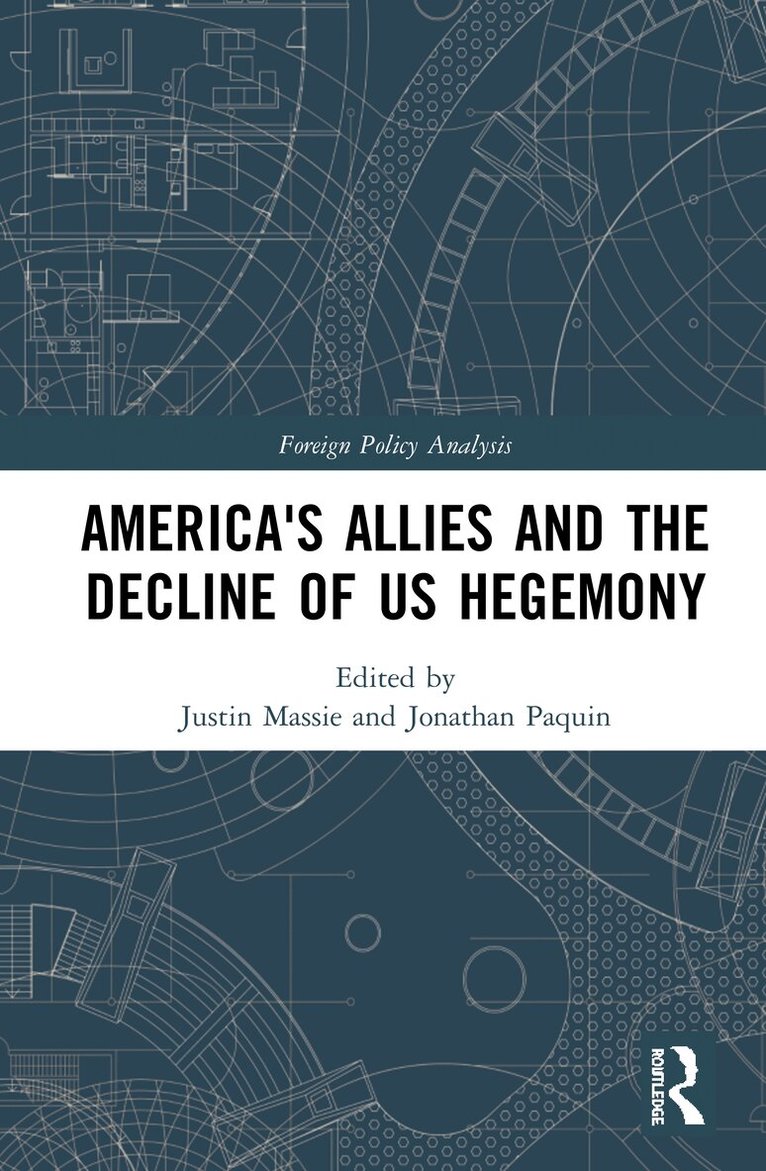
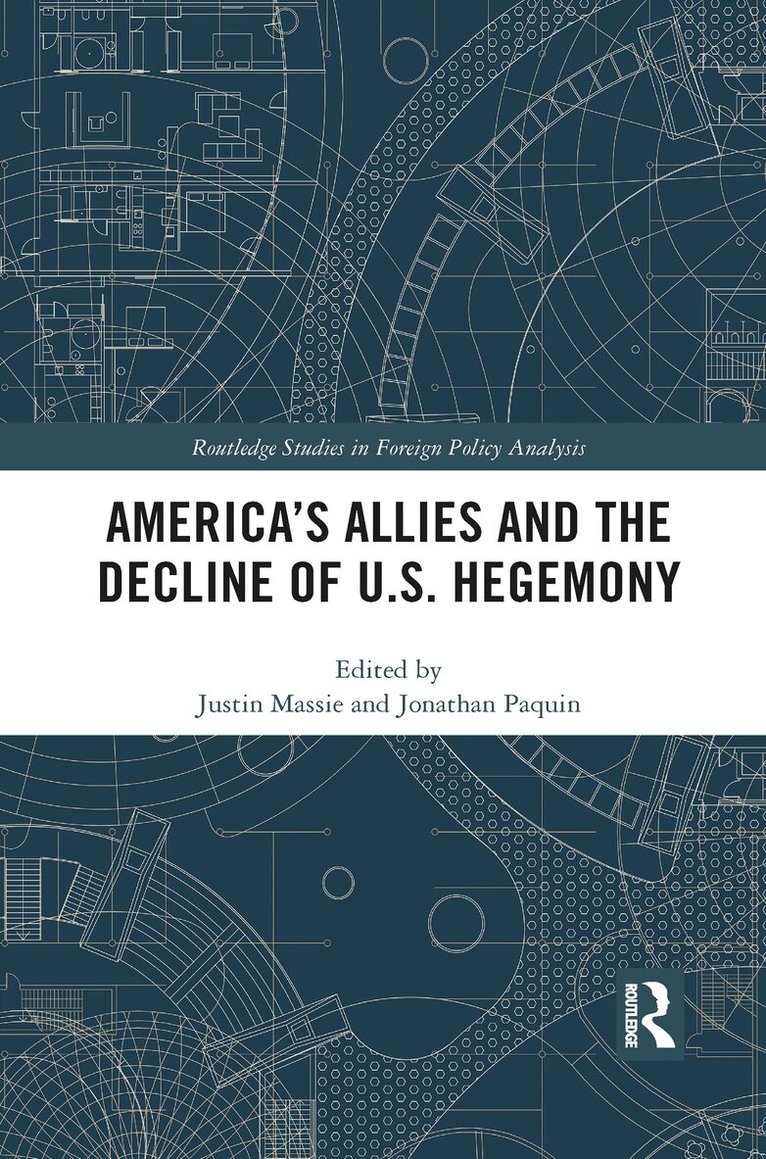
How do America’s democratic allies perceive and respond to a relative decline in US power and influence and the simultaneous rise of China? Using the case-studies of Europe, the UK, Australia, Canada, Japan and South East Asian countries, this book offers a broad assessment of the perceptions of threat and the strategies used by these allies to cope with the relative decline of America’s hegemonic power, the rise of China and the transforming world order.In answering these central questions, contributors focus on two complementary analytical approaches. The first examines the perceptions of systemic changes by America’s allies: how are US allies framing this issue and what kind of political discourse is emerging with regards to it? The second approach focuses on the concrete foreign policy and defence strategies put forward by these allies. The book explores the extent to which US allies are willing to support US hegemony and considers the democratic allies’ understanding of the international structure, their relations to the United States, and their own aspirations in this changing world order.This book will be of interest to general readers as well as scholars and students of US foreign policy, foreign policy analysis and International Relations.
Inbunden, Engelska, 2020
2 182 kr
Skickas inom 10-15 vardagar
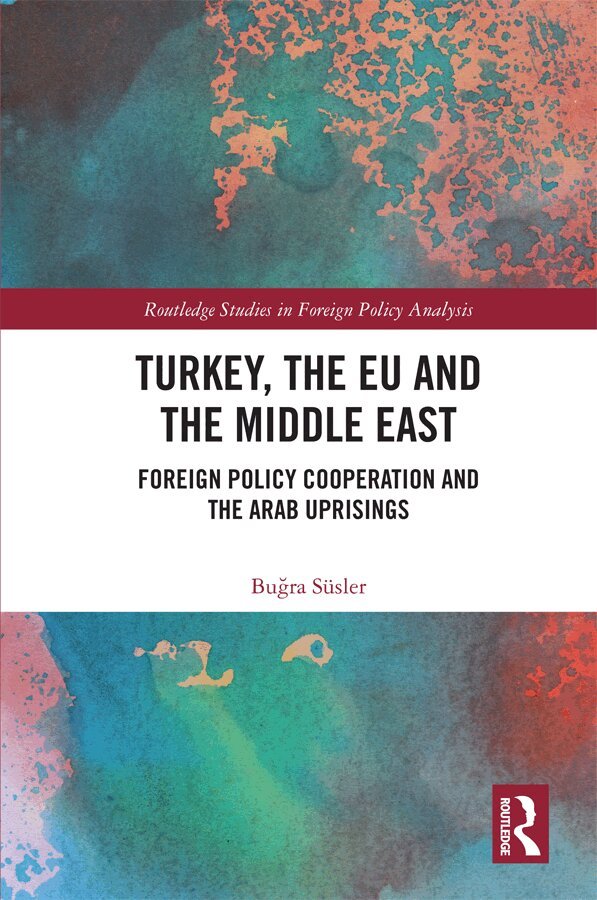
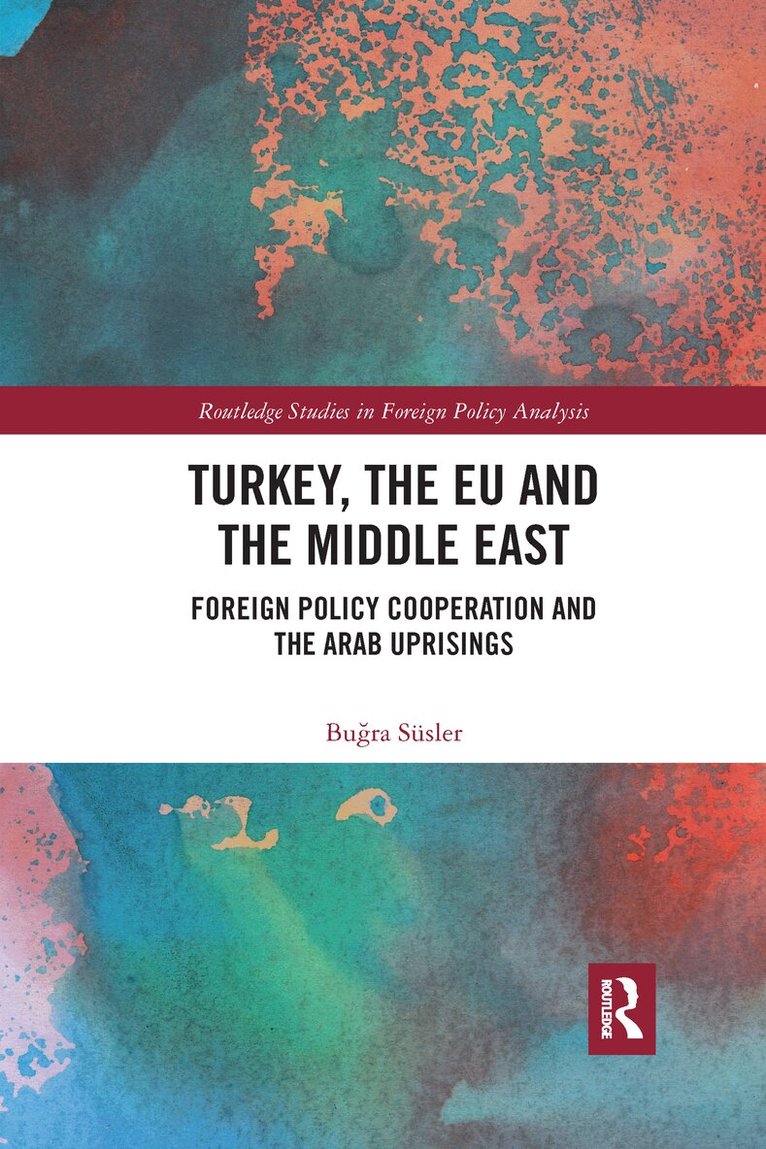
This book focuses on the dynamics of Turkey’s relationship with Europe in the context of the ‘Arab Spring’ and analyses Turkish behaviour vis-à-vis foreign policy cooperation with the EU.Süsler explains the complexity of Turkey-EU relations by looking beyond membership negotiations and examines informal foreign policy dialogue between Turkish and EU officials. The book discusses the reactions of the Turkish government to the uprisings in Libya, Syria, and Egypt and cooperative opportunities between Turkey and the EU. The analysis finds that although cooperation varies across cases, foreign policy dialogue has become a main driver of the Turkey-EU relationship. A counter-intuitive finding of the research is that the EU has often been the actor seeking Turkey’s cooperation, rather than the other way round, clearly challenging the original power asymmetry between Turkey and the EU. Based on interviews with diplomats and policy makers and extensive documentary research, this book will be of interest to political scientists, students, policy makers and researchers focusing on Turkish foreign policy and Turkey-EU relations. This book is also about exploring inventive ways of maintaining a complex working partnership with the EU and will be of interest to scholars working on the EU’s relationship with "outsiders".
Inbunden, Engelska, 2020
1 972 kr
Skickas inom 10-15 vardagar
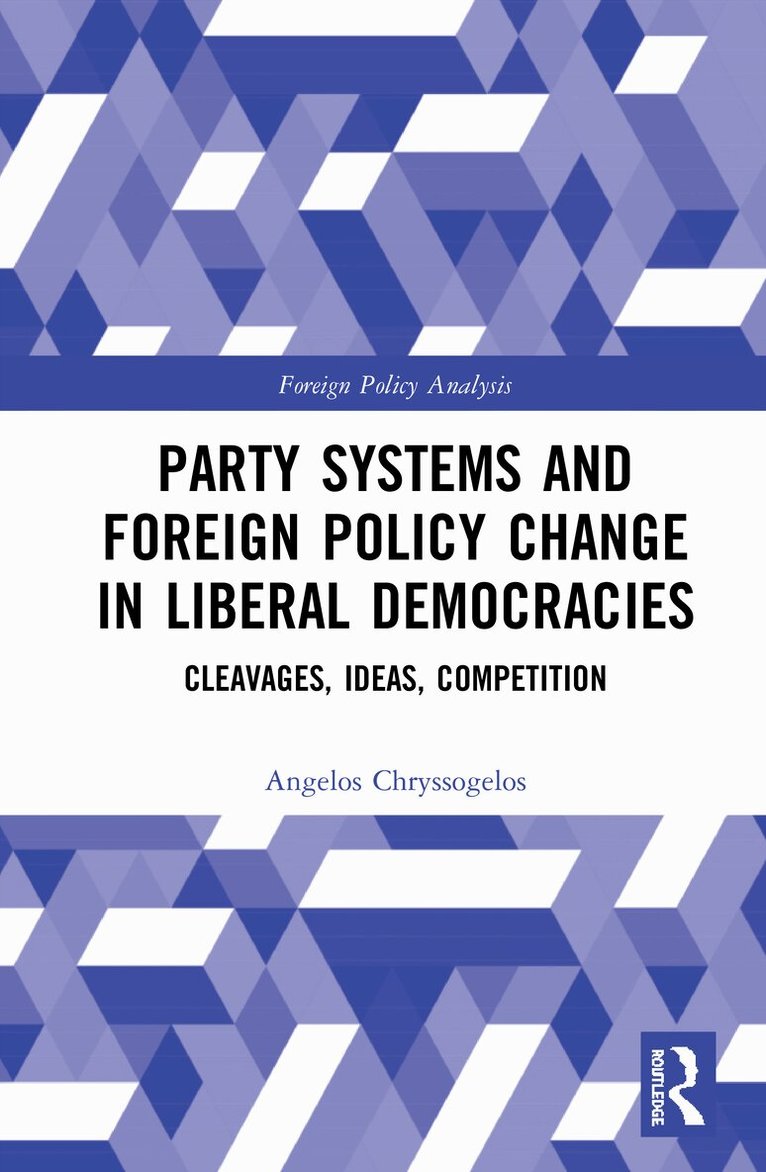
How do political parties affect foreign policy? This book answers this question by exploring the role of party politics as source of foreign policy change in liberal democracies. The book shifts the focus from individual political parties to party systems as the context in which parties’ ideologies receive precise content and their preferences are formed. The central claim is that foreign policy change arises from within transformed discursive contexts of party competition, when a new language of politics that constitutes anew parties’ self-understanding of what they stand for and compete over emerges in a party system. By comparing cases of contested foreign policy change, the book shows how such transformations in party competition determine whether and when international pressures on a state will translate into decisions to institute foreign policy change and what degree of change will be ultimately implemented. With a novel framework which bridges concepts of international relations and comparative politics, the book will be of interest to researchers and students in the areas of international relations theory, foreign policy analysis and comparative politics, and generally to anyone wanting to understand how and when parties, elections and voters contribute to international change.
Häftad, Engelska, 2022
638 kr
Skickas inom 10-15 vardagar
How do political parties affect foreign policy? This book answers this question by exploring the role of party politics as source of foreign policy change in liberal democracies. The book shifts the focus from individual political parties to party systems as the context in which parties’ ideologies receive precise content and their preferences are formed. The central claim is that foreign policy change arises from within transformed discursive contexts of party competition, when a new language of politics that constitutes anew parties’ self-understanding of what they stand for and compete over emerges in a party system. By comparing cases of contested foreign policy change, the book shows how such transformations in party competition determine whether and when international pressures on a state will translate into decisions to institute foreign policy change and what degree of change will be ultimately implemented. With a novel framework which bridges concepts of international relations and comparative politics, the book will be of interest to researchers and students in the areas of international relations theory, foreign policy analysis and comparative politics, and generally to anyone wanting to understand how and when parties, elections and voters contribute to international change.
Häftad, Engelska, 2022
667 kr
Skickas inom 10-15 vardagar
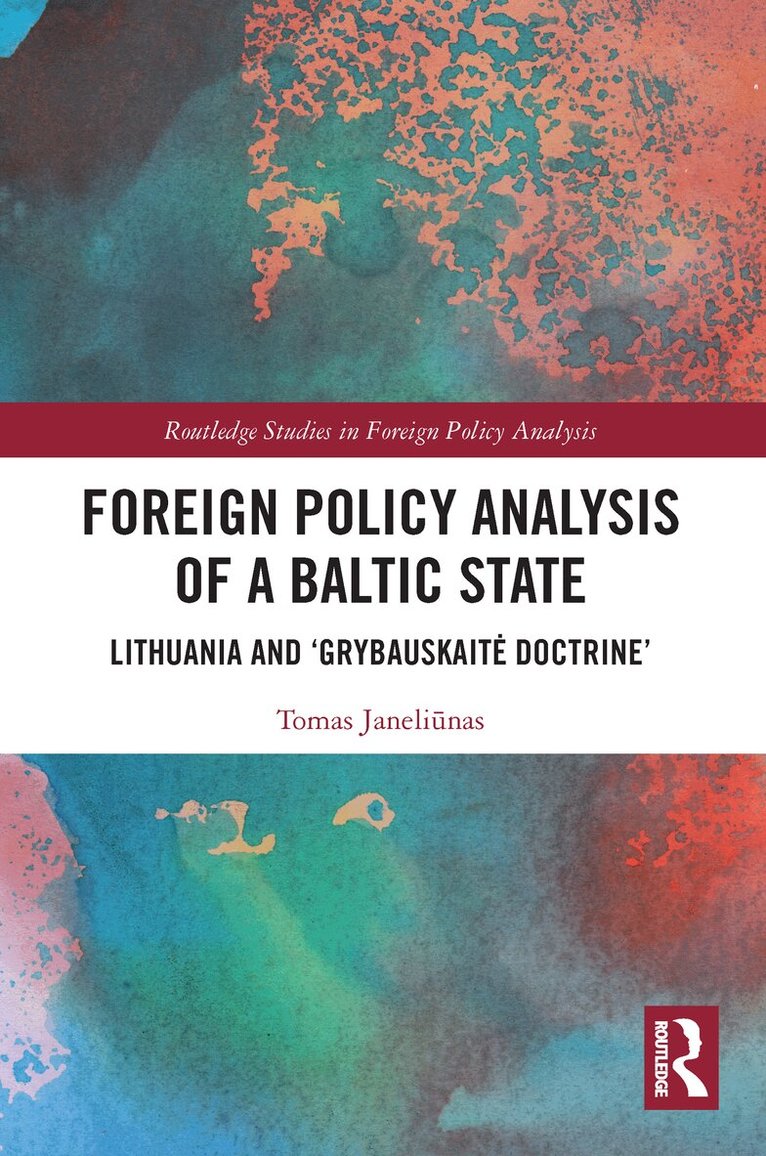
This book provides a comprehensive analysis of Lithuanian foreign policy by employing the theory of small states and the agent-perspective to assess how President Dalia Grybauskaitė impacted Lithuanian foreign policy in 2009–2019 and which, in turn, could affect changes in international structures. The book is based on original interviews with Grybauskaitė and all her foreign policy advisors, as well as other Lithuanian diplomats and Ministers of Foreign Affairs. In addition to providing an important case study of Lithuanian foreign policy, this monograph also discusses the impact an agent formulating and executing small-state foreign policy may have on the ‘grand structures’ of international relations, such as the EU and NATO. For its investigation of the mutual relationship between agent and structure, this monograph draws on the literature on foreign policy analysis (FPA) and asks questions about the extent to which a particular leader of foreign policy may determine a specific policy decision or outcome. This book will be of particular interest to students of the Baltic region and Russia-Baltic relations, as well as to political scientists and researchers interested in FPA literature, and small-state security.
Inbunden, Engelska, 2020
1 972 kr
Skickas inom 10-15 vardagar
This book provides a comprehensive analysis of Lithuanian foreign policy by employing the theory of small states and the agent-perspective to assess how President Dalia Grybauskaitė impacted Lithuanian foreign policy in 2009–2019 and which, in turn, could affect changes in international structures. The book is based on original interviews with Grybauskaitė and all her foreign policy advisors, as well as other Lithuanian diplomats and Ministers of Foreign Affairs. In addition to providing an important case study of Lithuanian foreign policy, this monograph also discusses the impact an agent formulating and executing small-state foreign policy may have on the ‘grand structures’ of international relations, such as the EU and NATO. For its investigation of the mutual relationship between agent and structure, this monograph draws on the literature on foreign policy analysis (FPA) and asks questions about the extent to which a particular leader of foreign policy may determine a specific policy decision or outcome. This book will be of particular interest to students of the Baltic region and Russia-Baltic relations, as well as to political scientists and researchers interested in FPA literature, and small-state security.
Inbunden, Engelska, 2017
2 252 kr
Skickas inom 10-15 vardagar
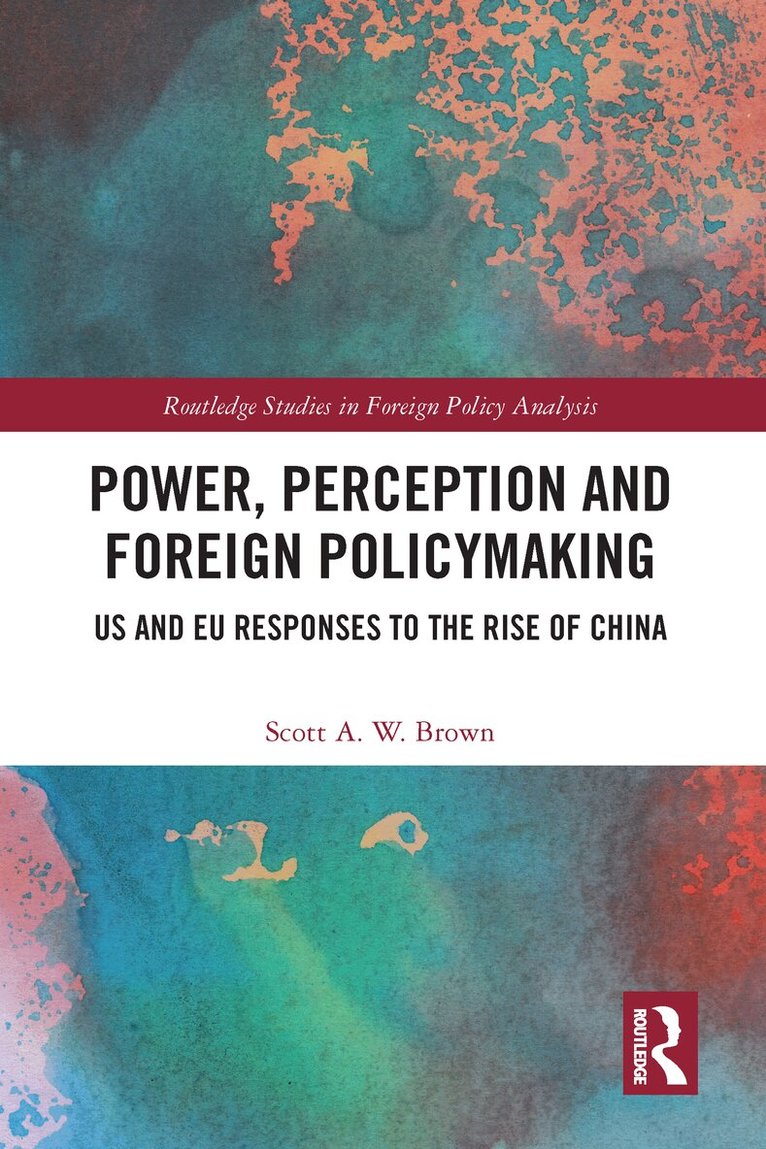
This book examines the changing dynamics of power in the international arena since the end of the Cold War. Brown engages in analysis of how the United States and the European Union have responded to the so-called rise of China through an examination of how policymakers’ perceptions of China have changed over time and influenced their policy choices. This study undertakes rigorous analysis of how these perceptions have evolved between 1989 and 20092016, offering a comparative perspective on the similarities and differences between the policy discourse and behaviour within these two Western powers. Brown argues that ‘China’s rise’ is a contested notion, with varied perceptions of how the implications of China’s ascendancy have shaped policy preferences in ways that are inconsistent with concerns over the threat of an impending power-transition. Combining concepts and methods derived from IR and FPA, the book examines the linkages between great power politics and policymakers’ competing interpretations of key international actors, and their influence upon foreign policies. The main objective of the study is to illuminate the different ways in which the US and the EU have responded to the rise of China through a close analysis of their decision-making processes and outcomes across a series of key encounters and events, including the transatlantic debate over the EU’s proposal to lift its China arms embargo (2003-2005).Undertaking qualitative analysis of the development of American and European policymakers’ perceptions of China, this book will be of interest to graduates and scholars of post-Cold War international politics, Foreign Policy Analysis, policymaking, US-China relations and EU-China relations.
Häftad, Engelska, 2021
637 kr
Skickas inom 10-15 vardagar
How do America’s democratic allies perceive and respond to a relative decline in US power and influence and the simultaneous rise of China? Using the case-studies of Europe, the UK, Australia, Canada, Japan and South East Asian countries, this book offers a broad assessment of the perceptions of threat and the strategies used by these allies to cope with the relative decline of America’s hegemonic power, the rise of China and the transforming world order.In answering these central questions, contributors focus on two complementary analytical approaches. The first examines the perceptions of systemic changes by America’s allies: how are US allies framing this issue and what kind of political discourse is emerging with regards to it? The second approach focuses on the concrete foreign policy and defence strategies put forward by these allies. The book explores the extent to which US allies are willing to support US hegemony and considers the democratic allies’ understanding of the international structure, their relations to the United States, and their own aspirations in this changing world order.This book will be of interest to general readers as well as scholars and students of US foreign policy, foreign policy analysis and International Relations.
Häftad, Engelska, 2021
637 kr
Skickas inom 10-15 vardagar
This book examines the changing dynamics of power in the international arena since the end of the Cold War. Brown engages in analysis of how the United States and the European Union have responded to the so-called rise of China through an examination of how policymakers’ perceptions of China have changed over time and influenced their policy choices. This study undertakes rigorous analysis of how these perceptions have evolved between 1989 and 20092016, offering a comparative perspective on the similarities and differences between the policy discourse and behaviour within these two Western powers. Brown argues that ‘China’s rise’ is a contested notion, with varied perceptions of how the implications of China’s ascendancy have shaped policy preferences in ways that are inconsistent with concerns over the threat of an impending power-transition. Combining concepts and methods derived from IR and FPA, the book examines the linkages between great power politics and policymakers’ competing interpretations of key international actors, and their influence upon foreign policies. The main objective of the study is to illuminate the different ways in which the US and the EU have responded to the rise of China through a close analysis of their decision-making processes and outcomes across a series of key encounters and events, including the transatlantic debate over the EU’s proposal to lift its China arms embargo (2003-2005).Undertaking qualitative analysis of the development of American and European policymakers’ perceptions of China, this book will be of interest to graduates and scholars of post-Cold War international politics, Foreign Policy Analysis, policymaking, US-China relations and EU-China relations.
Häftad, Engelska, 2021
637 kr
Skickas inom 10-15 vardagar
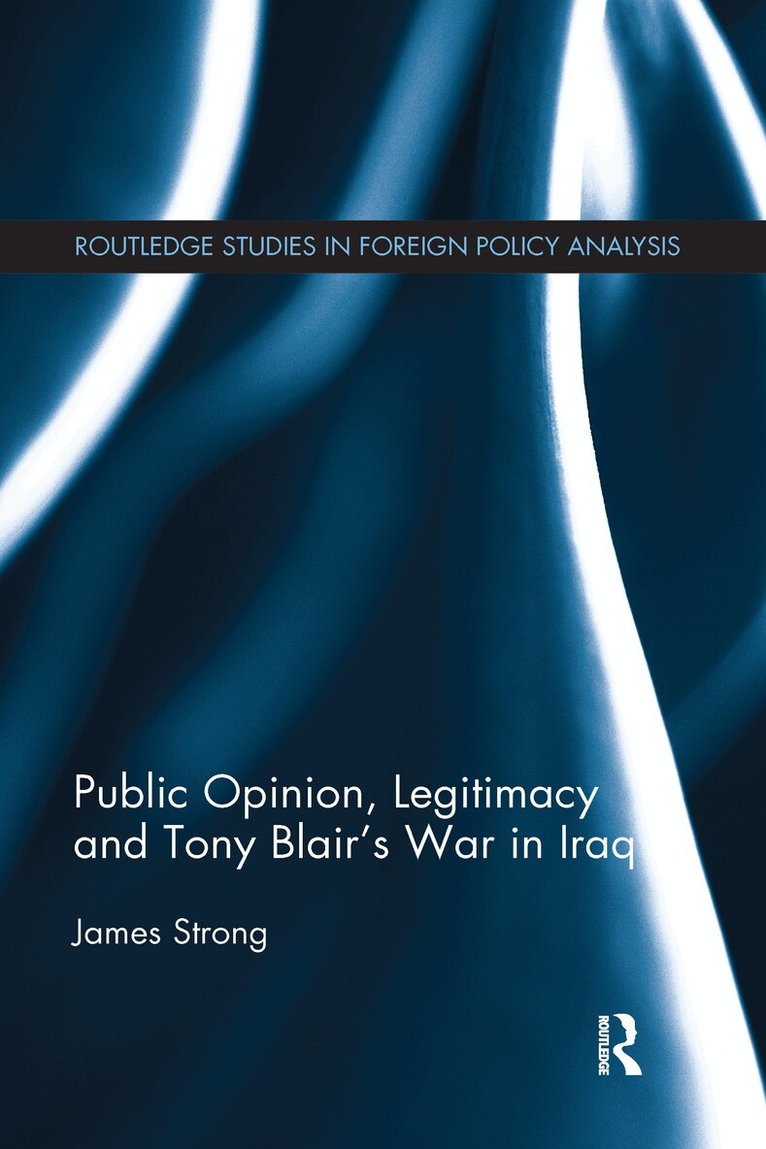
In the wake of the publication of the Chilcot report, this book reinterprets the relationship between British public opinion and the Blair government’s decision-making in the run-up to the 2003 invasion of Iraq. It highlights how the government won the parliamentary vote and got its war, but never won the argument that it was the right thing to do. Understanding how, why and with what consequences Britain wound up in this position means understanding better both this specific case and the wider issue of how democratic publics influence foreign policy processes. Taking an innovative constructivist approach to understanding how public actors potentially influence foreign policy, Strong frames the debate about Iraq as a contest over legitimacy among active public actors, breaking it down into four constituent elements covering the necessity, legality and morality of war, and the government’s authority. The book presents a detailed empirical account of the British public debate before the invasion of Iraq based on the rigorous interrogation of thousands of primary sources, employing both quantitative and qualitative content analysis methods to interpret the shape of debate between January 2002 and March 2003. Also contributing to the wider foreign policy analysis literature, the book investigates the domestic politics of foreign policy decision-making, and particularly the influence public opinion exerts; considers the domestic structural determinants of foreign policy decision-making; and studies the ethics of foreign policy decision-making, and the legitimate use of force. It will be of great use to students and scholars of foreign policy analysis, as well as those interested in legitimacy in international conflict, British foreign policy, the Iraq War and the role of public opinion in conflict situations.
Häftad, Engelska, 2021
637 kr
Skickas inom 10-15 vardagar
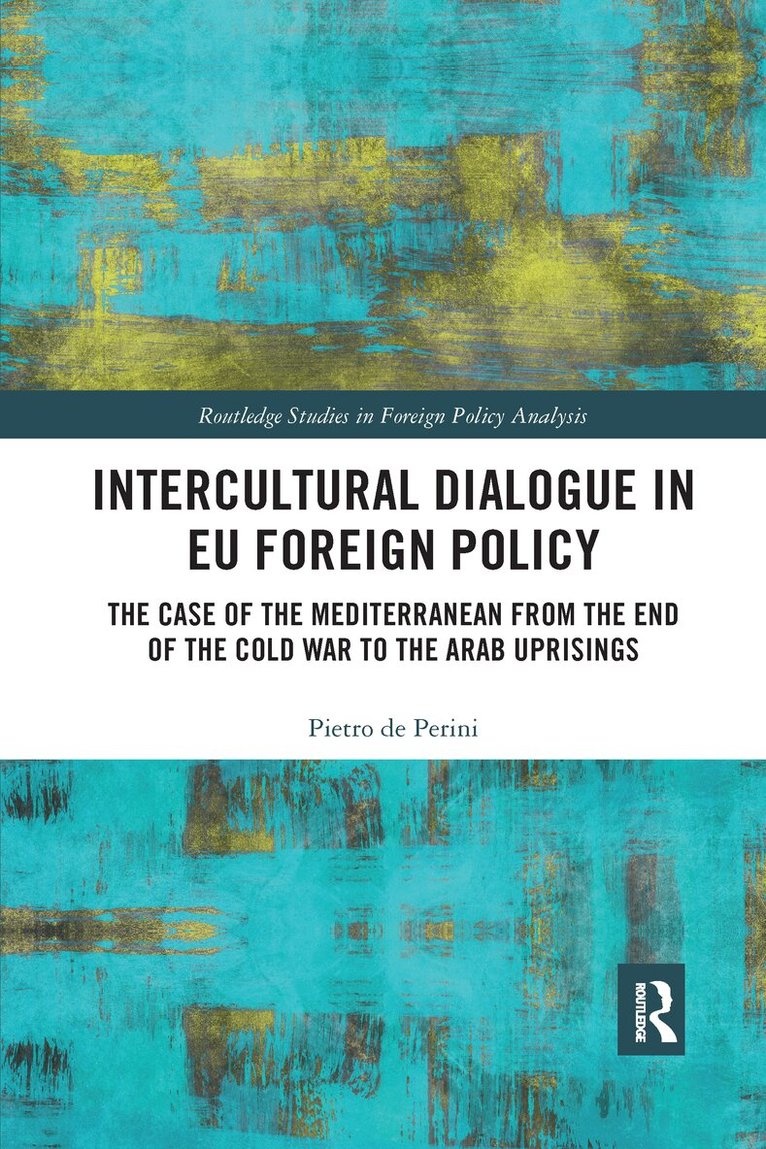
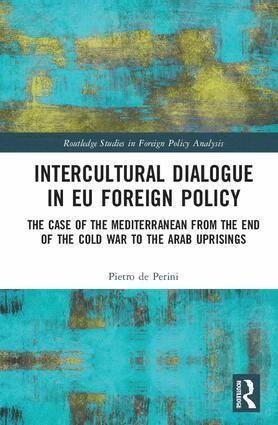
This book provides an original, rigorous and theoretically-grounded investigation into varying EU efforts to advance intercultural dialogue (ICD) in the framework of its foreign policy towards the Mediterranean during the period 1990-2014. From the end of the Cold War, the EU has increasingly invested in both rhetoric and resources on ICD promotion. In spite of this commitment, the EU has never offered a clear and permanent understanding of what this concept entails and has been actually aimed at. By adopting a FPA standpoint and approaching ICD as one of the foreign policy instruments developed by the EU to address the relations with its Mediterranean partners, this book exposes the causes and the modalities of the contradictory development of this relevant and long standing element of EU foreign policy. De Perini investigates change and continuity in the promotion of this tool, and provides in-depth knowledge of what ICD has actually meant for the EU: from the development and launch of the Euro-Mediterranean Partnership or Barcelona Process, to the revision of the European Neighbourhood Policy following the Arab uprisings. The book shows that the EU’s advancement of ICD in its foreign policy has gone through three distinct phases: ‘emergence’ (1990-2001), ‘consolidation’ (2001-2010) and ‘professionalisation’ (2010-2014). Empirically the book provides the first comprehensive and integrative analysis of all aspects of EU efforts to promote ICD. The book exposes a series of trends, limits and contradictions of EU foreign policy which are increasingly relevant today. In particular, it shows that over the last twenty-five years, the EU has addressed a set of persistent challenges characterising its relations with Mediterranean countries and people, namely challenges connected to regional conflicts, religious fundamentalisms, xenophobic attitudes towards Arab/Muslim migrants and related social tensions. As these challenges are still major issues in the current EU agenda and in the broader debate about EU foreign policy, this book provides rich and original empirical knowledge to an understanding of how the EU has decided to address these phenomena at different moments of its recent history.
Häftad, Engelska, 2021
637 kr
Skickas inom 10-15 vardagar
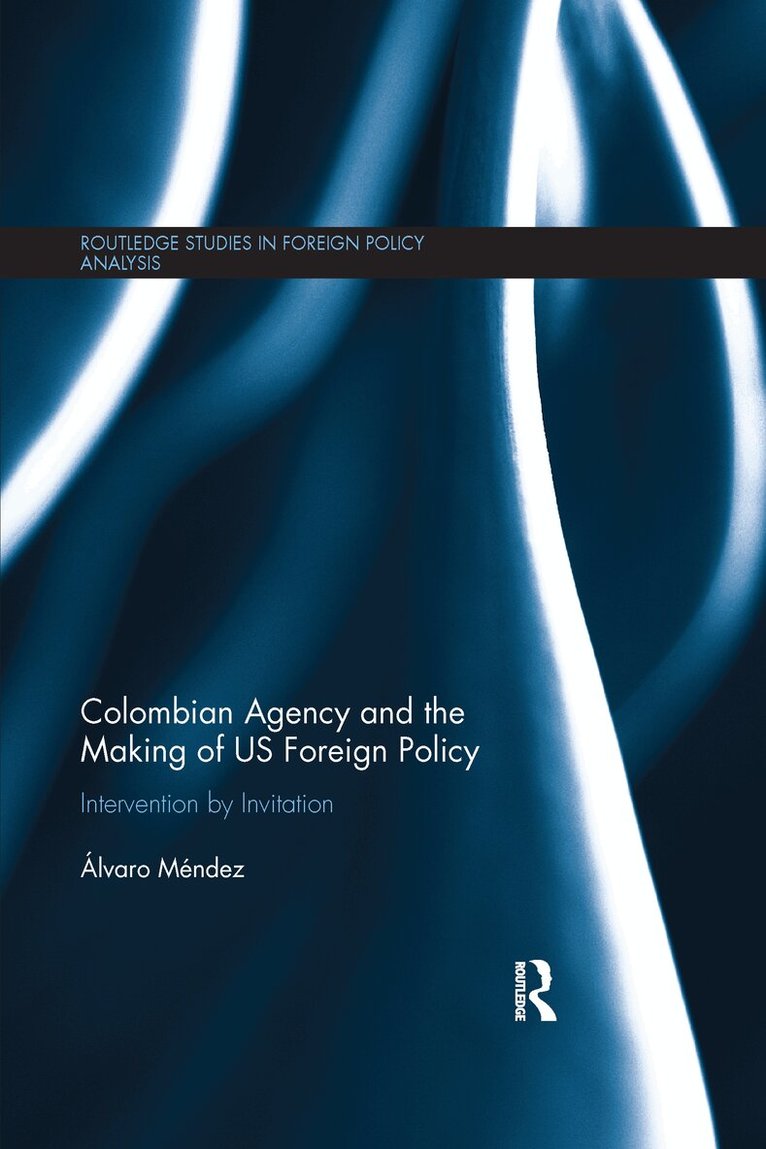
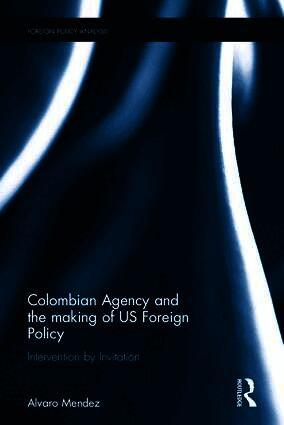
This book studies a significant event in US relations with Latin America, shedding light on the role of dependent states and their foreign policy agency in the process by which local concerns become intertwined with the dominant state’s foreign policy. Plan Colombia was a large-scale foreign aid programme through which the US intervened in the internal affairs of Colombia, by invitation. It proved to be one of the major successes of US foreign policy, and has been credited with stemming a potentially catastrophic security failure of the Colombian state. This book discusses the strategies and practices deployed by the Colombian government to influence US foreign policy decision making at the bureaucratic, legislative and executive levels, and is a distinctive contribution to our understanding of the dynamics of small power agency. Giving a clearer insight into the decision making processes in both the US and Colombia, this book founds its argument on solid empirical analysis assembled from interviews of the major players in the events including: Andres Pastrana, President of Colombia; Thomas Pickering, US State Department; Arturo Valenzuela, Senior Director for Inter-American Affairs at the NSA; General Barry McCaffrey, the US ‘Drug Czar’; and Dennis Hastert, Speaker of the US House of Representatives. Approaching the events in question from a bottom-up theoretical perspective that puts the emphasis on the facts of the case, this book will be of great interest to academics, students and policy makers in the field of foreign policy analysis, US foreign policy studies, and Latin American studies.
Häftad, Engelska, 2022
637 kr
Skickas inom 10-15 vardagar
This book focuses on the dynamics of Turkey’s relationship with Europe in the context of the ‘Arab Spring’ and analyses Turkish behaviour vis-à-vis foreign policy cooperation with the EU.Süsler explains the complexity of Turkey-EU relations by looking beyond membership negotiations and examines informal foreign policy dialogue between Turkish and EU officials. The book discusses the reactions of the Turkish government to the uprisings in Libya, Syria, and Egypt and cooperative opportunities between Turkey and the EU. The analysis finds that although cooperation varies across cases, foreign policy dialogue has become a main driver of the Turkey-EU relationship. A counter-intuitive finding of the research is that the EU has often been the actor seeking Turkey’s cooperation, rather than the other way round, clearly challenging the original power asymmetry between Turkey and the EU. Based on interviews with diplomats and policy makers and extensive documentary research, this book will be of interest to political scientists, students, policy makers and researchers focusing on Turkish foreign policy and Turkey-EU relations. This book is also about exploring inventive ways of maintaining a complex working partnership with the EU and will be of interest to scholars working on the EU’s relationship with "outsiders".
Inbunden, Engelska, 2023
2 036 kr
Skickas inom 10-15 vardagar
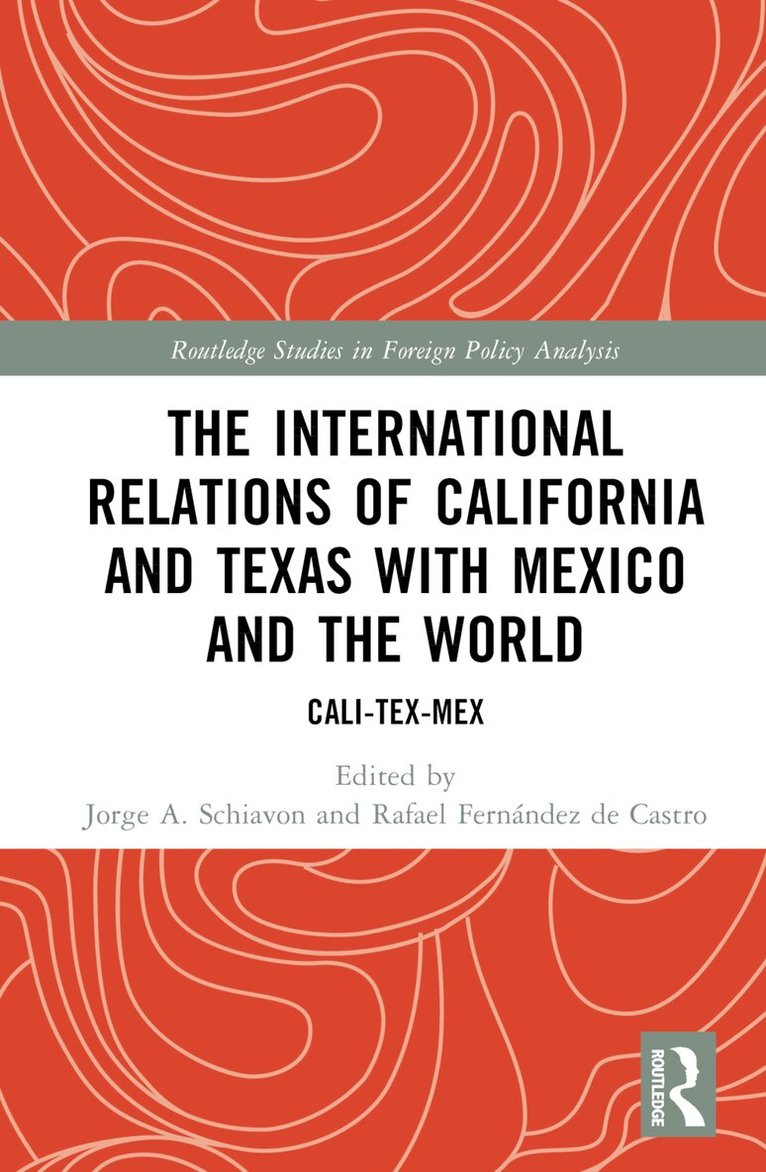
This book analyzes the international relations of Mexico and the two most important sub-state governments of the United States, California and Texas. It explains why and how these two states conduct their international relations (IR) with Mexico and the world, and how national authorities and local governments coordinate in the definition and implementation of their international policies. Expert contributors from across the Americas offer a historical and current analysis, exploring which areas of cooperation—trade, investment, border cooperation, energy, migration—matter most. They also consider the institutional and legal bases of Mexican and U.S. states’ international relations, the changing nature of the U.S. federal system, the impact on international partners, the role of Latinos and the future of paradiplomacy in the region. The book will be of interest to scholars and students of International Relations, comparative politics, diplomacy, foreign policy, governance, and federalism, as well as business people, social leaders, and practitioners of diplomacy and paradiplomacy around the world.
Häftad, Engelska, 2024
595 kr
Skickas inom 10-15 vardagar
This book analyzes the international relations of Mexico and the two most important sub-state governments of the United States, California and Texas. It explains why and how these two states conduct their international relations (IR) with Mexico and the world, and how national authorities and local governments coordinate in the definition and implementation of their international policies. Expert contributors from across the Americas offer a historical and current analysis, exploring which areas of cooperation—trade, investment, border cooperation, energy, migration—matter most. They also consider the institutional and legal bases of Mexican and U.S. states’ international relations, the changing nature of the U.S. federal system, the impact on international partners, the role of Latinos and the future of paradiplomacy in the region. The book will be of interest to scholars and students of International Relations, comparative politics, diplomacy, foreign policy, governance, and federalism, as well as business people, social leaders, and practitioners of diplomacy and paradiplomacy around the world.
Inbunden, Engelska, 2017
2 457 kr
Skickas inom 10-15 vardagar
In the wake of the publication of the Chilcot report, this book reinterprets the relationship between British public opinion and the Blair government’s decision-making in the run-up to the 2003 invasion of Iraq. It highlights how the government won the parliamentary vote and got its war, but never won the argument that it was the right thing to do. Understanding how, why and with what consequences Britain wound up in this position means understanding better both this specific case and the wider issue of how democratic publics influence foreign policy processes. Taking an innovative constructivist approach to understanding how public actors potentially influence foreign policy, Strong frames the debate about Iraq as a contest over legitimacy among active public actors, breaking it down into four constituent elements covering the necessity, legality and morality of war, and the government’s authority. The book presents a detailed empirical account of the British public debate before the invasion of Iraq based on the rigorous interrogation of thousands of primary sources, employing both quantitative and qualitative content analysis methods to interpret the shape of debate between January 2002 and March 2003. Also contributing to the wider foreign policy analysis literature, the book investigates the domestic politics of foreign policy decision-making, and particularly the influence public opinion exerts; considers the domestic structural determinants of foreign policy decision-making; and studies the ethics of foreign policy decision-making, and the legitimate use of force. It will be of great use to students and scholars of foreign policy analysis, as well as those interested in legitimacy in international conflict, British foreign policy, the Iraq War and the role of public opinion in conflict situations.
Inbunden, Engelska, 2017
2 176 kr
Skickas inom 10-15 vardagar
This book provides an original, rigorous and theoretically-grounded investigation into varying EU efforts to advance intercultural dialogue (ICD) in the framework of its foreign policy towards the Mediterranean during the period 1990-2014. From the end of the Cold War, the EU has increasingly invested in both rhetoric and resources on ICD promotion. In spite of this commitment, the EU has never offered a clear and permanent understanding of what this concept entails and has been actually aimed at. By adopting a FPA standpoint and approaching ICD as one of the foreign policy instruments developed by the EU to address the relations with its Mediterranean partners, this book exposes the causes and the modalities of the contradictory development of this relevant and long standing element of EU foreign policy. De Perini investigates change and continuity in the promotion of this tool, and provides in-depth knowledge of what ICD has actually meant for the EU: from the development and launch of the Euro-Mediterranean Partnership or Barcelona Process, to the revision of the European Neighbourhood Policy following the Arab uprisings. The book shows that the EU’s advancement of ICD in its foreign policy has gone through three distinct phases: ‘emergence’ (1990-2001), ‘consolidation’ (2001-2010) and ‘professionalisation’ (2010-2014). Empirically the book provides the first comprehensive and integrative analysis of all aspects of EU efforts to promote ICD. The book exposes a series of trends, limits and contradictions of EU foreign policy which are increasingly relevant today. In particular, it shows that over the last twenty-five years, the EU has addressed a set of persistent challenges characterising its relations with Mediterranean countries and people, namely challenges connected to regional conflicts, religious fundamentalisms, xenophobic attitudes towards Arab/Muslim migrants and related social tensions. As these challenges are still major issues in the current EU agenda and in the broader debate about EU foreign policy, this book provides rich and original empirical knowledge to an understanding of how the EU has decided to address these phenomena at different moments of its recent history.
Inbunden, Engelska, 2017
2 176 kr
Skickas inom 10-15 vardagar
This book studies a significant event in US relations with Latin America, shedding light on the role of dependent states and their foreign policy agency in the process by which local concerns become intertwined with the dominant state’s foreign policy. Plan Colombia was a large-scale foreign aid programme through which the US intervened in the internal affairs of Colombia, by invitation. It proved to be one of the major successes of US foreign policy, and has been credited with stemming a potentially catastrophic security failure of the Colombian state. This book discusses the strategies and practices deployed by the Colombian government to influence US foreign policy decision making at the bureaucratic, legislative and executive levels, and is a distinctive contribution to our understanding of the dynamics of small power agency. Giving a clearer insight into the decision making processes in both the US and Colombia, this book founds its argument on solid empirical analysis assembled from interviews of the major players in the events including: Andres Pastrana, President of Colombia; Thomas Pickering, US State Department; Arturo Valenzuela, Senior Director for Inter-American Affairs at the NSA; General Barry McCaffrey, the US ‘Drug Czar’; and Dennis Hastert, Speaker of the US House of Representatives. Approaching the events in question from a bottom-up theoretical perspective that puts the emphasis on the facts of the case, this book will be of great interest to academics, students and policy makers in the field of foreign policy analysis, US foreign policy studies, and Latin American studies.