Routledge Studies in Juvenile Justice and Delinquency – serie
Visar alla böcker i serien Routledge Studies in Juvenile Justice and Delinquency. Handla med fri frakt och snabb leverans.
13 produkter
13 produkter
Inbunden, Engelska, 2019
2 179 kr
Skickas inom 10-15 vardagar
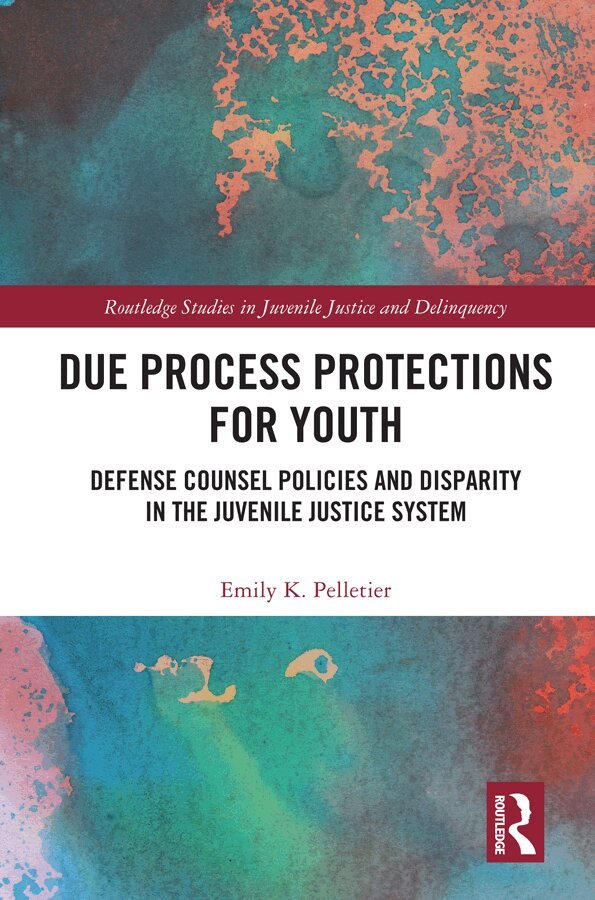
This monograph illuminates the connections between juvenile defense policies and the racially disparate impact of the juvenile justice system. The limited data that exist on youth in the juvenile justice system consistently depict disparate contact and outcomes for black youth across the system. The broad rehabilitative goals of the U.S. juvenile justice system, along with the "best interest" legal standard of the child welfare system, muddle the protection of youth due process rights. States differ widely in their policies granting defense counsel, and many policies lack specific language for policies addressing notions such as appointment timing, duration of representation, waiver criteria, and role of counsel.Using a combination of legal and sociological research methods, this book examines the lack of specificity in the language of juvenile defense policies and connects the dots between this deficiency with the racially disparate impact of the system, contextualizing findings within a broader theoretical constructs of race and law. The author introduces common elements of juvenile defense policies, describes their impact, and makes suggestions for strengthening defense counsel policies. The book concludes with a call to action regarding expanded data-collection practices for juvenile delinquency courts.This book is essential reading for those engaged in youth and juvenile justice efforts and scholars interested in issues surrounding due process, race, class, social policy, and justice.
Inbunden, Engelska, 2019
2 004 kr
Skickas inom 10-15 vardagar
While there is extensive research published concerning juvenile justice and sentencing, most of the research focuses on individual and extra-legal factors, such as age, race, and gender, with scant attention paid to the impact of macro-level factors. This book assesses how a specific contextual factor—concentrated disadvantage—impacts juvenile court outcomes and considers the relevant implications for the current state of juvenile justice processing.Using case-level data from a Southern state with a large, diverse population and contextual-level data from the 2010 US Census and American Community Survey, Maroun assesses whether youth living in neighborhoods of concentrated disadvantage experience harsher outcomes than their counterparts from other types of neighborhoods. Additionally, she examines whether concentrated disadvantage interacts with individual race/ethnicity to influence juvenile court outcomes. Results suggested a direct impact of concentrated disadvantage on diversion, adjudication, and probation type. Further, race significantly interacted with concentrated disadvantage in impacting adjudication and probation outcomes, while ethnicity significantly interacted with concentrated disadvantage in impacting disposition and commitment type.This research expands the knowledge of macrolevel influences on juvenile court outcomes, providing support for the notion that community context impacts juvenile justice processing. Results also highlight the fact that judges use discretion as well as other legal and extralegal factors in exerting social control, and do so differently at each stage of processing. This monograph is essential reading for those engaged in youth and juvenile justice efforts and scholars interested in issues surrounding race, class, social policy, and justice.
Inbunden, Engelska, 2021
2 004 kr
Skickas inom 10-15 vardagar
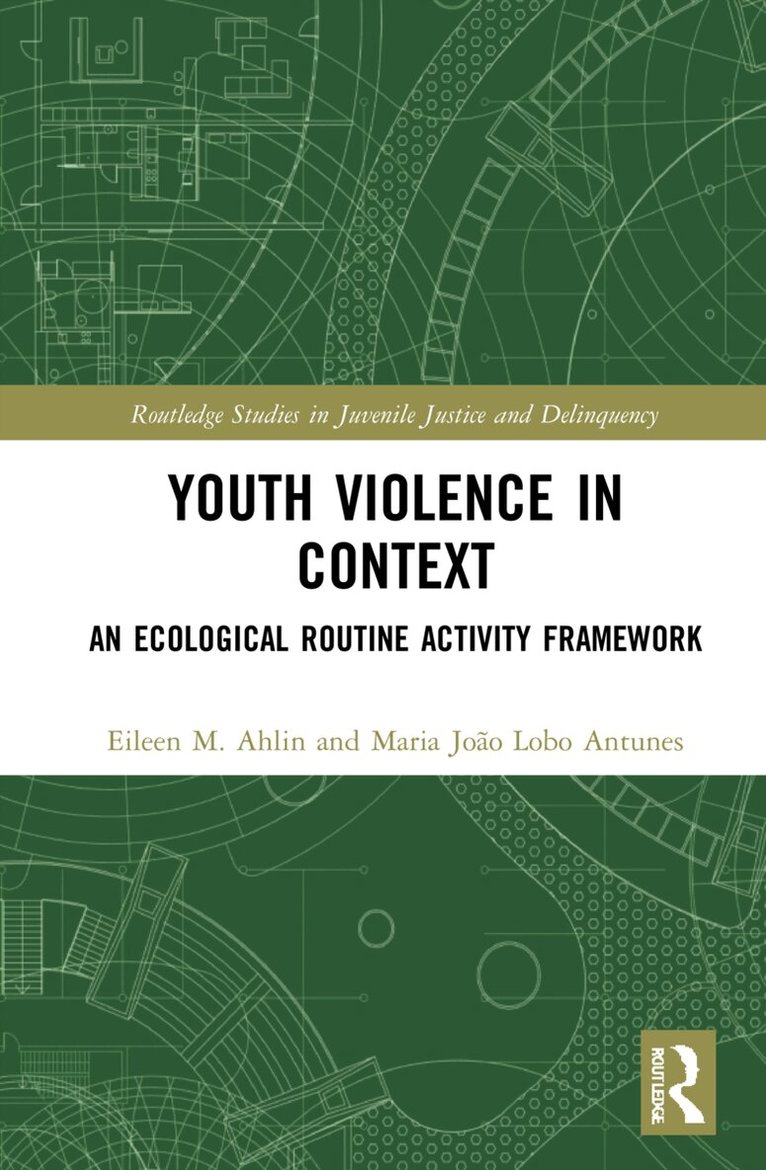
This book places youth violence within a Routine Activity Ecological Framework. Youth violence, specifically youth exposure to community violence and youth perpetration of violent behaviors, occur within various contexts. Ahlin and Antunes situate their discussion of youth violence within an ecological framework, identifying how it is nested within four mesosystem layers: community, family, peers and schools, and youth characteristics. Contextualized using an ecological framework, the Routine Activity Theory and Lifestyles perspective (RAT/LS) are well suited to guide an examination of youth violence risk and protective factors across the four layers. Drawing on scholarship that explores predictors and consequences of youth violence, the authors apply RAT/LS theory to explain how community, family, peers, schools, and youth characteristics influence youth behavior. Each layer of the ecological framework unfolds to reveal the latest scholarship and contextualizes how concepts of RAT/LS, specifically the motivated offender, target suitability, and guardianship, can be applied at each level. This book also highlights the mechanisms and processes that contribute to youth exposure to and involvement in violence by exploring factors examined in the literature as protective and risk factors of youth violence. Youth violence occurs in context, and, as such, the understanding of multilevel predictors and preventive measures against it can be situated within an RAT/LS ecological framework. This work links theory to extant research. Ahlin and Antunes demonstrate how knowledge of youth violence can be used to develop a robust theoretical foundation that can inform policy to improve neighborhoods and youth experiences within their communities, families, and peers and within their schools while acknowledging the importance of individual characteristics. This monograph is essential reading for those interested in youth violence, juvenile delinquency, and juvenile justice research and anyone dedicated to preventing crime among youths.
Inbunden, Engelska, 2021
2 004 kr
Skickas inom 10-15 vardagar
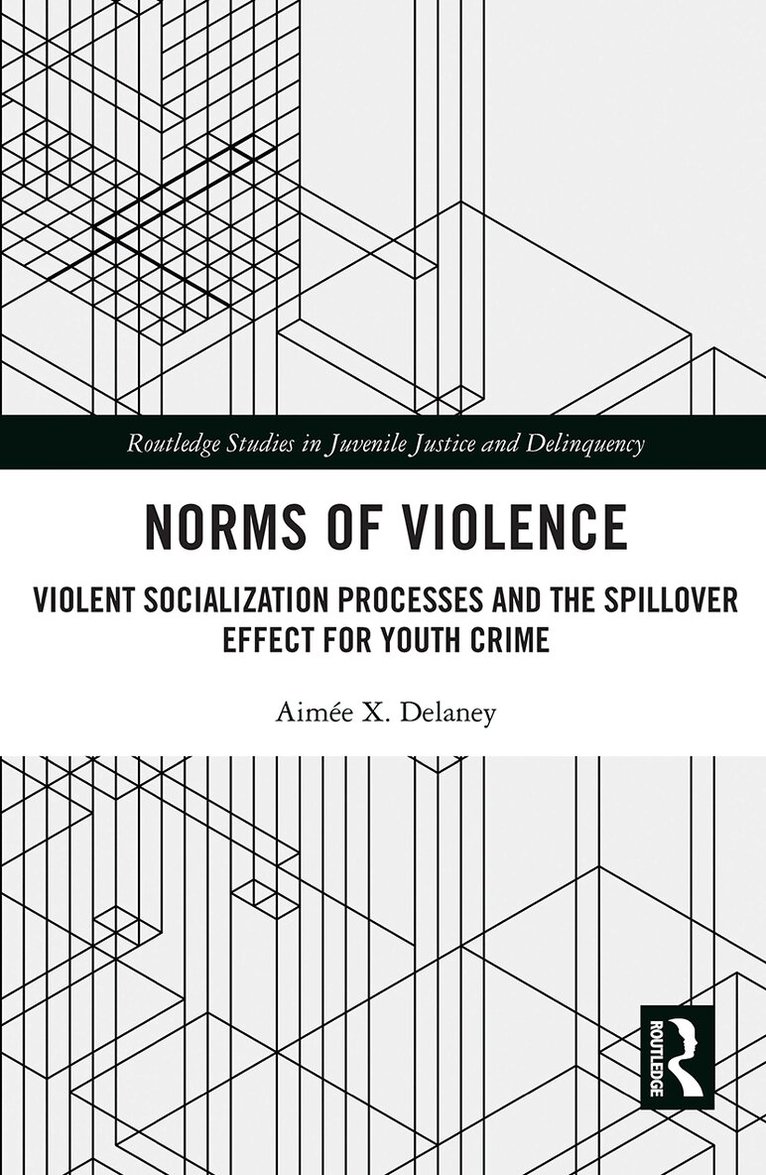
Norms of Violence: Violent Socialization Processes and the Spillover Effect for Youth Crime explores the degree to which violent socialization processes, both at the macro- and micro-levels, are associated with youth criminal behavior. Based on a quantitative test of an integrated theory of social control and culture of violence, the author argues that violent socialization is a process involving physical violence, exposure to violence, and pro-violent communications. All three dimensions, in combination with national level indicators of violence, contribute to a norm of violence which, at a national-level, spills over into other dimensions of society, including the family environment.This book seeks to answer if violent socialization processes truly control youth behavior. Various quantitative methods are used to demonstrate how violent socialization tends to be more prevalent in nations with indicators of violence compared to nations without such indicators. The spilling over of violence into socialization processes creates a context of violence normalized as a form of social control, which exacerbates youth criminal behavior within pro-violent nations.This book is unique in propelling a more thorough explanation of international youth crime by focusing on both victimization (violent socialization) and offending, rather than arguing solely that victimization is a correlate of youth crime. It provides a reference point for future comparative research offering theoretical explanations for youth crime across different nations and is essential reading for those engaged in youth and juvenile justice efforts and scholars interested in issues surrounding violence, youth, and justice.
Inbunden, Engelska, 2021
2 004 kr
Skickas inom 10-15 vardagar
This book takes a comprehensive, analytic approach to understanding Juvenile Risk and Needs Assessment (JRNA), covering elements relevant to how the practice affects youths’ cases and the juvenile justice system. The work draws on both analysis of the extensive research on risk and needs assessment in the juvenile justice system as well as data from the authors’ recent work in the area.Authors Sullivan and Childs have extensive experience in teaching about and doing research on the juvenile justice system, including multiple studies on juvenile risk and needs assessment tools and their implementation. This expansive, integrative book leaves readers with a realistic sense of "where things stand" on the theory, research, policy, and practice of JRNA. By bringing together existing ideas and assessing them in depth, it identifies possible future paths and sparks ideas for improving the juvenile justice response to delinquent and at-risk youths.Juvenile Risk and Needs Assessment is essential reading for scholars of juvenile justice system impact and reform as well as practitioners engaged in youth and juvenile justice work ranging from the preventive to the rehabilitative stages.
Inbunden, Engelska, 2021
2 004 kr
Skickas inom 10-15 vardagar
This research monograph provides a comparative analysis of juvenile court outcomes, exploring the influence of contextual factors on juvenile punishment across systems and communities. In doing so, it investigates whether, how, and to what extent macro-social context influences variation in juvenile punishment. The contextual hypotheses under investigation evaluate three prominent macro-sociall theoretical approaches: the conflict-oriented perspective of community threat, the consensus-oriented perspective of social disorganization, and the organizational perspective of the political economy of the juvenile court. Using multilevel modeling techniques, the study investigates these macro-social influences on juvenile justice outcomes across nearly 500 counties in seven states—Alabama, Connecticut, Missouri, Oregon, South Carolina, Texas, and Utah. Findings suggest that the contextual indicators under investigation did not explain variation in juvenile court punishment across communities and systems, and the study proposes several implications for future research and policy. This monograph is essential reading for scholars of juvenile justice system impact and reform as well as practitioners engaged in youth policy and juvenile justice work. It is unique in taking a comparative perspective that acknowledges that there is no one juvenile justice system in the United States, but many such systems.
Häftad, Engelska, 2021
586 kr
Skickas inom 10-15 vardagar
While there is extensive research published concerning juvenile justice and sentencing, most of the research focuses on individual and extra-legal factors, such as age, race, and gender, with scant attention paid to the impact of macro-level factors. This book assesses how a specific contextual factor—concentrated disadvantage—impacts juvenile court outcomes and considers the relevant implications for the current state of juvenile justice processing.Using case-level data from a Southern state with a large, diverse population and contextual-level data from the 2010 US Census and American Community Survey, Maroun assesses whether youth living in neighborhoods of concentrated disadvantage experience harsher outcomes than their counterparts from other types of neighborhoods. Additionally, she examines whether concentrated disadvantage interacts with individual race/ethnicity to influence juvenile court outcomes. Results suggested a direct impact of concentrated disadvantage on diversion, adjudication, and probation type. Further, race significantly interacted with concentrated disadvantage in impacting adjudication and probation outcomes, while ethnicity significantly interacted with concentrated disadvantage in impacting disposition and commitment type.This research expands the knowledge of macrolevel influences on juvenile court outcomes, providing support for the notion that community context impacts juvenile justice processing. Results also highlight the fact that judges use discretion as well as other legal and extralegal factors in exerting social control, and do so differently at each stage of processing. This monograph is essential reading for those engaged in youth and juvenile justice efforts and scholars interested in issues surrounding race, class, social policy, and justice.
Häftad, Engelska, 2021
586 kr
Skickas inom 10-15 vardagar
This monograph illuminates the connections between juvenile defense policies and the racially disparate impact of the juvenile justice system. The limited data that exist on youth in the juvenile justice system consistently depict disparate contact and outcomes for black youth across the system. The broad rehabilitative goals of the U.S. juvenile justice system, along with the "best interest" legal standard of the child welfare system, muddle the protection of youth due process rights. States differ widely in their policies granting defense counsel, and many policies lack specific language for policies addressing notions such as appointment timing, duration of representation, waiver criteria, and role of counsel.Using a combination of legal and sociological research methods, this book examines the lack of specificity in the language of juvenile defense policies and connects the dots between this deficiency with the racially disparate impact of the system, contextualizing findings within a broader theoretical constructs of race and law. The author introduces common elements of juvenile defense policies, describes their impact, and makes suggestions for strengthening defense counsel policies. The book concludes with a call to action regarding expanded data-collection practices for juvenile delinquency courts.This book is essential reading for those engaged in youth and juvenile justice efforts and scholars interested in issues surrounding due process, race, class, social policy, and justice.
Häftad, Engelska, 2022
595 kr
Skickas inom 10-15 vardagar
Norms of Violence: Violent Socialization Processes and the Spillover Effect for Youth Crime explores the degree to which violent socialization processes, both at the macro- and micro-levels, are associated with youth criminal behavior. Based on a quantitative test of an integrated theory of social control and culture of violence, the author argues that violent socialization is a process involving physical violence, exposure to violence, and pro-violent communications. All three dimensions, in combination with national level indicators of violence, contribute to a norm of violence which, at a national-level, spills over into other dimensions of society, including the family environment.This book seeks to answer if violent socialization processes truly control youth behavior. Various quantitative methods are used to demonstrate how violent socialization tends to be more prevalent in nations with indicators of violence compared to nations without such indicators. The spilling over of violence into socialization processes creates a context of violence normalized as a form of social control, which exacerbates youth criminal behavior within pro-violent nations.This book is unique in propelling a more thorough explanation of international youth crime by focusing on both victimization (violent socialization) and offending, rather than arguing solely that victimization is a correlate of youth crime. It provides a reference point for future comparative research offering theoretical explanations for youth crime across different nations and is essential reading for those engaged in youth and juvenile justice efforts and scholars interested in issues surrounding violence, youth, and justice.
Häftad, Engelska, 2023
548 kr
Skickas inom 10-15 vardagar
This research monograph provides a comparative analysis of juvenile court outcomes, exploring the influence of contextual factors on juvenile punishment across systems and communities. In doing so, it investigates whether, how, and to what extent macro-social context influences variation in juvenile punishment. The contextual hypotheses under investigation evaluate three prominent macro-sociall theoretical approaches: the conflict-oriented perspective of community threat, the consensus-oriented perspective of social disorganization, and the organizational perspective of the political economy of the juvenile court. Using multilevel modeling techniques, the study investigates these macro-social influences on juvenile justice outcomes across nearly 500 counties in seven states—Alabama, Connecticut, Missouri, Oregon, South Carolina, Texas, and Utah. Findings suggest that the contextual indicators under investigation did not explain variation in juvenile court punishment across communities and systems, and the study proposes several implications for future research and policy. This monograph is essential reading for scholars of juvenile justice system impact and reform as well as practitioners engaged in youth policy and juvenile justice work. It is unique in taking a comparative perspective that acknowledges that there is no one juvenile justice system in the United States, but many such systems.
Häftad, Engelska, 2023
638 kr
Skickas inom 10-15 vardagar
This book places youth violence within a Routine Activity Ecological Framework. Youth violence, specifically youth exposure to community violence and youth perpetration of violent behaviors, occur within various contexts. Ahlin and Antunes situate their discussion of youth violence within an ecological framework, identifying how it is nested within four mesosystem layers: community, family, peers and schools, and youth characteristics. Contextualized using an ecological framework, the Routine Activity Theory and Lifestyles perspective (RAT/LS) are well suited to guide an examination of youth violence risk and protective factors across the four layers. Drawing on scholarship that explores predictors and consequences of youth violence, the authors apply RAT/LS theory to explain how community, family, peers, schools, and youth characteristics influence youth behavior. Each layer of the ecological framework unfolds to reveal the latest scholarship and contextualizes how concepts of RAT/LS, specifically the motivated offender, target suitability, and guardianship, can be applied at each level. This book also highlights the mechanisms and processes that contribute to youth exposure to and involvement in violence by exploring factors examined in the literature as protective and risk factors of youth violence. Youth violence occurs in context, and, as such, the understanding of multilevel predictors and preventive measures against it can be situated within an RAT/LS ecological framework. This work links theory to extant research. Ahlin and Antunes demonstrate how knowledge of youth violence can be used to develop a robust theoretical foundation that can inform policy to improve neighborhoods and youth experiences within their communities, families, and peers and within their schools while acknowledging the importance of individual characteristics. This monograph is essential reading for those interested in youth violence, juvenile delinquency, and juvenile justice research and anyone dedicated to preventing crime among youths.
Häftad, Engelska, 2024
638 kr
Skickas inom 10-15 vardagar
This book takes a comprehensive, analytic approach to understanding Juvenile Risk and Needs Assessment (JRNA), covering elements relevant to how the practice affects youths’ cases and the juvenile justice system. The work draws on both analysis of the extensive research on risk and needs assessment in the juvenile justice system as well as data from the authors’ recent work in the area.Authors Sullivan and Childs have extensive experience in teaching about and doing research on the juvenile justice system, including multiple studies on juvenile risk and needs assessment tools and their implementation. This expansive, integrative book leaves readers with a realistic sense of "where things stand" on the theory, research, policy, and practice of JRNA. By bringing together existing ideas and assessing them in depth, it identifies possible future paths and sparks ideas for improving the juvenile justice response to delinquent and at-risk youths.Juvenile Risk and Needs Assessment is essential reading for scholars of juvenile justice system impact and reform as well as practitioners engaged in youth and juvenile justice work ranging from the preventive to the rehabilitative stages.
Inbunden, Engelska, 2026
2 120 kr
Skickas inom 10-15 vardagar
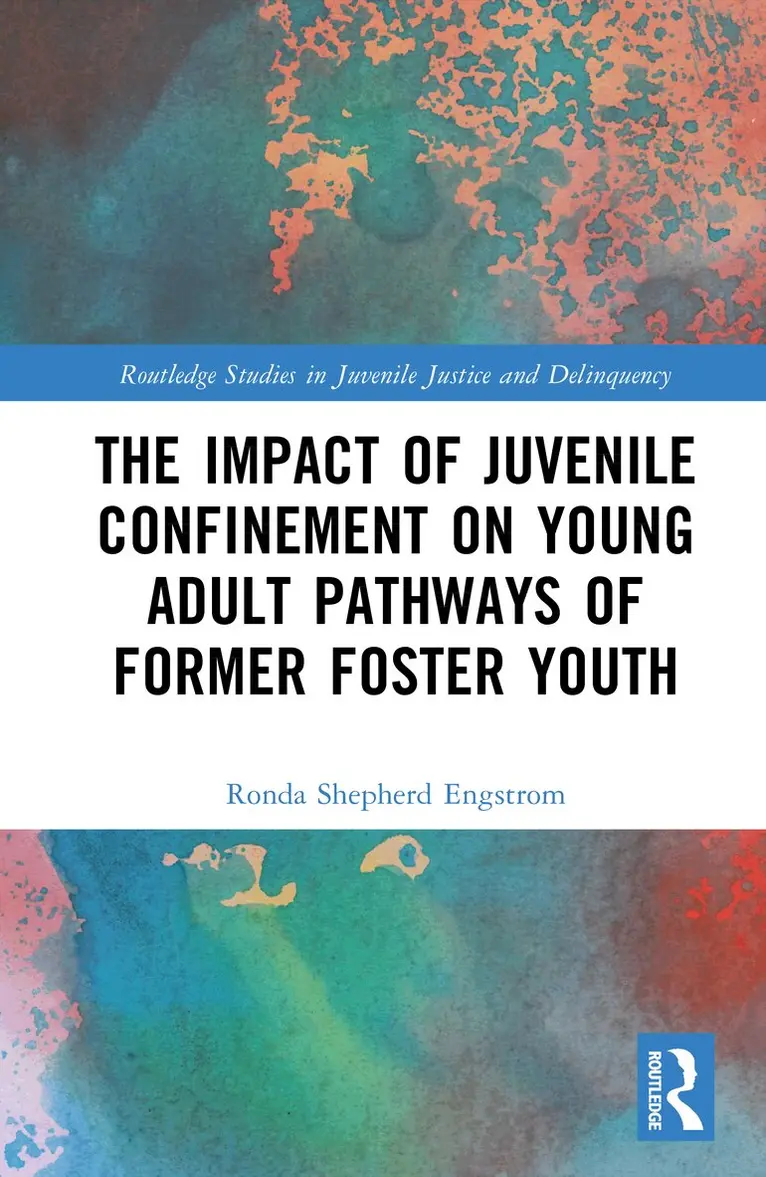
This book shares results from a mixed method study of former foster youth and the experiences that influenced the trajectory of their lives during their transitional adulthood years.Readers will come away from the book with a better understanding of the life events that most significantly influence foster youth’s transition to adulthood and how this knowledge can inform policy and practice. Through an extensive review of the literature, readers will gain broad knowledge of research in the areas of foster youth and offending trajectories, other young adult outcomes of foster youth, and the effect of juvenile detention on the likelihood of adult offending. Quantitative findings from a national sample of foster youth highlight the negative impact of confining foster youth as juveniles. Qualitative findings point to life experiences that promote self-agency, determination, and resiliency in youth aging out of care. Figures and tables present these findings in an easily accessible format. Readers will learn through both the quantitative and qualitative results that the ages of 17–19 are of utmost importance in helping former foster youth transition successfully to adulthood. Narratives of participant stories with direct quotations make the qualitative findings a compelling read. Numerous policy and research implications of the findings are shared that can direct academics and practitioners alike.Practitioners working with youth transitioning out of care, researchers, and instructors will all find this book a practical and meaningful resource. Practitioners will gain insights that will enable them to provide needed support for young people transitioning out of foster care. Policymakers may use the research to help advocate for policies suggested by the study’s findings such as increased use of diversion and extended foster care. Findings of the study raise new questions for researchers to explore further. Instructors will find this an excellent supplemental text for a graduate-level social work, sociology, or criminology course.