Routledge Studies in Urban Ecology - Böcker
Visar alla böcker i serien Routledge Studies in Urban Ecology. Handla med fri frakt och snabb leverans.
14 produkter
14 produkter
670 kr
Skickas inom 10-15 vardagar
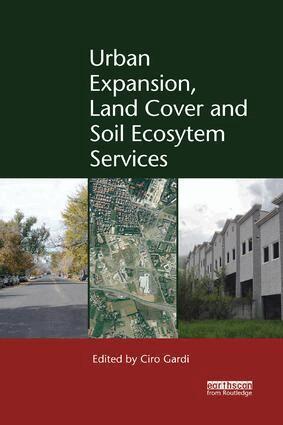
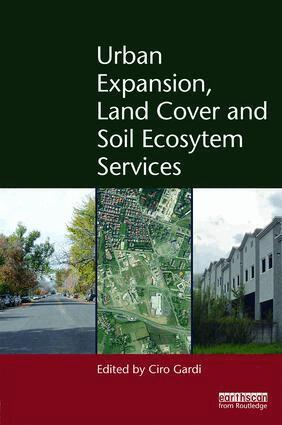
More than half of the world population now lives in cities, and urban expansion continues as rural people move to cities. This results in the loss of land for other purposes, particularly soil for agriculture and drainage. This book presents a review of current knowledge of the extension and projected expansion of urban areas at a global scale. Focusing on the impact of the process of 'land take' on soil resources and the ecosystem services that they provide, it describes approaches and methodologies for detecting and measuring urban areas, based mainly on remote sensing, together with a review of models and projected data on urban expansion. The most innovative aspect includes an analysis of the drivers and especially the impacts of soil sealing and land take on ecosystem services, including agriculture and food security, biodiversity, hydrology, climate and landscape. Case studies of cities from Europe, China and Latin America are included. The aim is not only to present and analyse this important environmental challenge, but also to propose and discuss solutions for the limitation, mitigation and compensation of this process.
2 113 kr
Skickas inom 10-15 vardagar
This book showcases the diversity of ways in which urban residents from varying cultural contexts view, interact, engage with and give meaning to urban nature, aiming to counterbalance the dominance of Western depictions and values of urban nature and design. Urban nature has up to now largely been defined, planned and managed in a way that is heavily dominated by Western understandings, values and appreciations, which has spread through colonialism and globalisation. As cities increasingly represent a diversity of cultures, and urban nature is being increasingly recognised as contributing to residents' wellbeing, belonging and overall quality of life, it is important to consider the numerous ways in which urban nature is understood and appreciated. This collection of case studies includes examples from Africa, Asia, Europe, North and South America, and reflects on the multi-dimensional aspects of engagements with urban nature through a biocultural diversity lens. The chapters cover several themes such as how engagements with nature contribute to a sense of wellbeing and belonging; the implications that diversity has on the provision, design and management of urban environments; and the threats inhibiting residents’ abilities to engage meaningfully with nature. The book challenges the dominant discourse, Western ideological understandings and meta-narratives of modernisation and unilineal urban transitions. A timely addition to the literature, Urban Nature: Enriching Belonging, Wellbeing and Bioculture offers an alternative to Western ideological understandings of nature and values and will be of great interest to those working in human and environmental urban ecology. It will also be key reading for students in the relevant fields of anthropology, development studies, geography, social ecology and urban studies.
616 kr
Skickas inom 10-15 vardagar
This book showcases the diversity of ways in which urban residents from varying cultural contexts view, interact, engage with and give meaning to urban nature, aiming to counterbalance the dominance of Western depictions and values of urban nature and design. Urban nature has up to now largely been defined, planned and managed in a way that is heavily dominated by Western understandings, values and appreciations, which has spread through colonialism and globalisation. As cities increasingly represent a diversity of cultures, and urban nature is being increasingly recognised as contributing to residents' wellbeing, belonging and overall quality of life, it is important to consider the numerous ways in which urban nature is understood and appreciated. This collection of case studies includes examples from Africa, Asia, Europe, North and South America, and reflects on the multi-dimensional aspects of engagements with urban nature through a biocultural diversity lens. The chapters cover several themes such as how engagements with nature contribute to a sense of wellbeing and belonging; the implications that diversity has on the provision, design and management of urban environments; and the threats inhibiting residents’ abilities to engage meaningfully with nature. The book challenges the dominant discourse, Western ideological understandings and meta-narratives of modernisation and unilineal urban transitions. A timely addition to the literature, Urban Nature: Enriching Belonging, Wellbeing and Bioculture offers an alternative to Western ideological understandings of nature and values and will be of great interest to those working in human and environmental urban ecology. It will also be key reading for students in the relevant fields of anthropology, development studies, geography, social ecology and urban studies.
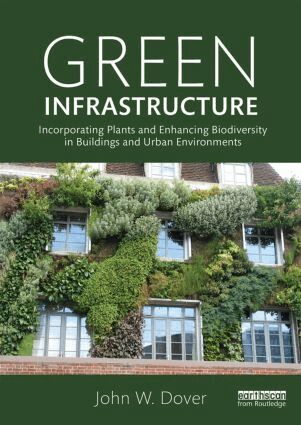
Green Infrastructure
Incorporating Plants and Enhancing Biodiversity in Buildings and Urban Environments
Inbunden, Engelska, 2015
3 085 kr
Skickas inom 10-15 vardagar
With more than half of the world's population now living in urban areas, it is vitally important that towns and cities are healthy places to live. The principal aim of this book is to synthesize the disparate literature on the use of vegetation in the built environment and its multifunctional benefits to humans. The author reviews issues such as: contact with wildlife and its immediate and long-term effects on psychological and physical wellbeing; the role of vegetation in removing health-damaging pollutants from the air; green roofs and green walls, which provide insulation, reduce energy use and decrease the carbon footprint of buildings; and structural vegetation such as street trees, providing shading and air circulation whilst also helping to stop flash-floods through surface drainage. Examples are used throughout to illustrate the practical use of vegetation to improve the urban environment and deliver ecosystem services.Whilst the underlying theme is the value of biodiversity, the emphasis is less on existing high-value green spaces (such as nature reserves, parks and gardens), than on the sealed surfaces of urban areas (building surfaces, roads, car parks, plazas, etc.). The book shows how these, and the spaces they encapsulate, can be modified to meet current and future environmental challenges including climate change. The value of existing green space is also covered to provide a comprehensive textbook of international relevance.
Green Infrastructure
Incorporating Plants and Enhancing Biodiversity in Buildings and Urban Environments
Häftad, Engelska, 2015
959 kr
Skickas inom 10-15 vardagar
With more than half of the world's population now living in urban areas, it is vitally important that towns and cities are healthy places to live. The principal aim of this book is to synthesize the disparate literature on the use of vegetation in the built environment and its multifunctional benefits to humans. The author reviews issues such as: contact with wildlife and its immediate and long-term effects on psychological and physical wellbeing; the role of vegetation in removing health-damaging pollutants from the air; green roofs and green walls, which provide insulation, reduce energy use and decrease the carbon footprint of buildings; and structural vegetation such as street trees, providing shading and air circulation whilst also helping to stop flash-floods through surface drainage. Examples are used throughout to illustrate the practical use of vegetation to improve the urban environment and deliver ecosystem services.Whilst the underlying theme is the value of biodiversity, the emphasis is less on existing high-value green spaces (such as nature reserves, parks and gardens), than on the sealed surfaces of urban areas (building surfaces, roads, car parks, plazas, etc.). The book shows how these, and the spaces they encapsulate, can be modified to meet current and future environmental challenges including climate change. The value of existing green space is also covered to provide a comprehensive textbook of international relevance.
2 386 kr
Skickas inom 10-15 vardagar
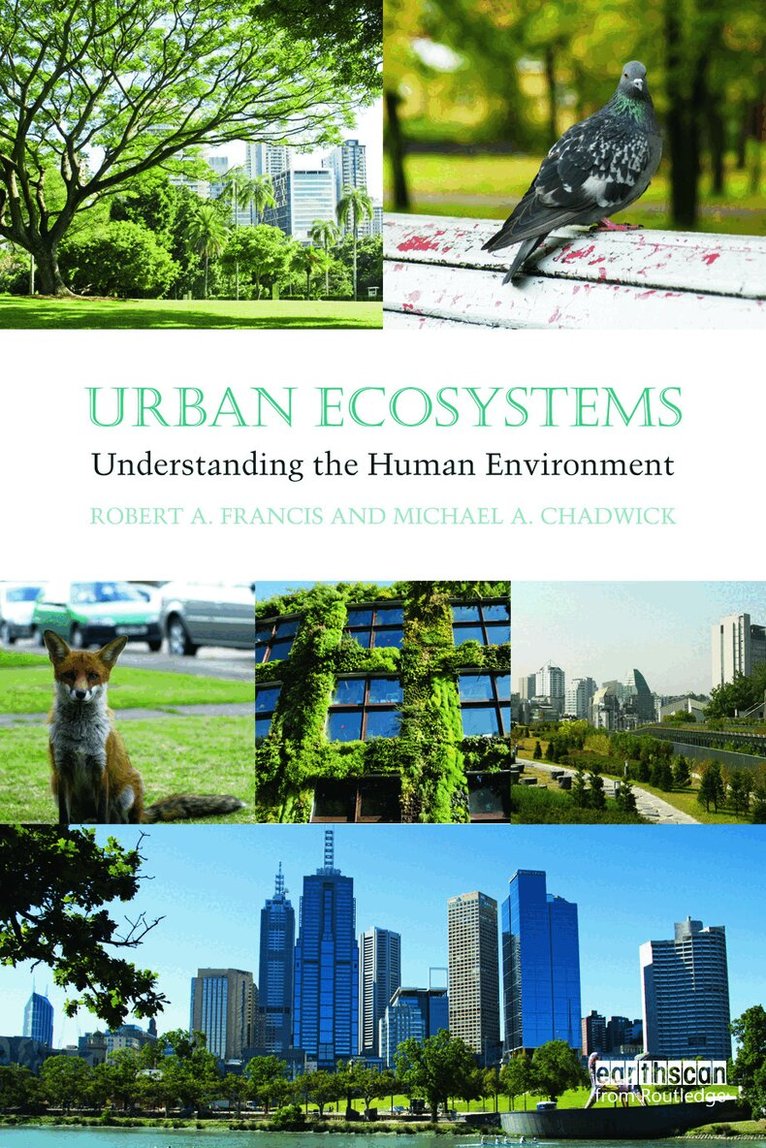
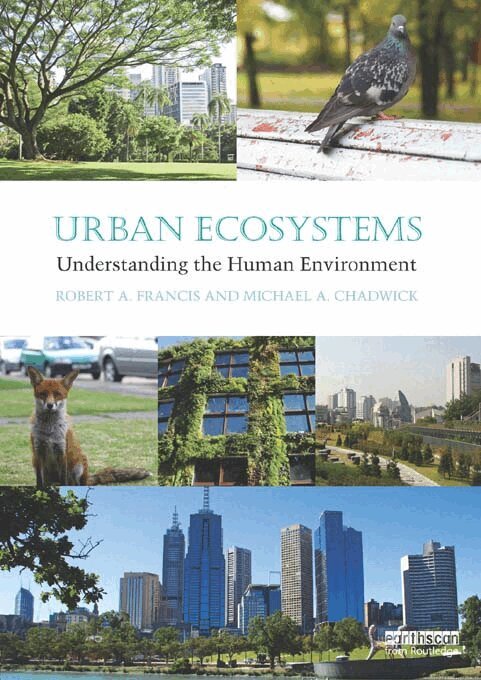
With over half of the global human population living in urban regions, urban ecosystems may now represent the contemporary and future human environment. Consisting of green space and the built environment, they harbour a wide range of species, yet are not well understood. This book aims to review what is currently known about urban ecosystems in a short and approachable text that will serve as a key resource for teaching and learning related to the urban environment. It covers both physical and biotic components of urban ecosystems, key ecological processes, and the management of ecological resources, including biodiversity conservation. All chapters incorporate case studies, boxes and questions for stimulating discussions in the learning environment.
777 kr
Skickas inom 10-15 vardagar
With over half of the global human population living in urban regions, urban ecosystems may now represent the contemporary and future human environment. Consisting of green space and the built environment, they harbour a wide range of species, yet are not well understood. This book aims to review what is currently known about urban ecosystems in a short and approachable text that will serve as a key resource for teaching and learning related to the urban environment. It covers both physical and biotic components of urban ecosystems, key ecological processes, and the management of ecological resources, including biodiversity conservation. All chapters incorporate case studies, boxes and questions for stimulating discussions in the learning environment.
2 181 kr
Skickas inom 10-15 vardagar
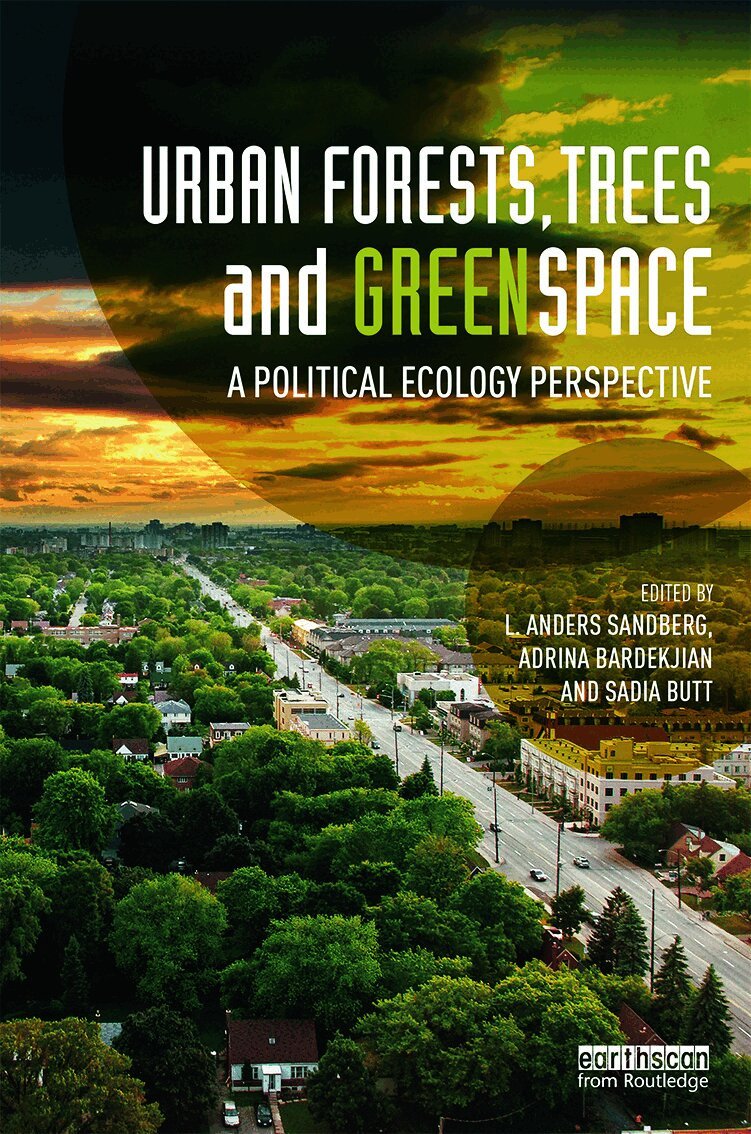
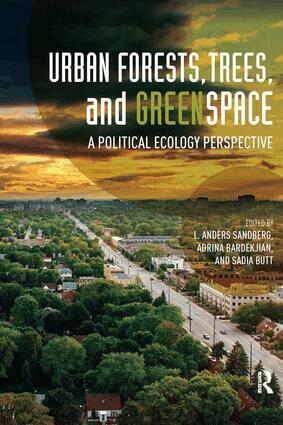
Urban forests, trees and greenspace are critical in contemporary planning and development of the city. Their study is not only a question of the growth and conservation of green spaces, but also has social, cultural and psychological dimensions. This book brings a perspective of political ecology to the complexities of urban trees and forests through three themes: human agency in urban forests and greenspace; arboreal and greenspace agency in the urban landscape; and actions and interventions in the urban forest. Contributors include leading authorities from North America and Europe from a range of disciplines, including forestry, ecology, geography, landscape design, municipal planning, environmental policy and environmental history.
2 113 kr
Skickas inom 10-15 vardagar
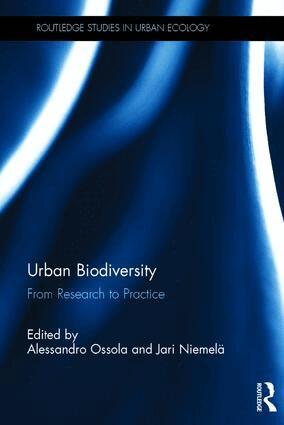
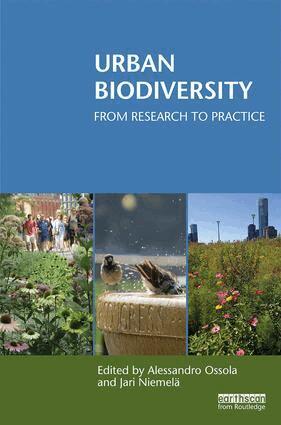
Urban biodiversity is an increasingly popular topic among researchers. Worldwide, thousands of research projects are unravelling how urbanisation impacts the biodiversity of cities and towns, as well as its benefits for people and the environment through ecosystem services. Exciting scientific discoveries are made on a daily basis. However, researchers often lack time and opportunity to communicate these findings to the community and those in charge of managing, planning and designing for urban biodiversity. On the other hand, urban practitioners frequently ask researchers for more comprehensible information and actionable tools to guide their actions. This book is designed to fill this cultural and communicative gap by discussing a selection of topics related to urban biodiversity, as well as its benefits for people and the urban environment. It provides an interdisciplinary overview of scientifically grounded knowledge vital for current and future practitioners in charge of urban biodiversity management, its conservation and integration into urban planning. Topics covered include pests and invasive species, rewilding habitats, the contribution of a diverse urban agriculture to food production, implications for human well-being, and how to engage the public with urban conservation strategies. For the first time, world-leading researchers from five continents convene to offer a global interdisciplinary perspective on urban biodiversity narrated with a simple but rigorous language. This book synthesizes research at a level suitable for both students and professionals working in nature conservation and urban planning and management.
700 kr
Skickas inom 10-15 vardagar
Urban biodiversity is an increasingly popular topic among researchers. Worldwide, thousands of research projects are unravelling how urbanisation impacts the biodiversity of cities and towns, as well as its benefits for people and the environment through ecosystem services. Exciting scientific discoveries are made on a daily basis. However, researchers often lack time and opportunity to communicate these findings to the community and those in charge of managing, planning and designing for urban biodiversity. On the other hand, urban practitioners frequently ask researchers for more comprehensible information and actionable tools to guide their actions. This book is designed to fill this cultural and communicative gap by discussing a selection of topics related to urban biodiversity, as well as its benefits for people and the urban environment. It provides an interdisciplinary overview of scientifically grounded knowledge vital for current and future practitioners in charge of urban biodiversity management, its conservation and integration into urban planning. Topics covered include pests and invasive species, rewilding habitats, the contribution of a diverse urban agriculture to food production, implications for human well-being, and how to engage the public with urban conservation strategies. For the first time, world-leading researchers from five continents convene to offer a global interdisciplinary perspective on urban biodiversity narrated with a simple but rigorous language. This book synthesizes research at a level suitable for both students and professionals working in nature conservation and urban planning and management.
727 kr
Skickas inom 10-15 vardagar
Urban forests, trees and greenspace are critical in contemporary planning and development of the city. Their study is not only a question of the growth and conservation of green spaces, but also has social, cultural and psychological dimensions. This book brings a perspective of political ecology to the complexities of urban trees and forests through three themes: human agency in urban forests and greenspace; arboreal and greenspace agency in the urban landscape; and actions and interventions in the urban forest. Contributors include leading authorities from North America and Europe from a range of disciplines, including forestry, ecology, geography, landscape design, municipal planning, environmental policy and environmental history.
576 kr
Skickas
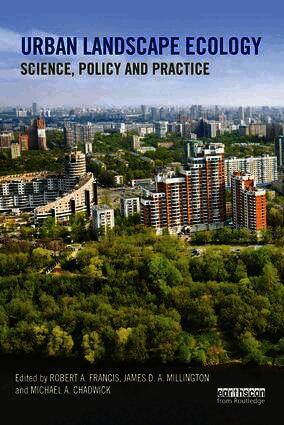
The growth of cities poses ever-increasing challenges for the natural environment on which they impact and depend, not only within their boundaries but also in surrounding peri-urban areas. Landscape ecology – the study of interactions across space and time between the structure and function of physical, biological and cultural components of landscapes – has a pivotal role to play in identifying sustainable solutions. This book brings together examples of research at the cutting edge of urban landscape ecology across multiple contexts that investigate the state, maintenance and restoration of healthy and functional natural environments across urban and peri-urban landscapes. An explicit focus is on urban landscapes in contrast to other books which have considered urban ecosystems and ecology without specific focus on spatial connections. It integrates research and perspectives from across academia, public and private practitioners of urban conservation, planning and design. It provides a much needed summary of current thinking on how urban landscapes can provide the foundation of sustained economic growth, prospering communities and personal well-being.
2 113 kr
Skickas inom 10-15 vardagar
More than half of the world population now lives in cities, and urban expansion continues as rural people move to cities. This results in the loss of land for other purposes, particularly soil for agriculture and drainage. This book presents a review of current knowledge of the extension and projected expansion of urban areas at a global scale. Focusing on the impact of the process of 'land take' on soil resources and the ecosystem services that they provide, it describes approaches and methodologies for detecting and measuring urban areas, based mainly on remote sensing, together with a review of models and projected data on urban expansion. The most innovative aspect includes an analysis of the drivers and especially the impacts of soil sealing and land take on ecosystem services, including agriculture and food security, biodiversity, hydrology, climate and landscape. Case studies of cities from Europe, China and Latin America are included. The aim is not only to present and analyse this important environmental challenge, but also to propose and discuss solutions for the limitation, mitigation and compensation of this process.
2 317 kr
Skickas inom 10-15 vardagar
The growth of cities poses ever-increasing challenges for the natural environment on which they impact and depend, not only within their boundaries but also in surrounding peri-urban areas. Landscape ecology – the study of interactions across space and time between the structure and function of physical, biological and cultural components of landscapes – has a pivotal role to play in identifying sustainable solutions. This book brings together examples of research at the cutting edge of urban landscape ecology across multiple contexts that investigate the state, maintenance and restoration of healthy and functional natural environments across urban and peri-urban landscapes. An explicit focus is on urban landscapes in contrast to other books which have considered urban ecosystems and ecology without specific focus on spatial connections. It integrates research and perspectives from across academia, public and private practitioners of urban conservation, planning and design. It provides a much needed summary of current thinking on how urban landscapes can provide the foundation of sustained economic growth, prospering communities and personal well-being.