Routledge/Lisbon Civic Forum Studies in Innovation – Serie
Visar alla böcker i serien Routledge/Lisbon Civic Forum Studies in Innovation. Handla med fri frakt och snabb leverans.
6 produkter
6 produkter
International Innovation Networks and Knowledge Migration
The German–Turkish nexus
Häftad, Engelska, 2019
413 kr
Skickas inom 10-15 vardagar
Migration is conceived differently in Europe compared with countries like the US, Canada or Australia. International Innovation Networks and Knowledge Migration confronts traditional views on migration with modern theories of brain circulation and innovation networks, showing that migration leads to mutual benefits for both the home and host countriesThis new volume brings together several case studies and empirical in-depth analyses which are constructed from the strong migration relationship between Turkey and Germany that has existed for more than 50 years. Bringing together over 20 international contributors, this book highlights that knowledge migration and cultural diversity can strongly stimulate entrepreneurial activities, competence acquisition and economic development of countries and regions. The authors highlight the considerable scope for improvement of European migration policies in order to be better prepared to successfully process structural changes stemming from an aging society in Europe, and an increasing international division of labour. This volume is suitable for those who study industrial economics, international economics and European economics. It is also of interest to those who want to delve deeper into the Turkish-German migration nexus.
2 181 kr
Skickas inom 10-15 vardagar
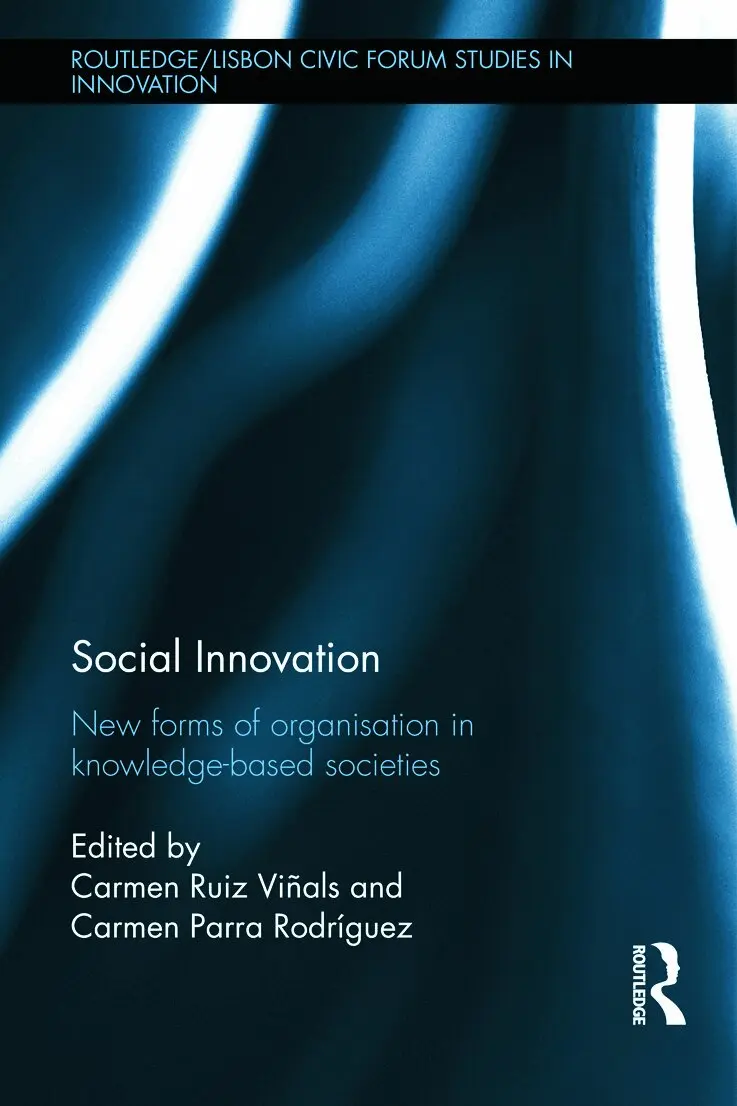
'Social innovation’ can be simply defined as the new ideas and initiatives that make it possible to meet our society’s challenges in areas such as the environment, education, employment, culture, health and economic development. It is currently becoming increasingly important as a central concept for social theories and politics. This edited volume brings together interdisciplinary contributions which examine the complex interrelation between innovation and social problems, a link which has been surprisingly underexplored in academia and practice thus far.Social Innovation: New Forms of Organisation in Knowledge–Based Societies examines the mutual interdependence of innovation processes and social affairs. This interdependent relationship is characterised by a high degree of complexity which stems on the one hand from the true uncertain character of innovation and on the other hand from the different time scales in both domains. The alliance between innovation and social policy is highly relevant to the challenges which we are facing in the 21st century, such as resource scarcity, ageing societies and climate change. All of these issues demand substantial, continuous and sustainable structural change to maintain international competitiveness. Social change can only be understood by improving our knowledge about the impact of innovation processes in their co-evolutionary alliance with social evolution.The purpose of this book is to increase awareness of social participation among civil society organisations, SMEs, governments and research institutions, in order to promote economic, political and social changes that enhance collective welfare. This volume offers a key starting point for those looking to further explore this important realm of social research.
2 316 kr
Skickas inom 10-15 vardagar
Innovation and finance are in a symbiotic and twin-track relationship: a well-functioning financial system spurs innovation by identifying and funding stimulating entrepreneurial activities which trigger economic growth. Innovations also open up profitable opportunities for the financial system. These mutual dynamics cause and need innovative adaptations in the financial system in order to better deal with the changing requirements of a knowledge-based economy. The volume comprises different contributions which focus on the central imperative of this evident connection between financial markets and innovation which, despite its importance, is only barely considered in academia, as well in practice so far.The book is about the mutual interdependence of innovation processes and finance. This interdependent relationship is characterized by a high degree of complexity which stems, on the one hand, from the truly uncertain character of innovation and, on the other hand, from the different time scales in both domains. Whereas innovation processes are long-term and experimental, financial markets are interested in shortening time horizons in order to optimize financial investments. Economies which do not manage to align the two realms of their economic system are in danger of ending up in either financial bubbles or economic stagnation. The chapters of this book deal with different aspects of this complex interrelationship between innovation and finance, highlighting, for example the role of stock markets, venture capital and international financial transactions, as well as the historical co-development of the financial and industrial domains. Thus far, the communities in economics dealing with both issues are almost completely disconnected. The book brings together economic research dealing with the interface between innovation and finance and highlights the importance of the Neo-Schumpeterian perspective. This topic is of particular interest in the current economic crisis affecting the Eurozone and its currency. Most of the policy instruments discussed and implemented so far are focused on short-run targets. This discussion of the relationship between innovation and finance suggests a long-run perspective to create new potentials for economic growth and a sustainable way out of the economic crisis.
721 kr
Skickas inom 10-15 vardagar
Innovation and finance are in a symbiotic and twin-track relationship: a well-functioning financial system spurs innovation by identifying and funding stimulating entrepreneurial activities which trigger economic growth. Innovations also open up profitable opportunities for the financial system. These mutual dynamics cause and need innovative adaptations in the financial system in order to better deal with the changing requirements of a knowledge-based economy. The volume comprises different contributions which focus on the central imperative of this evident connection between financial markets and innovation which, despite its importance, is only barely considered in academia, as well in practice so far.The book is about the mutual interdependence of innovation processes and finance. This interdependent relationship is characterized by a high degree of complexity which stems, on the one hand, from the truly uncertain character of innovation and, on the other hand, from the different time scales in both domains. Whereas innovation processes are long-term and experimental, financial markets are interested in shortening time horizons in order to optimize financial investments. Economies which do not manage to align the two realms of their economic system are in danger of ending up in either financial bubbles or economic stagnation. The chapters of this book deal with different aspects of this complex interrelationship between innovation and finance, highlighting, for example the role of stock markets, venture capital and international financial transactions, as well as the historical co-development of the financial and industrial domains. Thus far, the communities in economics dealing with both issues are almost completely disconnected. The book brings together economic research dealing with the interface between innovation and finance and highlights the importance of the Neo-Schumpeterian perspective. This topic is of particular interest in the current economic crisis affecting the Eurozone and its currency. Most of the policy instruments discussed and implemented so far are focused on short-run targets. This discussion of the relationship between innovation and finance suggests a long-run perspective to create new potentials for economic growth and a sustainable way out of the economic crisis.
809 kr
Skickas inom 10-15 vardagar
'Social innovation’ can be simply defined as the new ideas and initiatives that make it possible to meet our society’s challenges in areas such as the environment, education, employment, culture, health and economic development. It is currently becoming increasingly important as a central concept for social theories and politics. This edited volume brings together interdisciplinary contributions which examine the complex interrelation between innovation and social problems, a link which has been surprisingly underexplored in academia and practice thus far.Social Innovation: New Forms of Organisation in Knowledge–Based Societies examines the mutual interdependence of innovation processes and social affairs. This interdependent relationship is characterised by a high degree of complexity which stems on the one hand from the true uncertain character of innovation and on the other hand from the different time scales in both domains. The alliance between innovation and social policy is highly relevant to the challenges which we are facing in the 21st century, such as resource scarcity, ageing societies and climate change. All of these issues demand substantial, continuous and sustainable structural change to maintain international competitiveness. Social change can only be understood by improving our knowledge about the impact of innovation processes in their co-evolutionary alliance with social evolution.The purpose of this book is to increase awareness of social participation among civil society organisations, SMEs, governments and research institutions, in order to promote economic, political and social changes that enhance collective welfare. This volume offers a key starting point for those looking to further explore this important realm of social research.
International Innovation Networks and Knowledge Migration
The German–Turkish nexus
Inbunden, Engelska, 2016
1 406 kr
Skickas inom 10-15 vardagar
Migration is conceived differently in Europe compared with countries like the US, Canada or Australia. International Innovation Networks and Knowledge Migration confronts traditional views on migration with modern theories of brain circulation and innovation networks, showing that migration leads to mutual benefits for both the home and host countriesThis new volume brings together several case studies and empirical in-depth analyses which are constructed from the strong migration relationship between Turkey and Germany that has existed for more than 50 years. Bringing together over 20 international contributors, this book highlights that knowledge migration and cultural diversity can strongly stimulate entrepreneurial activities, competence acquisition and economic development of countries and regions. The authors highlight the considerable scope for improvement of European migration policies in order to be better prepared to successfully process structural changes stemming from an aging society in Europe, and an increasing international division of labour. This volume is suitable for those who study industrial economics, international economics and European economics. It is also of interest to those who want to delve deeper into the Turkish-German migration nexus.