Scientific American Readers – serie
Visar alla böcker i serien Scientific American Readers. Handla med fri frakt och snabb leverans.
3 produkter
3 produkter
Häftad, Engelska, 2008
223 kr
Skickas inom 5-8 vardagar
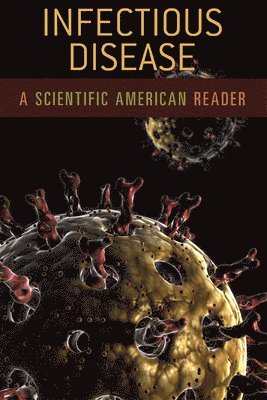
The international public health scare that resulted last year when a man infected with multidrug-resistant tuberculosis flew overseas from the United States and back illustrates both the fear and the potential impact of highly infectious diseases in a global age. At a time when scientists warn of the potential for an influenza epidemic to rival the deadly outbreak of 1919 and newspapers feature alarming headlines about incidences of mad cow disease, infectious disease will be a critical area of concern and scientific study in the twenty-first century."Infectious Disease" collects thirty of the most exciting, innovative, and significant articles on communicable illness published in the pages of "Scientific American" magazine since 1993. With sections devoted to viral infections, infectious disease, the immune system, and global management and treatment issues, "Infectious Disease" provides general readers and students with an excellent overview of recent research in the field. Roger I. Glass discusses a potential vaccine for the rotavirus - a leading cause of severe childhood diarrhea worldwide and frequent killer of young children in developing nations. Jeffery K.Taubenberger and colleagues investigate the virulent strain of influenza that killed nearly 40 million people in 1919 to suggest treatments and recommend preventative measures. And Paul R. Epstein looks into whether global warming could be harmful to our health, untangling research that suggests that many diseases will flourish as Earth's atmosphere heats up.The prominence of disease in the ecology and evolution of human society has spurred investment in research and technology development, and as a consequence the topic is much discussed in the general and scientific media. "Infectious Disease" is the essential sourcebook for anyone looking for the solid science and compelling narrative behind the stories that make headlines.
Häftad, Engelska, 2006
209 kr
Skickas inom 5-8 vardagar
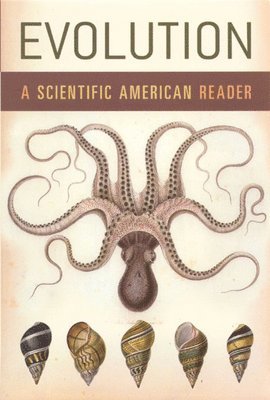
From the Scopes “Monkey Trial” of 1925 to the court ruling against the Dover Area School Board’s proposed intelligent design curriculum in 2005, few scientific topics have engendered as much controversy—or grabbed as many headlines—as evolution. And since the debate shows no signs of abating, there is perhaps no better time to step back and ask: What is evolution? Defined as the gradual process by which something changes into a different and usually more complex and efficient form, evolution explains the formation of the universe, the nature of viruses, and the emergence of humans. A first-rate summary of the actual science of evolution, this Scientific American reader is a timely collection that gives readers an opportunity to consider evolution’s impact in various settings. Divided into four sections that consider the evolution of the universe, cells, dinosaurs, and humans, Evolution brings together more than thirty articles written by some of the world’s most respected evolutionary scientists. As tour guides through the genesis of the universe and complex cells, P. James E. Peebles examines the evidence in support of an expanding cosmos, while Christian de Duve discusses the birth of eukaryotes. In an article that anticipated his book Full House, Stephen Jay Gould argues that chance and contingency are as important as natural selection for evolutionary change. And Ian Tatersall makes two fascinating contributions, submitting his view that the schematic of human evolution looks less like a ladder and more like a bush. With the latest on what’s being researched at every level of evolutionary studies, from prospects of life on other planets to the inner working of cells, Evolution offers general readers an opportunity to update their knowledge on this hot topic while giving students an introduction to the problems and methodologies of an entire field of inquiry.
Inbunden, Engelska, 2006
861 kr
Tillfälligt slut
From the Scopes “Monkey Trial” of 1925 to the court ruling against the Dover Area School Board’s proposed intelligent design curriculum in 2005, few scientific topics have engendered as much controversy—or grabbed as many headlines—as evolution. And since the debate shows no signs of abating, there is perhaps no better time to step back and ask: What is evolution? Defined as the gradual process by which something changes into a different and usually more complex and efficient form, evolution explains the formation of the universe, the nature of viruses, and the emergence of humans. A first-rate summary of the actual science of evolution, this Scientific American reader is a timely collection that gives readers an opportunity to consider evolution’s impact in various settings. Divided into four sections that consider the evolution of the universe, cells, dinosaurs, and humans, Evolution brings together more than thirty articles written by some of the world’s most respected evolutionary scientists. As tour guides through the genesis of the universe and complex cells, P. James E. Peebles examines the evidence in support of an expanding cosmos, while Christian de Duve discusses the birth of eukaryotes. In an article that anticipated his book Full House, Stephen Jay Gould argues that chance and contingency are as important as natural selection for evolutionary change. And Ian Tatersall makes two fascinating contributions, submitting his view that the schematic of human evolution looks less like a ladder and more like a bush. With the latest on what’s being researched at every level of evolutionary studies, from prospects of life on other planets to the inner working of cells, Evolution offers general readers an opportunity to update their knowledge on this hot topic while giving students an introduction to the problems and methodologies of an entire field of inquiry.