340 kr
Skickas inom 5-8 vardagar
340 kr
Skickas inom 5-8 vardagar
271 kr
Skickas
584 kr
Skickas inom 5-8 vardagar
590 kr
Skickas inom 5-8 vardagar
373 kr
Skickas inom 5-8 vardagar
590 kr
Skickas inom 5-8 vardagar
590 kr
Skickas inom 5-8 vardagar
376 kr
Skickas inom 5-8 vardagar
344 kr
Skickas inom 5-8 vardagar
218 kr
Skickas inom 5-8 vardagar
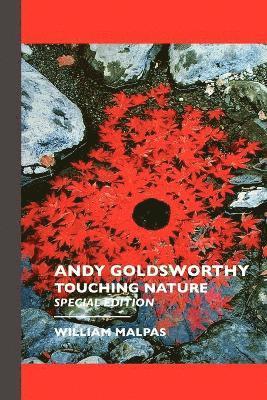
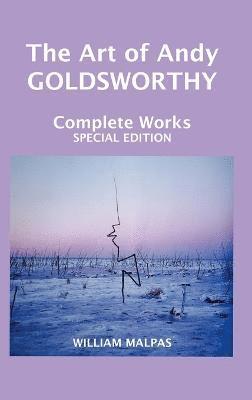
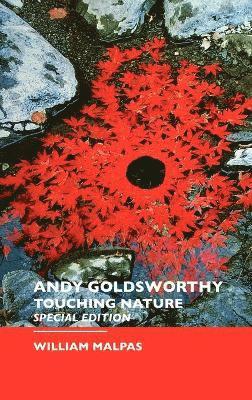
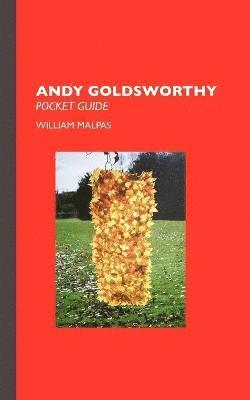
ANDY GOLDSWORTHY: POCKET GUIDE
A pocket-sized guide to the art of Andy Goldsworthy, Britian's foremost sculptor of the natural world. This book tells you everything you need to know about Andy Goldsworthy and his artworks.
EXTRACT FROM CHAPTER 5
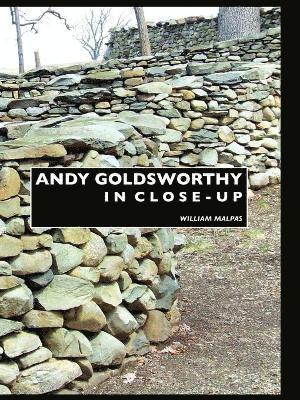
Andy Goldsworthy works with the natural world, and within nature. He uses natural materials in natural shapes and forms set in natural contexts. Goldsworthy takes his cue from nature: as Jan Dibbets put it in 1969: 'I realized that if you want to use nature, you have to derive the appropriate structure from nature too'. Nature may be the starting-point but, as we'll see, the endpoint - art - is entirely cultural and not something you'll ever find in the natural world.
Andy Goldsworthy seems to be a particularly gentle and sensitive artist, compared to many sculptors and land artists: he stitches together leaves to form lines (which're often placed in water, or over branches), or makes circular slabs of snow, or entwines twigs in an arc. He creates a delicate spiral of chestnut leaves, called Autumn Horn (1986); he pins bright yellow dandelions on willowherb stalks in a circle, on bluebells (1987); he makes lines and cairns of pebbles; a horizontal line of red sumach leaves was pinned to a willow (at Storm King Art Center in 1998); he rubs red stones to stain rockpools; he pins leaves to tree trunks; he fashions a zigzag line of hogweed stalks along a fallen elm tree (2002); he makes hollow, circular structures, recalling igloos, from slate, leaves, driftwood and bracken; he creates long wavy ridges in Arizonan and Australian desert sand; he throws sand and sticks in the air and photographs the moment; he builds arches, globes, hollow spheres, slabs, spires, spirals and star-shapes out of snow and ice. Very impressive it all is. The sculptures made of sticks, for instance, stuck together in an arch, or a line, reflected in the mirror-like water of Derwent Water in Cumbria in 1988, are indeed wonderful. The sculptures exude tranquillity, an early morning calm.
AUTHOR BIOGRAPHY
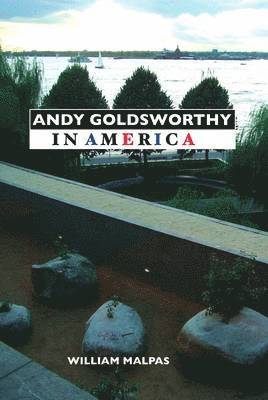
William Malpas has written books on Richard Long and land art, as well as three books on Andy Goldsworthy, including the forthcoming Andy Goldsworthy In America. Malpas's books on Richard Long and Andy Goldsworthy are the only full-length studies of these artists available.
584 kr
Skickas inom 5-8 vardagar
426 kr
Skickas inom 5-8 vardagar
508 kr
Skickas inom 5-8 vardagar
212 kr
Skickas inom 5-8 vardagar
344 kr
Skickas inom 5-8 vardagar
340 kr
Skickas inom 5-8 vardagar
212 kr
Skickas inom 5-8 vardagar
344 kr
Skickas inom 5-8 vardagar
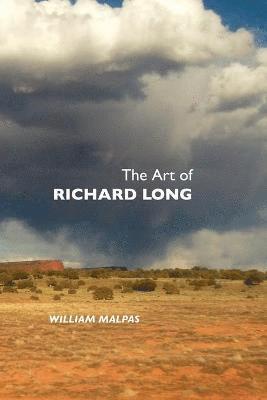
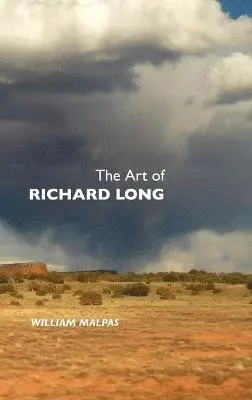
THE ART OF RICHARD LONG BY WILLIAM MALPAS
The central fact and act of Richard Long's art is walking. His work is founded on the art of walking, the act of walking, the actuality of walking, and on walking as art, as act, as experience. His walks become 'artwalks', artwalks which become artworks. ••• Richard Long is a British land artist and sculptor who works with and in the natural world, but also with and within the highly sophisticated, artificial and humanmade world of art and culture. 'I too wanted to make nature the subject of my work,' Long explained of his early work, 'but in new ways. I started working outside using natural materials like grass and water, and this evolved into the idea of making a sculpture by walking'. •••Richard Long is sometimes termed a 'Romantic' sculptor, and part of this book relates his art to British Romanticism, as found in the literature of William Wordsworth, Percy Bysshe Shelley, John Keats and others, and the British landscape tradition, as in J.M.W. Turner, John Constable, Thomas Girtin and other landscape painters. Aspects of British Romantic culture in 20th century and 21st century art also considered (such as the 'New Ruralists', 'New Romantics', 'New Arcadians' and 'Neo-Romantics'). I also explore some of the aspects of Romantic culture in Europe as well as Britain. ••• In the course of this book William Malpas references many of Richard Long's contemporary British sculptors (Tony Cragg, Bill Woodrow, David Nash, Barry Flanagan, Alison Wilding, Shirazeh Houshiary, Richard Wentworth, Boyd Webb, Hamish Fulton, Stephen Cox, Philip King, Anthony Caro, Tim Head, William Tucker, Anish Kapoor, Anthony Gormley, David Mach, Peter Randall-Page, Nicholas Pope and Gilbert & George). ••• Further chapters include: one on women, feminist, body art and performance sculptors, as a comparison with Richard Long's art, which has a strong component of performance (even if it's nearly always private). Also, a consideration of gendered sculpture and art. In the chapter on Minimal, Conceptual, Process and other 1960s and post-1960s art and artists, I'm interested in the artists (primarily European and American) who have most in common with Richard Long's art: the great Minimal and land artists, such as Donald Judd, Robert Morris, Carl Andre, Sol LeWitt, Dennis Oppenheim, James Turrell and Robert Ryman, and the important Conceptual artists, such as Hans Haacke, Bruce Nauman, Yves Klein and Lawrence Weiner. Fully illustrated, with a newly revised text. Bibliography and notes. ISBN 971861713285. •••www.crmoon.com •••• REVIEW ON AMAZON: Very satisfied with this book. It includes not only detailed information about Long's work, but also discusses other related artists, such as Barnett Newman, and other related topics, including sculpture, installation and text in art. All in all a very interesting book.
259 kr
Skickas inom 5-8 vardagar
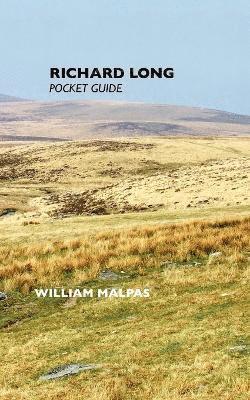
RICHARD LONG: POCKET GUIDE
by WILLIAM MALPAS •••• The central fact and act of Richard Long's art is walking. His work is founded on the art of walking, the act of walking, the actuality of walking, and on walking as art, as act, as experience. His walks become 'artwalks', artwalks which become artworks. •••For Richard Long, (art)walking is (art)working. As he walks he works. Art-walking and art-working become interchangeable. 'I have met with but one or two persons in the course of my life who understood the art of Walking, that is, of taking walks - who had a genius, so to speak, for sauntering', wrote Henry Thoreau. •••Richard Long is a British land artist and sculptor who works with and in the natural world, but also with and within the highly sophisticated, artificial and humanmade world of art and culture. 'I too wanted to make nature the subject of my work,' Long explained of his early work, 'but in new ways. I started working outside using natural materials like grass and water, and this evolved into the idea of making a sculpture by walking'. •••This book also considers topics such as contemporary and postwar art and sculpture; Richard Long's contemporaries, including fellow British sculptors; and land art. •••In the course of this book William Malpas references many of Richard Long's contemporary British sculptors (Tony Cragg, Bill Woodrow, David Nash, Barry Flanagan, Alison Wilding, Shirazeh Houshiary, Richard Wentworth, Boyd Webb, Hamish Fulton, Stephen Cox, Philip King, Anthony Caro, Tim Head, William Tucker, Anish Kapoor, Anthony Gormley, David Mach, Peter Randall-Page, Nicholas Pope and Gilbert & George). •••Further chapters include: one on women, feminist, body art and performance sculptors, as a comparison with Richard Long's art, which has a strong component of performance (even if it's nearly always private). Also, a consideration of gendered sculpture and art. In the chapter on Minimal, Conceptual, Process and other 1960s and post-1960s art and artists, I'm interested in the artists (primarily European and American) who have most in common with Richard Long's art: the great Minimal and land artists, such as Donald Judd, Robert Morris, Carl Andre, Sol LeWitt, Dennis Oppenheim, James Turrell and Robert Ryman, and the important Conceptual artists, such as Hans Haacke, Bruce Nauman, Yves Klein and Lawrence Weiner. •••AUTHOR'S NOTE: This is a revised edition of a book first published in 2007. I have updated the study with information of more recent exhibitions and artworks of Richard Long. The book has involved a good deal of research into Long's art over the years, and I hope that readers will gain some new insights into this inspiring artist's work. Fully illustrated, with a newly revised text. Bibliography and notes. ISBN 971861713308. •••www.crmoon.com
229 kr
Skickas inom 5-8 vardagar
541 kr
Skickas inom 5-8 vardagar
344 kr
Skickas inom 5-8 vardagar
344 kr
Skickas inom 5-8 vardagar
243 kr
Skickas inom 5-8 vardagar
344 kr
Skickas inom 5-8 vardagar
584 kr
Skickas inom 5-8 vardagar
311 kr
Skickas inom 5-8 vardagar
665 kr
Skickas inom 5-8 vardagar
153 kr
Skickas inom 5-8 vardagar
185 kr
Skickas inom 5-8 vardagar