Seminars of Alain Badiou - Böcker
Visar alla böcker i serien Seminars of Alain Badiou. Handla med fri frakt och snabb leverans.
10 produkter
10 produkter
1 083 kr
Skickas inom 7-10 vardagar
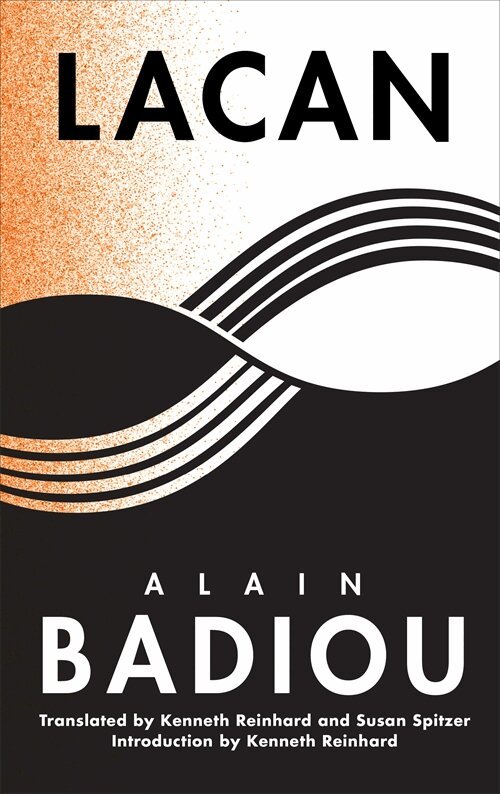
Alain Badiou is arguably the most significant philosopher in Europe today. Badiou’s seminars, given annually on major conceptual and historical topics, constitute an enormously important part of his work. They served as laboratories for his thought and public illuminations of his complex ideas yet remain little known. This book, the transcript of Badiou’s year-long seminar on the psychoanalytic theory of Jacques Lacan, is the first volume of his seminars to be published in English, opening up a new and vital aspect of his thinking.In a highly original and compelling account of Lacan’s theory and therapeutic practice, Badiou considers the challenge that Lacan poses to fundamental philosophical topics such as being, the subject, and truth. Badiou argues that Lacan is a singular figure of the “anti-philosopher,” a series of thinkers stretching back to Saint Paul and including Kierkegaard and Nietzsche, with Lacan as the last great anti-philosopher of modernity. The book offers a forceful reading of an enigmatic yet foundational thinker and sheds light on the crucial role that Lacan plays in Badiou’s own thought. This seminar, more accessible than some of Badiou’s more difficult works, will be profoundly valuable for the many readers across academic disciplines, art and literature, and political activism who find his thought essential.
244 kr
Skickas
Alain Badiou is arguably the most significant philosopher in Europe today. Badiou’s seminars, given annually on major conceptual and historical topics, constitute an enormously important part of his work. They served as laboratories for his thought and public illuminations of his complex ideas yet remain little known. This book, the transcript of Badiou’s year-long seminar on the psychoanalytic theory of Jacques Lacan, is the first volume of his seminars to be published in English, opening up a new and vital aspect of his thinking.In a highly original and compelling account of Lacan’s theory and therapeutic practice, Badiou considers the challenge that Lacan poses to fundamental philosophical topics such as being, the subject, and truth. Badiou argues that Lacan is a singular figure of the “anti-philosopher,” a series of thinkers stretching back to Saint Paul and including Kierkegaard and Nietzsche, with Lacan as the last great anti-philosopher of modernity. The book offers a forceful reading of an enigmatic yet foundational thinker and sheds light on the crucial role that Lacan plays in Badiou’s own thought. This seminar, more accessible than some of Badiou’s more difficult works, will be profoundly valuable for the many readers across academic disciplines, art and literature, and political activism who find his thought essential.
1 035 kr
Skickas inom 7-10 vardagar
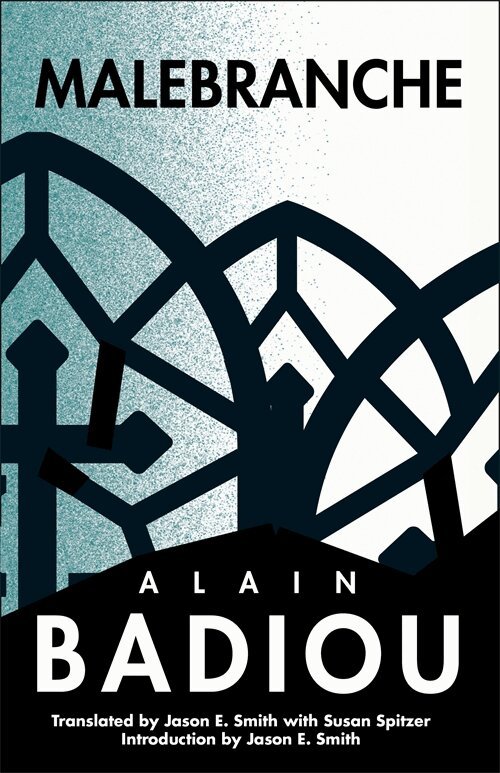
Alain Badiou is perhaps the world’s most significant living philosopher. In his annual seminars on major topics and pivotal figures, Badiou developed vital aspects of his thinking on a range of subjects that he would go on to explore in his influential works. In this seminar, Badiou offers a tour de force encounter with a lesser-known seventeenth-century philosopher and theologian, Nicolas Malebranche, a contemporary and peer of Spinoza and Leibniz.The seminar is at once a record of Badiou’s thought at a key moment in the years before the publication of his most important work, Being and Event, and a lively interrogation of Malebranche’s key text, the Treatise on Nature and Grace. Badiou develops a rigorous yet novel analysis of Malebranche’s theory of grace, retracing his claims regarding the nature of creation and the relation between God and world and between God and Jesus. Through Malebranche, Badiou develops a radical concept of truth and the subject. This book renders a seemingly obscure post-Cartesian philosopher fascinating and alive, restoring him to the philosophical canon. It occupies a pivotal place in Badiou’s reflections on the nature of being that demonstrates the crucial role of theology in his thinking.
260 kr
Skickas inom 7-10 vardagar
Alain Badiou is perhaps the world’s most significant living philosopher. In his annual seminars on major topics and pivotal figures, Badiou developed vital aspects of his thinking on a range of subjects that he would go on to explore in his influential works. In this seminar, Badiou offers a tour de force encounter with a lesser-known seventeenth-century philosopher and theologian, Nicolas Malebranche, a contemporary and peer of Spinoza and Leibniz.The seminar is at once a record of Badiou’s thought at a key moment in the years before the publication of his most important work, Being and Event, and a lively interrogation of Malebranche’s key text, the Treatise on Nature and Grace. Badiou develops a rigorous yet novel analysis of Malebranche’s theory of grace, retracing his claims regarding the nature of creation and the relation between God and world and between God and Jesus. Through Malebranche, Badiou develops a radical concept of truth and the subject. This book renders a seemingly obscure post-Cartesian philosopher fascinating and alive, restoring him to the philosophical canon. It occupies a pivotal place in Badiou’s reflections on the nature of being that demonstrates the crucial role of theology in his thinking.
1 114 kr
Skickas inom 7-10 vardagar
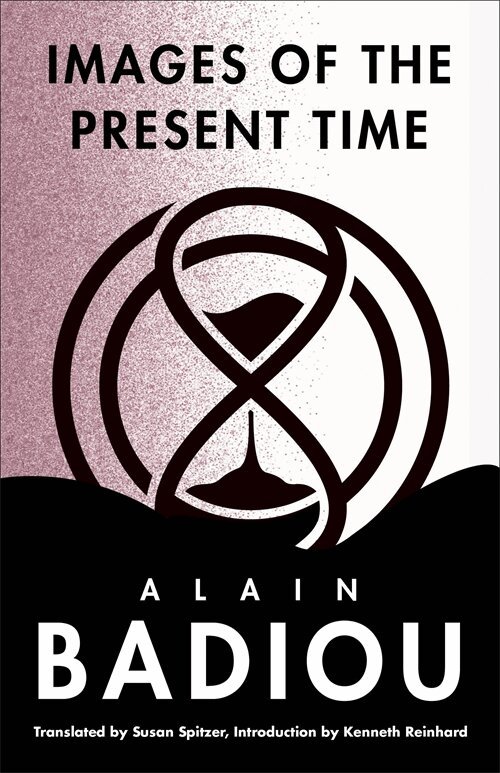
Finalist, 2024 Translation Prize - Nonfiction, French-American FoundationAlain Badiou began the twenty-first century by considering the relationship between philosophy and notions of “the present.” In this period of his ongoing annual lecture series, the acclaimed philosopher took up the existential problem of how to be contemporary with one’s own time—that is, how to not simply inhabit a passing moment but bring a real present into existence.Images of the Present Time presents nearly three years of Badiou’s seminars, held from 2001 to 2004, partly against the backdrop of the war in Iraq. Given while Badiou was writing Logics of Worlds, the second of the three volumes of Being and Event, these lectures address some of the same questions of existence in a particular world in a more personal and conversational tone, with reference to literature, philosophy, and contemporary politics and culture. He proposes a new concept of living in a real present as the twisting together of something from the past and something of the future.Featuring some of the philosopher’s most inspiring and approachable work, Images of the Present Time is an important book for all readers interested in the practical as well as conceptual possibilities of Badiou’s thought.
284 kr
Skickas inom 7-10 vardagar
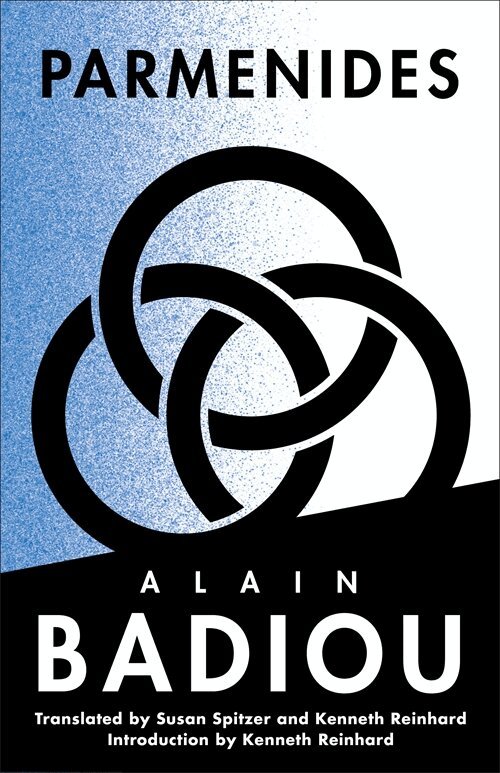
Alain Badiou’s 1985 seminar on Parmenides initiated his ongoing dialogue with the pre-Socratic philosopher and set out some of the foundational ideas of his own major philosophical works, including Being and Event. The seminar provides both a new understanding of the importance of Parmenides in establishing the fundamental terms of philosophy and a vital account of the intimate relationship between philosophy and mathematics.For Badiou, Parmenides inaugurates the history of philosophy by linking being, thinking, and nonbeing in a “Borromean knot”—a linkage in which the relationship between any two terms requires the mediation of a third. Badiou traces the permutations of this connection among fundamental concepts as it was transmitted to later thinkers, including Plato, Aristotle, Descartes, Hegel, and Heidegger. He also argues that Parmenides’s account of philosophy establishes a new kind of formal reasoning that, like mathematics, breaks with the Greek mythic and poetic traditions and their assumption that truth derives from sensory experience. This seminar demonstrates Badiou’s unparalleled ability to recast the fundamental questions of philosophy.
373 kr
Kommande
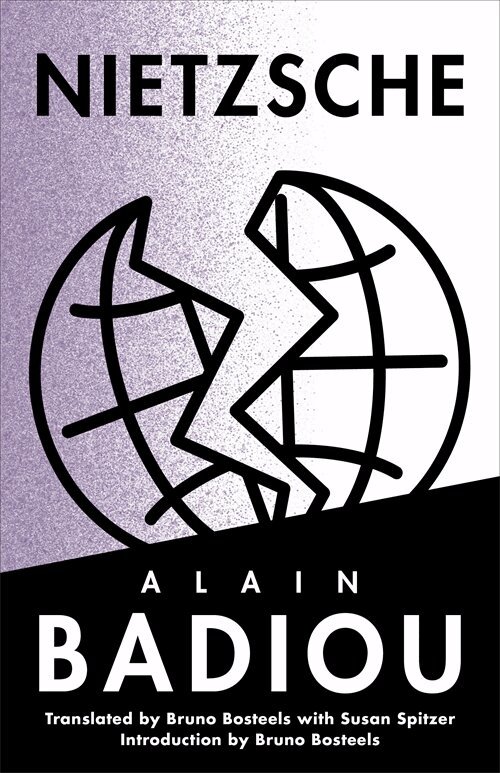
For Alain Badiou, Friedrich Nietzsche is the “prince” of anti-philosophy. French leftist thinkers celebrated Nietzsche in the second half of the twentieth century, but when a backlash emerged in the 1990s, Badiou refused to join the attack. Instead, he devoted his 1992–1993 seminar to an astonishingly original reading of Nietzsche—to whom he had previously shown indifference or scorn—in which he appears almost enamored with the author of The Anti-Christ and Ecce Homo.This book presents Badiou’s seminar on Nietzsche’s late works, which for the first time addresses what would become one of his central concepts: anti-philosophy and its adversarial yet intimate relationship with philosophy. For Badiou, Nietzsche is the key modern anti-philosopher, his antagonist—and occasional ally—in the battle to redefine the work of philosophy. Badiou takes for granted Nietzsche’s declaration that “God is dead,” yet rejects his assertion that philosophy too is past its expiration date. Badiou engages a century-long tradition of grappling with Nietzsche’s paradoxes, considering thinkers such as Heidegger, Deleuze, and Derrida. Examining Nietzsche’s impassioned writings on Wagner, he reflects on the nature of art and aesthetics. Provocative and profound, this seminar shows Badiou’s ongoing project of reasserting the value of philosophy from a new angle.
373 kr
Skickas
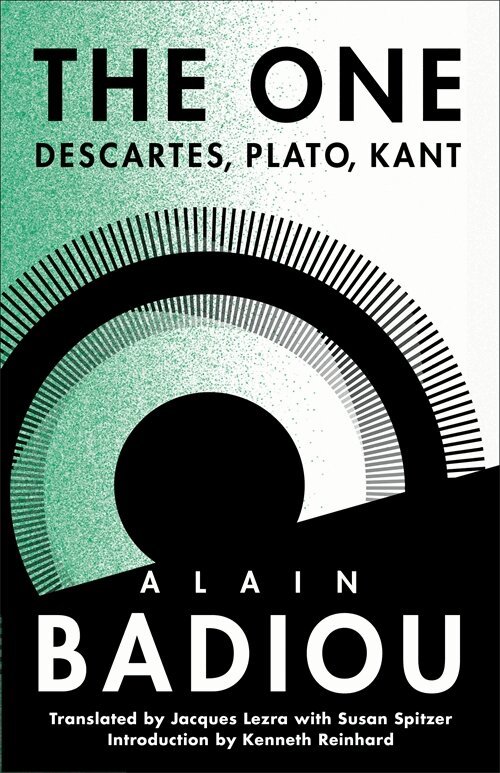
Alain Badiou’s 1983–1984 lecture series on “the One” is the earliest of his seminars that he has chosen to publish. It focuses on the philosophical concept of oneness in the works of Descartes, Plato, and Kant—a crucial foil for his signature metaphysical concept, the multiple. Badiou declares that there is no “One”: there is no fundamental unit of being; being is inherently multiple.What is novel in Badiou’s view of multiplicity is his reliance on mathematics, and set theory in particular. A set is a collection of things—yet, as he observes, it often is taken to “count as one” operationally for the purposes of mathematical transformations. In this seminar, distinguishing between “the One” and “counting as one” emerges as essential to Badiou’s ontological project. His analysis of reflections on oneness in Descartes, Plato, and Kant prefigures core arguments of his defining work, Being and Event.Showcasing the seeds of Badiou’s key ideas and later thought, The One features singular readings, breathtaking theorizations, and frequently astonishing offhand remarks.
284 kr
Skickas inom 7-10 vardagar
Finalist, 2024 Translation Prize - Nonfiction, French-American FoundationAlain Badiou began the twenty-first century by considering the relationship between philosophy and notions of “the present.” In this period of his ongoing annual lecture series, the acclaimed philosopher took up the existential problem of how to be contemporary with one’s own time—that is, how to not simply inhabit a passing moment but bring a real present into existence.Images of the Present Time presents nearly three years of Badiou’s seminars, held from 2001 to 2004, partly against the backdrop of the war in Iraq. Given while Badiou was writing Logics of Worlds, the second of the three volumes of Being and Event, these lectures address some of the same questions of existence in a particular world in a more personal and conversational tone, with reference to literature, philosophy, and contemporary politics and culture. He proposes a new concept of living in a real present as the twisting together of something from the past and something of the future.Featuring some of the philosopher’s most inspiring and approachable work, Images of the Present Time is an important book for all readers interested in the practical as well as conceptual possibilities of Badiou’s thought.
284 kr
Skickas inom 7-10 vardagar
Alain Badiou’s 1983–1984 lecture series on “the One” is the earliest of his seminars that he has chosen to publish. It focuses on the philosophical concept of oneness in the works of Descartes, Plato, and Kant—a crucial foil for his signature metaphysical concept, the multiple. Badiou declares that there is no “One”: there is no fundamental unit of being; being is inherently multiple.What is novel in Badiou’s view of multiplicity is his reliance on mathematics, and set theory in particular. A set is a collection of things—yet, as he observes, it often is taken to “count as one” operationally for the purposes of mathematical transformations. In this seminar, distinguishing between “the One” and “counting as one” emerges as essential to Badiou’s ontological project. His analysis of reflections on oneness in Descartes, Plato, and Kant prefigures core arguments of his defining work, Being and Event.Showcasing the seeds of Badiou’s key ideas and later thought, The One features singular readings, breathtaking theorizations, and frequently astonishing offhand remarks.