Senses in Antiquity - Böcker
Visar alla böcker i serien Senses in Antiquity. Handla med fri frakt och snabb leverans.
13 produkter
13 produkter
3 736 kr
Skickas inom 10-15 vardagar
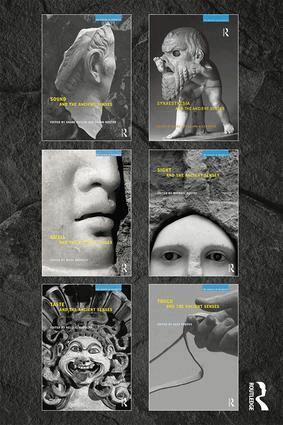
This set includes all six titles in The Senses in Antiquity series. Buying the set provides a significant saving as opposed to buying the books separately. Series editors: Mark Bradley, University of Nottingham, UK, and Shane Butler, Johns Hopkins University, USALike us, ancient Greeks and Romans came to know and understand their world through their senses. Yet it has long been recognized that the world the ancients perceived, and the senses through which they channelled this information could operate differently from the patterns and processes of perception in the modern world. This series explores the relationship between perception, knowledge and understanding in the literature, philosophy, history, language and culture of ancient Greece and Rome. Synaesthesia and the Ancient SensesEdited by Shane Butler and Alex PurvesSmell and the Ancient SensesEdited by Mark BradleySight and the Ancient SensesEdited by Michael SquireTaste and the Ancient SensesEdited by Kelli C. RudolphTouch and the Ancient SensesEdited by Alex PurvesSound and the Ancient SensesEdited by Shane Butler and Sarah Nooter
2 430 kr
Skickas inom 10-15 vardagar
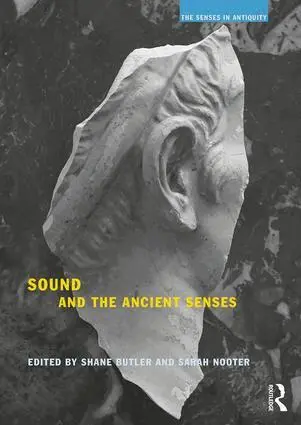
Sound leaves no ruins and no residues, even though it is experienced constantly. It is ubiquitous but fleeting. Even silence has sound, even absence resonates. Sound and the Ancient Senses aims to hear the lost sounds of antiquity, from the sounds of the human body to those of the gods, from the bathhouse to the Forum, from the chirp of a cicada to the music of the spheres. Sound plays so great a role in shaping our environments as to make it a crucial sounding board for thinking about space and ecology, emotions and experience, mortality and the divine, orality and textuality, and the self and its connection to others. From antiquity to the present day, poets and philosophers have strained to hear the ways that sounds structure our world and identities. This volume looks at theories and practices of hearing and producing sounds in ritual contexts, medicine, mourning, music, poetry, drama, erotics, philosophy, rhetoric, linguistics, vocality, and on the page, and shows how ancient ideas of sound still shape how and what we hear today. As the first comprehensive introduction to the soundscapes of antiquity, this volume makes a significant contribution to the burgeoning fields of sound and voice studies and is the final volume of the series, The Senses in Antiquity.
664 kr
Skickas inom 10-15 vardagar
Sound leaves no ruins and no residues, even though it is experienced constantly. It is ubiquitous but fleeting. Even silence has sound, even absence resonates. Sound and the Ancient Senses aims to hear the lost sounds of antiquity, from the sounds of the human body to those of the gods, from the bathhouse to the Forum, from the chirp of a cicada to the music of the spheres. Sound plays so great a role in shaping our environments as to make it a crucial sounding board for thinking about space and ecology, emotions and experience, mortality and the divine, orality and textuality, and the self and its connection to others. From antiquity to the present day, poets and philosophers have strained to hear the ways that sounds structure our world and identities. This volume looks at theories and practices of hearing and producing sounds in ritual contexts, medicine, mourning, music, poetry, drama, erotics, philosophy, rhetoric, linguistics, vocality, and on the page, and shows how ancient ideas of sound still shape how and what we hear today. As the first comprehensive introduction to the soundscapes of antiquity, this volume makes a significant contribution to the burgeoning fields of sound and voice studies and is the final volume of the series, The Senses in Antiquity.
2 664 kr
Skickas inom 10-15 vardagar
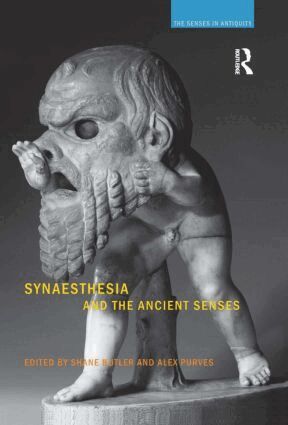
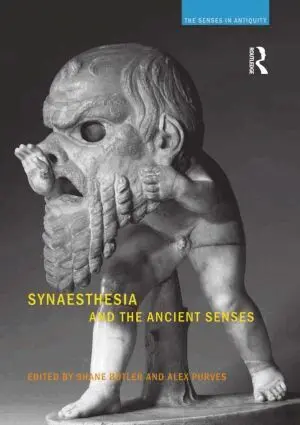
Like us, the ancient Greeks and Romans came to know and understand the world through their senses. Yet sensory experience has rarely been considered in the study of antiquity and, when the senses are examined, sight is regularly privileged. 'Synaesthesia and the Ancient Senses' presents a radical reappraisal of antiquity's textures, flavours, and aromas, sounds and sights. It offers both a fresh look at society in the ancient world and an opportunity to deepen the reading of classical literature. The book will appeal to readers in classical society and literature, philosophy and cultural history. All Greek and Latin is translated and technical matters are explained for the non-specialist. The introduction sets the ancient senses within the history of aesthetics and the subsequent essays explores the senses throughout the classical period and on to the modern reception of classical literature.
586 kr
Skickas inom 10-15 vardagar
Like us, the ancient Greeks and Romans came to know and understand the world through their senses. Yet sensory experience has rarely been considered in the study of antiquity and, when the senses are examined, sight is regularly privileged. 'Synaesthesia and the Ancient Senses' presents a radical reappraisal of antiquity's textures, flavours, and aromas, sounds and sights. It offers both a fresh look at society in the ancient world and an opportunity to deepen the reading of classical literature. The book will appeal to readers in classical society and literature, philosophy and cultural history. All Greek and Latin is translated and technical matters are explained for the non-specialist. The introduction sets the ancient senses within the history of aesthetics and the subsequent essays explores the senses throughout the classical period and on to the modern reception of classical literature.
2 386 kr
Skickas inom 10-15 vardagar
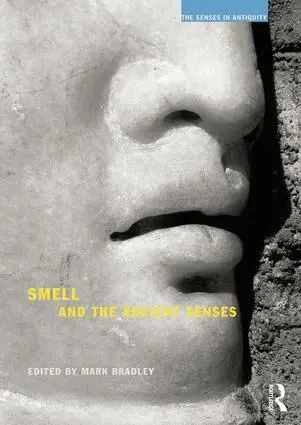
From flowers and perfumes to urban sanitation and personal hygiene, smell—a sense that is simultaneously sublime and animalistic—has played a pivotal role in western culture and thought. Greek and Roman writers and thinkers lost no opportunity to connect the smells that bombarded their senses to the social, political and cultural status of the individuals and environments that they encountered: godly incense and burning sacrifices, seductive scents, aromatic cuisines, stinking bodies, pungent farmyards and festering back-streets. The cultural study of smell has largely focused on pollution, transgression and propriety, but the olfactory sense came into play in a wide range of domains and activities: ancient medicine and philosophy, religion, botany and natural history, erotic literature, urban planning, dining, satire and comedy—where odours, aromas, scents and stenches were rich and versatile components of the ancient sensorium. The first comprehensive introduction to the role of smell in the history, literature and society of classical antiquity, Smell and the Ancient Senses explores and probes the ways that the olfactory sense can contribute to our perceptions of ancient life, behaviour, identity and morality.
525 kr
Skickas inom 10-15 vardagar
From flowers and perfumes to urban sanitation and personal hygiene, smell—a sense that is simultaneously sublime and animalistic—has played a pivotal role in western culture and thought. Greek and Roman writers and thinkers lost no opportunity to connect the smells that bombarded their senses to the social, political and cultural status of the individuals and environments that they encountered: godly incense and burning sacrifices, seductive scents, aromatic cuisines, stinking bodies, pungent farmyards and festering back-streets. The cultural study of smell has largely focused on pollution, transgression and propriety, but the olfactory sense came into play in a wide range of domains and activities: ancient medicine and philosophy, religion, botany and natural history, erotic literature, urban planning, dining, satire and comedy—where odours, aromas, scents and stenches were rich and versatile components of the ancient sensorium. The first comprehensive introduction to the role of smell in the history, literature and society of classical antiquity, Smell and the Ancient Senses explores and probes the ways that the olfactory sense can contribute to our perceptions of ancient life, behaviour, identity and morality.
2 736 kr
Skickas inom 10-15 vardagar
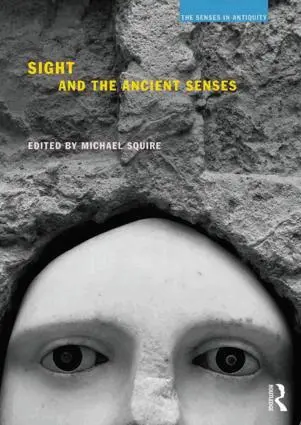
It is to Greek critical thinking about seeing that we owe our conceptual framework for theorizing the senses, and it is also to such thinking that we owe the lasting legacy of Greco-Roman imagery. Sight and the Ancient Senses is the first thorough introduction to the conceptualization of sight in the history, visual culture, literature and philosophy of classical antiquity. Examining how the Greeks and Romans interpreted what they saw, the collection also considers sight in relation to the other senses. This volume brings together a number of interdisciplinary perspectives to deliver a broad and balanced coverage of this subject. Contributors explore the cultural, social and intellectual backdrops that gave rise to ancient theories of seeing, from Archaic Greece through to the advent of Christianity in late antiquity. This series of specially commissioned thematic chapters demonstrate how theories about sight informed Graeco-Roman philosophy, science, poetry rhetoric and art. The collection also reaches beyond its Graeco-Roman visual framework, showcasing how ancient ideas have influenced the longue durée of western sensory thinking. Richly illustrated throughout, including a section of color plates, Sight and the Ancient Senses is a wide-ranging introduction to ancient theories of seeing which will be an invaluable resource for students and scholars of classical antiquity.
595 kr
Skickas inom 10-15 vardagar
It is to Greek critical thinking about seeing that we owe our conceptual framework for theorizing the senses, and it is also to such thinking that we owe the lasting legacy of Greco-Roman imagery. Sight and the Ancient Senses is the first thorough introduction to the conceptualization of sight in the history, visual culture, literature and philosophy of classical antiquity. Examining how the Greeks and Romans interpreted what they saw, the collection also considers sight in relation to the other senses. This volume brings together a number of interdisciplinary perspectives to deliver a broad and balanced coverage of this subject. Contributors explore the cultural, social and intellectual backdrops that gave rise to ancient theories of seeing, from Archaic Greece through to the advent of Christianity in late antiquity. This series of specially commissioned thematic chapters demonstrate how theories about sight informed Graeco-Roman philosophy, science, poetry rhetoric and art. The collection also reaches beyond its Graeco-Roman visual framework, showcasing how ancient ideas have influenced the longue durée of western sensory thinking. Richly illustrated throughout, including a section of color plates, Sight and the Ancient Senses is a wide-ranging introduction to ancient theories of seeing which will be an invaluable resource for students and scholars of classical antiquity.
2 176 kr
Skickas inom 10-15 vardagar
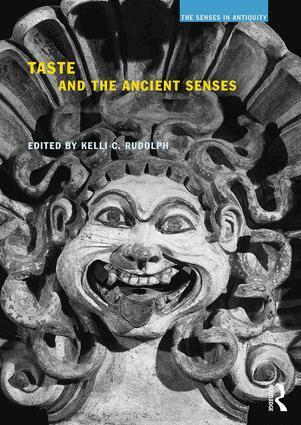
Olives, bread, meat and wine: it is deceptively easy to evoke ancient Greece and Rome through a few items of food and drink. But how were their tastes different from ours? How did they understand the sense of taste itself, in relation to their own bodies and to other modes of sensory experience? This volume, the first of its kind to explore the ancient sense of taste, draws on the literature, philosophy, history and archaeology of Greco-Roman antiquity to provide answers to these central questions. By surveying and probing the literary and material remains from the Archaic period to late antiquity, contributors investigate the cultural and intellectual development towards attitudes and theories about taste. These specially commissioned chapters also open a window onto ancient thinking about perception and the body. Importantly, these authors go beyond exploring the functional significance of taste to uncover its value and meaning in the actions, thoughts and words of the Greeks and Romans. Taste and the Ancient Senses presents a full range of interpretative approaches to the gustatory sense, and provides an indispensable resource for students and scholars of classical antiquity and sensory studies.
483 kr
Skickas inom 10-15 vardagar
Olives, bread, meat and wine: it is deceptively easy to evoke ancient Greece and Rome through a few items of food and drink. But how were their tastes different from ours? How did they understand the sense of taste itself, in relation to their own bodies and to other modes of sensory experience? This volume, the first of its kind to explore the ancient sense of taste, draws on the literature, philosophy, history and archaeology of Greco-Roman antiquity to provide answers to these central questions. By surveying and probing the literary and material remains from the Archaic period to late antiquity, contributors investigate the cultural and intellectual development towards attitudes and theories about taste. These specially commissioned chapters also open a window onto ancient thinking about perception and the body. Importantly, these authors go beyond exploring the functional significance of taste to uncover its value and meaning in the actions, thoughts and words of the Greeks and Romans. Taste and the Ancient Senses presents a full range of interpretative approaches to the gustatory sense, and provides an indispensable resource for students and scholars of classical antiquity and sensory studies.
2 176 kr
Skickas inom 10-15 vardagar
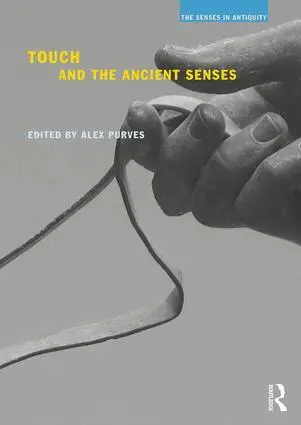
Unlike the other senses, touch ranges beyond a single sense organ, encompassing not only the skin but also the interior of the body. It mediates almost every aspect of interpersonal relations in antiquity, from the everyday to the erotic, just as it also provides a primary point of contact between the individual and the outside world. The essays in this volume explore the ways in which touch plays a defining role in science, art, philosophy, and medicine, and shapes our understanding of topics ranging from aesthetics and poetics to various religious and ritual practices. Whether we locate the sense of touch on the surface of the skin, within the body or – less tangibly still – within the emotions, the sensory impact of touching raises a broad range of interpretive and phenomenological questions. This is the first volume of its kind to explore the sense of touch in antiquity, bringing a variety of disciplinary approaches to bear on the sense that is usually disregarded as the most base and obvious of the five. In these pages, by contrast, we find in touch a complex and fascinating indicator of the body’s relation to object, environment, and self.
483 kr
Skickas inom 10-15 vardagar
Unlike the other senses, touch ranges beyond a single sense organ, encompassing not only the skin but also the interior of the body. It mediates almost every aspect of interpersonal relations in antiquity, from the everyday to the erotic, just as it also provides a primary point of contact between the individual and the outside world. The essays in this volume explore the ways in which touch plays a defining role in science, art, philosophy, and medicine, and shapes our understanding of topics ranging from aesthetics and poetics to various religious and ritual practices. Whether we locate the sense of touch on the surface of the skin, within the body or – less tangibly still – within the emotions, the sensory impact of touching raises a broad range of interpretive and phenomenological questions. This is the first volume of its kind to explore the sense of touch in antiquity, bringing a variety of disciplinary approaches to bear on the sense that is usually disregarded as the most base and obvious of the five. In these pages, by contrast, we find in touch a complex and fascinating indicator of the body’s relation to object, environment, and self.