Series in Computational Physics - Böcker
Visar alla böcker i serien Series in Computational Physics. Handla med fri frakt och snabb leverans.
11 produkter
11 produkter
1 144 kr
Skickas inom 10-15 vardagar
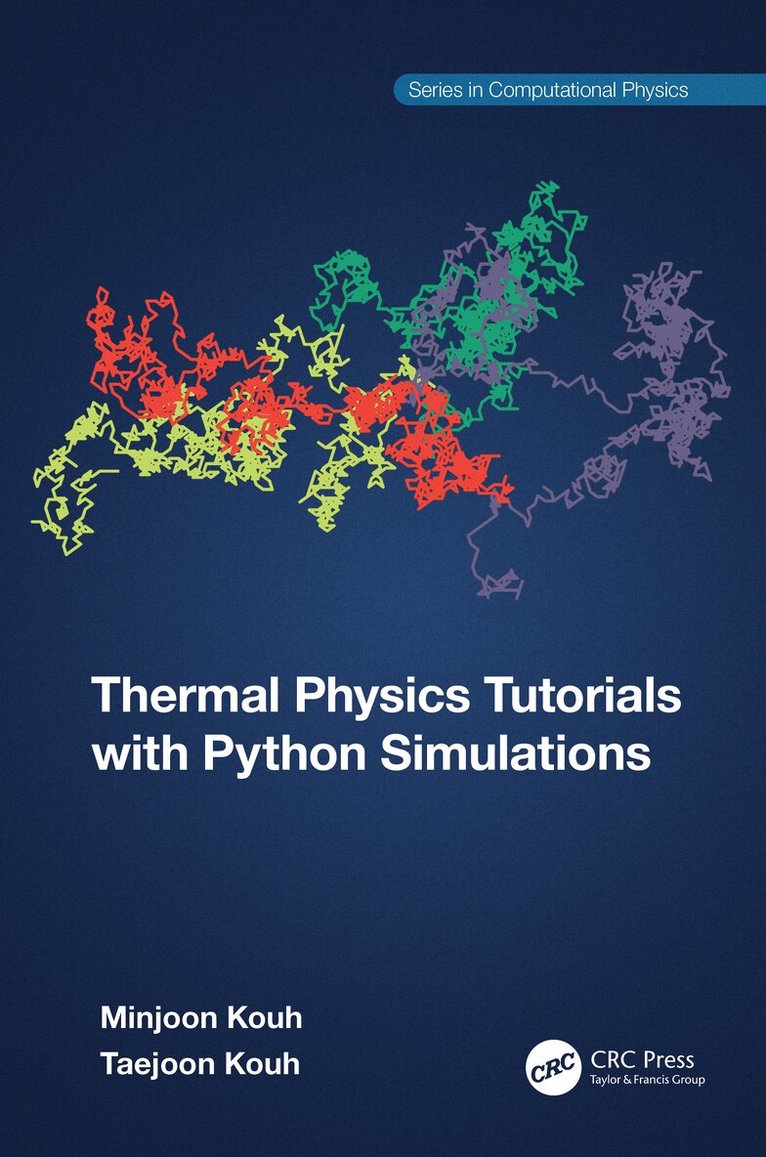
This book provides an accessible introduction to thermal physics with computational approaches that complement the traditional mathematical treatments of classical thermodynamics and statistical mechanics. It guides readers through visualizations and simulations in the Python programming language, helping them to develop their own technical computing skills (including numerical and symbolic calculations, optimizations, recursive operations, and visualizations). Python is a highly readable and practical programming language, making this book appropriate for students without extensive programming experience.This book may serve as a thermal physics textbook for a semester-long undergraduate thermal physics course or may be used as a tutorial on scientific computing with focused examples from thermal physics. This book will also appeal to engineering students studying intermediate-level thermodynamics as well as computer science students looking to understand how to apply their computer programming skills to science.Key features Major concepts in thermal physics are introduced cohesively through computational and mathematical treatments. Computational examples in Python programming language guide students on how to simulate and visualize thermodynamic principles and processes for themselves.
670 kr
Skickas inom 10-15 vardagar
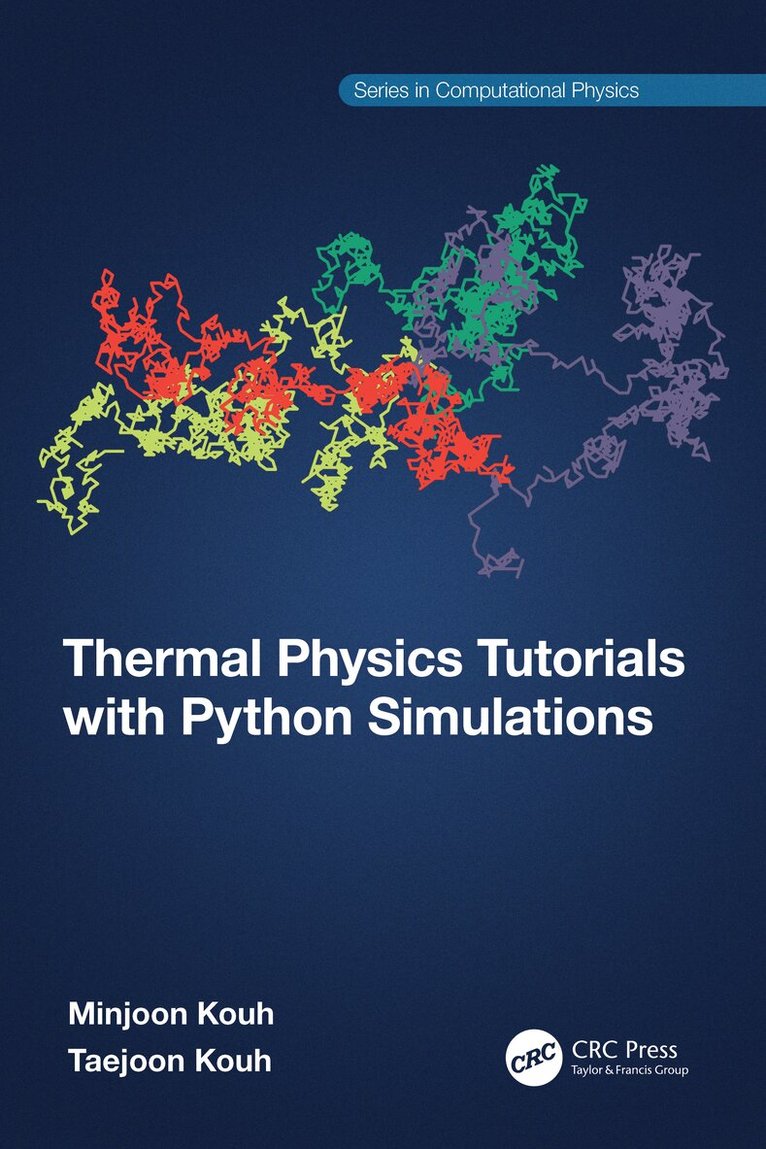
This book provides an accessible introduction to thermal physics with computational approaches that complement the traditional mathematical treatments of classical thermodynamics and statistical mechanics. It guides readers through visualizations and simulations in the Python programming language, helping them to develop their own technical computing skills (including numerical and symbolic calculations, optimizations, recursive operations, and visualizations). Python is a highly readable and practical programming language, making this book appropriate for students without extensive programming experience.This book may serve as a thermal physics textbook for a semester-long undergraduate thermal physics course or may be used as a tutorial on scientific computing with focused examples from thermal physics. This book will also appeal to engineering students studying intermediate-level thermodynamics as well as computer science students looking to understand how to apply their computer programming skills to science.Key features Major concepts in thermal physics are introduced cohesively through computational and mathematical treatments. Computational examples in Python programming language guide students on how to simulate and visualize thermodynamic principles and processes for themselves.
1 834 kr
Skickas inom 10-15 vardagar
This book provides an accessible introduction to intermediate-level electrodynamics with computa- tional approaches to complement a traditional mathematical treatment of the subject. It covers key topics in electrodynamics, such as electromagnetic fields, forces, potentials, and waves as well as Special Theory of Relativity.Through intuition-building examples and visualizations in the Python programming language, it helps readers to develop technical computing skills in numerical and symbolic calculations, modeling and simulations, and visualizations. Python is a highly readable and practical programming language, making this book appropriate for students without extensive programming experience.This book can serve as an electrodynamics textbook for undergraduate physics and engineering students in their second or third years, who are studying intermediate- or advanced-level electrodynamics and who want to learn techniques for scientific computing at the same time. This book will also appeal to computer science students who want to see how their computer programming skills may be applied to science, particularly to physics, without needing too much background physics knowledge.Key featuresMajor concepts in classical electrodynamics are introduced cohesively through computational and mathematical treatmentsComputational examples in Python programming language guide students on how to simulate and visualize electrodynamic principles and phenomena for themselves
697 kr
Skickas inom 10-15 vardagar
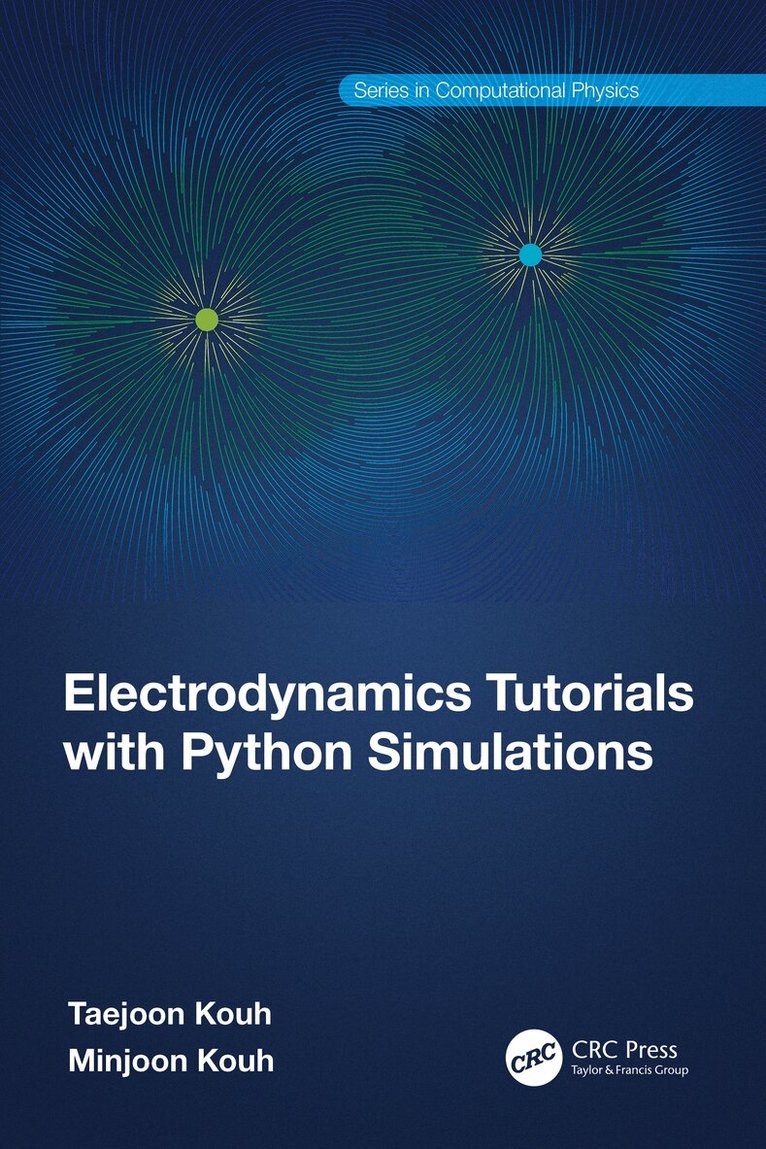
This book provides an accessible introduction to intermediate-level electrodynamics with computa- tional approaches to complement a traditional mathematical treatment of the subject. It covers key topics in electrodynamics, such as electromagnetic fields, forces, potentials, and waves as well as Special Theory of Relativity.Through intuition-building examples and visualizations in the Python programming language, it helps readers to develop technical computing skills in numerical and symbolic calculations, modeling and simulations, and visualizations. Python is a highly readable and practical programming language, making this book appropriate for students without extensive programming experience.This book can serve as an electrodynamics textbook for undergraduate physics and engineering students in their second or third years, who are studying intermediate- or advanced-level electrodynamics and who want to learn techniques for scientific computing at the same time. This book will also appeal to computer science students who want to see how their computer programming skills may be applied to science, particularly to physics, without needing too much background physics knowledge.Key featuresMajor concepts in classical electrodynamics are introduced cohesively through computational and mathematical treatmentsComputational examples in Python programming language guide students on how to simulate and visualize electrodynamic principles and phenomena for themselves
1 386 kr
Kommande
Computational Modelling with Single Prompts provides an overview of computer models of physical phenomena and more. Each chapter is about a different model and contains a complete description, together with the algorithm and the result of the operation. There is no mathematics extended to its limits. The book provides a complete description, allowing readers to implement the algorithm themselves. The artificial intelligence (AI) elements in the book relate to the computer implementation and the programs that have been generated on the basis of the algorithms written. The results of these programs have been used as illustrations in the book. The book is mainly of use to graduate students working in computational physics, biology, chemistry, and computer science.Key Features:Provides a large collection of very diverse models, the compilation of which is uniqueIncludes elements of AI and the use of large language models (LLM).Consists of a collection of new ideas and additional tasks to be completed independently by the readers.
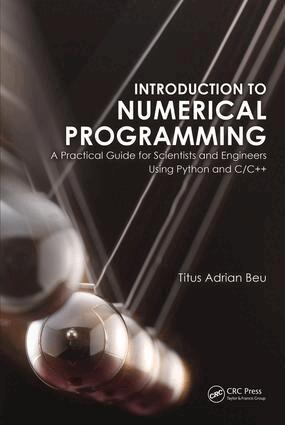
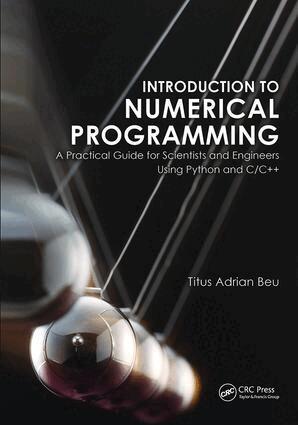
Introduction to Numerical Programming
A Practical Guide for Scientists and Engineers Using Python and C/C++
Inbunden, Engelska, 2017
2 713 kr
Skickas inom 10-15 vardagar
Makes Numerical Programming More Accessible to a Wider AudienceBearing in mind the evolution of modern programming, most specifically emergent programming languages that reflect modern practice, Numerical Programming: A Practical Guide for Scientists and Engineers Using Python and C/C plus plus utilizes the author‘s many years of practical research and teaching experience to offer a systematic approach to relevant programming concepts. Adopting a practical, broad appeal, this user-friendly book offers guidance to anyone interested in using numerical programming to solve science and engineering problems. Emphasizing methods generally used in physics and engineering from elementary methods to complex algorithms it gradually incorporates algorithmic elements with increasing complexity.Develop a Combination of Theoretical Knowledge, Efficient Analysis Skills, and Code Design Know-HowThe book encourages algorithmic thinking, which is essential to numerical analysis. Establishing the fundamental numerical methods, application numerical behavior and graphical output needed to foster algorithmic reasoning, coding dexterity, and a scientific programming style, it enables readers to successfully navigate relevant algorithms, understand coding design, and develop efficient programming skills. The book incorporates real code, and includes examples and problem sets to assist in hands-on learning. Begins with an overview on approximate numbers and programming in Python and C/C plus plus, followed by discussion of basic sorting and indexing methods, as well as portable graphic functionality Contains methods for function evaluation, solving algebraic and transcendental equations, systems of linear algebraic equations, ordinary differential equations, and eigenvalue problems Addresses approximation of tabulated functions, regression, integration of one-
600 kr
Tillfälligt slut
This guide offers a rapid introduction to Python programming to anyone with no experience in programming, taking a careful and methodical approach to presenting the features available and their use for performing practical scientific and engineering tasks.
1 076 kr
Skickas inom 10-15 vardagar
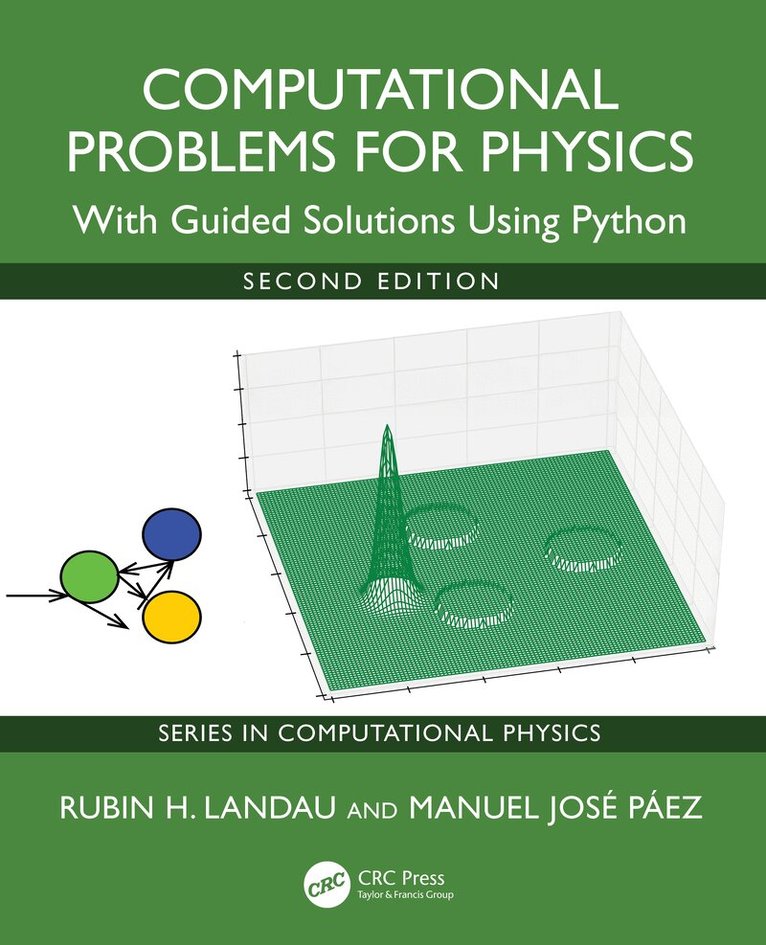
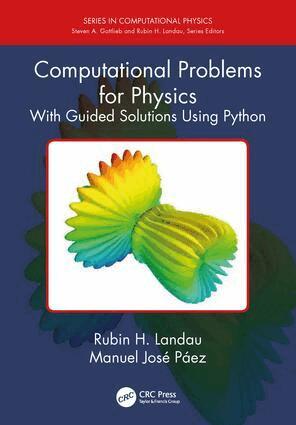
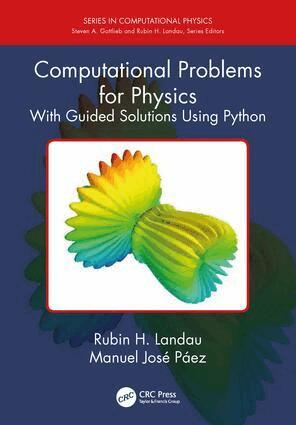
Our future scientists and professionals must be conversant in computational techniques. In order to facilitate integration of computer methods into existing physics courses, this textbook offers a large number of worked examples and problems with fully guided solutions in Python as well as other languages (Mathematica, Java, C, Fortran, and Maple). It’s also intended as a self-study guide for learning how to use computer methods in physics. The authors include an introductory chapter on numerical tools and indication of computational and physics difficulty level for each problem. Readers also benefit from the following features:• Detailed explanations and solutions in various coding languages.• Problems are ranked based on computational and physics difficulty.• Basics of numerical methods covered in an introductory chapter.• Programming guidance via flowcharts and pseudocode.Rubin Landau is a Distinguished Professor Emeritus in the Department of Physics at Oregon State University in Corvallis and a Fellow of the American Physical Society (Division of Computational Physics).Manuel Jose Paez-Mejia is a Professor of Physics at Universidad de Antioquia in Medellín, Colombia.
1 698 kr
Skickas inom 10-15 vardagar
Our future scientists and professionals must be conversant in computational techniques. In order to facilitate integration of computer methods into existing physics courses, this textbook offers a large number of worked examples and problems with fully guided solutions in Python as well as other languages (Mathematica, Java, C, Fortran, and Maple). It’s also intended as a self-study guide for learning how to use computer methods in physics. The authors include an introductory chapter on numerical tools and indication of computational and physics difficulty level for each problem. Readers also benefit from the following features:• Detailed explanations and solutions in various coding languages.• Problems are ranked based on computational and physics difficulty.• Basics of numerical methods covered in an introductory chapter.• Programming guidance via flowcharts and pseudocode.Rubin Landau is a Distinguished Professor Emeritus in the Department of Physics at Oregon State University in Corvallis and a Fellow of the American Physical Society (Division of Computational Physics).Manuel Jose Paez-Mejia is a Professor of Physics at Universidad de Antioquia in Medellín, Colombia.
851 kr
Tillfälligt slut
In a condensed matter laboratory, visualization is especially useful in cases where it is possible to observe the interior of samples non-destructively. However, tools for visualizing surfaces and fields in engineering are often unsuitable. This book provides a complete guide to the application of visualization and other computational techniques in condensed matter physics and materials science research. It emphasizes three-dimensional visualization techniques and animation in condensed matter, statistical physics, computational physics, quantum mechanics, and optics. The text takes gives a truly hands-on approach, explaining techniques step by step with simple, representative examples.
Introduction to Numerical Programming
A Practical Guide for Scientists and Engineers Using Python and C/C++
Häftad, Engelska, 2014
1 470 kr
Skickas inom 10-15 vardagar
Makes Numerical Programming More Accessible to a Wider AudienceBearing in mind the evolution of modern programming, most specifically emergent programming languages that reflect modern practice, Numerical Programming: A Practical Guide for Scientists and Engineers Using Python and C/C++ utilizes the author’s many years of practical research and teaching experience to offer a systematic approach to relevant programming concepts. Adopting a practical, broad appeal, this user-friendly book offers guidance to anyone interested in using numerical programming to solve science and engineering problems. Emphasizing methods generally used in physics and engineering—from elementary methods to complex algorithms—it gradually incorporates algorithmic elements with increasing complexity.Develop a Combination of Theoretical Knowledge, Efficient Analysis Skills, and Code Design Know-HowThe book encourages algorithmic thinking, which is essential to numerical analysis. Establishing the fundamental numerical methods, application numerical behavior and graphical output needed to foster algorithmic reasoning, coding dexterity, and a scientific programming style, it enables readers to successfully navigate relevant algorithms, understand coding design, and develop efficient programming skills. The book incorporates real code, and includes examples and problem sets to assist in hands-on learning. Begins with an overview on approximate numbers and programming in Python and C/C++, followed by discussion of basic sorting and indexing methods, as well as portable graphic functionalityContains methods for function evaluation, solving algebraic and transcendental equations, systems of linear algebraic equations, ordinary differential equations, and eigenvalue problemsAddresses approximation of tabulated functions, regression, integration of one- and multi-dimensional functions by classical and Gaussian quadratures, Monte Carlo integration techniques, generation of random variables, discretization methods for ordinary and partial differential equations, and stability analysisThis text introduces platform-independent numerical programming using Python and C/C++, and appeals to advanced undergraduate and graduate students in natural sciences and engineering, researchers involved in scientific computing, and engineers carrying out applicative calculations.