Short Studies in Private International Law – serie
Visar alla böcker i serien Short Studies in Private International Law. Handla med fri frakt och snabb leverans.
6 produkter
6 produkter
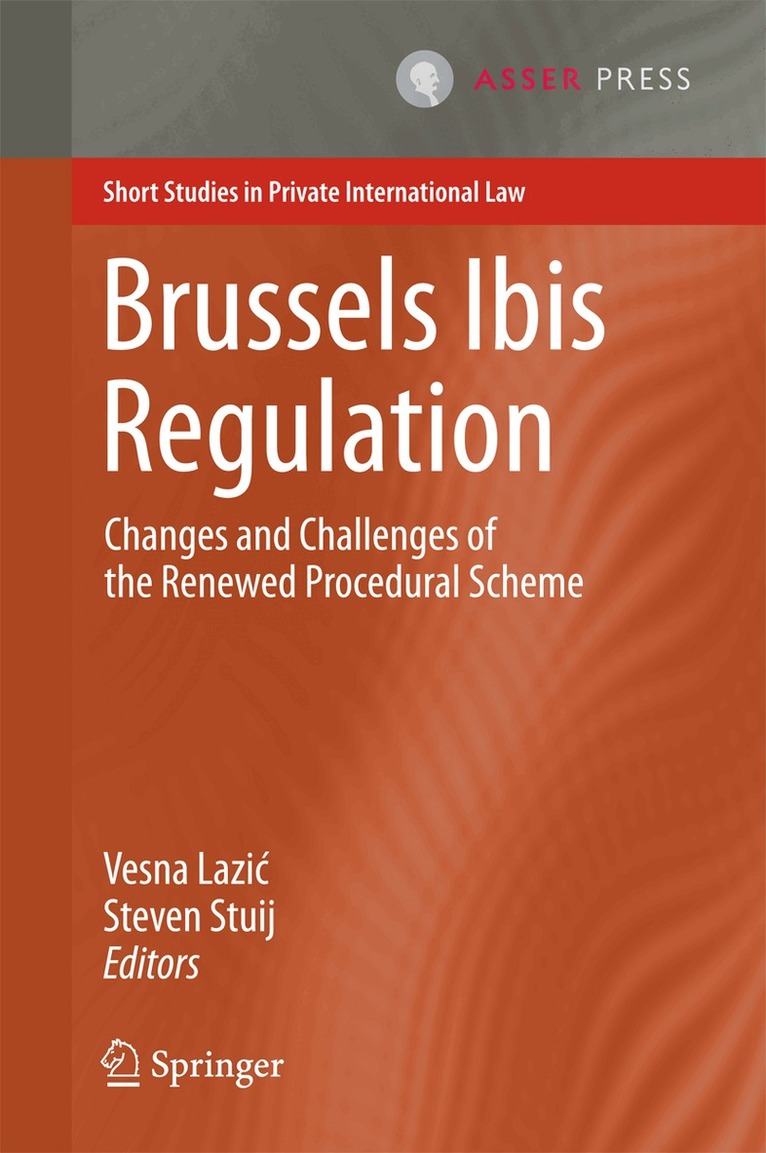
Inbunden, Engelska, 2016
804 kr
Skickas inom 10-15 vardagar
This book focuses on major amendments introduced in the Brussels I regulatory framework. The contributions scrutenise the changes introduced in the Brussels Ibis Regulation, a legal instrument that presents a core of the unification of private international law rules on the European Union level. It is one of the first publications addressing all the changes in the Brussels I regulatory scheme, which takes into consideration relevant CJEU case law up to July 2016.The texts, written by legal scholars who have published extensively in the field of private international law and international civil procedure, will add to the development of EU private international law. In addition, the authors’ critical analysis may open further discussions on the topic and so benefit a consistent and harmonised application of the Regulation. In this respect the book takes a different approach than the commentaries which have so far been published. It is primarily meant for legal academics in private international law and practitioners who are regularly engaged in cross-border civil proceedings. It may also be of added value to advanced students and to those with a particular interest in the subject of international litigation and more generally in the area of dispute resolution.Vesna Lazić is a Senior Researcher at the T.M.C. Asser Instituut, an Associate Professor of Private Law at Utrecht University and Professor of European Civil Procedure at the University of Rijeka.Steven Stuij is an expert in Private International Law and an external Ph.D. candidate at Erasmus School of Law, Rotterdam.
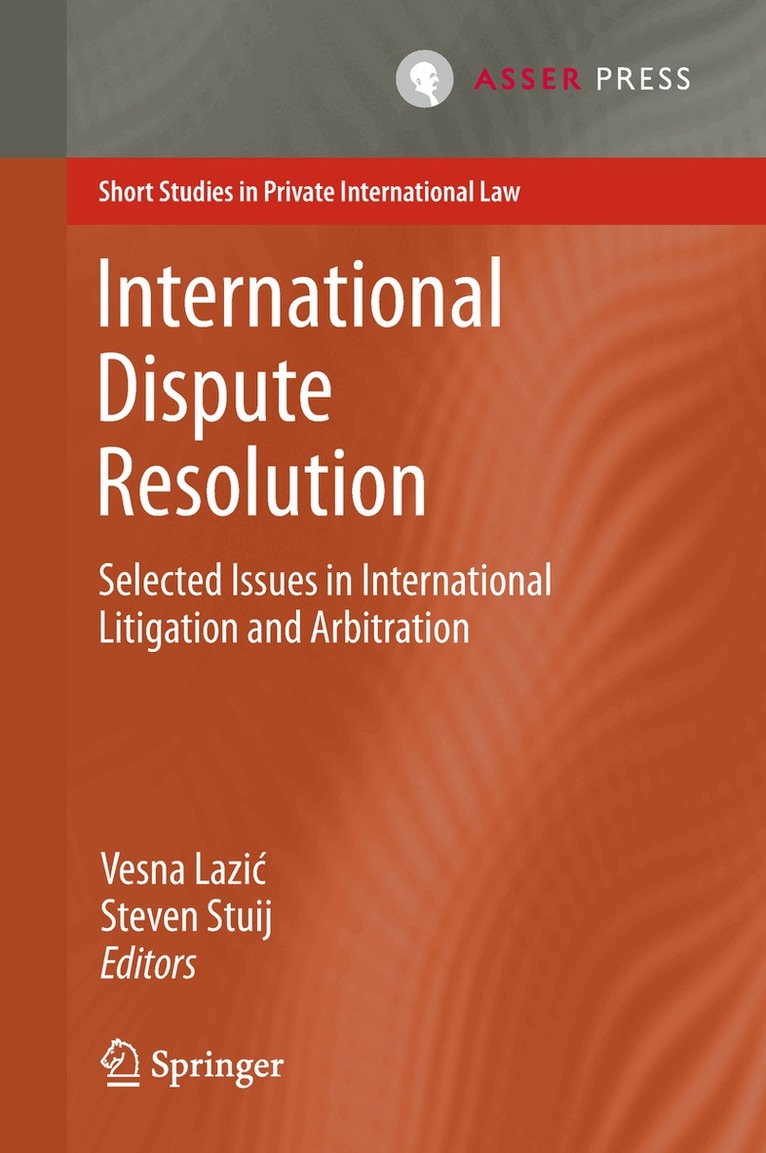
Inbunden, Engelska, 2018
804 kr
Skickas inom 10-15 vardagar
The contributions in this book cover a wide range of topics within modern disputeresolution, which can be summarised as follows: harmonisation, enforcement andalternative dispute resolution. In particular, it looks into the impact of harmonisedEU law on national rules of civil procedure and addresses the lack of harmonisationin the US regarding the recognition and enforcement of foreign judgments. Furthermore,the law on enforcement is examined, not only by focusing on US law, but also onhow to attach assets in order to enforce a judgment. Finally, it addresses certain typesof alternative dispute resolution. In addition, the book looks into the systems andcultures of dispute resolution in several regions of the world, such as the EU, the US andChina, that have a high impact on globalisation. Hence, the book is diverse in the senseof dealing with multiple issues in the field of modern dispute resolution.The book offers explorations of the impact of international rules and EU law on domesticcivil procedure, through case studies from, among others, the US, China, Belgium andthe Netherlands. The relevance of EU law for the national debate and its impact on theregulation of civil procedure is also considered. Furthermore, several contributions discussthe necessity and possibility of harmonisation in the emergency arbitrator mechanisms inthe EU. The harmonisation of private international law rules within the EU, particularlythose of a procedural nature, is juxtaposed to the lack thereof in the US. Also, the bookoffers an overview of the current dispute settlement mechanisms in China.The publication is primarily meant for legal academics in private international law andcivil procedure. It will also prove useful to practitionersregularly engaged in cross-borderdispute resolution and will be of added value to advanced students, as well as to those withan interest in international litigation and more generally in the area of dispute resolution.Vesna Lazić is Senior Researcher at the T.M.C. Asser Institute, Associate Professor ofPrivate Law at Utrecht University and Professor of European Civil Procedure at theUniversity of Rijeka.Steven Stuij is an expert in Private International Law and a PhD Candidate/GuestResearcher at the Erasmus School of Law, Rotterdam.Ton Jongbloed is Guest Editor on this volume.
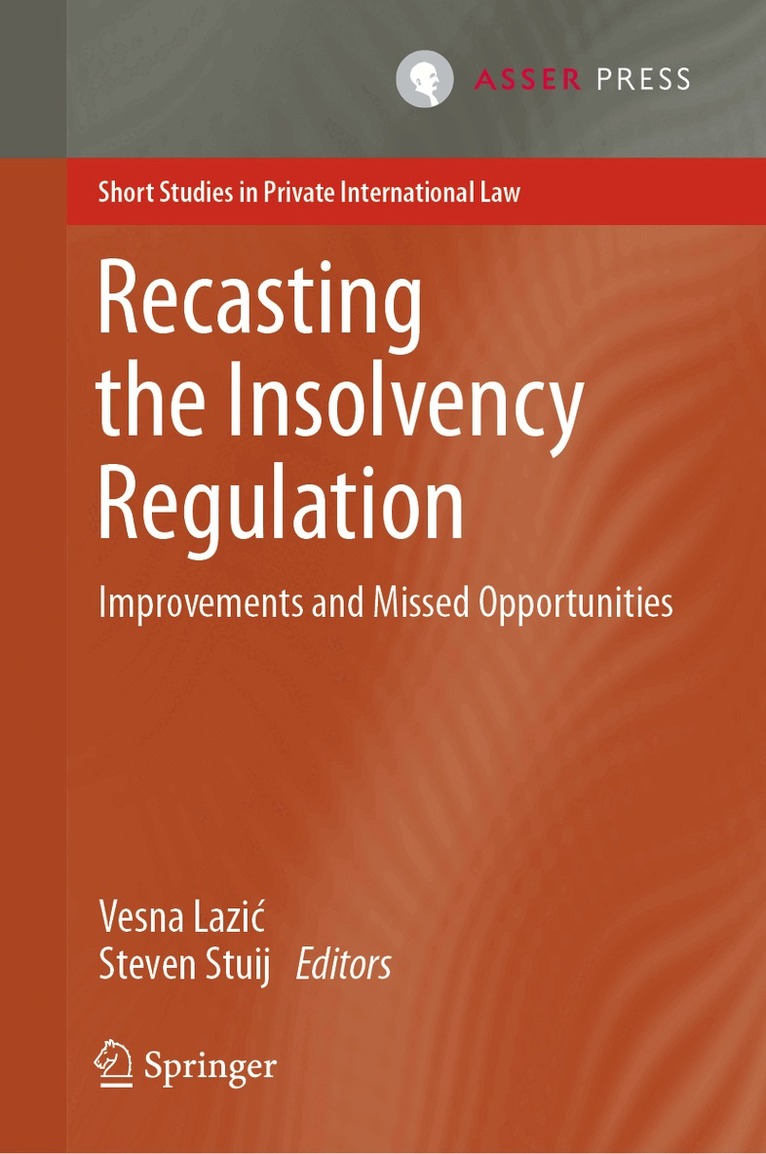
Inbunden, Engelska, 2020
904 kr
Skickas inom 10-15 vardagar
This book comprises contributions relating to the Insolvency Regulation Recast,which recently entered into force. The authors analyse the changes introduced andgive their views on the improvements that are thereby achieved. In other words, theyassess to what extent the amendments have mitigated the disadvantages of the previousInsolvency Regulation.Three of the chapters concentrate on the issues pertaining to jurisdiction, such asthe problem of forum shopping by re-locating the debtor’s centre of main interests.Furthermore, the extent to which the parties have the freedom to contract withinthe framework of the Insolvency Regulation Recast is discussed. Also, the relevanceand consequences of recent developments in corporate law for the current crossborderinsolvency framework, as well as the jurisdictional issues concerning approvalrequirements areamongst the matters addressed. Aside from the jurisdictional matters,the question of the law applicable to so-called ‘avoidance actions’ is analysed and crossbordercooperation between national authorities in the field of insolvency is touchedupon. To conclude, this book covers a range of specific and intriguing topics broughtup by the Insolvency Regulations Recast.This third volume in the Short Studies in Private International Law Series is primarilyaimed at legal academics dealing with cross-border insolvency, but it will also proveuseful to insolvency judges and practitioners, as well as those specialised in financialand fiscal law. Finally, advanced students as well as those with a general interest ininsolvency law will also find it of added value.Vesna Lazić is Senior Researcher at the T.M.C. Asser Institute and Associate Professorof Private Law at Utrecht University in The Netherlands. Steven Stuij is an expert inprivate international law and PhD Candidate at the Erasmus School of Law, Rotterdam.
Häftad, Engelska, 2021
904 kr
Skickas inom 10-15 vardagar
This book comprises contributions relating to the Insolvency Regulation Recast,which recently entered into force. The authors analyse the changes introduced andgive their views on the improvements that are thereby achieved. In other words, theyassess to what extent the amendments have mitigated the disadvantages of the previousInsolvency Regulation.Three of the chapters concentrate on the issues pertaining to jurisdiction, such asthe problem of forum shopping by re-locating the debtor’s centre of main interests.Furthermore, the extent to which the parties have the freedom to contract withinthe framework of the Insolvency Regulation Recast is discussed. Also, the relevanceand consequences of recent developments in corporate law for the current crossborderinsolvency framework, as well as the jurisdictional issues concerning approvalrequirements areamongst the matters addressed. Aside from the jurisdictional matters,the question of the law applicable to so-called ‘avoidance actions’ is analysed and crossbordercooperation between national authorities in the field of insolvency is touchedupon. To conclude, this book covers a range of specific and intriguing topics broughtup by the Insolvency Regulations Recast.This third volume in the Short Studies in Private International Law Series is primarilyaimed at legal academics dealing with cross-border insolvency, but it will also proveuseful to insolvency judges and practitioners, as well as those specialised in financialand fiscal law. Finally, advanced students as well as those with a general interest ininsolvency law will also find it of added value.Vesna Lazić is Senior Researcher at the T.M.C. Asser Institute and Associate Professorof Private Law at Utrecht University in The Netherlands. Steven Stuij is an expert inprivate international law and PhD Candidate at the Erasmus School of Law, Rotterdam.
Inbunden, Engelska, 2020
854 kr
Skickas inom 10-15 vardagar
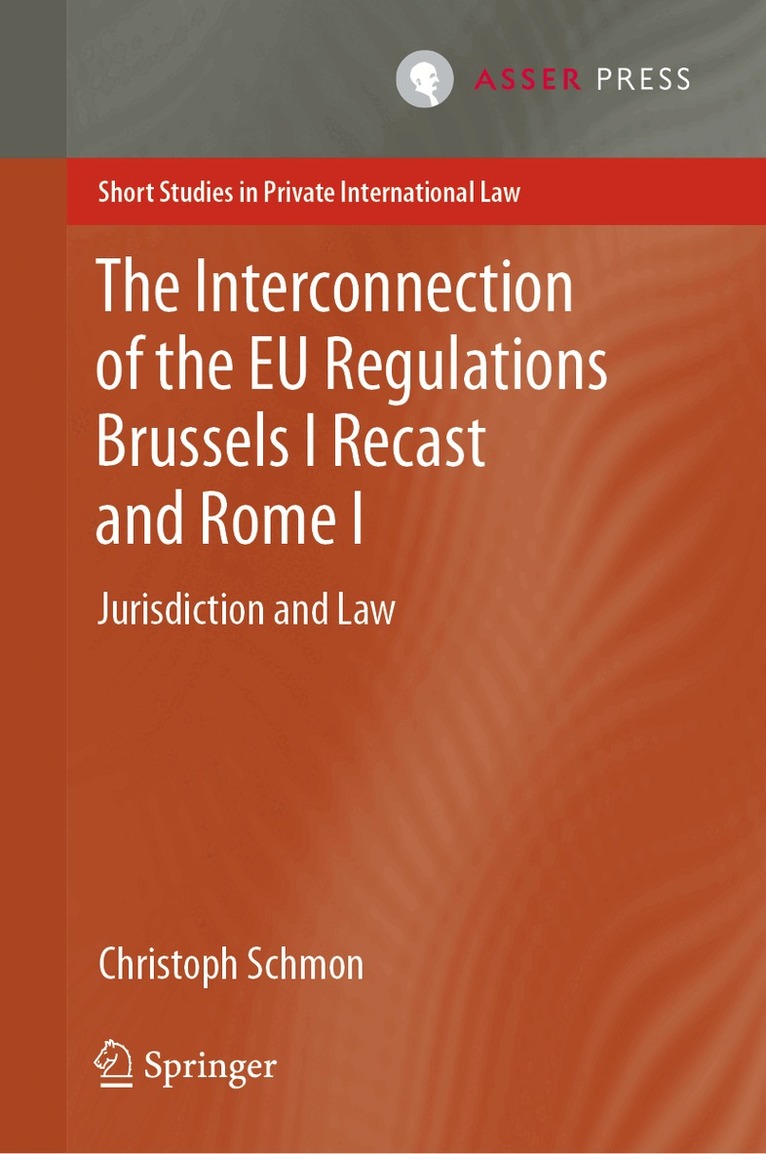
This book deals with the interconnection between the Brussels I Recast and Rome I Regulations and addresses the question of uniform interpretation. A consistent understanding of scope and provisions is suggested by the preamble of the Rome I Regulation. Without doubt, it is fair to presume that the same terms bear the same meaning throughout the Regulations.The author takes a closer look at the Regulations’ systems, guiding principles, and their balance of flexibility and legal certainty. He starts from the premise that such analysis should prove particularly rewarding as both legal acts have their specific DNA: The Brussels I Recast Regulation has a procedural focus when it governs the allocation of jurisdiction and the free circulation of judgments. The multilateral rules under the Rome I Regulation, by contrast, are animated by conflict of laws methods and focus on the delimitation of legal systems.This fourth volume in the Short Studies in Private International Law Series is primarily aimed at legal academics in private international law and advanced students. But it should also prove an intriguing read for legal practitioners in international litigation.Christoph Schmon is a legal expert in the fields of Private International Law, Consumer Law, and Digital Rights. After serving in research positions at academic institutes in Vienna and London, he focused on EU policy and law making. He is appointed expert of advisory groups to the EU Commission.
Häftad, Engelska, 2021
854 kr
Skickas inom 10-15 vardagar
This book deals with the interconnection between the Brussels I Recast and Rome I Regulations and addresses the question of uniform interpretation. A consistent understanding of scope and provisions is suggested by the preamble of the Rome I Regulation. Without doubt, it is fair to presume that the same terms bear the same meaning throughout the Regulations.The author takes a closer look at the Regulations’ systems, guiding principles, and their balance of flexibility and legal certainty. He starts from the premise that such analysis should prove particularly rewarding as both legal acts have their specific DNA: The Brussels I Recast Regulation has a procedural focus when it governs the allocation of jurisdiction and the free circulation of judgments. The multilateral rules under the Rome I Regulation, by contrast, are animated by conflict of laws methods and focus on the delimitation of legal systems.This fourth volume in the Short Studies in Private International Law Series is primarily aimed at legal academics in private international law and advanced students. But it should also prove an intriguing read for legal practitioners in international litigation.Christoph Schmon is a legal expert in the fields of Private International Law, Consumer Law, and Digital Rights. After serving in research positions at academic institutes in Vienna and London, he focused on EU policy and law making. He is appointed expert of advisory groups to the EU Commission.