Social Value in the Built Environment - Böcker
Visar alla böcker i serien Social Value in the Built Environment. Handla med fri frakt och snabb leverans.
8 produkter
8 produkter
725 kr
Skickas inom 10-15 vardagar
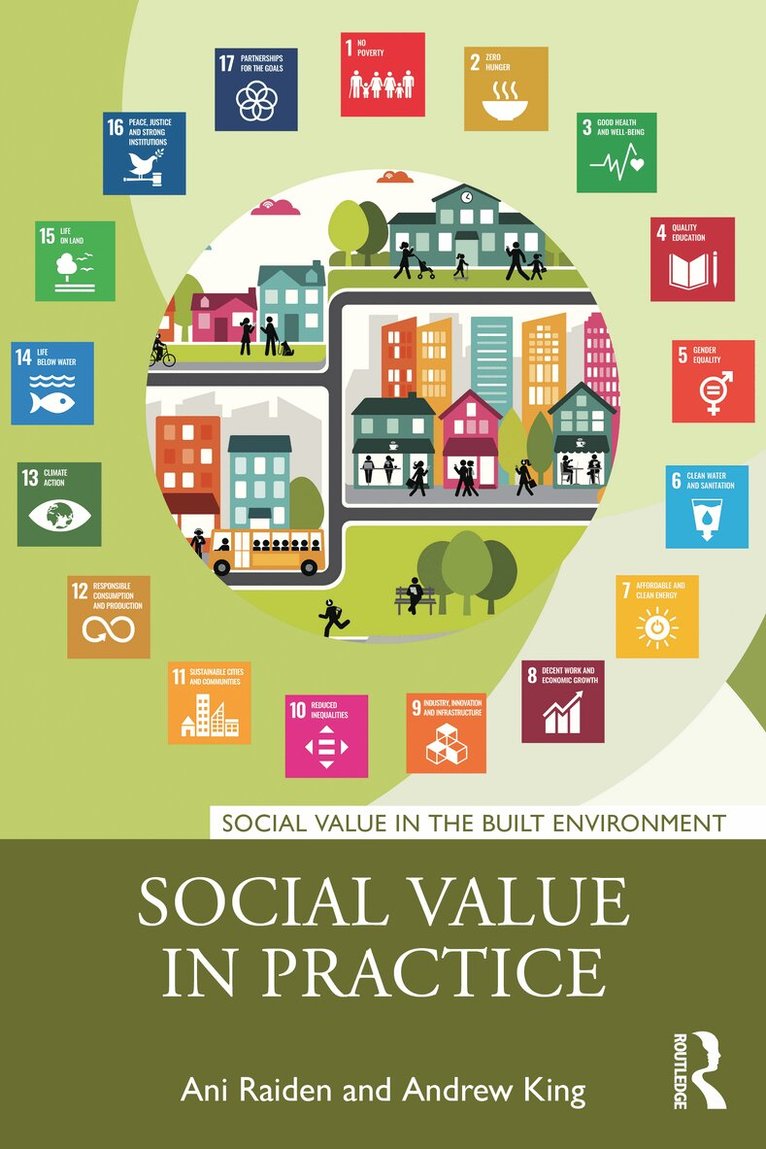
Social Value in Practice offers the reader a simple, accessible guide for considering, creating, and delivering social value in projects and within their organisation. The book connects social value to the global Sustainable Development Goals (SDGs) and presents an insight into the many and different practical ways in which individuals and organisations can make a positive impact towards resolving the ‘people, planet and prosperity’ agenda:'Good work' – good practice in managing people, including working conditions, and equality, diversity, and inclusionEducation, skills, and employment, including apprenticeships and enhancing the industry imageSocial procurement and circular supply chainsStrategic partnerships and social enterprisesCommunity development, regeneration, and placemakingConstruction consultancyArchitecture, design, and constructionAssessing and measuring social value.Reflective practitioners can pick it up, turn to a chapter, and learn something they can use right away. Through numerous practical examples and think pieces, this book can help readers learn how to create social value, how to improve and build upon current practice, and how to co-create social value in partnership with clients and the supply chain. The authors aim to empower and inspire stakeholders to engage with new ideas and create more value for those using the built environment. This book is a must read for all those involved in procuring, tendering, planning, designing, developing, funding, building, working in, and managing the built environment.
2 088 kr
Skickas inom 10-15 vardagar
Social Value in Practice offers the reader a simple, accessible guide for considering, creating, and delivering social value in projects and within their organisation. The book connects social value to the global Sustainable Development Goals (SDGs) and presents an insight into the many and different practical ways in which individuals and organisations can make a positive impact towards resolving the ‘people, planet and prosperity’ agenda:'Good work' – good practice in managing people, including working conditions, and equality, diversity, and inclusionEducation, skills, and employment, including apprenticeships and enhancing the industry imageSocial procurement and circular supply chainsStrategic partnerships and social enterprisesCommunity development, regeneration, and placemakingConstruction consultancyArchitecture, design, and constructionAssessing and measuring social value.Reflective practitioners can pick it up, turn to a chapter, and learn something they can use right away. Through numerous practical examples and think pieces, this book can help readers learn how to create social value, how to improve and build upon current practice, and how to co-create social value in partnership with clients and the supply chain. The authors aim to empower and inspire stakeholders to engage with new ideas and create more value for those using the built environment. This book is a must read for all those involved in procuring, tendering, planning, designing, developing, funding, building, working in, and managing the built environment.
Constructing a Consumer-Focused Industry
Cracks, Cladding and Crisis in the Residential Construction Sector
Häftad, Engelska, 2022
752 kr
Skickas inom 10-15 vardagar
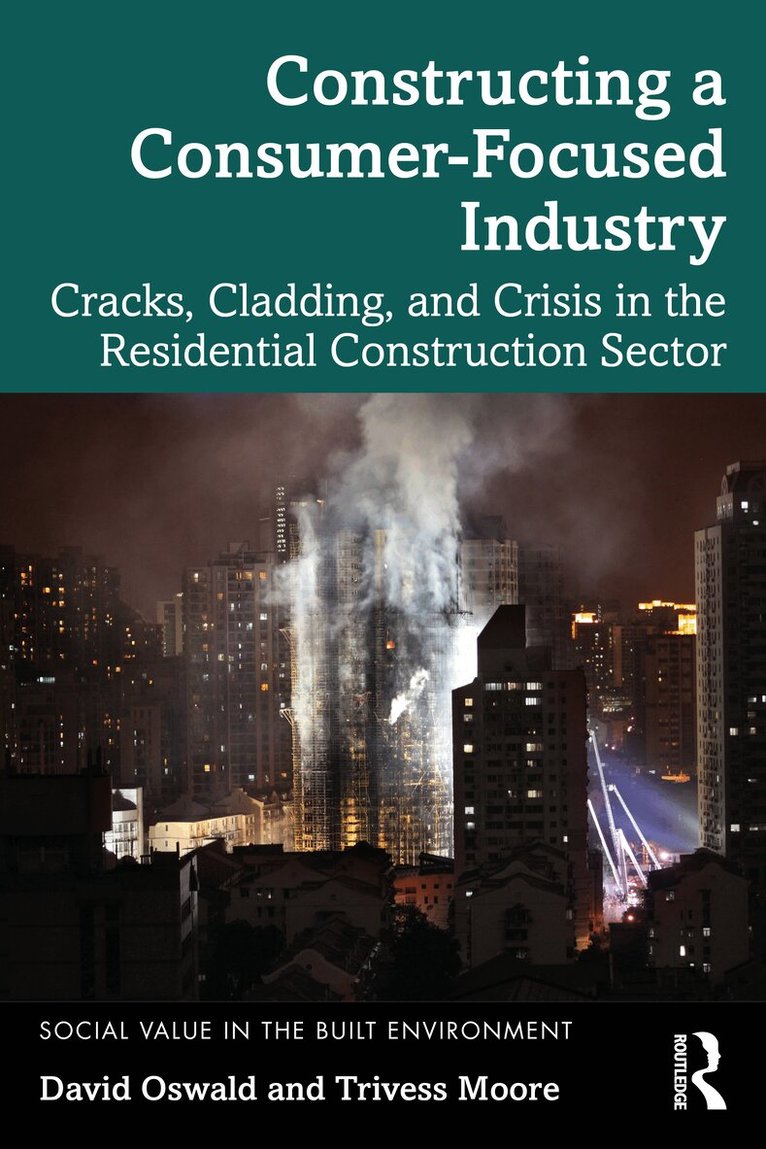
The old saying ‘safe as houses’ is being challenged around the world like never before. Over recent decades homeowners have experienced the devastating effects of defects like asbestos, leaky buildings, structural failings, and more recently the combustible cladding crisis. The provision of safe and secure housing is a critical starting point to ensure that social value can be delivered in the built environment. However, some of these dangerous defects have resulted in a lack of security, safety, health, well-being, and social value for households and the wider community. The problems homeowners experience go beyond the substantial financial costs for defect rectification. Too often there has been a lack of government and industry support to help the housing consumer through these issues or to prevent them from occurring to begin with. It is time for a rethink and restructure of government policy, support, and industry practices to better protect housing consumers and deliver high-quality and sustainable housing that creates social value.Through evidence-based research and international case studies, this book focuses on the effects that dangerous defects have on the housing consumer. The ongoing construction cladding crisis is used as a primary case study throughout to highlight these implications, with other previous large-scale defect examples, such as leaky buildings and asbestos. Based upon the range of emerging evidence, we propose ideas for policy makers, construction and built environment professionals, owners corporations, and households on how to move forward towards a higher-quality, sustainable, and socially valuable way of residential living. Government policy has long focused on ‘making industry work’ through building regulations and standards. It is now time for greater government and industry focus on the consumer to make ‘consumer protection work’ in the built environment. There is a need to prevent dangerous defects like combustible cladding, better support consumers when defects emerge, and to create buildings for social value rather than minimum standards. Now is the time to build a better future for the end-user.
Constructing a Consumer-Focused Industry
Cracks, Cladding and Crisis in the Residential Construction Sector
Inbunden, Engelska, 2022
2 357 kr
Skickas inom 10-15 vardagar
The old saying ‘safe as houses’ is being challenged around the world like never before. Over recent decades homeowners have experienced the devastating effects of defects like asbestos, leaky buildings, structural failings, and more recently the combustible cladding crisis. The provision of safe and secure housing is a critical starting point to ensure that social value can be delivered in the built environment. However, some of these dangerous defects have resulted in a lack of security, safety, health, well-being, and social value for households and the wider community. The problems homeowners experience go beyond the substantial financial costs for defect rectification. Too often there has been a lack of government and industry support to help the housing consumer through these issues or to prevent them from occurring to begin with. It is time for a rethink and restructure of government policy, support, and industry practices to better protect housing consumers and deliver high-quality and sustainable housing that creates social value.Through evidence-based research and international case studies, this book focuses on the effects that dangerous defects have on the housing consumer. The ongoing construction cladding crisis is used as a primary case study throughout to highlight these implications, with other previous large-scale defect examples, such as leaky buildings and asbestos. Based upon the range of emerging evidence, we propose ideas for policy makers, construction and built environment professionals, owners corporations, and households on how to move forward towards a higher-quality, sustainable, and socially valuable way of residential living. Government policy has long focused on ‘making industry work’ through building regulations and standards. It is now time for greater government and industry focus on the consumer to make ‘consumer protection work’ in the built environment. There is a need to prevent dangerous defects like combustible cladding, better support consumers when defects emerge, and to create buildings for social value rather than minimum standards. Now is the time to build a better future for the end-user.
Socially Successful Projects in the built environment
Demystifying social value and stakeholder engagement
Häftad, Engelska, 2026
777 kr
Kommande
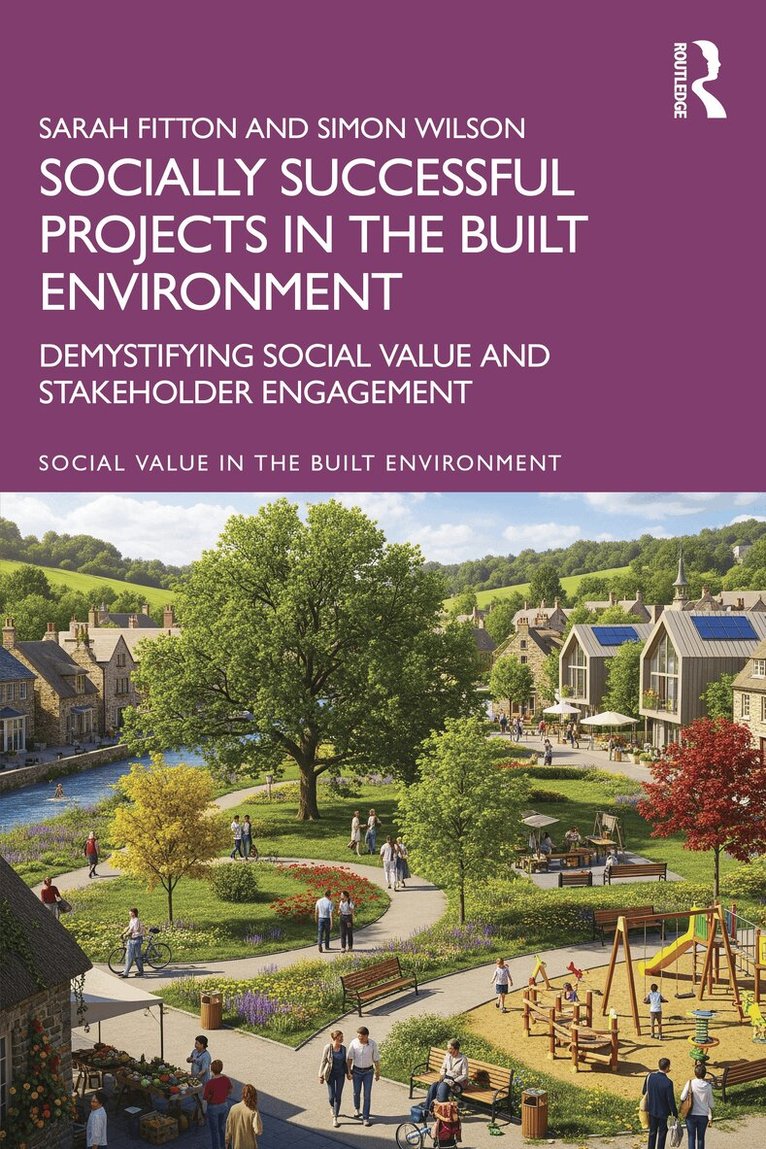
For built environment professionals, delivering socially impactful projects is more crucial and challenging than ever. This step-by-step guide provides an innovative approach to stakeholder engagement, empowering project teams to create meaningful social value through the stakeholder engagement process and build better projects.Socially Successful Projects in the built environment will help the reader understand the theory behind a reframed approach to stakeholder engagement using a social value lens. The authors argue that projects in the built environment need to be technically feasible, financially viable, and socially successful. Project managers need to focus on all three elements, which are summarised as ‘concrete, cash, and connection’. Failing to meet that third criterion can lead to pushback, protests, delays, and potentially unsuccessful projects. This book focuses on the third of those elements (the social dimension) and provides a step-by-step guide to how a project can be socially successful. In summary, this is about delivering better projects for both the stakeholders and the project teams.In Socially Successful Projects in the built environment, the authors unravel the complex relationship between social value and stakeholder engagement and reveal a transformative practical theory for effective collaboration and facilitation. Along the way, they address key issues such as design philosophy, scenario development, stakeholder analysis, optioneering, and project learning, and provide practical advice on how to use these methods within real-world projects. This book is essential reading for all built environment stakeholders and teams working to deliver better projects.
Socially Successful Projects in the built environment
Demystifying social value and stakeholder engagement
Inbunden, Engelska, 2026
2 185 kr
Kommande
For built environment professionals, delivering socially impactful projects is more crucial and challenging than ever. This step-by-step guide provides an innovative approach to stakeholder engagement, empowering project teams to create meaningful social value through the stakeholder engagement process and build better projects.Socially Successful Projects in the built environment will help the reader understand the theory behind a reframed approach to stakeholder engagement using a social value lens. The authors argue that projects in the built environment need to be technically feasible, financially viable, and socially successful. Project managers need to focus on all three elements, which are summarised as ‘concrete, cash, and connection’. Failing to meet that third criterion can lead to pushback, protests, delays, and potentially unsuccessful projects. This book focuses on the third of those elements (the social dimension) and provides a step-by-step guide to how a project can be socially successful. In summary, this is about delivering better projects for both the stakeholders and the project teams.In Socially Successful Projects in the built environment, the authors unravel the complex relationship between social value and stakeholder engagement and reveal a transformative practical theory for effective collaboration and facilitation. Along the way, they address key issues such as design philosophy, scenario development, stakeholder analysis, optioneering, and project learning, and provide practical advice on how to use these methods within real-world projects. This book is essential reading for all built environment stakeholders and teams working to deliver better projects.
2 088 kr
Skickas inom 10-15 vardagar
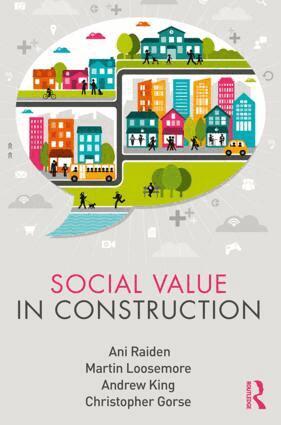
While the concept of social value is not new, recent interest in social value in construction has grown because of new social procurement legislation around the world and an increasing acceptance of the need to ensure construction projects provide social value, rather than simply economic value. Despite this growing recognition, literature and professional guidance on the subject is hard to find. This is the first book looking at social value in construction and it sets the agenda by asking and answering important questions like: How is the construction industry developing and supporting social enterprise and social value and for who? How and when is the industry recording and measuring social value and its effect? Which organisations are doing things well and what can we learn from their experiences? What can industry players do together to consolidate efforts and drive improvements? What are the key challenges in the field and what does the future look like?Drawing on a variety of professional and academic experiences and disciplines, the authors present global perspectives and lay the foundations for creating social value in the construction industry. This timely book makes use of real-life case studies and examples of best practice to demonstrate how innovative companies can utilise contemporary research to create social value through their projects. It is time the construction industry viewed community involvement and corporate social responsibility as an opportunity rather than a risk, and this is the book that shows the industry how. This is essential reading for all professionals in the construction, engineering, architecture and built environment sector. In particular, project managers, clients, contract managers, quantity surveyors, CSR and HR personnel will gain a lot from reading this book.
725 kr
Skickas inom 10-15 vardagar
While the concept of social value is not new, recent interest in social value in construction has grown because of new social procurement legislation around the world and an increasing acceptance of the need to ensure construction projects provide social value, rather than simply economic value. Despite this growing recognition, literature and professional guidance on the subject is hard to find. This is the first book looking at social value in construction and it sets the agenda by asking and answering important questions like: How is the construction industry developing and supporting social enterprise and social value and for who? How and when is the industry recording and measuring social value and its effect? Which organisations are doing things well and what can we learn from their experiences? What can industry players do together to consolidate efforts and drive improvements? What are the key challenges in the field and what does the future look like?Drawing on a variety of professional and academic experiences and disciplines, the authors present global perspectives and lay the foundations for creating social value in the construction industry. This timely book makes use of real-life case studies and examples of best practice to demonstrate how innovative companies can utilise contemporary research to create social value through their projects. It is time the construction industry viewed community involvement and corporate social responsibility as an opportunity rather than a risk, and this is the book that shows the industry how. This is essential reading for all professionals in the construction, engineering, architecture and built environment sector. In particular, project managers, clients, contract managers, quantity surveyors, CSR and HR personnel will gain a lot from reading this book.