Culture, Society and Political Economy in Turkey – serie
Visar alla böcker i serien Culture, Society and Political Economy in Turkey. Handla med fri frakt och snabb leverans.
3 produkter
3 produkter
Del 1 - Culture, Society and Political Economy in Turkey
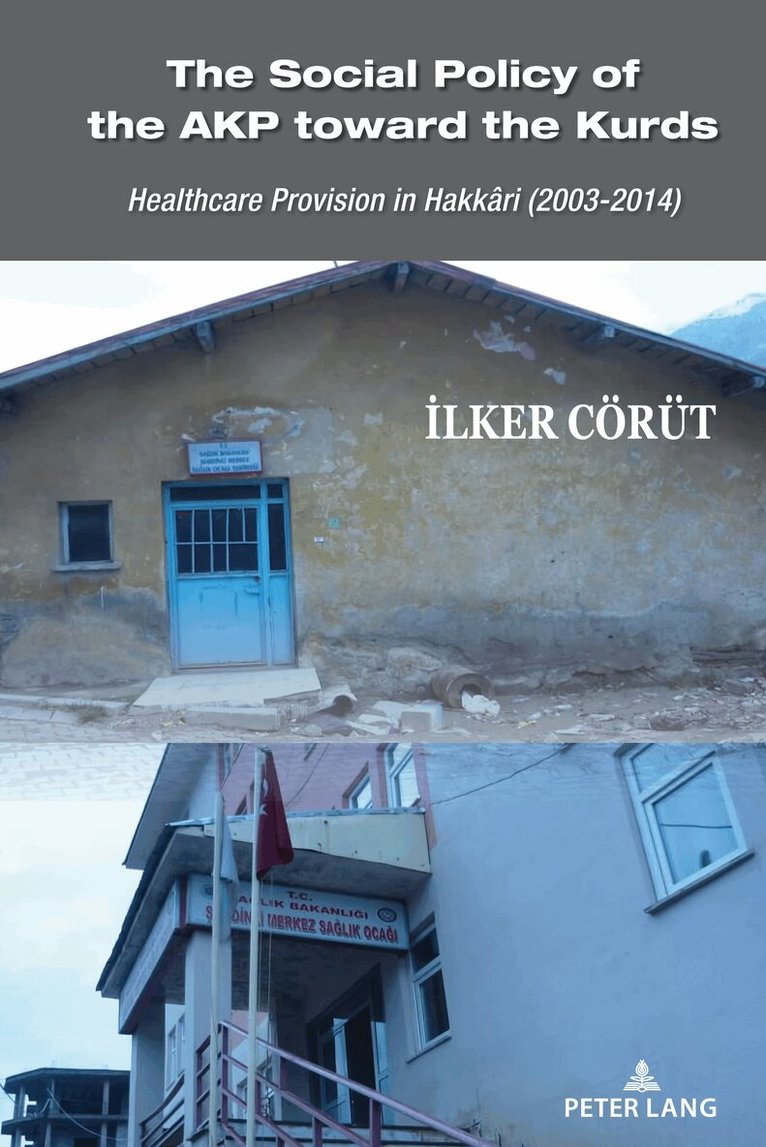
Social Policy of the AKP toward the Kurds
Healthcare Provision in Hakkâri (2003–2014)
Inbunden, Engelska, 2023
950 kr
Skickas inom 5-8 vardagar
This research focuses on the period 2003 to 2014, which was exceptional in the history of the Turkish Republic for its radical shift in the official stance adopted towards Kurds. The overall Kurdish policy of the AKP in 2003–14 was part of a wider agenda of refashioning the nation on an anti-Kemalist, anti-elitist, and essentially pro-Muslim basis. This reconstruction of the nation was built on the populist claim to be ending the varying levels of social and cultural exclusion that the religious masses, Kurds, informal employees, and poorly educated rural masses had been subject to as subaltern groups of the Republic. This policy did not work. The AKP failed to establish Turkish hegemony over Kurds and could not suppress the Kurdish national movement. This book looks for an explanation of the failure of the Kurdish policy of the AKP by considering the limits of its social policy in instituting a compliant, cooperative, submissive Kurdish subjectivity. To do this, it focuses on the persistence of patient dissatisfaction in Hakkâri, a small Kurdish province, during the period despite the very considerable improvements to healthcare provision achieved in these years. The empirical findings of this study show that the persistence of patient dissatisfaction in Hakkâri as a mass phenomenon was essentially a daily symptom of an ethnopolitical resistance to being interpellated by the AKP as citizens-in-the-making who would compare past and present, realize the progress, and thus appreciate the current quality of healthcare provision by tolerating any shortcomings as a minor price to pay for relative material comfort. In short, the limit of the AKP strategy was reached in an attempt to carry out a sort of politics of redistribution that tried to convince Hakkârians to be content with a situation that fell short of full respect to their identity and bodies.
Del 2 - Culture, Society and Political Economy in Turkey
Fragments of Repression and Resistance
A.K.P. Rule in Turkey
Inbunden, Engelska, 2024
923 kr
Skickas inom 5-8 vardagar
President Recep Tayyip Erdoğan has been playing the authoritarian’s game for some time now. Under the polarizing, tense and uncertain conditions of this regime, segments of society in Turkey are still actively resisting to the onslaught of authoritarian measures, coalescing at diverse sites of repression, and protesting against the lack of transparency, arbitrary state actions against citizens, or outright extractivist practices against humans and nature. In this volume, we continue with our critical task of both documenting this resistance and detailing, examining, and analyzing the backsliding of one of the democratically elected governments of the twenty-first century into an authoritarian regime that is domestically punitive and regionally aggressive. By doing so, as academics, we become critical agents in determining the nature and meaning of the legacy of the A.K.P. regime.
Del 3 - Culture, Society and Political Economy in Turkey
Paths of De-democratization in Turkey
Inbunden, Engelska, 2025
909 kr
Skickas inom 5-8 vardagar
This volume offers a variety of perspectives on Turkey’s democratic backsliding since 2010 as the ruling Justice and Development Party and President Recep T. Erdoğan have consolidated their rule. It highlights numerous historical, ideological, and structural forces that have contributed to this process, explores the weaknesses of the opposition and civil society actors, examines how the changing political economy has contributed to growing authoritarianism, and notes how growing authoritarianism has impacted different political and social actors. It also suggests some factors that might help reverse the current processes of de-democratization.