Language, Society and Political Economy – serie
Visar alla böcker i serien Language, Society and Political Economy. Handla med fri frakt och snabb leverans.
18 produkter
18 produkter
Häftad, Engelska, 2021
632 kr
Skickas inom 10-15 vardagar
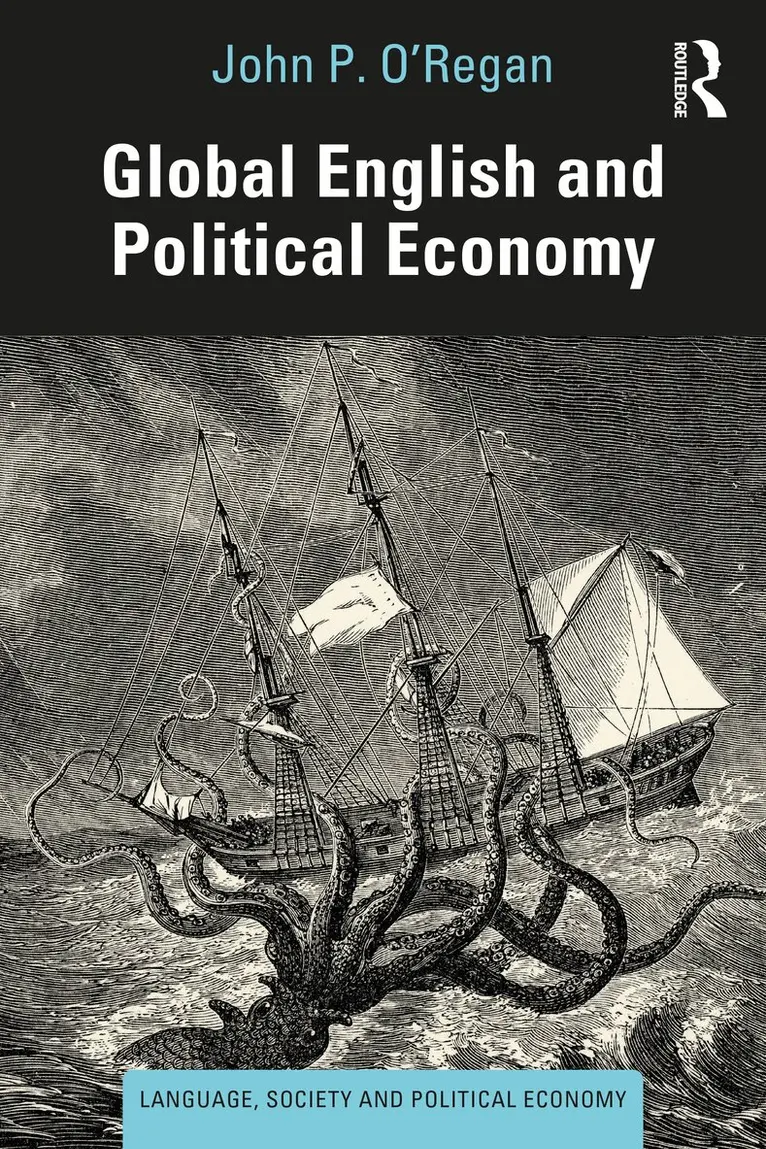
In this book, John O’Regan examines the role of political economy in the worldwide spread of English and traces the origins and development of the dominance of English to the endless accumulation of capital in a capitalist world-system.O’Regan combines Marxist perspectives of capital accumulation with world-systems analysis, international political economy, and studies of imperialism and empire to present a historical account of the ‘free riding’ of English upon the global capital networks of the capitalist world-system. Relevant disciplinary perspectives on global English are examined in this light, including superdiversity, translanguaging, translingual practice, trans-spatiality, language commodification, World Englishes and English as a Lingua Franca. Global English and Political Economy presents an original historical and interdisciplinary interpretation of the global ascent of English, while also raising important theoretical and practical questions for perspectives which suggest that the time of the traditional models of English is past.Providing an introduction to key theoretical perspectives in political economy, this book is essential reading for advanced students and researchers in applied linguistics, World Englishes and related fields of study.
Häftad, Engelska, 2021
603 kr
Skickas inom 10-15 vardagar
This volume seeks to add to our understanding of how language is constructed in late capitalist societies. Exploring the conceptual and theoretical underpinnings of the so-called "commodification of language" and its relationship to the notion of linguistic capital, the authors examine recent research that offers implications for language policy and planning. Bringing together an international group of scholars, this collection includes chapters that address whether or not language can rightly be referred to as a commodity and, if so, under what circumstances. The different theoretical foundations of understanding language as a resource with exchange value – whether as commodity or capital – have practical implications for policy writ large. The implications of the "commodification of language" in more empirical terms are explored, both in terms of how it affects language as well as language policy at more micro levels. This includes more specific policy arenas such as language in education policy or family language policies as well as the implications for individual identity construction and linguistic communities. With a conclusion written by leading scholar David Block, this is key reading for researchers and advanced students of critical sociolinguistics, language and economy, language and politics, language policy and linguistic anthropology within linguistics, applied linguistics, and language teacher education.
Inbunden, Engelska, 2021
2 259 kr
Skickas inom 10-15 vardagar
This volume seeks to add to our understanding of how language is constructed in late capitalist societies. Exploring the conceptual and theoretical underpinnings of the so-called "commodification of language" and its relationship to the notion of linguistic capital, the authors examine recent research that offers implications for language policy and planning. Bringing together an international group of scholars, this collection includes chapters that address whether or not language can rightly be referred to as a commodity and, if so, under what circumstances. The different theoretical foundations of understanding language as a resource with exchange value – whether as commodity or capital – have practical implications for policy writ large. The implications of the "commodification of language" in more empirical terms are explored, both in terms of how it affects language as well as language policy at more micro levels. This includes more specific policy arenas such as language in education policy or family language policies as well as the implications for individual identity construction and linguistic communities. With a conclusion written by leading scholar David Block, this is key reading for researchers and advanced students of critical sociolinguistics, language and economy, language and politics, language policy and linguistic anthropology within linguistics, applied linguistics, and language teacher education.
Inbunden, Engelska, 2022
1 926 kr
Skickas inom 10-15 vardagar
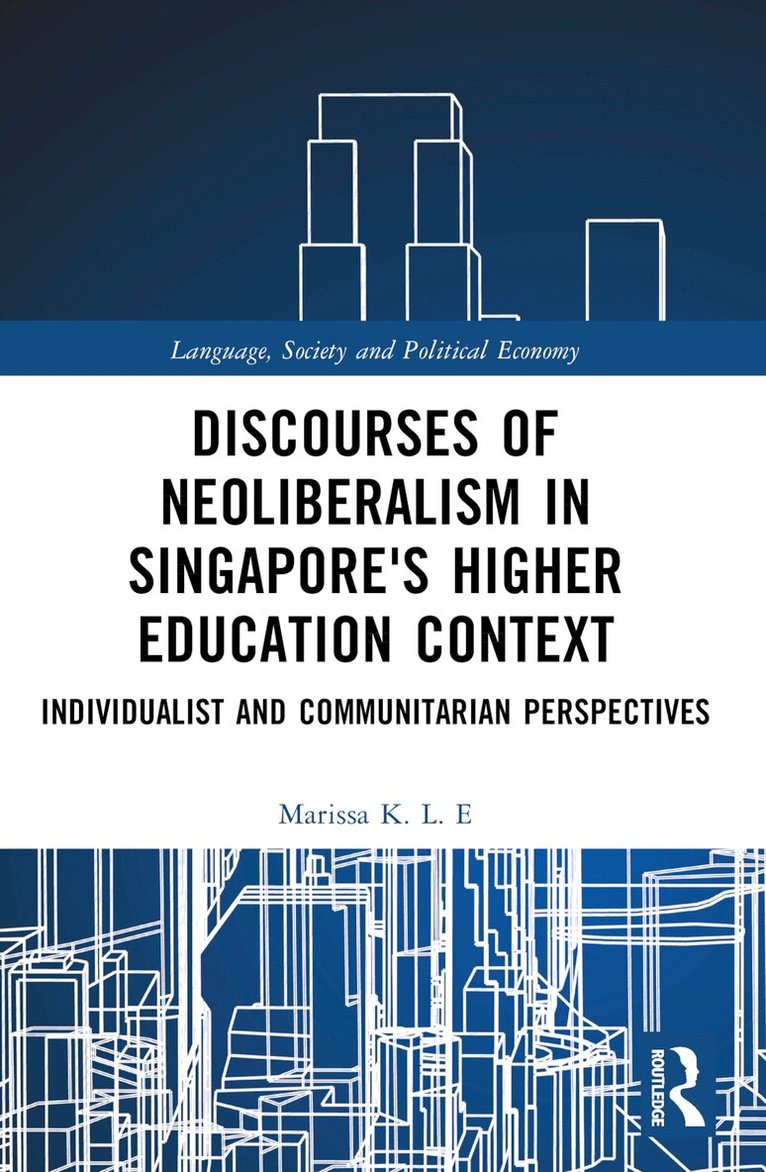
E explores, using textual (words) and visual (image) data from the corporate newsletters of two prominent Asian universities, how particular discourses and their associated discursive representations of neoliberal logic and subjectivity occur in higher education. In particular, she looks at the expression of both institutional priorities and state imperatives that lend themselves to a complementarity built upon two contradictory perspectives: individualism and communitarianism. She argues that the ever-increasing demand for, and utility of higher education in neoliberal society means that it no longer functions merely to provide knowledge and skills, but has implications for society, the individual and the state with regard to their ways of thinking, doing and being. Contributing to a growing corpus of literature on how higher education around the world is being shaped by neoliberal policies, E’s research is based on work done in the city-state of Singapore, a less-well represented context in current literature. While both higher education institutions possess significantly different institutional identities and backgrounds, the alignment of their varied representations of neoliberal logic and subjectivity with state-sanctioned imperatives that indirectly impose demands and constraints shows how neoliberalism as ideology adapts to the socio-political, socio-cultural and socio-economic dimensions that make up the Singapore context. The discursive representations of context-dependent neoliberal logics and subjectivity are discussed in terms of their ideological implications, focusing primarily on the complementarity between seemingly contradictory ideological positions. E’s work uses an innovative framework that integrates aspects of Discourse Theory with Critical Discourse Analysis and demonstrates the use of this framework through empirical linguistic and image analysis.Appealing to academics and graduate students in linguistics, especially those with an interest in critical multimodal discourse analysis, audiences from the domains of higher education research, critical geography, sociology and political science will also find this a useful book.
Häftad, Engelska, 2024
582 kr
Skickas inom 10-15 vardagar
E explores, using textual (words) and visual (image) data from the corporate newsletters of two prominent Asian universities, how particular discourses and their associated discursive representations of neoliberal logic and subjectivity occur in higher education. In particular, she looks at the expression of both institutional priorities and state imperatives that lend themselves to a complementarity built upon two contradictory perspectives: individualism and communitarianism. She argues that the ever-increasing demand for, and utility of higher education in neoliberal society means that it no longer functions merely to provide knowledge and skills, but has implications for society, the individual and the state with regard to their ways of thinking, doing and being. Contributing to a growing corpus of literature on how higher education around the world is being shaped by neoliberal policies, E’s research is based on work done in the city-state of Singapore, a less-well represented context in current literature. While both higher education institutions possess significantly different institutional identities and backgrounds, the alignment of their varied representations of neoliberal logic and subjectivity with state-sanctioned imperatives that indirectly impose demands and constraints shows how neoliberalism as ideology adapts to the socio-political, socio-cultural and socio-economic dimensions that make up the Singapore context. The discursive representations of context-dependent neoliberal logics and subjectivity are discussed in terms of their ideological implications, focusing primarily on the complementarity between seemingly contradictory ideological positions. E’s work uses an innovative framework that integrates aspects of Discourse Theory with Critical Discourse Analysis and demonstrates the use of this framework through empirical linguistic and image analysis.Appealing to academics and graduate students in linguistics, especially those with an interest in critical multimodal discourse analysis, audiences from the domains of higher education research, critical geography, sociology and political science will also find this a useful book.
Häftad, Engelska, 2020
675 kr
Skickas inom 10-15 vardagar
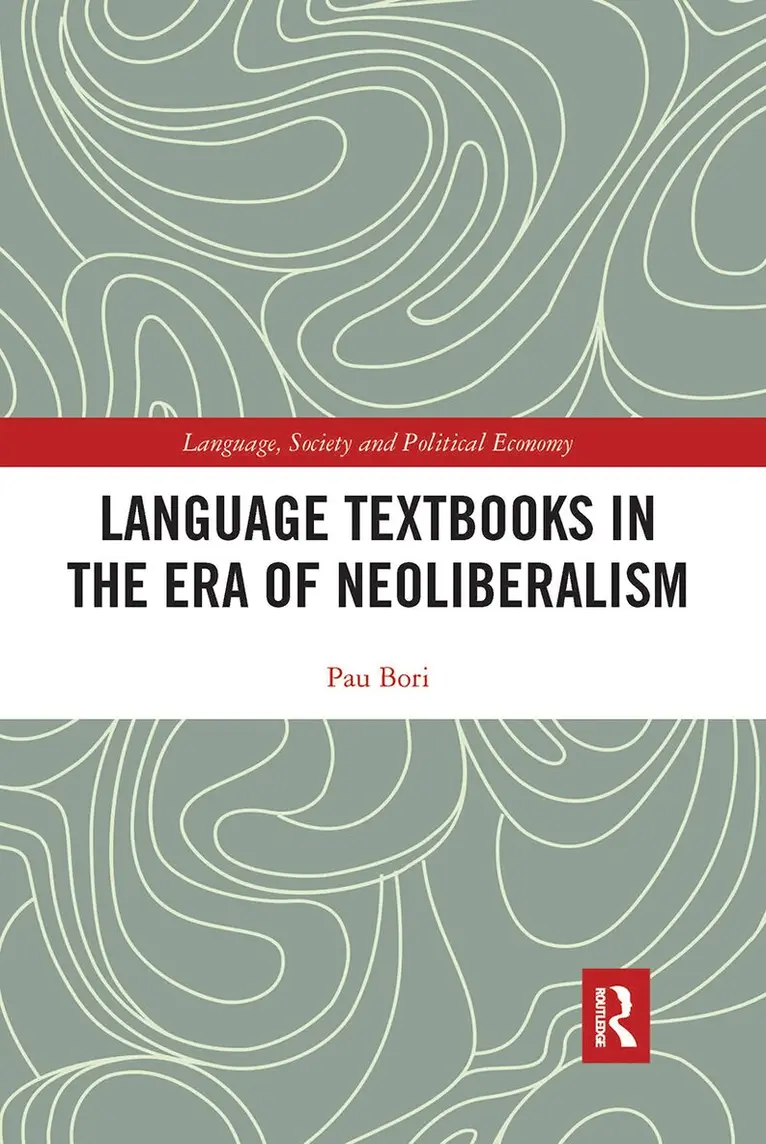
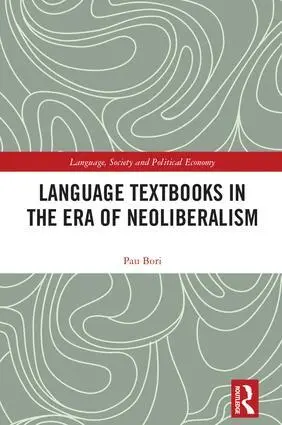
This book examines how neoliberalism finds expression in foreign language textbooks. Moving beyond the usual focus on English, Pau Bori explores the impact of neoliberal ideology on Catalan textbooks. By comparing Catalan textbooks to English textbooks, this book interrogates the similarities and differences between a minor and a global language in the age of neoliberalism. Drawing on insights from critical theory and critical pedagogy, this study provides a fresh perspective on foreign language textbooks and second language education more broadly. Language Textbooks in the Era of Neoliberalism paves the way for new critical perspectives in language education that will challenge the current hegemony of neoliberalism.
Inbunden, Engelska, 2022
2 259 kr
Skickas inom 10-15 vardagar
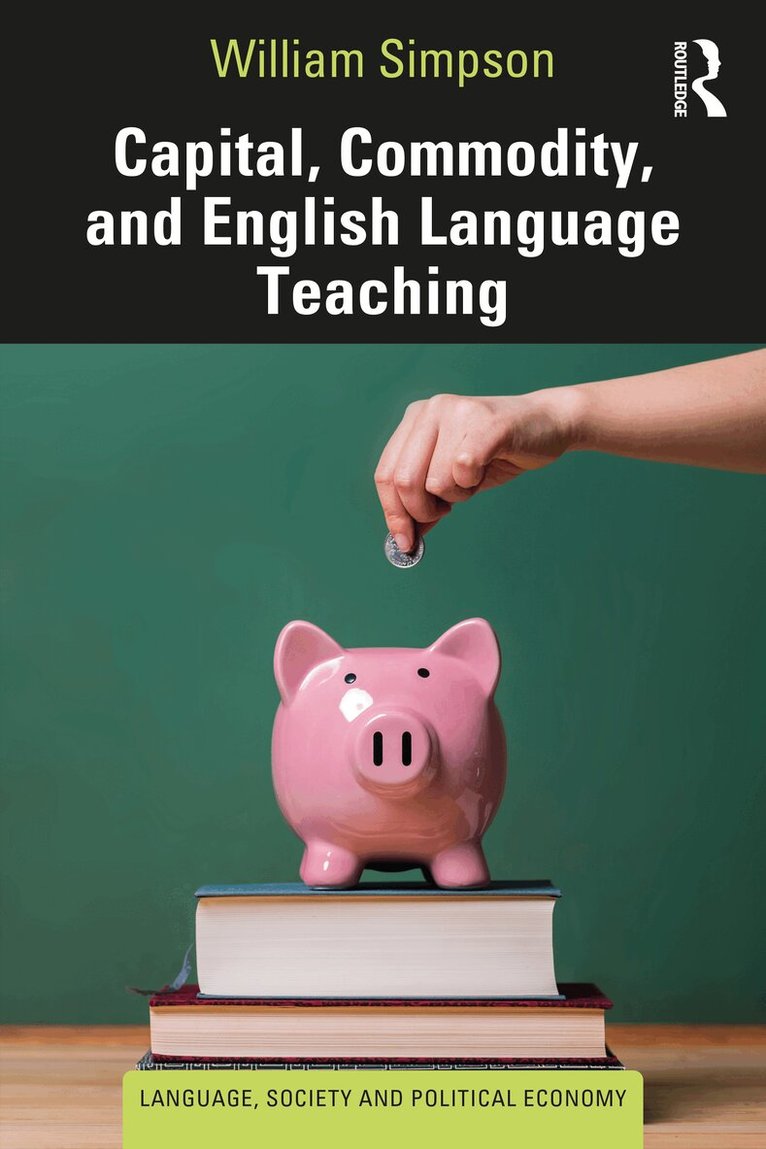
Capital, Commodity, and English Language Teaching illustrates how the drive for profit in commercial ELT affects the manner in which language is taught. The book looks at education as a form of production, and asks how lessons are produced, and how the production of profit in addition to the production of the lesson affects the operation of educational institutions and their stakeholders. Simpson delivers a theoretically rigorous conception of capital and builds from this an investigation into how the circulation of capital for profit interrelates with the teaching of language. Simpson discusses ELT at both a global level, in discussion of the ELT industry in the UK, the US, Ireland, Canada, Japan, Spain, and transnationally online, as well as at a more local level, where finer detailed descriptions of the work-lives of those within the Japanese eikaiwa ELT industry are given. Drawing on a synthesis of Marxist and Bourdieusian theory, the book outlines a dialectical approach to understanding capital, and to understanding how the drive for profit and language education interrelate with one another. Simpson concludes by showing how such an approach might open up areas for further research in a number of contexts across the globe, as well as in light of the Covid-19 pandemic. Providing a model for addressing global issues of ELT, this book is of interest to advanced students, scholars and professionals within applied linguistics, TESOL, sociolinguistics, and linguistic anthropology, language economics and related areas.
Häftad, Engelska, 2022
603 kr
Skickas inom 10-15 vardagar
Capital, Commodity, and English Language Teaching illustrates how the drive for profit in commercial ELT affects the manner in which language is taught. The book looks at education as a form of production, and asks how lessons are produced, and how the production of profit in addition to the production of the lesson affects the operation of educational institutions and their stakeholders. Simpson delivers a theoretically rigorous conception of capital and builds from this an investigation into how the circulation of capital for profit interrelates with the teaching of language. Simpson discusses ELT at both a global level, in discussion of the ELT industry in the UK, the US, Ireland, Canada, Japan, Spain, and transnationally online, as well as at a more local level, where finer detailed descriptions of the work-lives of those within the Japanese eikaiwa ELT industry are given. Drawing on a synthesis of Marxist and Bourdieusian theory, the book outlines a dialectical approach to understanding capital, and to understanding how the drive for profit and language education interrelate with one another. Simpson concludes by showing how such an approach might open up areas for further research in a number of contexts across the globe, as well as in light of the Covid-19 pandemic. Providing a model for addressing global issues of ELT, this book is of interest to advanced students, scholars and professionals within applied linguistics, TESOL, sociolinguistics, and linguistic anthropology, language economics and related areas.
Inbunden, Engelska, 2015
2 537 kr
Skickas inom 10-15 vardagar
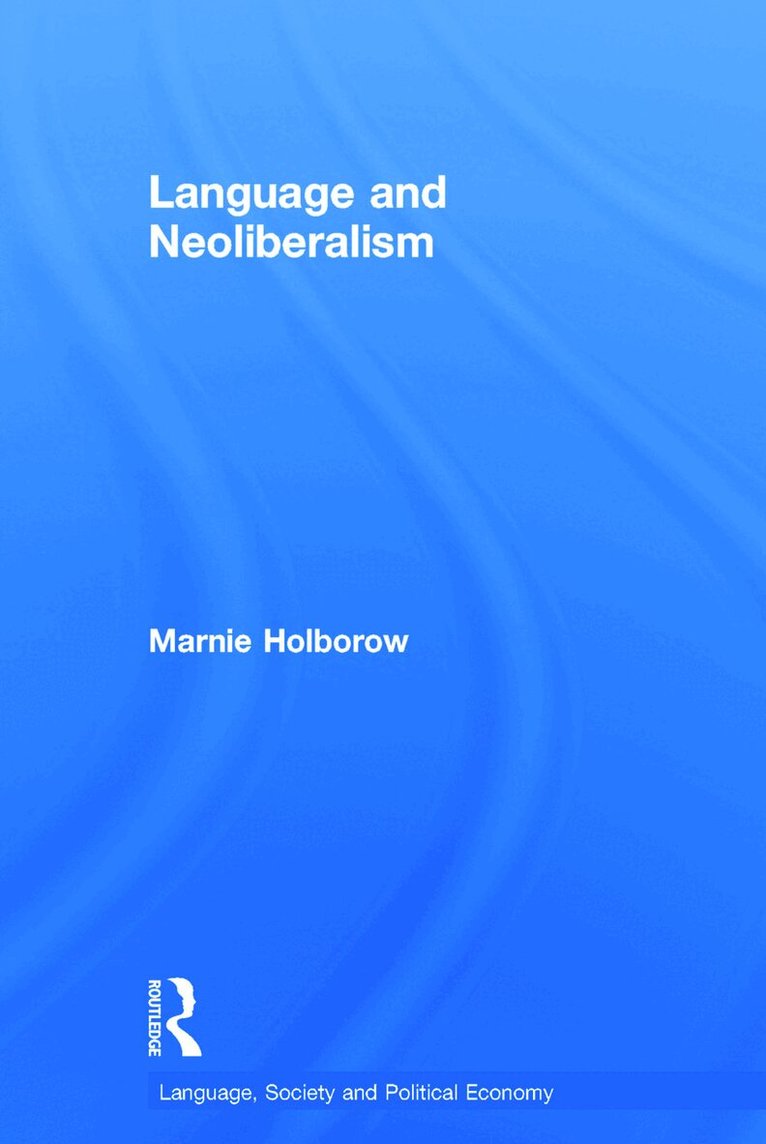
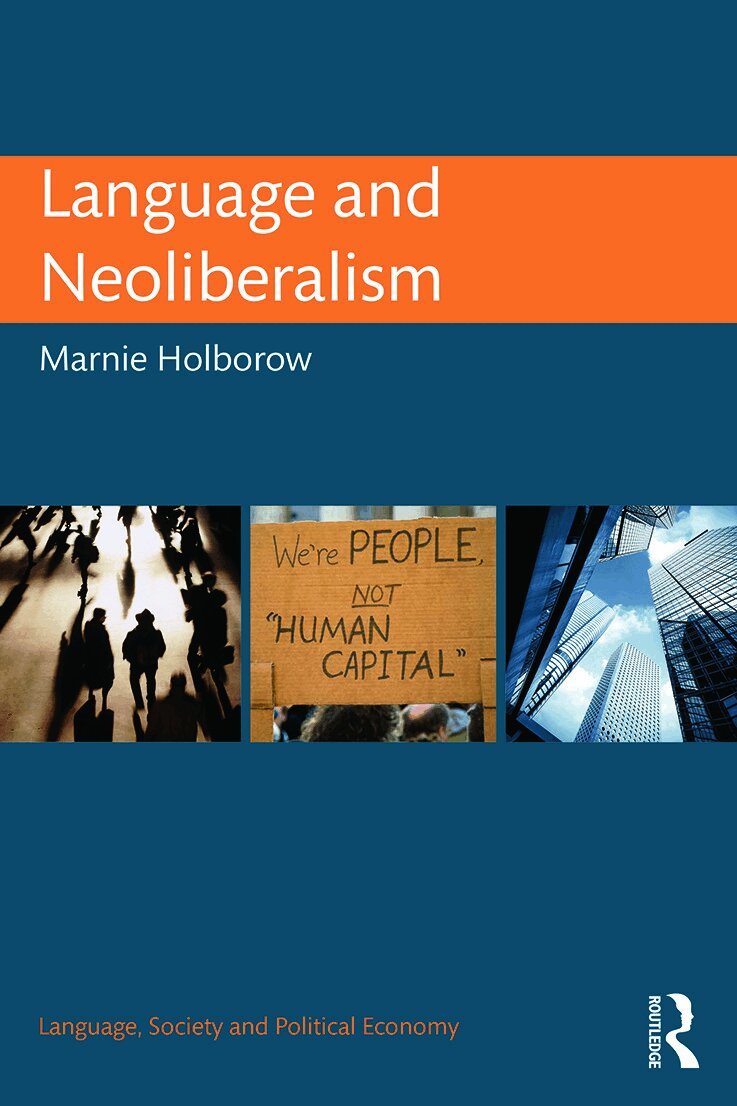
Language and Neoliberalism examines the ways in which neoliberalism, or the ideology of market rule, finds expression in language. In this groundbreaking original study, Holborow shows at once the misleading character of ideological meaning and the underlying social reality from which that meaning emerges.In universities, it is now the norm to use terms like entrepreneurial and business partnerships. How have these terms become a core component of education and gained such force? Markets have become, metaphorically, a power in their own right. They now tell governments how to act and warn them against too much public spending. Post-crash, the capitalist market continues to be crisis-prone, and in that context the neoliberal ideology remains contested.Free of jargon and assuming no specialist knowledge, this book will strike a chord internationally by showing how neoliberal ideology has, literally, gone global in language. Drawing on Vološinov and Bakhtin, Williams and Gramsci, and introducing concepts from Marxist political economy, Language and Neoliberalism is essential reading for all interested in the intersection of linguistics/applied linguistics and politics.
Häftad, Engelska, 2015
773 kr
Skickas inom 10-15 vardagar
Language and Neoliberalism examines the ways in which neoliberalism, or the ideology of market rule, finds expression in language. In this groundbreaking original study, Holborow shows at once the misleading character of ideological meaning and the underlying social reality from which that meaning emerges.In universities, it is now the norm to use terms like entrepreneurial and business partnerships. How have these terms become a core component of education and gained such force? Markets have become, metaphorically, a power in their own right. They now tell governments how to act and warn them against too much public spending. Post-crash, the capitalist market continues to be crisis-prone, and in that context the neoliberal ideology remains contested.Free of jargon and assuming no specialist knowledge, this book will strike a chord internationally by showing how neoliberal ideology has, literally, gone global in language. Drawing on Vološinov and Bakhtin, Williams and Gramsci, and introducing concepts from Marxist political economy, Language and Neoliberalism is essential reading for all interested in the intersection of linguistics/applied linguistics and politics.
Häftad, Engelska, 2026
596 kr
Skickas
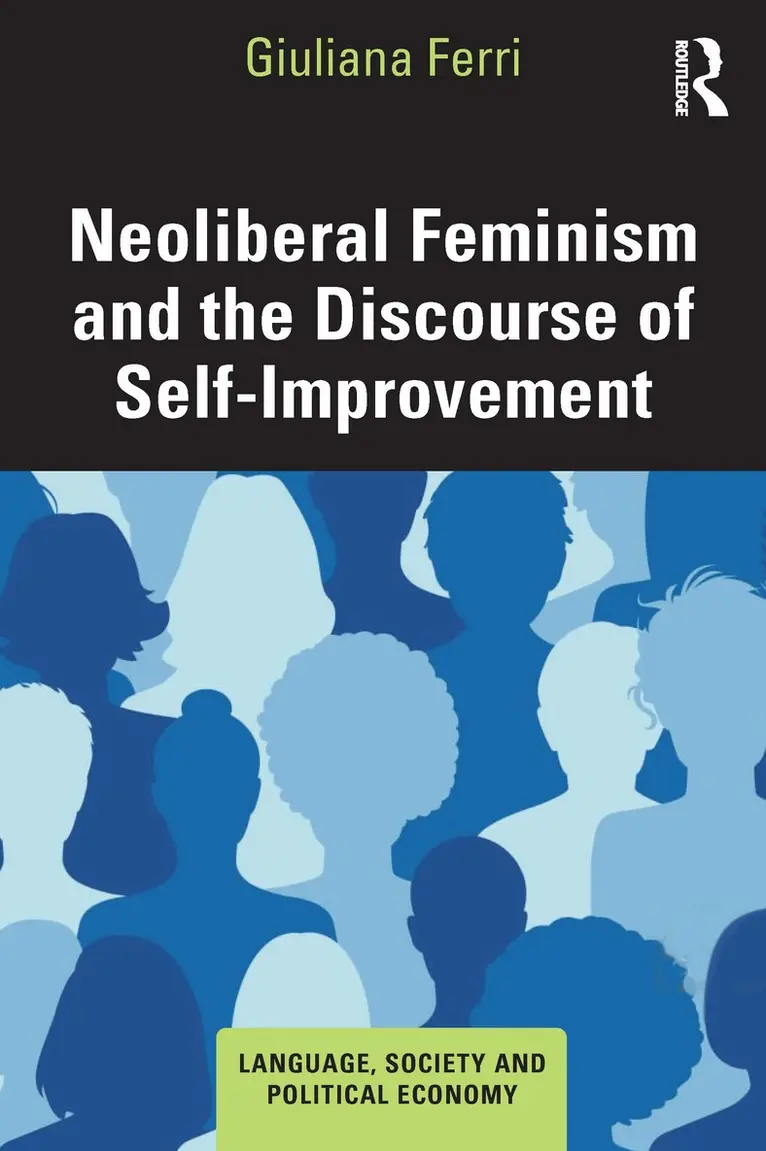
Neoliberal Feminism and the Discourse of Self-Improvement utilises feministcritical discourse analysis to examine the language and narratives within self-helpliterature targeted at women.Giuliana Ferri critically explores the discourse of self-improvement, focusingon how neoliberal values of empowerment and individual fulfilment have beenco-opted by elite feminism as a “technology of the self”. She unpacks how thisdiscourse constructs an idealised image of the “empowered woman”—one whois portrayed as capable of overcoming patriarchy through the affirmation ofinnate strength and resilience. Drawing on Marxist feminism and feministsocial reproduction theory, the book highlights how neoliberal feminism marketswomen as entrepreneurs, “badass feminists”, and successful workingmothers, all while obscuring the realities of increasing work precarization andflexibilisation in post-industrial societies.Through its feminist critical discourse analysis, the book reveals how theseseemingly empowering narratives shift the responsibility for systemic changeonto individuals, rather than positioning feminism as a collective, anti-capitalistmovement for liberation. By integrating applied linguistics with Marxist feminismand social reproduction theory, this text provides a unique interdisciplinary perspective,making it a key reading for scholars and students of language, gender,and economic systems.
Inbunden, Engelska, 2026
2 306 kr
Skickas
Neoliberal Feminism and the Discourse of Self-Improvement utilises feministcritical discourse analysis to examine the language and narratives within self-helpliterature targeted at women.Giuliana Ferri critically explores the discourse of self-improvement, focusingon how neoliberal values of empowerment and individual fulfilment have beenco-opted by elite feminism as a “technology of the self”. She unpacks how thisdiscourse constructs an idealised image of the “empowered woman”—one whois portrayed as capable of overcoming patriarchy through the affirmation ofinnate strength and resilience. Drawing on Marxist feminism and feministsocial reproduction theory, the book highlights how neoliberal feminism marketswomen as entrepreneurs, “badass feminists”, and successful workingmothers, all while obscuring the realities of increasing work precarization andflexibilisation in post-industrial societies.Through its feminist critical discourse analysis, the book reveals how theseseemingly empowering narratives shift the responsibility for systemic changeonto individuals, rather than positioning feminism as a collective, anti-capitalistmovement for liberation. By integrating applied linguistics with Marxist feminismand social reproduction theory, this text provides a unique interdisciplinary perspective,making it a key reading for scholars and students of language, gender,and economic systems.
Inbunden, Engelska, 2018
2 404 kr
Skickas inom 10-15 vardagar
This book examines how neoliberalism finds expression in foreign language textbooks. Moving beyond the usual focus on English, Pau Bori explores the impact of neoliberal ideology on Catalan textbooks. By comparing Catalan textbooks to English textbooks, this book interrogates the similarities and differences between a minor and a global language in the age of neoliberalism. Drawing on insights from critical theory and critical pedagogy, this study provides a fresh perspective on foreign language textbooks and second language education more broadly. Language Textbooks in the Era of Neoliberalism paves the way for new critical perspectives in language education that will challenge the current hegemony of neoliberalism.
Inbunden, Engelska, 2019
2 193 kr
Skickas inom 10-15 vardagar
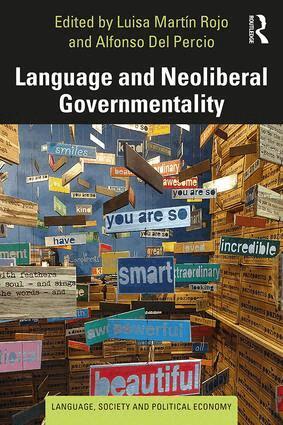
Against a background of the ongoing crisis of global capitalism and the fracturing of the neoliberal project, this book provides a detailed account of the ways in which language is profoundly imbricated in the neoliberalising of the fabric of social life.With chapters from a cast list of international scholars covering topics such as the commodification of education and language, unemployment, and the governmentality of the self, and discussion chapters from Monica Heller and Jackie Urla bringing the various strands together, the book ultimately helps us to understand how language is part of political economy and the everyday making and remaking of society and individuals. It provides both a theoretical framework and a significant methodological "tool-box" to critically detect, understand, and resist the impact of neoliberalism on everyday social spheres, particularly in relation to language.Presenting richly empirical studies that expand our understanding of how neoliberalism as a regime of truth and as a practice of governance performs within the terrain of language, this book is an essential resource for researchers and graduate students in English language, sociolinguistics, applied linguistics, linguistic anthropology, and related areas.
Häftad, Engelska, 2019
656 kr
Skickas inom 10-15 vardagar
Against a background of the ongoing crisis of global capitalism and the fracturing of the neoliberal project, this book provides a detailed account of the ways in which language is profoundly imbricated in the neoliberalising of the fabric of social life.With chapters from a cast list of international scholars covering topics such as the commodification of education and language, unemployment, and the governmentality of the self, and discussion chapters from Monica Heller and Jackie Urla bringing the various strands together, the book ultimately helps us to understand how language is part of political economy and the everyday making and remaking of society and individuals. It provides both a theoretical framework and a significant methodological "tool-box" to critically detect, understand, and resist the impact of neoliberalism on everyday social spheres, particularly in relation to language.Presenting richly empirical studies that expand our understanding of how neoliberalism as a regime of truth and as a practice of governance performs within the terrain of language, this book is an essential resource for researchers and graduate students in English language, sociolinguistics, applied linguistics, linguistic anthropology, and related areas.
Inbunden, Engelska, 2017
2 259 kr
Skickas inom 10-15 vardagar
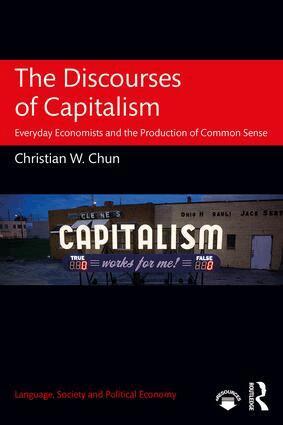
Since the global economic crisis of 2007–2008, ‘capitalism’ has been the topic of widespread general discussion in both mainstream and social media. In this book, Christian W. Chun examines the discourses of capitalism taken up by people in their responses to a street art installation created by Steve Lambert, entitled Capitalism Works for Me! In doing so, he considers several key questions, including: How do everyday people view and make sense of capitalism and its role in their work and personal lives? What are the discourses they use in their common-sense understandings of the economy to defend or reject capitalism as a system?Chun looks at how dominant discourses in social circulation operate to co-construct and support capitalism, and the accompanying counter-discourses that critique it. This is key reading for advanced students of discourse analysis, language and globalization/politics, media/communication studies, and related areas. A video lecture by the author can be accessed via the Routledge website (www.routledge.com/9781138807105) and the Routledge Language and Communication Portal (www.routledgetextbooks.com/textbooks/languageandcommunication).
Häftad, Engelska, 2017
661 kr
Skickas inom 10-15 vardagar
Since the global economic crisis of 2007–2008, ‘capitalism’ has been the topic of widespread general discussion in both mainstream and social media. In this book, Christian W. Chun examines the discourses of capitalism taken up by people in their responses to a street art installation created by Steve Lambert, entitled Capitalism Works for Me! In doing so, he considers several key questions, including: How do everyday people view and make sense of capitalism and its role in their work and personal lives? What are the discourses they use in their common-sense understandings of the economy to defend or reject capitalism as a system?Chun looks at how dominant discourses in social circulation operate to co-construct and support capitalism, and the accompanying counter-discourses that critique it. This is key reading for advanced students of discourse analysis, language and globalization/politics, media/communication studies, and related areas. A video lecture by the author can be accessed via the Routledge website (www.routledge.com/9781138807105) and the Routledge Language and Communication Portal (www.routledgetextbooks.com/textbooks/languageandcommunication).
Inbunden, Engelska, 2021
2 506 kr
Skickas inom 10-15 vardagar
In this book, John O’Regan examines the role of political economy in the worldwide spread of English and traces the origins and development of the dominance of English to the endless accumulation of capital in a capitalist world-system.O’Regan combines Marxist perspectives of capital accumulation with world-systems analysis, international political economy, and studies of imperialism and empire to present a historical account of the ‘free riding’ of English upon the global capital networks of the capitalist world-system. Relevant disciplinary perspectives on global English are examined in this light, including superdiversity, translanguaging, translingual practice, trans-spatiality, language commodification, World Englishes and English as a Lingua Franca. Global English and Political Economy presents an original historical and interdisciplinary interpretation of the global ascent of English, while also raising important theoretical and practical questions for perspectives which suggest that the time of the traditional models of English is past.Providing an introduction to key theoretical perspectives in political economy, this book is essential reading for advanced students and researchers in applied linguistics, World Englishes and related fields of study.