Spatial Humanities - Böcker
Visar alla böcker i serien Spatial Humanities. Handla med fri frakt och snabb leverans.
6 produkter
6 produkter
473 kr
Skickas inom 10-15 vardagar
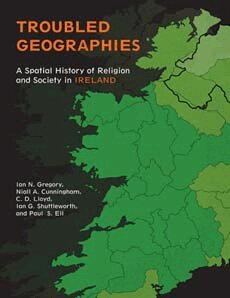
Ireland's landscape is marked by fault lines of religious, ethnic, and political identity that have shaped its troubled history. Troubled Geographies maps this history by detailing the patterns of change in Ireland from 16th century attempts to "plant" areas of Ireland with loyal English Protestants to defend against threats posed by indigenous Catholics, through the violence of the latter part of the 20th century and the rise of the "Celtic Tiger." The book is concerned with how a geography laid down in the 16th and 17th centuries led to an amalgam based on religious belief, ethnic/national identity, and political conviction that continues to shape the geographies of modern Ireland. Troubled Geographies shows how changes in religious affiliation, identity, and territoriality have impacted Irish society during this period. It explores the response of society in general and religion in particular to major cultural shocks such as the Famine and to long term processes such as urbanization.
912 kr
Skickas inom 10-15 vardagar
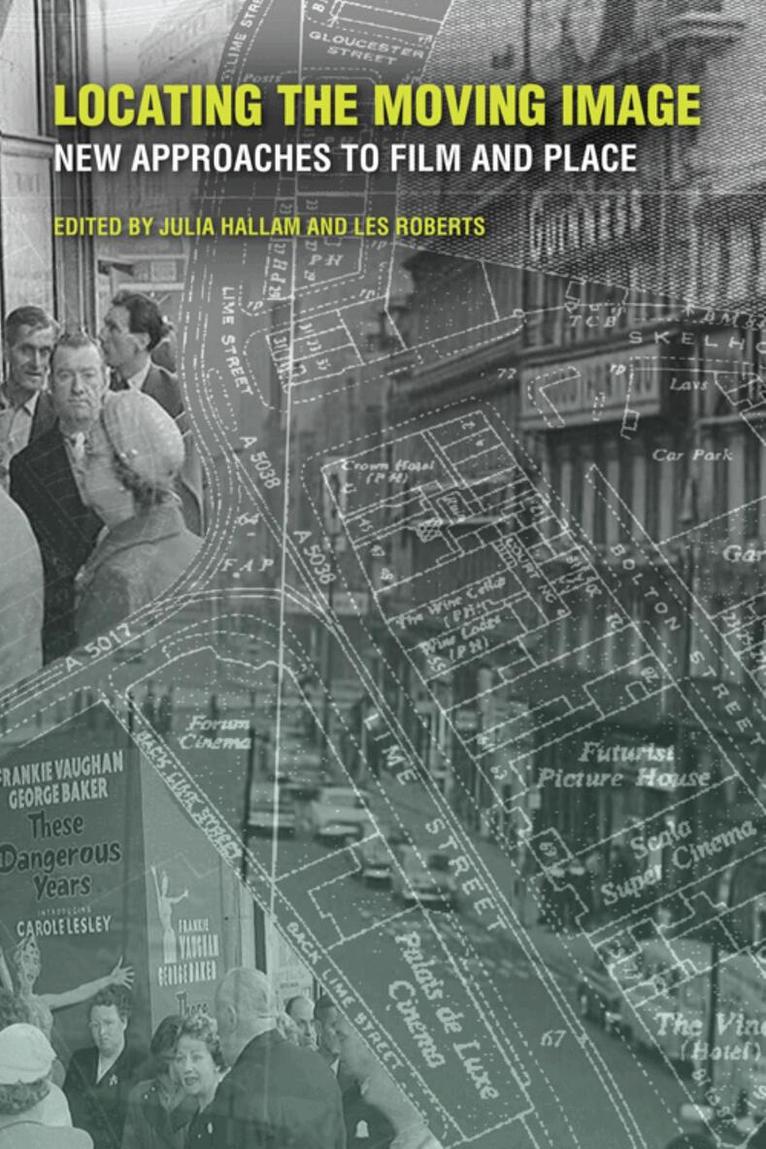
Leading scholars in the interdisciplinary field of geo-spatial visual studies examine the social experience of cinema and the different ways in which film production developed as a commercial enterprise, as a leisure activity, and as modes of expression and communication. Their research charts new pathways in mapping the relationship between film production and local film practices, theatrical exhibition circuits and cinema going, creating new forms of spatial anthropology. Topics include cinematic practices in rural and urban communities, development of cinema by amateur filmmakers, and use of GIS in mapping the spatial development of film production and cinema going as social practices.
322 kr
Skickas inom 7-10 vardagar
Leading scholars in the interdisciplinary field of geo-spatial visual studies examine the social experience of cinema and the different ways in which film production developed as a commercial enterprise, as a leisure activity, and as modes of expression and communication. Their research charts new pathways in mapping the relationship between film production and local film practices, theatrical exhibition circuits and cinema going, creating new forms of spatial anthropology. Topics include cinematic practices in rural and urban communities, development of cinema by amateur filmmakers, and use of GIS in mapping the spatial development of film production and cinema going as social practices.
1 034 kr
Skickas inom 7-10 vardagar
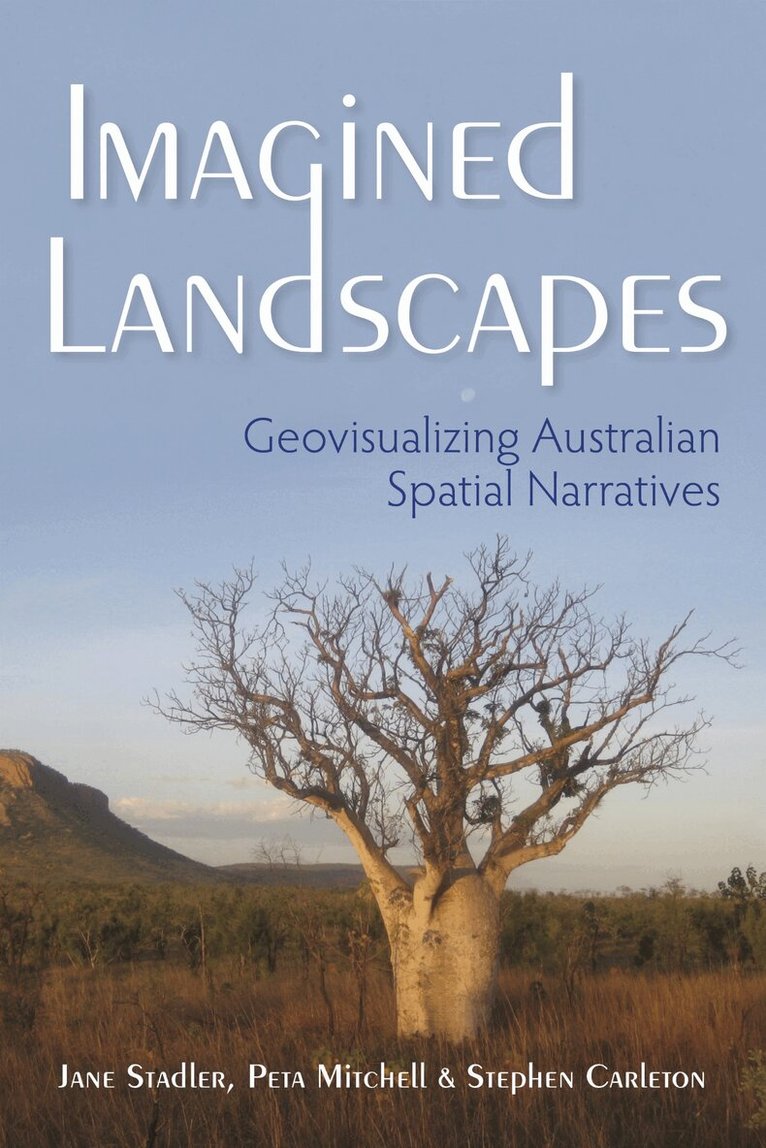
Imagined Landscapes teams geocritical analysis with digital visualization techniques to map and interrogate films, novels, and plays in which space and place figure prominently. Drawing upon A Cultural Atlas of Australia, a database-driven interactive digital map that can be used to identify patterns of representation in Australia's cultural landscape, the book presents an integrated perspective on the translation of space across narrative forms and pioneers new ways of seeing and understanding landscape. It offers fresh insights on cultural topography and spatial history by examining the technical and conceptual challenges of georeferencing fictional and fictionalized places in narratives. Among the items discussed are Wake in Fright, a novel by Kenneth Cook, adapted iconically to the screen and recently onto the stage; the Australian North as a mythic space; spatial and temporal narrative shifts in retellings of the story of Alexander Pearce, a convict who gained notoriety for resorting to cannibalism after escaping from a remote Tasmanian penal colony; travel narratives and road movies set in Western Australia; and the challenges and spatial politics of mapping spaces for which there are no coordinates.
176 kr
Skickas inom 10-15 vardagar
Imagined Landscapes teams geocritical analysis with digital visualization techniques to map and interrogate films, novels, and plays in which space and place figure prominently. Drawing upon A Cultural Atlas of Australia, a database-driven interactive digital map that can be used to identify patterns of representation in Australia's cultural landscape, the book presents an integrated perspective on the translation of space across narrative forms and pioneers new ways of seeing and understanding landscape. It offers fresh insights on cultural topography and spatial history by examining the technical and conceptual challenges of georeferencing fictional and fictionalized places in narratives. Among the items discussed are Wake in Fright, a novel by Kenneth Cook, adapted iconically to the screen and recently onto the stage; the Australian North as a mythic space; spatial and temporal narrative shifts in retellings of the story of Alexander Pearce, a convict who gained notoriety for resorting to cannibalism after escaping from a remote Tasmanian penal colony; travel narratives and road movies set in Western Australia; and the challenges and spatial politics of mapping spaces for which there are no coordinates.
548 kr
Skickas inom 7-10 vardagar
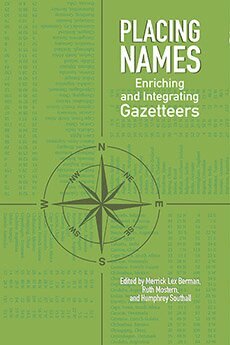
Well before the innovation of maps, gazetteers served as the main geographic referencing system for hundreds of years. Consisting of a specialized index of place names, gazetteers traditionally linked descriptive elements with topographic features and coordinates. Placing Names is inspired by that tradition of discursive place-making and by contemporary approaches to digital data management that have revived the gazetteer and guided its development in recent decades. Adopted by researchers in the Digital Humanities and Spatial Sciences, gazetteers provide a way to model the kind of complex cultural, vernacular, and perspectival ideas of place that can be located in texts and expanded into an interconnected framework of naming history. This volume brings together leading and emergent scholars to examine the history of the gazetteer, its important role in geographic information science, and its use to further the reach and impact of spatial reasoning into the digital age.