Springer Series in Molecular and Cell Biology - Böcker
Visar alla böcker i serien Springer Series in Molecular and Cell Biology. Handla med fri frakt och snabb leverans.
14 produkter
14 produkter
1 062 kr
Skickas inom 10-15 vardagar
During the past few decades we have witnessed an era of remarkable growth in the field of molecular biology. In 1950 very little was known of the chemical con stitution of biological systems, the manner in which information was transmitted from one organism to another, or the extent to which the chemical basis of life is unified. The picture today is dramatically different. We have an almost bewil dering variety of information detailing many different aspects of life at the molecular level. These great advances have brought with them some breath taking insights into the molecular mechanisms used by nature for replicating, dis tributing, and modifying biological information. We have learned a great deal about the chemical and physical nature of the macromolecular nucleic acids and proteins, and the manner in which carbohydrates, lipids, and smaller molecules work together to provide the molecular setting of living systems. It might be said that these few decades have replaced a near vacuum of information with a very large surplus. It is in the context of this flood of information that this series of monographs on molecular biology has been organized. The idea is to bring together in one place, between the covers of one book, a concise assessment of the state of the subject in a well-defined field.
1 062 kr
Skickas inom 10-15 vardagar
During the past few decades we have witnessed an era of remarkable growth in the field of molecular biology. In 1950 very little was known of the chemical constitution of biological systems, the manner in which information was trans mitted from one organism to another, or the extent to which the chemical basis of life is unified. The picture today is dramatically different. We have an almost bewildering variety of information detailing many different aspects of life at the molecular level. There great advances have brought with them some breath-taking insights into the molecular mechanisms used by nature for rep licating, distributing and modifying biological information. We have learned a great deal about the chemical and physical nature of the macromolecular nucleic acids and proteins, and the manner in which carbohydrates, lipids and smaller molecules work together to provide the molecular setting of living sys tems. It might be said that these few decades have replaced a near vacuum of information with a very large surplus. It is in the context of this flood of information that this series of monographs on molecular biology has been organized. The idea is to bring together in one place, between the covers of one book, a concise assessment of the state of the subject in a well-defined field. This will enable the reader to get a sense of historical perspectiv(}-what is known about the field today-and a description of the frontiers of research where our knowledge is increasing steadily.
1 094 kr
Skickas inom 10-15 vardagar
Fibronectins comprise a class of high molecular weight glycoproteins present both in extracellular matrices and in soluble form in body fluids. Although they have been studied for about forty years, their real significance emerged only during the past decade. Intensive research has focused on their role in platelet function, cell migration, the cytoskeleton, reticuloendothelial function, and on alterations in fibronectin distribution during development and disease. Fibronectins have emerged as glycoproteins with a very interesting set of properties generally involving adhesion of cells to cells or to extracellular material. In more recent years, the complete sequences of several fibronectin molecules and their genes were determined, the relation between structure and function was understood and much has been learned about cell surface receptors for fibronectins and other adhesive ligands. Having been at the forefront of all these exciting developments, the author has synthesized the entire field and with all the latest information at hand for the first time given it a clear perspective.
1 378 kr
Skickas inom 10-15 vardagar
Contemporary views on the structure and function of chromatin are presented and the history of the development of these ideas as well as the nature of the nucleic acid and protein components of chromatin are reviewed. The structure of chromatin is studied at several levels, and its modes of transcription and replication are analyzed. Chromatin provides researchers with a critical evaluation of current knowledge. It combines much information that has never before been assembled, and evaluates and interrelates it in a critical way. This has not been done before so that readers are not only provided with an overview, but with extensive references to the literature (there are about 2000 references in all).
1 062 kr
Skickas inom 10-15 vardagar
During the past few decades we have witnessed an era of remarkable growth in the field of molecular biology. In 1950 very little was known ofthe chemical constitution of biological systems, the manner in which information was transmitted from one organism to another, or the extent to which the chemical basis oflife is unified. The picture today is dramatically different. We have an almost bewildering variety of information detailing many different aspects of life at the molecular level. These great advances have brought with them some breathtaking insights into the molecular mechanisms used by nature for replicating, distributing, and modifying biological information. We have learned a great deal about the chemical and physical nature of the macromo lecular nucleic acids and proteins, and the manner in which carbohydrates, lipids, and smaller molecules work together to provide the molecular setting ofliving systems. It might be said that these few decades have replaced a near vacuum of information with a very large surplus. It is in the context ofthis flood of information that this series of monographs on molecular biology has been organized. The idea is to bring together in one place, between the covers of one book, a concise assessment of the state of the subject in a well-defined field. This will enable the reader to get a sense of historical perspective-what is known about the field today-and a descrip tion of the frontiers of research where our knowledge is increasing steadily.
1 062 kr
Skickas inom 10-15 vardagar
During the past few decades we have witnessed an era of remarkable growth in the field of molecular biology. In 1950 very little was known of the chemical constitution of biological systems, the manner in which information was transmitted from one organism to another, or the extent to which the chemical basis of life is unified. The picture today is dramati cally different. We have an almost bewildering variety of information de tailing many different aspects of life at the molecular level. These great advances have brought with them some breath-taking insights into the molecular mechanisms used by nature for replicating, distributing, and modifying biological information. We have learned a great deal about the chemical and physical nature of the macromolecular nucleic acids and proteins, and the manner in which carbohydrates, lipids, and smaller mole cules work together to provide the molecular setting of living systems. It might be said that these few decades have replaced a near vacuum of information with a very large surplus. It is in the context of this flood of information that this series of mono graphs on molecular biology has been organized. The idea is to bring together in one place, between the covers of one book, a concise assessment of the state of the subject in a well-defined field.
1 062 kr
Skickas inom 10-15 vardagar
During the past few decades we have witnessed an era of remarkable growth in the field of molecular biology. In 1950 very little was known of the chemical constitution of biological systems, the manner in which information was trans mitted from one organism to another, or the extent to which the chemical basis of life is unified. The picture today is dramatically different. We have an almost bewildering variety of information detailing many different aspects of life at the molecular level. These great advances have brought with them some breath-taking insights into the molecular mechanisms used by nature for rep licating, distributing and modifying biological information. We have learned a great deal about the chemical and physical nature of the macromolecular nucleic acids and proteins, and the manner in which carbohydrates, lipids and smaller molecules work together to provide the molecular setting of living sys tems. It might be said that these few decades have replaced a near vacuum of information with a very large surplus. It is in the context of this flood of information that this series of monographs on molecular biology has been organized. The idea is to bring together in one place, between the covers of one book, a concise assessment of the state of the subject in a well-defined field. This will enable the reader to get a sense of historical perspective-what is known about the field today-and a description of the frontiers of research where our knowledge is increasing steadily.
534 kr
Skickas inom 10-15 vardagar
During the past few decades we have witnessed an era of remarkable growth in the field of molecular biology. In 1950 very little was known of the chemical constitution of biological systems, the manner in which in formation was transmitted from one organism to another, or the extent to which the chemical basis of life is unified. The picture today is dramati cally different. We have an almost bewildering variety of information detailing many different aspects of life at the molecular level. These great advances have brought with them some breath-taking insights into the molecular mechanisms used by nature for replicating, distributing and modifying biological information. We have learned a great deal about the chemical and physical nature of the macromolecular nucleic acids and proteins, and the manner in which carbohydrates, lipids and smaller mole cules work together to provide the molecular setting of living systems. It might be said that these few decades have replaced a near vacuum of information with a very large surplus. It is in the context of this flood of information that this series of mono graphs on molecular biology has been organized. The idea is to bring together in one place, between the covers of one book, a concise assess ment of the state of the subject in a well-defined field.
1 062 kr
Skickas inom 10-15 vardagar
During the past few decades we have witnessed an era of remarkable growth in the field of molecular biology. In 1950 very little was known of the chemical constitution of biological systems, the manner in which information was trans mitted from one organism to another, or the extent to which the chemical basis of life is unified. The picture today is dramatically different. We have an almost bewildering variety of information detailing many different aspects of life at the molecular level. These great advances have brought with them seme breath-taking insights into the molecular mechanisms used by nature for rep licating, distributing and modifying biological information. We have learned a great deal about the chemical and physical nature of the macromolecular nucleic acids and proteins, and the manner in which carbohydrates, lipids and smaller molecules work together to provide the molecular setting of living sys tems. It might be said that these few decades have replaced a near vacuum of information with a very large surplus. It is in the context of this flood of information that this series of monographs on molecular biology has been organized. The idea is to bring together in one place, between the covers of one book, a concise assessment of the state of the subject in a well-defined field. This will enable the reader to get a sense of historical perspective-what is known about the field today-and a description of the frontiers of research where our knowledge is increasing steadily.
1 062 kr
Skickas inom 10-15 vardagar
During the past few decades we have witnessed an era of remarkable growth in the field of molecular biology. In 1950 very little was known of the chemical constitution of biological systems, the manner in which information was trans mitted from one organism to another, or the extent to which the chemical basis of life is unified. The picture today is dramatically different. We have an almost bewildering variety of information detailing many different aspects of life at the molecular level. These great advances have brought with them some breath-taking insights into the molecular mechanisms used by nature for rep licating, distributing and modifying biological information. We have learned a great deal about the chemical and physical nature of the macromolecular nucleic acids and proteins, and the manner in which carbohydrates, lipids and smaller molecules work together to provide the molecular setting of living sys tems. It might be said that these few decades have replaced a near vacuum of information with a very large surplus. It is in the context of this flood of information that this series of monographs on molecular biology has been organized. The idea is to bring together in one place, between the covers of one book, a concise assessment of the state of the subject in a well-defined field. This will enable the reader to get a sense of historical perspective-what is known about the field today-and a description of the frontiers of research where our knowledge is increasing steadily.
1 094 kr
Skickas inom 10-15 vardagar
During the past few decades we have witnessed an era of remarkable growth in the field of molecular biology. In 1950 very little was known ofthe chemical constitution of biological systems, the manner in which information was transmitted from one organism to another, or the extent to which the chemical basis of life is unified. The picture today is dramatically different. We have an almost bewildering variety of information detailing many different aspects oflife at the molecular level. These great advances have brought with them some breath-taking insights into the molecular mechanisms used by nature for replicating, distributing and modifying biological information. We have learned a great deal about the chemical and physical nature of the macro molecular nucleic acids and proteins, and the manner in which carbohydrates, lipids and smaller molecules work together to provide the molecular setting of living systems. It might be said that these few decades have replaced a near vacuum of informa tion with a very large surplus. It is in the context of this flood of information that this series of monographs on molecular biology has been organized. The idea is to bring together in one place, between the covers of one book, a concise assessment of the state of the subject in a well-defined field. This will enable the reader to get a sense of historical perspective what is known about the field today - and a description of the frontiers of research where our knowledge is increasing steadily.
1 094 kr
Skickas inom 10-15 vardagar
During the past few decades we have witnessed an era of remarkable growth in the field of molecular biology. In 1950 very little was known of the chemical constitution of biological systems, the manner in which information was transmitted from one organism to another, or the extent to which the chemical basis of life is unified. The picture today is dramatically different. We have an almost bewildering variety of information detailing many different aspects oflife at the molecular level. These great advances have brought with them some breath-taking insights into the molecular mechanisms used by nature for replicating, distributing and modifying biological information. We have learned a great deal about the chemical and physical nature of the macro molecular nucleic acids and proteins, and the manner in which carbohydrates, lipids and smaller molecules work together to provide the molecular setting of living systems. It might be said that these few decades have replaced a near vacuum of informa tion with a very large surplus. It is in the context of this flood of information that this series of monographs on molecular biology has been organized. The idea is to bring together in one place, between the covers of one book, a concise assessment of the state of the subject in a well-defined field. This will enable the reader to get a sense of historical perspective what is known about the field today - and a description of the frontiers of research where our knowledge is increasing steadily.
1 062 kr
Skickas inom 10-15 vardagar
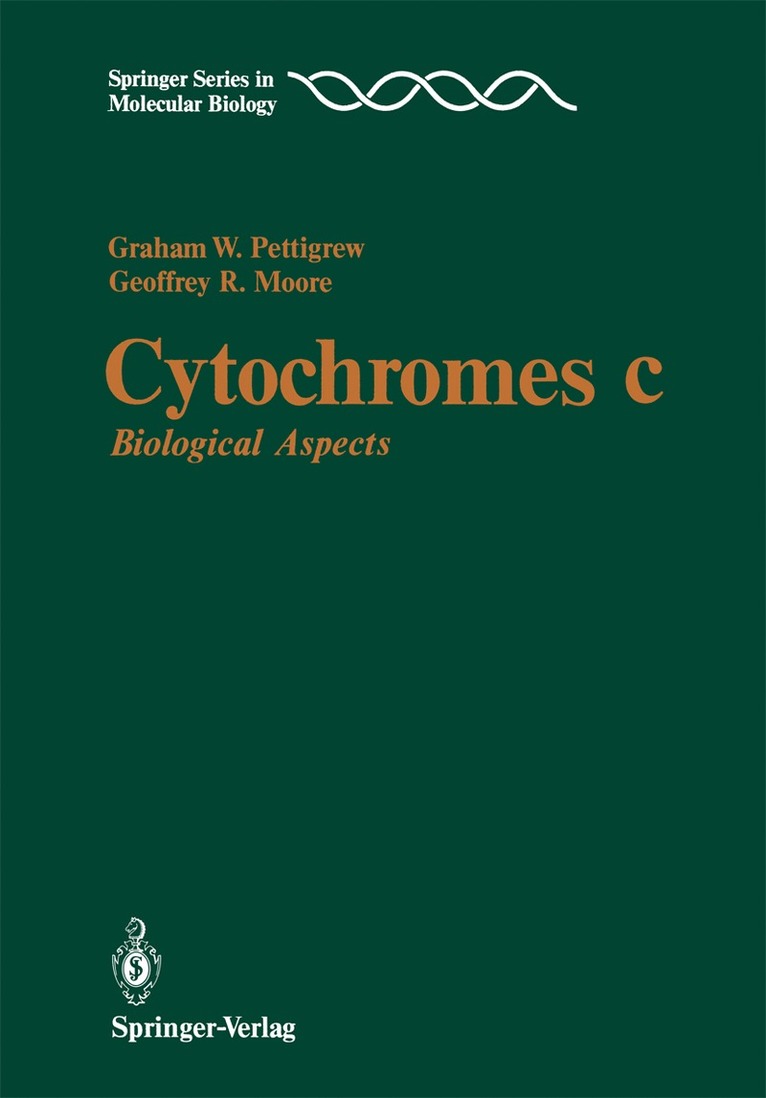
Cytochrome c fulfills a central role in biological electron transport. This book draws together information from diverse disciplines in order to provide a common base for further research. The comprehensive treatment of this subject does not neglect to show the diversity of biological respirations and photosyntheses. But it also defines their unifying principles. This overview presents the evolutionary relatedness in bioenergetic systems. Such systems are discussed at the experimental level with emphasis on the interpretation of results and the methodological approaches used. No other text provides a broad survey of this central area of biology. Researchers on cytochrome c are presented with information on the impact and importance of other disciplines on their area of investigation. Advanced students gain a balanced account of biological electron transport and will be encouraged to seek new directions of research.
1 062 kr
Skickas inom 10-15 vardagar
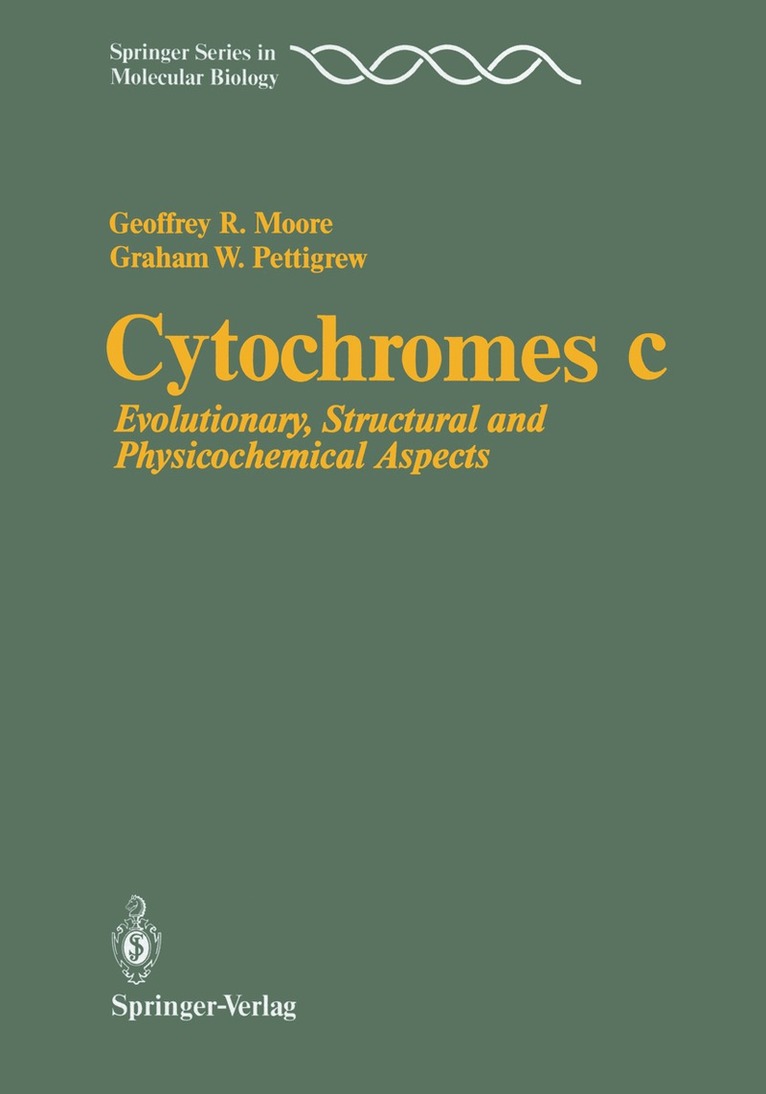
Cytochromes c are haemoproteins which carry out electron transfer in a wide variety of biological systems, necessitating different kinds of cytochrome c to fulfill different biological roles. The evolutionary relationship between cytochromes c and their host organisms are described, as well as their structural, spectroscopic and redox properties, including both electron-transfer rates and redox potentials. The treatment is aimed at the non-specialist so that both the techniques described and their application to cytochromes c can be understood. All classes of cytochrome c are dealt with to provide a comprehensive account of the field. No other text provides such a broad survey. Similar to the earlier volume "Cytochromes c: Biological Aspects" which deals with the classification, biosynthesis and biological role of cytochromes c, the present book is aimed at research workers and advanced students.