SpringerBriefs in Research and Innovation Governance – serie
Visar alla böcker i serien SpringerBriefs in Research and Innovation Governance. Handla med fri frakt och snabb leverans.
12 produkter
12 produkter
Häftad, Engelska, 2019
224 kr
Skickas inom 10-15 vardagar
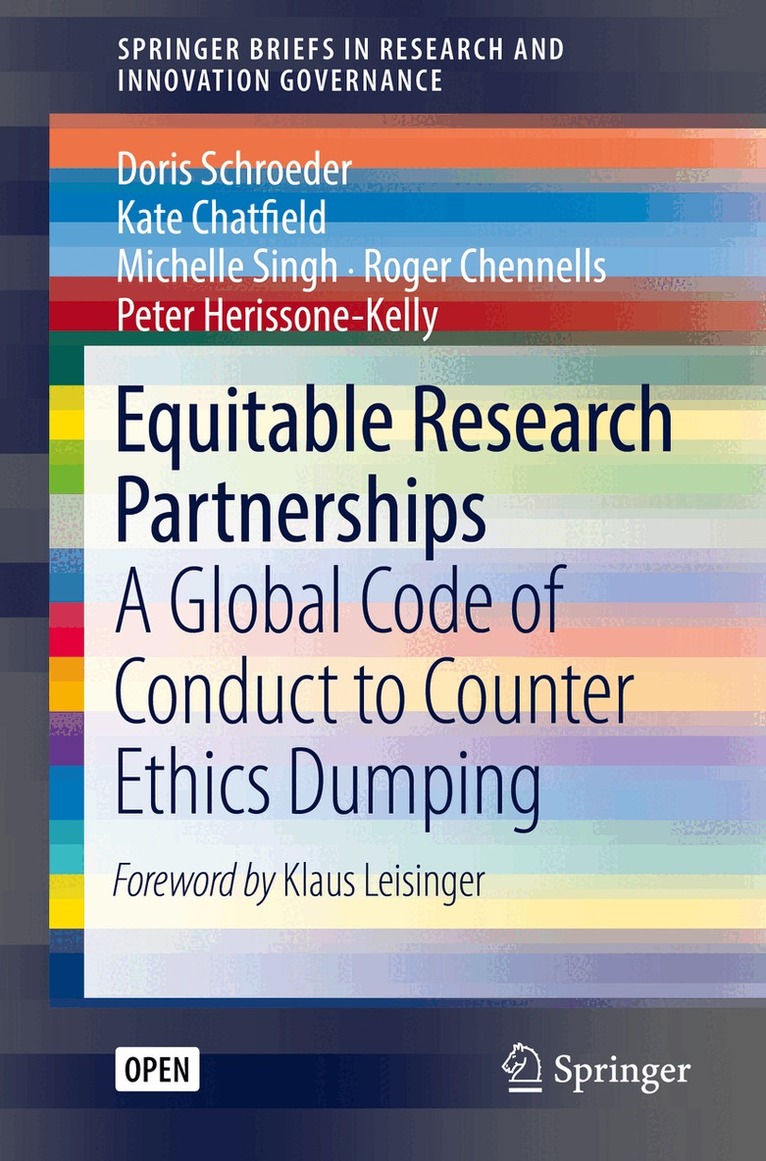
This open access book offers insights into the development of the ground-breaking Global Code of Conduct for Research in Resource-Poor Settings (GCC) and the San Code of Research Ethics. Using a new, intuitive moral framework predicated on fairness, respect, care and honesty, both codes target ethics dumping – the export of unethical research practices from a high-income setting to a lower- or middle-income setting. The book is a rich resource of information and argument for any research stakeholder who opposes double standards in research. It will be indispensable for applicants to European Union framework programmes, as the GCC is now a mandatory reference document for EU funding.
Häftad, Engelska, 2021
333 kr
Skickas inom 10-15 vardagar
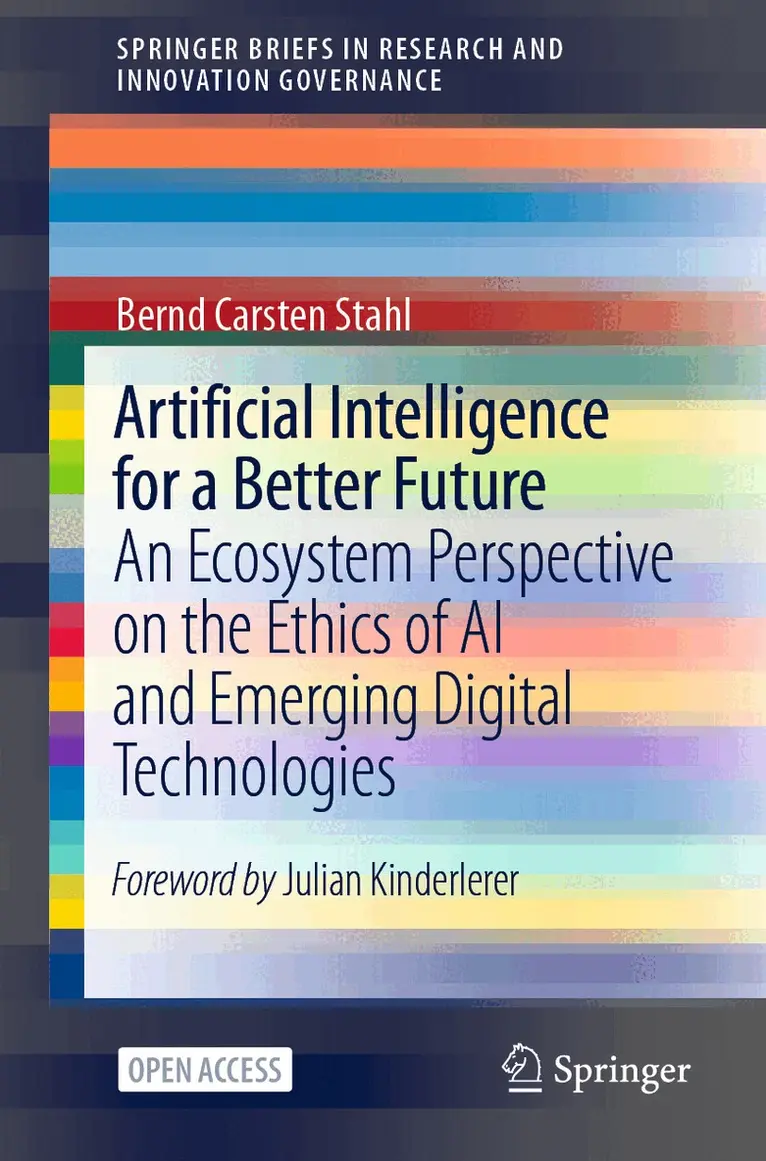
This open access book proposes a novel approach to Artificial Intelligence (AI) ethics. AI offers many advantages: better and faster medical diagnoses, improved business processes and efficiency, and the automation of boring work. But undesirable and ethically problematic consequences are possible too: biases and discrimination, breaches of privacy and security, and societal distortions such as unemployment, economic exploitation and weakened democratic processes. There is even a prospect, ultimately, of super-intelligent machines replacing humans. The key question, then, is: how can we benefit from AI while addressing its ethical problems?This book presents an innovative answer to the question by presenting a different perspective on AI and its ethical consequences. Instead of looking at individual AI techniques, applications or ethical issues, we can understand AI as a system of ecosystems, consisting of numerous interdependent technologies, applications and stakeholders. Developing this idea, the book explores how AI ecosystems can be shaped to foster human flourishing. Drawing on rich empirical insights and detailed conceptual analysis, it suggests practical measures to ensure that AI is used to make the world a better place.
Häftad, Engelska, 2021
640 kr
Skickas inom 10-15 vardagar
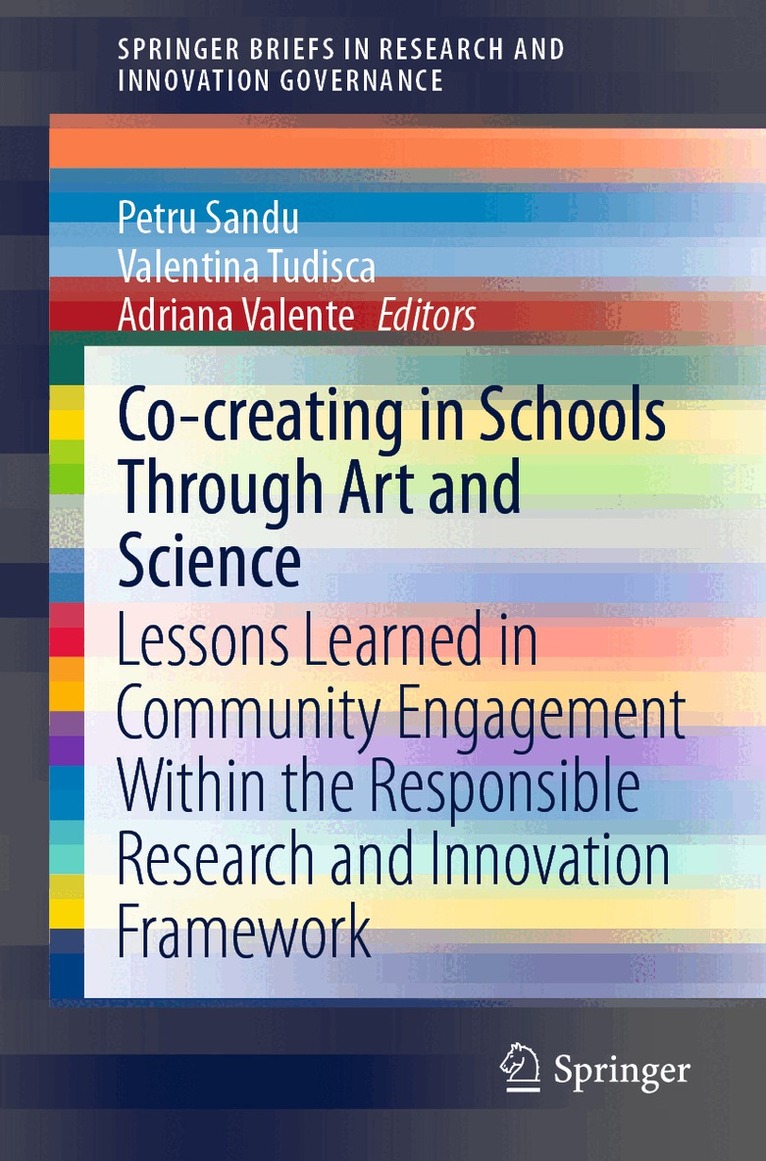
This book represents an applied, up-to-date work on RRI developments and their potential positive impact on societies. The societal challenges of the 21st century require the ability to integrate the knowledge and expertise of different societal actors, using more innovative, efficient and open approaches. Educational methodologies are in perpetual development in their attempt to provide tentative answers to three ever-changing digital age challenges: the challenge of speed, the challenge of form/at and the challenge of persistency. The current book aims to address these issues by presenting relevant case studies in the field of art, science and giving value to territory that, by the means of projects and initiatives using RRI consistent methodologies, have succeeded in their attempt to: preserve and valorise cultural heritage by using digital storytelling or crowddreaming methodology, develop educational strategies grounded on RRI and Open Schooling principles, contribute to new ways of thinking in the school environment by using RRI and promote gender equality and stimulate critical reflections on women’s role in science by the means of storytelling and RRI concepts.
Häftad, Engelska, 2022
333 kr
Skickas inom 10-15 vardagar
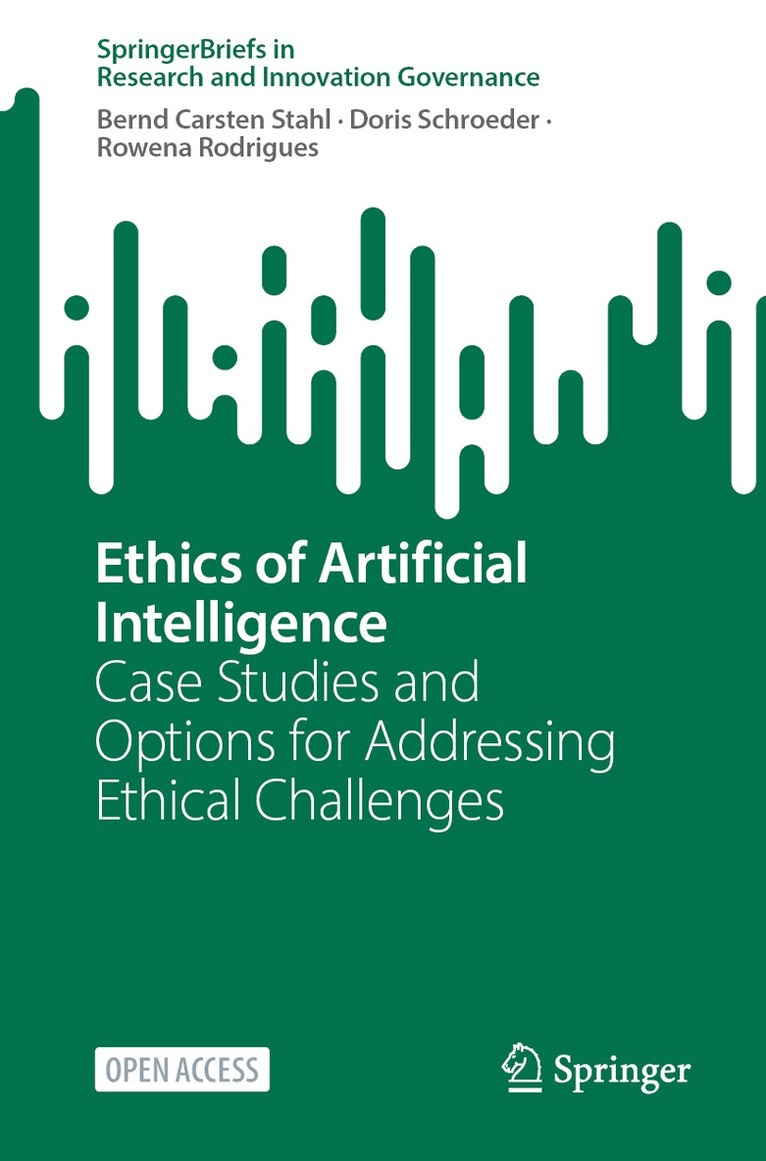
This open access collection of AI ethics case studies is the first book to present real-life case studies combined with commentaries and strategies for overcoming ethical challenges. Case studies are one of the best ways to learn about ethical dilemmas and to achieve insights into various complexities and stakeholder perspectives. Given the omnipresence of AI ethics in academic, policy and media debates, the book will be suitable for a wide range of audiences, from scholars of different disciplines (e.g. AI science, ethics, politics, philosophy, economics) to policy-makers, lobbying NGOs, teachers and the educated public.
Häftad, Engelska, 2024
333 kr
Skickas inom 10-15 vardagar
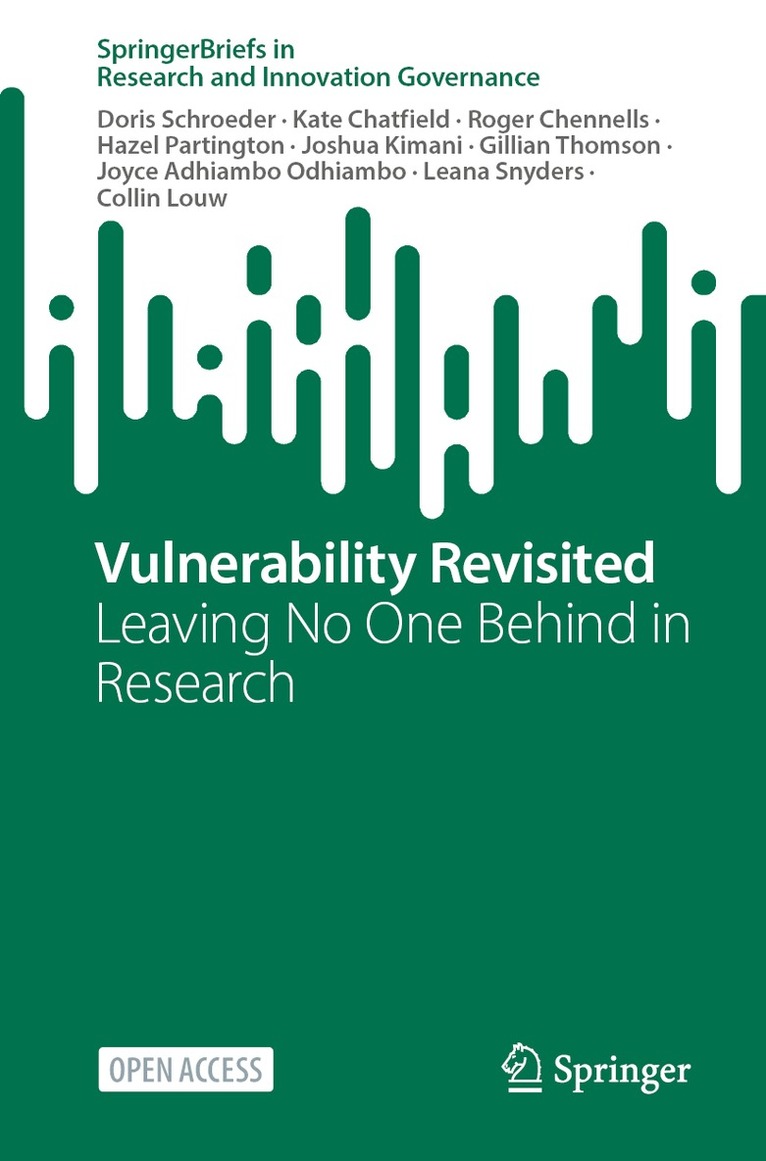
Open access. This open-access book discusses vulnerability and the protection-inclusion dilemma of including those who suffer from serious poverty, severe stigma, and structural violence in research. Co-written with representatives from indigenous peoples in South Africa and sex workers in Nairobi, the authors come down firmly on the side of inclusion. In the spirit of leaving no one behind in research, the team experimented with data collection methods that prioritize research participant needs over researcher needs. This involved foregoing the collection of personal data and community researchers being involved in all stages of the research. In the process, the term ‘vulnerability’ was illuminated across significant language barriers as it was defined by indigenous peoples and sex workers themselves. The book describes a potential alternative to exclusion from research that moves away from traditional research methods. By ensuring that the research is led by vulnerable groups for vulnerable groups, it offers an approach that fosters trust and collaboration with benefits for the community researchers, the wider community as well as research academics. Those living in low-income settings, in dire situations that are summarized with the term ‘vulnerability’ know best what their problems are and which priorities they have. To exclude them from research for their own protection is a patronizing approach which insinuates that researchers and research ethics committees know best. The team from this book have shown that minimally risky and minimally burdensome research tailored towards the needs of highly marginalized and stigmatized communities can be scientifically valuable as well as inclusive and equitable. I congratulate them.Prof. Klaus Leisinger, President Global Values Alliance, Former personal advisor to Kofi Annan on corporate responsibility
Häftad, Engelska, 2025
333 kr
Skickas inom 10-15 vardagar
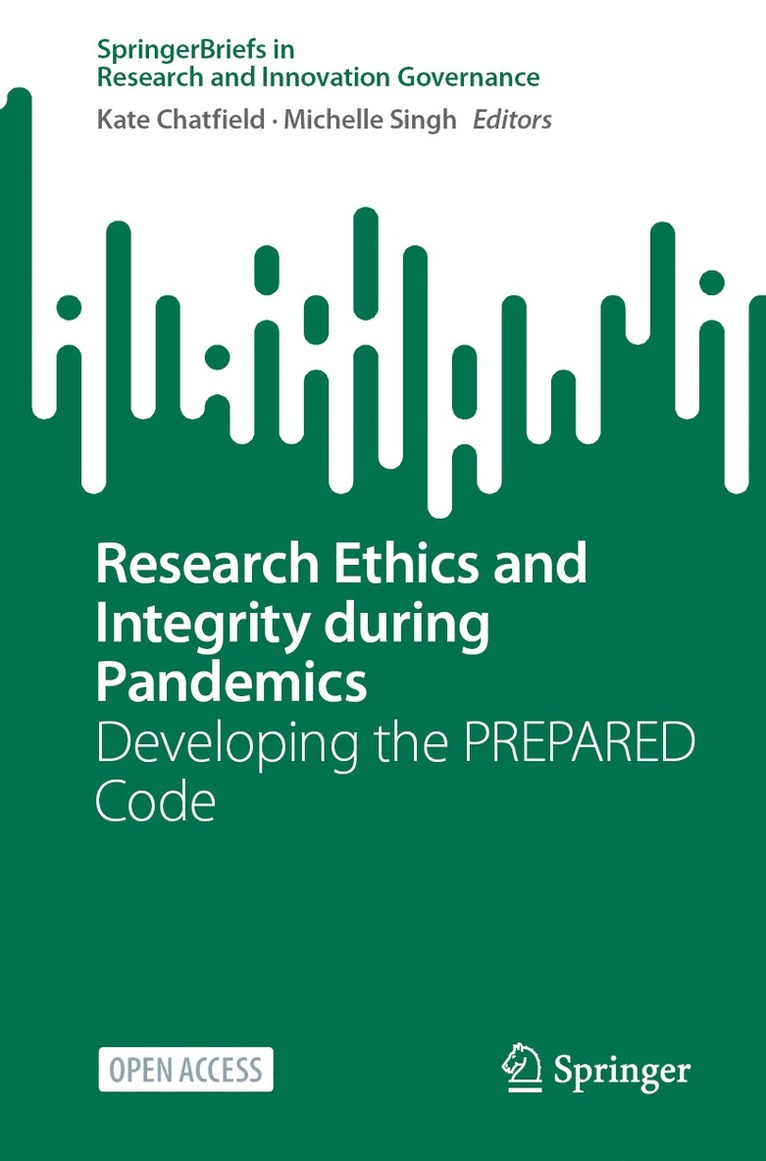
This open-access book is an essential read for anyone interested in pandemic preparedness, research governance, and the ethical oversight of research. It examines the development of a pioneering research ethics framework designed for use during pandemics, guiding readers through the careful development of the PREPARED Code, while highlighting the key steps and lessons learned. The book also underscores the importance of supportive measures, such as user-friendly ethics training, to ensure effective implementation. Drawing from these insights, it offers recommendations for others seeking to develop their own clear, engaging, and accessible ethics code.
Häftad, Engelska, 2026
333 kr
Skickas inom 10-15 vardagar
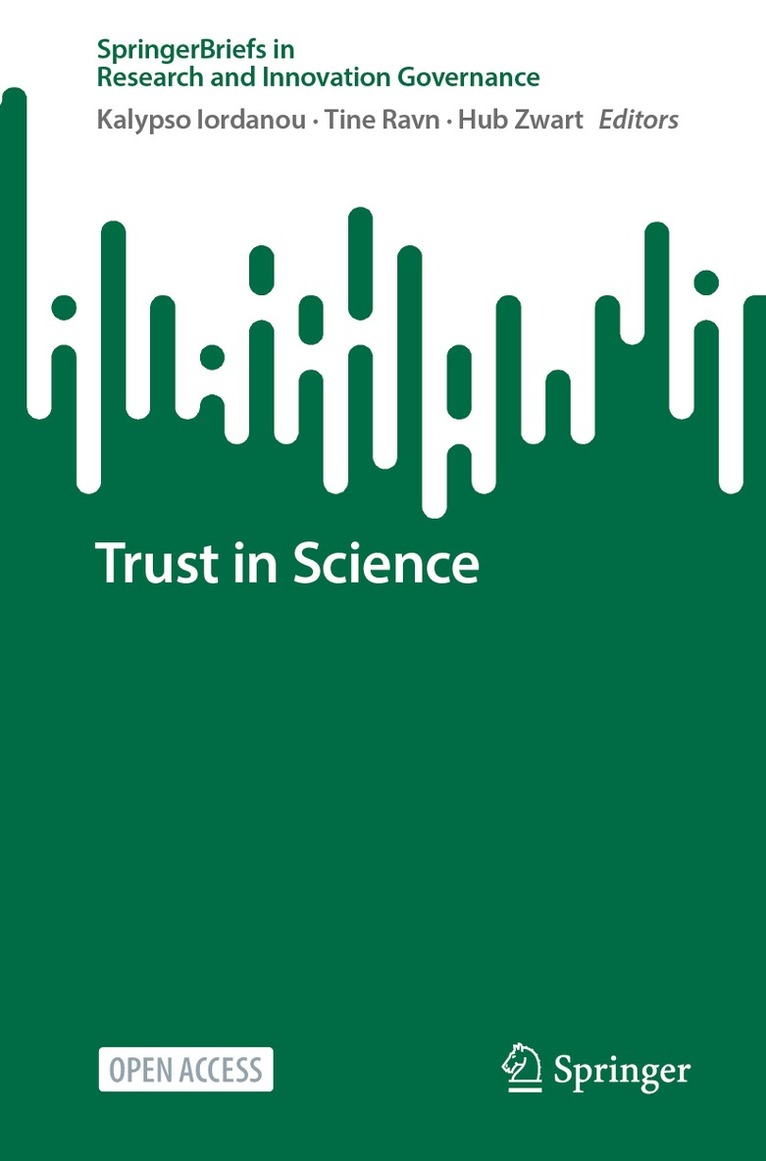
This open access book proposes that Europe has something to offer in the current landscape, namely decades of experience when it comes to addressing societal, ethical, and regulatory challenges of technoscientific change. Science is experiencing unprecedented turbulence as US government officials and Big Tech CEOs actively undermine its authority, particularly when scientific findings conflict with economic interests and power dynamics in polarized policy debates. At this time when Europe is closely monitoring what is happening "across the Pond" and struggles to position itself between giant technoscientific superpowers, researchers from three European projects joined forces to examine Science and Society's role and their interrelationship in addressing global challenges. In this Springer Brief, the authors ask core questions about Trust in Science: Are we indeed facing a trust crisis, as some sources suggest? Should science be trusted, or rather: should trust in science be promoted, and if so on what grounds? If fostering trust in science is a worthwhile and valid objective, how can it be achieved?The authors contend that through participatory research methodologies, "European sciences" have the opportunity to strengthen their responsiveness to societal values, priorities, and concerns."Hub Zwart (1960) studied philosophy and psychology at Radboud University Nijmegen (The Netherlands) and defended his thesis in 1993. In 2000, he became full professor of Philosophy at the Faculty of Science RU Nijmegen. In 2018, he was appointed as the dean of Erasmus School of Philosophy (Erasmus University Rotterdam). He is an editor-in-chief of the Library for Ethics and Applied Philosophy (Springer). His research develops a philosophical (dialectical) perspective on contemporary technoscience. Special attention is devoted to the dialectical relationship between science and genres of the imagination (drama, poetry, cinema, novels, music). In 2017, he published Tales of Research Misconduct (Springer Nature, open access) and in 2022 Continental Philosophy of Technoscience (Springer Nature, open access).
Häftad, Engelska, 2015
622 kr
Skickas inom 10-15 vardagar
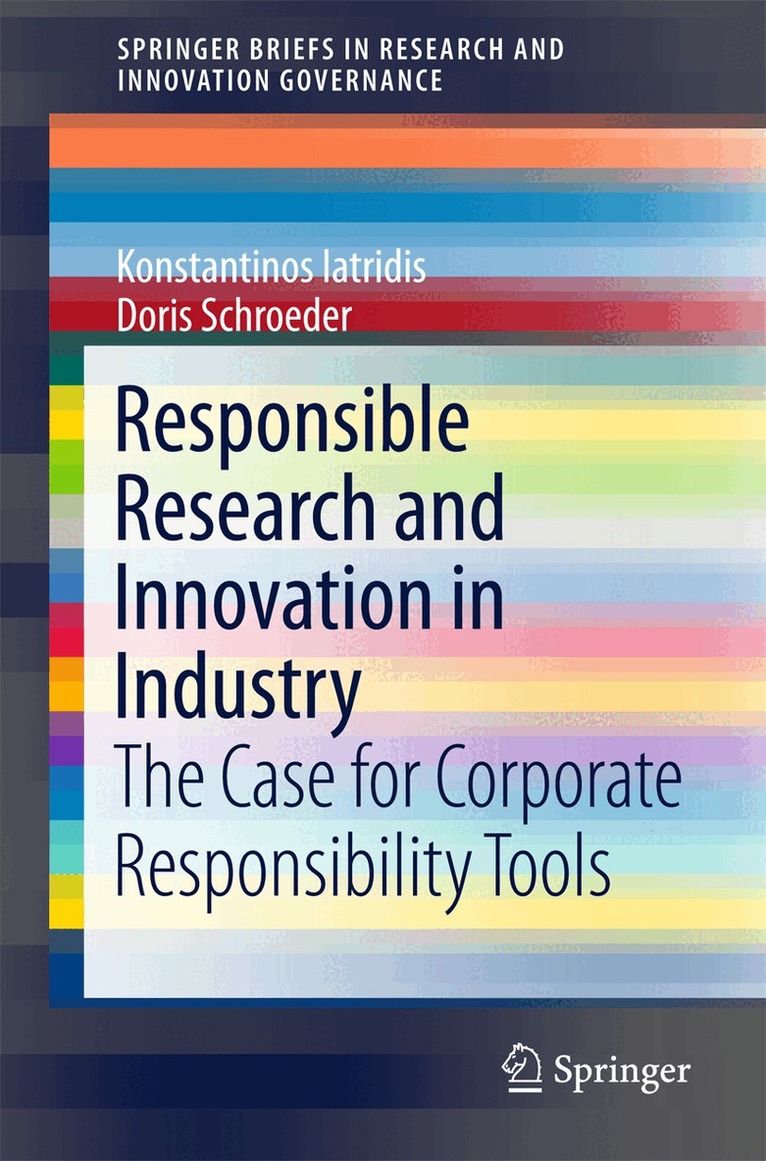
Responsible research and innovation (RRI) is a governance framework promoted by influential policy makers such as the European Commission and academics from the fields of science and technology studies and management. This book is the first text to serve industry. Inspired by existing Corporate Responsibility standards and principles, it offers a selection of tools that can assist practitioners in implementing RRI in business and industry. Responsible Research and Innovation (RRI) is integrative. It is a convergence of Technology Assessment (TA) and Ethics, including corporate responsibility. The task of linking RRI to existing frameworks has only just begun. This book is a welcome example, showing how Corporate Responsibility tools can drive the implementation of RRI.Prof. Armin Grunwald, Head of the Office of Technology Assessment at the German Bundestag and Head of the Institute for Technology Assessment and Systems Analysis, Karlsruhe Institute of Technology, Germany.This is a simple, short, yet encyclopaedic work designed to help business implement RRI using the many tools of Corporate Responsibility (CR) already in place, everything from ISO9001 to the Ceres Roadmap for Sustainability. It makes clear the ways in which RRI is an extension of ideas already well-developed in CR. I learned a lot reading it.Prof. Michael Davis, Senior Fellow, Center for the Study of Ethics in the Professions, Illinois Institute of Technology, USAIncrease the chance of success for your startup's business idea by using your future customers' knowledge about the market! This engagingly written book explains how. Dr Thomas Frenken, CEO oldntec, Germany
Häftad, Engelska, 2017
224 kr
Skickas inom 10-15 vardagar
This open access book provides original, up-to-date case studies of “ethics dumping” that were largely facilitated by loopholes in the ethics governance of low and middle-income countries. It is instructive even to experienced researchers since it provides a voice to vulnerable populations from the fore mentioned countries. Ensuring the ethical conduct of North-South collaborations in research is a process fraught with difficulties. The background conditions under which such collaborations take place include extreme differentials in available income and power, as well as a past history of colonialism, while differences in culture can add a new layer of complications. In this context, up-to-date case studies of unethical conduct are essential for research ethics training.
Häftad, Engelska, 2018
550 kr
Skickas inom 10-15 vardagar
This book provides methods and practical cases and experiences with the aim of stimulating Responsible Research and Innovation (RRI) through the direct engagement of researchers, Civil Society Organisations (CSOs), citizens, industry stakeholders, policy and decision makers, research funders and communicators. The book furthermore aims to advance debate on Responsible Research and Innovation and also to reinforce the RRI community identity. With chapters covering governance, public engagement and inclusion in responsible R&D and innovation processes; RRI actions in science education and communication; gender and ethical issues in RRI initiatives; and sustainability of RRI processes, the book is solidly part of the Europe 2020 strategy to promote a vision for a stronger collaborations between social, natural and physical scientists and the societal actors for a wider dimensions of science and innovation and the role in environmental preservation.Chapters 1 and 3 are open access under a CC BY 4.0 license via link.springer.com.
Häftad, Engelska, 2018
550 kr
Skickas inom 10-15 vardagar
This book gathers case studies presented at the International Conference on Responsible Research and Innovation in Science, Innovation and Society (RRI-SIS2017). It highlights European initiatives and projects in various domains and contexts, each of which explores how to create guidelines and good practices for Responsible Research and Innovation and how to promote them among citizens, industry stakeholders, policy and decision makers, research funders and educational institutions to foster their adoption as a potential benchmark in establishing RRI processes. Further, the book discusses gender and ethical issues, which are highly relevant for RRI initiatives in connection with representativeness, risks and in some cases, minority rights.
Häftad, Engelska, 2019
333 kr
Skickas inom 10-15 vardagar
This Open Access book, Responsible innovation provides benefits for society, for instance more sustainable products, more engagement with consumers and less anxiety about emerging technologies. As a governance tool it is mostly driven by research funders, including the European Commission, under the term “responsible research and innovation” (RRI). To achieve uptake in private industry is a challenge. This book provides successful case studies for the implementation of responsible innovation in businesses. The importance of social innovations is emphasized as a link between benefits for society and profits for businesses, especially SMEs. For corporate industry it is shown how responsible innovation can offer a competitive advantage to adopters. The book is based on the latest insights from theory and practice and combines conceptual work with first-hand experience. It is of interest to innovation managers, entrepreneurs and academics.For academics, the book will provide a combination of analysis and discussion, and present recent learnings from first-hand interaction with entrepreneurs. For innovation managers and entrepreneurs, it will provide inspiration and better ideas about what responsible innovation can look like in practice, why others have “done it” and what the potential benefits might be. The book will thus serve the purposes of spreading the word about the responsible innovation concept among different audiences whilst making it more accessible to innovation managers and entrepreneurs.