Sicherheit, Strategie & Innovation – serie
Visar alla böcker i serien Sicherheit, Strategie & Innovation. Handla med fri frakt och snabb leverans.
4 produkter
4 produkter
Häftad, Tyska, 2024
613 kr
Skickas inom 5-8 vardagar
Dieses Buch versetzt Analystinnen und Analysten in Regierung, Privatwirtschaft und Think Tanks in die Lage, globale Risiken und Chancen systematisch zu bewerten, informierte Entscheidungen zu treffen und Unvorhergesehenes zu antizipieren. Die Autoren beleuchten die Grundlagen intuitiven und analytischen Denkens und zeigen auf, wie strukturierte Analysetechniken die Auswirkungen kognitiver Verzerrungen, falsch angewandter Heuristiken und intuitiver Fallen abmildern können. Drei Fallstudien veranschaulichen die Anwendung von über 30 Strukturierten Analyse-Techniken (SAT) in Schritt-für-Schritt-Anleitungen.
Häftad, Tyska, 2024
1 021 kr
Skickas inom 10-15 vardagar
Der Sammelband nimmt erstmalig seit Ende des Kalten Krieges für den deutschsprachigen Raum eine komprimierte Bestandsaufnahme der aktuellen Aktivitäten, rechtlichen Rahmenbedingungen, politischen und militärischen Konfliktlinien und Kooperationsräume sowie weiterführender Trends und Herausforderungen im Weltraum vor. Dabei werden zum einen die rechtlichen, militärischen, wirtschaftlichen und technologischen Herausforderungen des Bedeutungszuwachses dieses strategisch gewichtigen Raumes analysiert. Zum anderen werden Handlungsfähigkeit und -bedarf ausgewählter Weltraummächte, ihre Kooperationsmöglichkeiten und Konfliktpotenziale sowie der internationale politische Regulierungsbedarf herausgearbeitet und darauf aufbauend politische Handlungsempfehlungen dargelegt.„Eine hervorragend gelungene Bestandsaufnahme der umfassenden Bedeutung des Weltraums.“ Prof. Dr. Dr. h. c. Karl Kaiser, Harvard University
Häftad, Engelska, 2025
1 200 kr
Skickas inom 10-15 vardagar
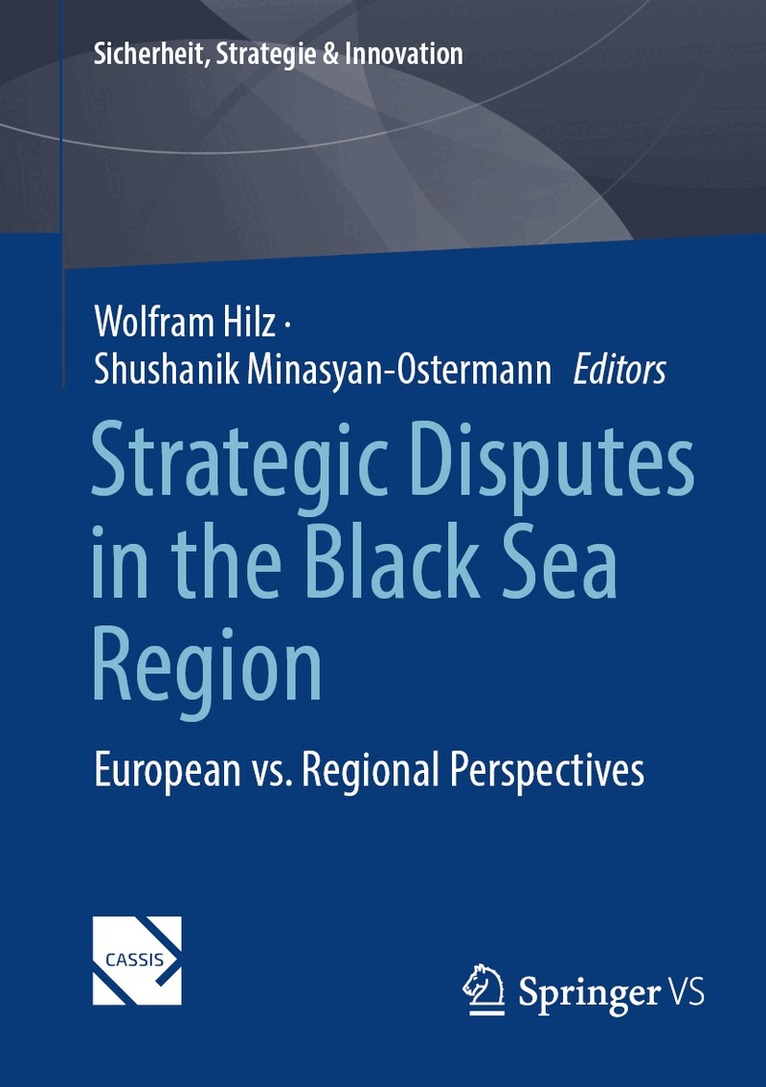
The Black Sea region has undergone significant political and social transformations over the past few decades, resulting in a new geopolitical reality that demands scholarly attention. This book offers a comprehensive analysis of the evolving security dynamics and the associated narratives in this strategic area. With a particular focus on the interplay between European and regional perspectives, this volume explores the critical role of power, energy policy, and security interests in shaping the region's geopolitical landscape. It examines the resurgence of regional leading powers, notably Russia, which has pursued a militant and aggressive foreign policy to reclaim its dominant position. The ongoing conflict between Russia and Ukraine has had a profound impact on the Black Sea region, leading to political and social crises in reform-oriented states like Armenia, Georgia, and Ukraine.Moreover, this book delves into Turkey's shifting role in the Black Sea region, as it reevaluates its strategic position between Asia and Europe. The authors analyze Turkey's transition from a cautious and dialogue-oriented regional policy to a more offensive and aggressive foreign policy profile. By considering diverse perspectives, the volume evaluates the prospects for an effective EU foreign policy in the region, examines the potential for sustainable democratic transformation, and explores the growing militarization of Turkish and Russian foreign policies. It also sheds light on the challenges and opportunities for strengthening pluralistic systems in the afflicted states.Featuring contributions from leading scholars in international security studies and foreign policy, this book offers a timely and in-depth exploration of the Black Sea region's complex dynamics. It will be an indispensable resource for scholars and policymakers seeking to understand the strategic disputes and their implications for European and regional interests.
Häftad, Engelska, 2024
1 302 kr
Skickas inom 5-8 vardagar
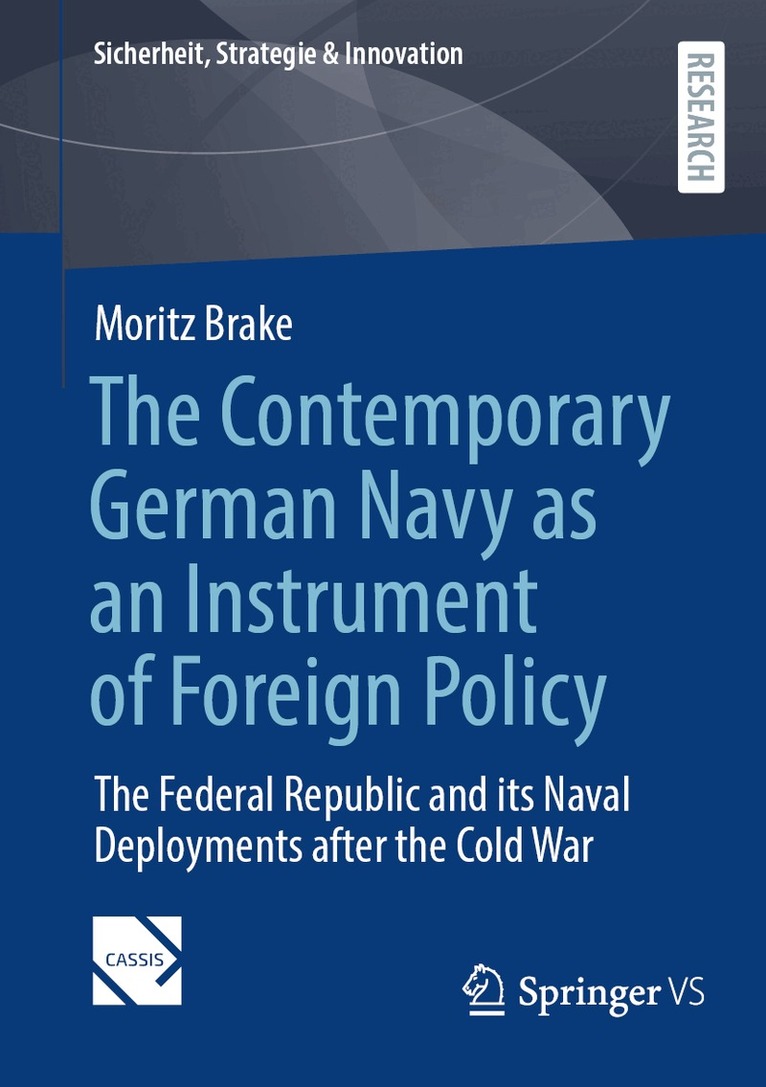
Since the Cold War and beyond the Zeitenwende, Germany has increasingly come to rely on its navy as an instrument of foreign policy. The German Navy supports comprehensive maritime security and ocean governance, and its missions not only reflect its own evolution, but also change within Germany. This is a marked shift for the ‘continental power’ Germany and forms a substantial component of its much broader ‘maritime turn’ in the 21st century. Changes in strategic context, new security challenges and Germany’s evolving international role after reunification have altered the perception of the navy’s utility. Its share in the Bundeswehr’s personnel has grown and the navy has seen proportionally higher investment – or relatively less cuts owing to the post-Cold War 'peace dividend' – than either army or airforce. The author shows, that the navy has markedly changed and become increasingly useful for Germany’s foreign policy – something which, in the stormy seas of geopolitical escalation of the Zeitenwende, has already paid dividends.