Structuring Sense - Böcker
Visar alla böcker i serien Structuring Sense. Handla med fri frakt och snabb leverans.
4 produkter
4 produkter
2 103 kr
Skickas inom 3-6 vardagar
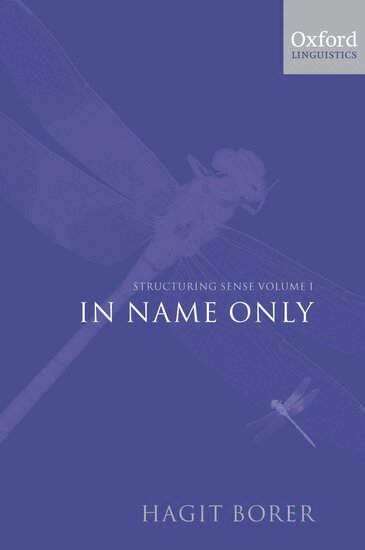
Structuring Sense explores the difference between words however defined and structures however constructed. It sets out to demonstrate over three volumes, of which this is the first, that the explanation of linguistic competence should be shifted from lexical entry to syntactic structure, from memory of words to manipulation of rules. Its reformulation of how grammar and lexicon interact has profound implications for linguistic, philosophical, and psychological theories about human mind and language.Hagit Borer departs from both language specific constructional approaches and lexicalist approaches to argue that universal hierarchical structures determine interpretation, and that language variation emerges from the morphological and phonological properties of inflectional material.In Name Only applies this radical approach to nominal structure. Integrating research in syntax, semantics, and morphology, the author argues that nominal structure is based on the syntactic realization of semantic notions such as classifier, quantity, and reference. In the process she seeks to do away with lexical ambiguity and type-shifting. Among the topics she considers are the interpretation of proper names, the mass-count distinction, the weak-strong interpretation of quantifiers, partitive and measure phrases, and the structural representation of the definite article. In the process she explores inter-language variation through the properties of the morpho-phonological system. The languages discussed include English, Chinese, Italian, and Hebrew.
726 kr
Skickas inom 5-8 vardagar
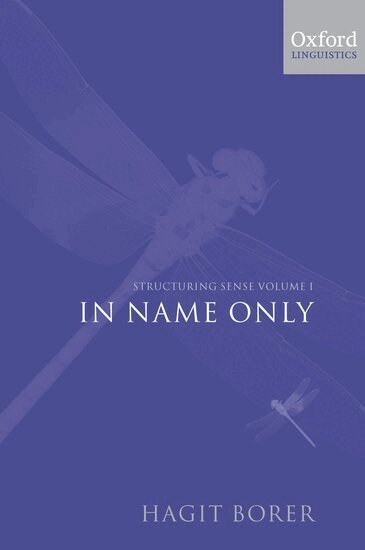
Structuring Sense explores the difference between words however defined and structures however constructed. It sets out to demonstrate over three volumes, of which this is the first, that the explanation of linguistic competence should be shifted from lexical entry to syntactic structure, from memory of words to manipulation of rules. Its reformulation of how grammar and lexicon interact has profound implications for linguistic, philosophical, and psychological theories about human mind and language.Hagit Borer departs from both language specific constructional approaches and lexicalist approaches to argue that universal hierarchical structures determine interpretation, and that language variation emerges from the morphological and phonological properties of inflectional material.In Name Only applies this radical approach to nominal structure. Integrating research in syntax, semantics, and morphology, the author argues that nominal structure is based on the syntactic realization of semantic notions such as classifier, quantity, and reference. In the process she seeks to do away with lexical ambiguity and type-shifting. Among the topics she considers are the interpretation of proper names, the mass-count distinction, the weak-strong interpretation of quantifiers, partitive and measure phrases, and the structural representation of the definite article. In the process she explores inter-language variation through the properties of the morpho-phonological system. The languages discussed include English, Chinese, Italian, and Hebrew.
2 305 kr
Skickas inom 3-6 vardagar
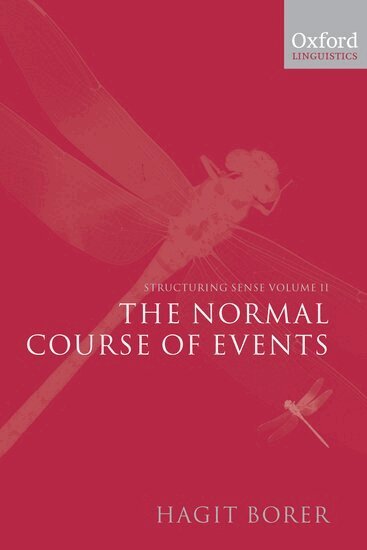
Structuring Sense explores the difference between words however defined and structures however constructed. It sets out to demonstrate over three volumes, of which this is the second, that the explanation of linguistic competence should be shifted from lexical entry to syntactic structure, from memory of words to manipulation of rules. Its reformulation of how grammar and lexicon interact has profound implications for linguistic, philosophical, and psychological theories about human mind and language.Hagit Borer departs from both language specific constructional approaches and lexicalist approaches to argue that universal hierarchical structures determine interpretation, and that language variation emerges from the morphological and phonological properties of inflectional material.The Normal Course of Events applies this radical approach to event structure. Integrating research results in syntax, semantics, and morphology, the author shows that argument structure is based on the syntactic realization of semantic event units. The topics she addresses include the structure of internal arguments and of telic and atelic interpretations, accusative and partitive case, perfective and imperfective marking, the unaccusative-unergative distinction, existential interpretation and post-verbal subjects, and resultative constructions. The languages discussed include English, Catalan, Finnish, Hebrew, Czech, Polish, Russian, and Spanish.
726 kr
Skickas inom 5-8 vardagar
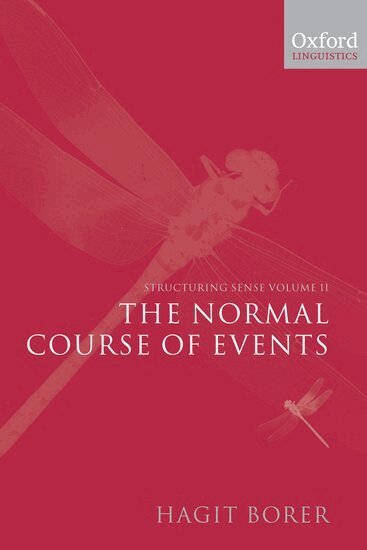
Structuring Sense explores the difference between words however defined and structures however constructed. It sets out to demonstrate over three volumes, of which this is the second, that the explanation of linguistic competence should be shifted from lexical entry to syntactic structure, from memory of words to manipulation of rules. Its reformulation of how grammar and lexicon interact has profound implications for linguistic, philosophical, and psychological theories about human mind and language.Hagit Borer departs from both language specific constructional approaches and lexicalist approaches to argue that universal hierarchical structures determine interpretation, and that language variation emerges from the morphological and phonological properties of inflectional material.The Normal Course of Events applies this radical approach to event structure. Integrating research results in syntax, semantics, and morphology, the author shows that argument structure is based on the syntactic realization of semantic event units. The topics she addresses include the structure of internal arguments and of telic and atelic interpretations, accusative and partitive case, perfective and imperfective marking, the unaccusative-unergative distinction, existential interpretation and post-verbal subjects, and resultative constructions. The languages discussed include English, Catalan, Finnish, Hebrew, Czech, Polish, Russian, and Spanish.