Studia Byzantina Upsaliensia – serie
Visar alla böcker i serien Studia Byzantina Upsaliensia. Handla med fri frakt och snabb leverans.
7 produkter
7 produkter
Del 20 - Studia Byzantina Upsaliensia
Receptions of the Bible in Byzantium: Texts, Manuscripts, and their Readers
Häftad, Engelska, 2021
347 kr
Skickas inom 5-8 vardagar
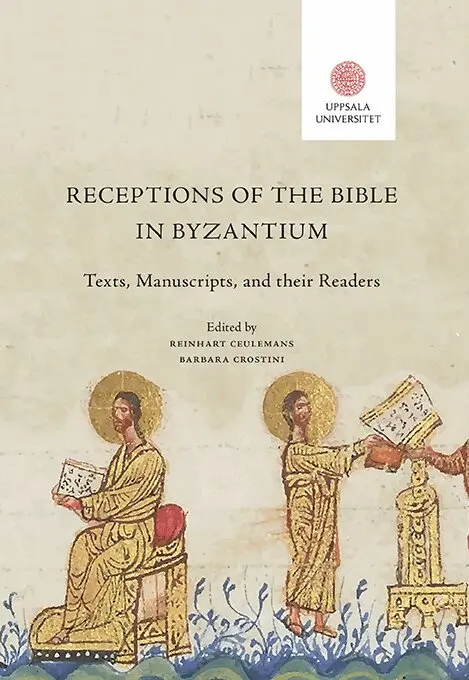
The twenty papers in this volume, fifteen in English and five in French, range from the fourth to the fifteenth century and are arranged in five sections according to a typology of reception of the Bible. The first section of the volume focuses on approaches to biblical exegesis often determined, as the authors argue, by worldly, practical aims pursued through commenting on the Bible. The second group of essays in the volume have in common a quotation approach to the text of the Bible: plucked from various books, key sentences were used in different contexts and to various ends. That the creativity of writers was actively engaged through their exposure to the Bible is further substantiated by the next group of essays, witnessing to a phenomenon whose dynamics are unpacked in scholarship on rewritten Bible. The next cluster of five papers takes illuminated manuscripts as the primary object, but without losing sight of the meaningful interaction between images and text. The essays in the final section of the volume require a special interest in textual criticism and manuscript transmission, and concern the work of scribes and compilers in assembling instruments through which the Bible is read. Even more specifically, these essays deal with how these instruments are made available in manuscript copies.
Del 22 - Studia Byzantina Upsaliensia
Spatial Paths to Holiness: Literary ‘Lived Spaces’ in Eleventh-Century Byzantine Saints’ Lives
Häftad, Engelska, 2023
326 kr
Skickas inom 5-8 vardagar
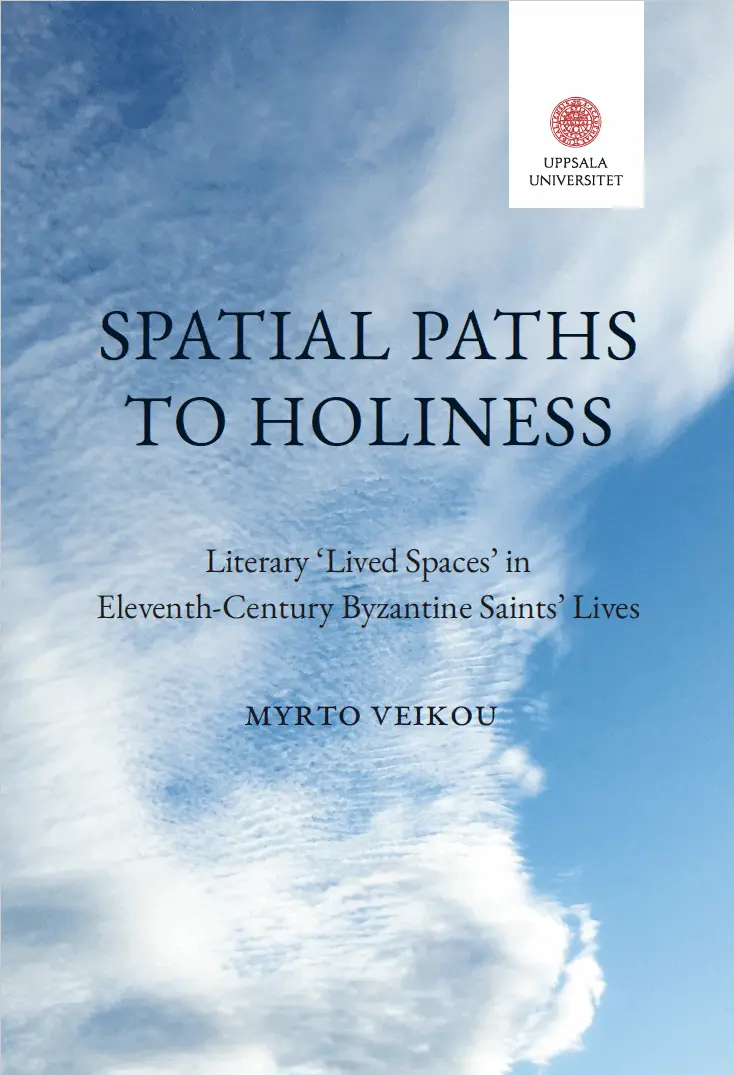
In the city of Uppsala, located at some 70km-distance from the Stockholm Archipelago, the average wind-speed throughout the year is 10–15 kilometers per hour. These dynamics generate recurring spectacles of ‘turbulent’ skies, as clouds are constantly in motion and they rapidly form, reform and transform the image of the sky. These spectacles make this Byzantinist reflect upon ways in which medieval people—who had never flown a plane, bound to the land—would have been receiving them in their everyday life. How ‘heavenlily-induced’ would they have considered turbulent skies? Would they have understood the image on the cover of this book (a cloud-pattern depicting a long staircase leading from the low parts of the horizon to the celestial hights) as divine invitation? The turbulent skies of Uppsala have nurtured me with ample imagination towards understanding medieval hagiographical texts and writing this book
Häftad, Engelska, 2025
497 kr
Skickas inom 5-8 vardagar
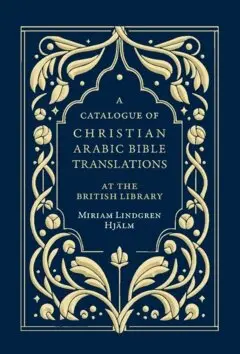
The present work contains records of the Christian Arabic Bible translations and Bible commentaries that are kept at the Department of Asian and African Studies at the British Library. Many of these manuscripts have previously been described in various catalogues, yet with different levels of detail. The main problem, however, for those interested in the material is to find and navigate through all these catalogues in order to get an overview of the corpus. As a means of enabling access to such an overview, Stocks and Baker published a Subject-Guide to the Arabic manuscripts at the British Library in 2001, where shelfmarks are arranged according to genre and where references to their respective catalogues are provided and point to the microfiches of the manuscripts that were produced by Brill in 2001. The Subject-Guide has been an important step forward in making the collections easier to navigate and the present catalogue builds on this important initiative. In contrast to the Subject-Guide, the present work is limited to a specific genre, Christian Arabic Bible translations. In addition, it includes a higher number of items and incorporates data into the work, allowing it to be used both as a guide and a catalogue. The present work also aims at systematizing and updating codicological and content-related information about these valuable sources, many of which have previously been described only by title and approximate date and some, which have not yet been catalogued. Finally, the present work includes sample images of the manuscripts it describes as well as indices over scribes, commissioners, dating systems, immediate sources of acquisition, etc.
Häftad, Engelska, 2026
337 kr
Skickas inom 5-8 vardagar
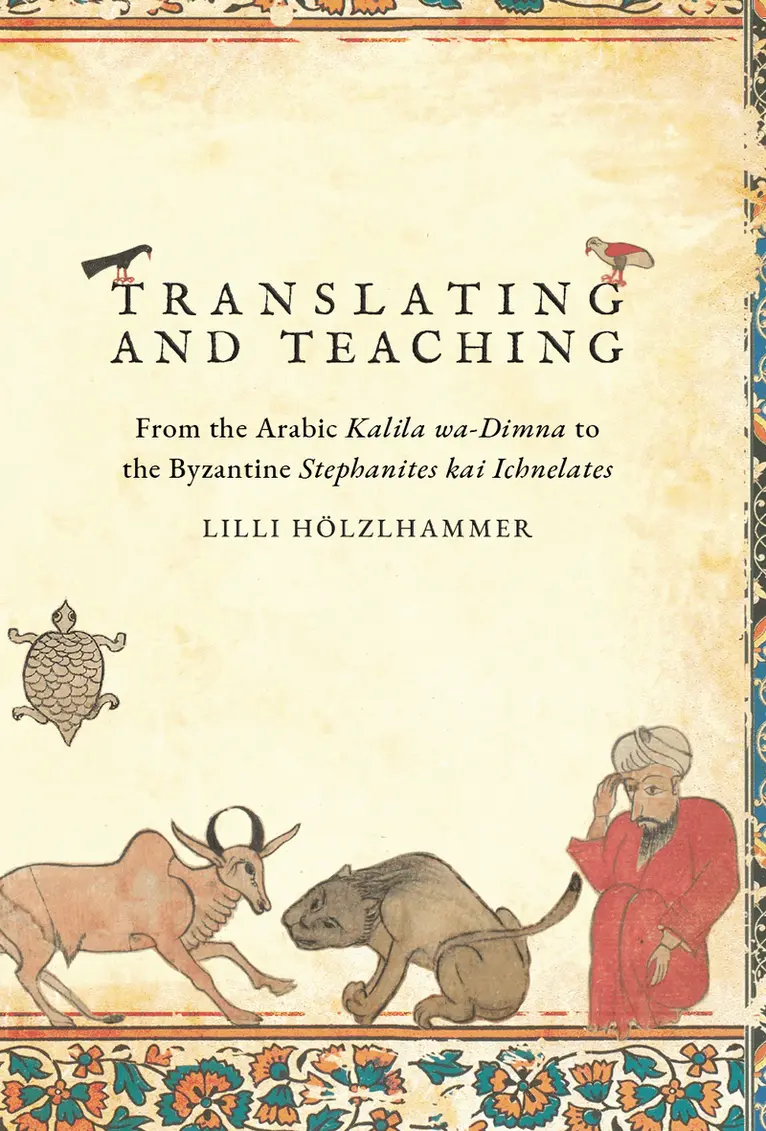
In the late eleventh century, Symeon Seth – a Byzantine scholar originally from Antioch – produced a translation of the highly popular Arabic fable collection Kalila wa-Dimnah and dedicated it to the Byzantine emperor Alexios I Komnenos. As an educational and at the same time entertaining text, the translation under the title Stephanites kai Ichnelates quickly spread in the Byzantine Empire. Exactly how Symeon Seth changed the source text in his translation and how these changes affected the didacted content is, however, hard to tell, since there are no surviving Arabic manuscripts from before the thirteenth century.The present book sets out to address these issues. It reconstructs as closely as possible the connection between the Arabic sources and the Greek translation and rethinks medieval translation practices. It also analyzes the didactic techniques by which the text sought to teach its readers. In addition, a close examination of manuscripts and of Symeon Seth’s translation practices offer new methodological approaches. First, the comparison of manuscripts and other writings attributed to the same historical person can help constructing what in this study is termed a writing persona. Second, the analysis of didactic narratological devices employed in the text furthers the understanding of how texts attempt to educate their readers.
Del 13 - Studia Byzantina Upsaliensia
Byzantine Gardens and Beyond
Häftad, Engelska, 2013
326 kr
Skickas inom 5-8 vardagar
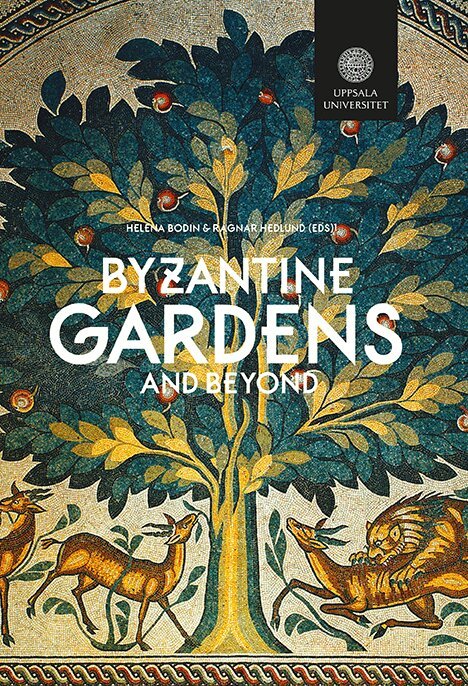
A garden, like the life it provides, may appear to the viewer in many different ways. As a space laid out for the nurturing of plants, a garden fulfils a variety of functions – practical, sacred, decorative or recreational. The garden may be an exquisite work of art and convey notions of cultural identity or particular values. It may also be an historical object, recalling times long past. Yet again, the garden may have aesthetic and ritual functions and serve as a poetic metaphor or religious image. Such concepts of the garden – practical, artistic, historical, and aesthetic – may already be found in the cultures of the ancient Mediterranean world and the Near East. This tradition was then adapted by the Byzantines. In their culture, we encounter not only physical gardens, but gardens with various spiritual, devotional and even erotic functions. Byzantine gardens then influenced many other cultures in significant ways. From the twelfth century onwards, garden culture became increasingly important in the West, even in Scandinavia, while many aspects of Byzantine garden culture lived on in Orthodox monasteries, in the Arab world, and in Ottoman Constantinople. At the same time, the imagery of the spiritual garden, highly elaborated in Byzantium, gained importance among the Slavs. (From the introduction by Helena Bodin and Ragnar Hedlund with Olof Heilo and Ingela Nilsson.)
Del 15 - Studia Byzantina Upsaliensia
Wanted: Byzantium. The Desire for a Lost Empire.
Häftad, Engelska, 2014
326 kr
Skickas inom 5-8 vardagar
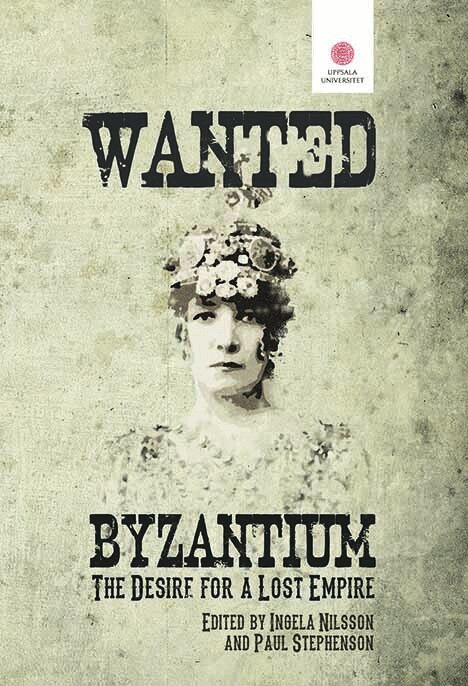
What is Byzantium? The question is not easy to answer. Is it a place, a time, an idea? Is Byzantium a closed chapter in history books or can it be part of modern Europe? Is it irretrievably lost, a kind of Arcadia – a topos rather than a reality, a nebulous yardstick against which we can measure our dreams and nightmares, a fairytale beyond time and space? Can we actually sail there, or may we only be distant spectators? There has long been a desire and a need for Byzantium. This need has been more or less detached from the chronological period and the geographical area to which the term Byzantium has been attached by scholars since the sixteenth century, a century after the fall of the empire known to its inhabitants as Roman and to its enemies as Greek. It is widely understood that those objects – textual and material, manuscripts and statues – that were taken to Western Europe from within the empire from the period of the Crusades onwards inspired “renaissances”. Generations of scholars and artists, and their patrons, in Western Europe were offered opportunities to contemplate and rediscover their Greek and Romans pasts. In popular historical accounts, the arrival of Byzantine artists and writers, philosophers and theologians, fleeing the Ottoman Turks, has long been used to explain the Italian Renaissance. But in this tradition, ostensibly positive, Byzantium has been treated not as a creative culture nor even as an incubator of ideas, but rather as if it were a refrigerator, keeping antiquity in a state of preservation until its rediscovery, or reinvention in Western Europe. (From the introduction by Ingela Nilsson and Paul Stephenson.)
Del 16 - Studia Byzantina Upsaliensia
Byzantium and the viking world
Häftad, Engelska, 2016
606 kr
Skickas inom 5-8 vardagar
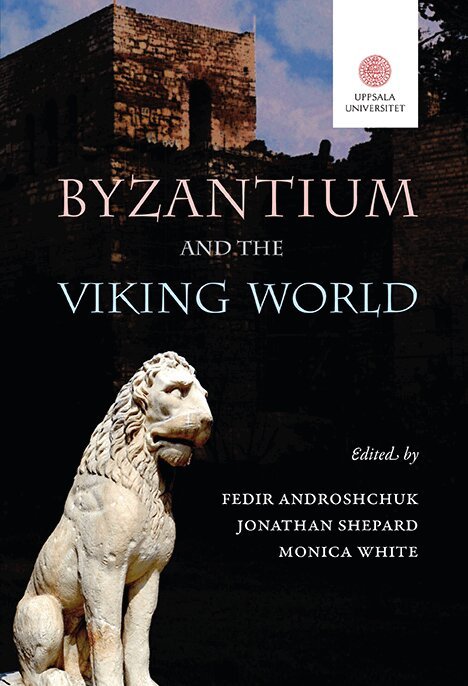
The title of this book encompasses two quite different academic worlds—those of Byzantine and Scandinavian studies. Each has its own academic tradition rooted in distinctive source materials. The world of Byzantine studies, which owes its origins largely to the study of the classics, has been accused—rightly or wrongly—of being elitist; while that of Scandinavian studies has long been overshadowed by the romance of the Old Norse sagas. Within these two academic worlds there are a number of smaller professional spaces that seldom overlap, and those of historians and archaeologists offer a prime example. Each approaches the other’s source materials hesitantly. Not all historians are at ease with the relevant archaeological sources, and the same is true for the way in which some archaeologists deal with the written sources. However, there are subjects where close collaboration between these disciplines is difficult to avoid. One such is the Scandinavians’ activities in eastern Europe and Byzantium during the Viking Age and beyond. One might assume that Scandinavians—variously referred to as Rhōs, Rūs or Varangians—played only a marginal role in the history of the Byzantine empire. However, as is well known, the empire had need of foreigners as much as the Scandinavians had need of Byzantium in the construction of a social identity for themselves. It would probably be no exaggeration to say that Byzantium is also needed by modern Scandinavianists as well as by Slavists. Slavonic and, in particular, Scandinavian written sources only materialised at a very late date and, for research into the history of the Viking Age, our information comes solely from the Muslim and Byzantine texts and from archaeology. (From the preface by the editors.)