Studier i utbildnings- och kultursociologi – serie
Visar alla böcker i serien Studier i utbildnings- och kultursociologi. Handla med fri frakt och snabb leverans.
4 produkter
4 produkter
Del 11 - Studier i utbildnings- och kultursociologi
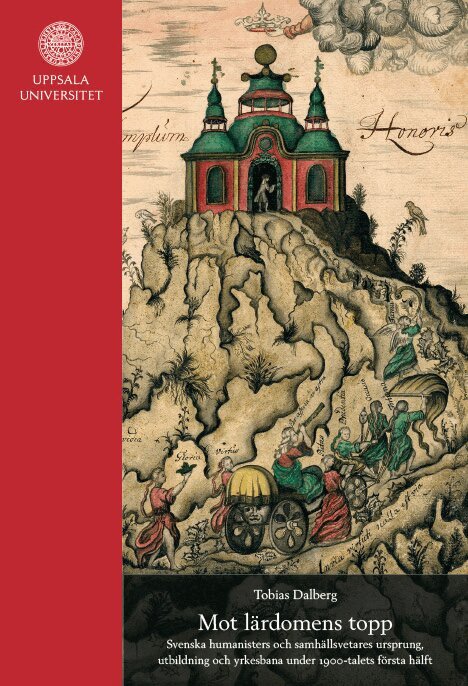
Mot lärdomens topp : Svenska humanisters och samhällsvetares ursprung, utbildning och yrkesbana under 1900-talets första hälft
Häftad, Svenska, 2018
308 kr
Skickas inom 5-8 vardagar
”Mot lärdomens topp”. Så formulerades ambitionen att bli professor av en av de få som nådde målet. Tobias Dalbergs studie är en kollektivbiografi över deltagarna i denna akademiska tävlan i Sverige under nittonhundratalets första hälft, med tonvikt vid dem som disputerat för doktorsgraden i humanistiska och samhällsvetenskapliga ämnen. Deras yrkesbanor hade samband med tillgångar som de förde med sig i bagaget – dels kulturellt kapital som de ärvt från föräldrahemmet och dels resurser och förmågor förvärvade i skolan och vid universitetet. Hur banorna gestaltades berodde dessutom på vilka anställningsmöjligheter som stod till buds inom de akademiska och vetenskapliga fälten och även därutanför, såsom lektorat vid läroverken och befattningar i statsförvaltningen och de lärda verken. Omvänt bidrog de banor som genomkorsade fälten till att forma samma fält. På så vis analyseras i denna avhandling hur akademiskt och vetenskapligt kapital alstrade, ackumulerades och fördelades under den period då de moderna lärosätena och vetenskapliga – inte minst de samhällsvetenskapliga – fälten växte fram. Studien vilar på ett mångsidigt insamlande av uppgifter i arkiv, matriklar, dödsrunor och andra källor. De främsta bearbetningsmetoderna har varit geometrisk dataanalys och sekvensanalys. Tolkningarna ansluter till sociologiska forskningstraditioner företrädda av Pierre Bourdieu, Robert K. Merton och Andrew Abbott. Tobias Dalberg tillhör Forskningsgruppen för utbildnings- och kultursociologi (SEC) vid Uppsala universitet. Detta är hans doktorsavhandling i utbildningssociologi.
Del 14 - Studier i utbildnings- och kultursociologi
Barn med diagnoser: Mödrars och skolors strategier i Stockholm
Häftad, Svenska, 2021
326 kr
Skickas inom 5-8 vardagar
Barn med neuropsykiatriska diagnoser har ökat kraftigt i antal under 2000-talet. Samtidigt har utbildningssystemet förändrats i grunden med omfattande valfrihetsreformer och mer ansvar inom familjen för barnens skolgång. Familjernas och individernas eget ansvar för framgång, men också misslyckanden, skymmer den ojämna fördelningen av resurser och livschanser. I det alltmer differentierade utbildningslandskapet skiljer sig skolorna åt i fråga om förutsättningar för att möta barn med diagnoser, liksom familjerna i sina förutsättningar för att navigera i systemet. Det är i denna skärningspunkt som undersökningen Barn med diagnoser placerar sig. De empiriska studierna fångar två aspekter av förändringarna i skolans värld i Stockholm. Å ena sidan har en nisch av skolor och pedagogiska former för barn med särskilda behov vuxit fram. Å andra sidan utvecklar familjer – och framför allt mödrarna – individuella strategier när deras barns skolgång kantas av svårigheter. Skolornas profil och position i förhållande till andra skolor avgör hur de hanterar barn med neuropsykiatriska diagnoser. I föräldrarnas perspektiv blir skolorna i varierande grad synliga som valalternativ och ter sig mer eller mindre attraktiva utifrån vad barnen erbjuds. Mödrarnas outtröttliga kamp för sina barns skolgång vittnar om hur viktig utbildning kommit att bli för alla, oavsett samhällsklass. Samtidigt visar studien hur familjernas resurser är avgörande för hur de klarar att hantera att diagnoserna är omstridda och föränderliga och tillmäts skiftande betydelse på olika håll i skolans värld. Emma Laurin tillhör Forskningsgruppen för utbildnings- och kultursociologi (SEC) vid Uppsala universitet. Detta är hennes doktorsavhandling i utbildningssociologi.
Del 17 - Studier i utbildnings- och kultursociologi
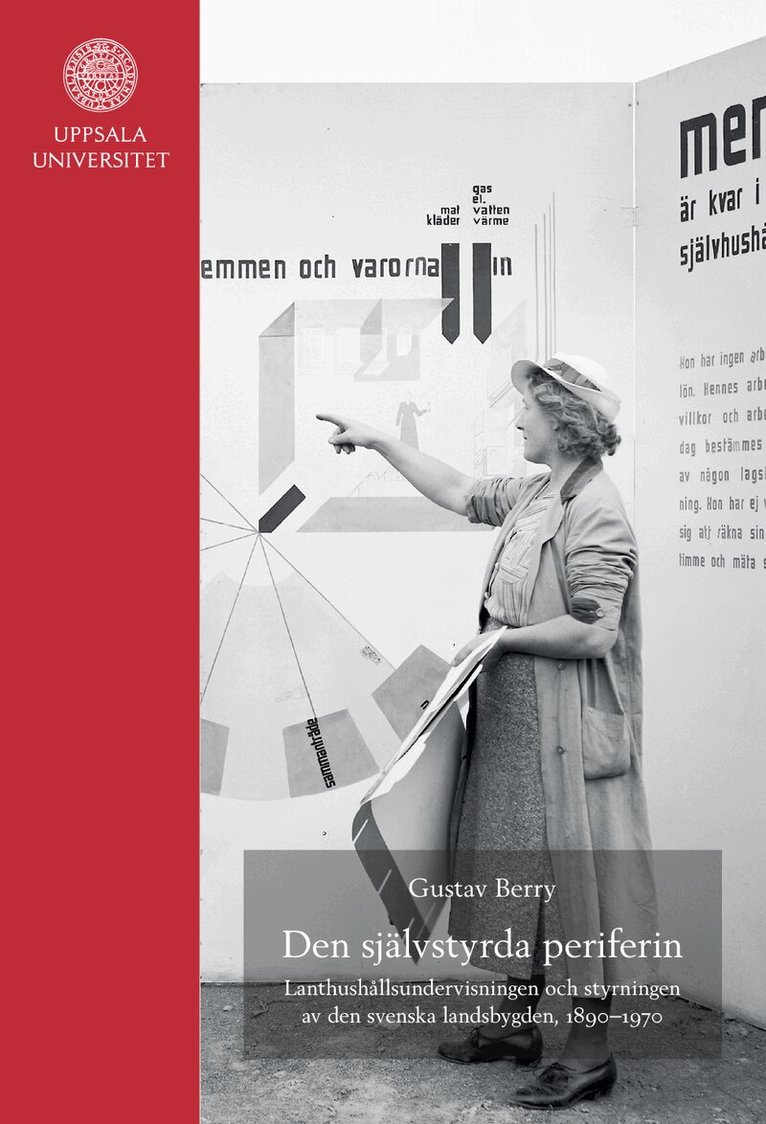
Den självstyrda periferin: Lanthushållsundervisningen och styrningen av den svenska landsbygden, 1890-1970
Häftad, Svenska, 2023
308 kr
Skickas inom 5-8 vardagar
Through the formation and development of industrial societies between 1890 and 1970, rural life and agriculture in Europe were made subject to a high degree of social, economic and political planning. This phenomenon of rural governance in the age of high modernity is explored in this thesis, which analyzes the governance of the Swedish countryside through studies of rural domestic education. In this thesis, rural domestic education refers to a complex of three educational institutions. Together they formed an arrangement to shape the work and lives of rural girls and women in Sweden in order to manage larger issues connected to the fate of agriculture and rural life in industrial society. The arrangement consisted of rural vocational schools, targeting young, unmarried women; the home demonstration extension service, directed towards rural housewives, and colleges for rural domestic teacher education. By framing rural domestic education as a case of rural governance, the thesis seeks to further the discussion of rural self-governance during the period. In contrast to previous studies in the field, which have favored the agency of the modern state and the notion of high modernism, this study highlights the social dimensions of rural governance and the ambivalence and resistance to the upheavals of high modernity experienced by social groups and classes in the Swedish countryside. The aim of the thesis is to widen and deepen our understanding of rural governance in the age of high modernity. This is done by merging theoretical perspectives from modern history and the history of education and applying them to four source pluralistic empirical investigations. These investigations cover the rationales, conditions, and actors involved in the governance of the Swedish countryside through rural domestic education between 1910 and 1960. Taken together the investigations show that the attempts to govern rural Sweden by fostering rural housewives were firmly based in the countryside. They were motivated by real and imagined threats related to women’s flight from the land and carried out through cooperation between the state and rural civil society, responsible for financing respectively organizing different forms of rural domestic education. Moreover, the rationales and conditions of rural domestic education were closely tied to a social and cultural formation that used it to further its own interests, characterized in the thesis as the rural bourgeoise. Through these results the thesis shows that rural governance in the age of high modernity can be understood as reactions of social groups responding to rapid transformations of society, rather than an outcome of state intervention and the need to render agriculture and rural life legible. This new understanding has implications for our perception of rural governance as a phenomenon in modern history and presents new perspectives on the history of agricultural and domestic education for women.
Del 18 - Studier i utbildnings- och kultursociologi
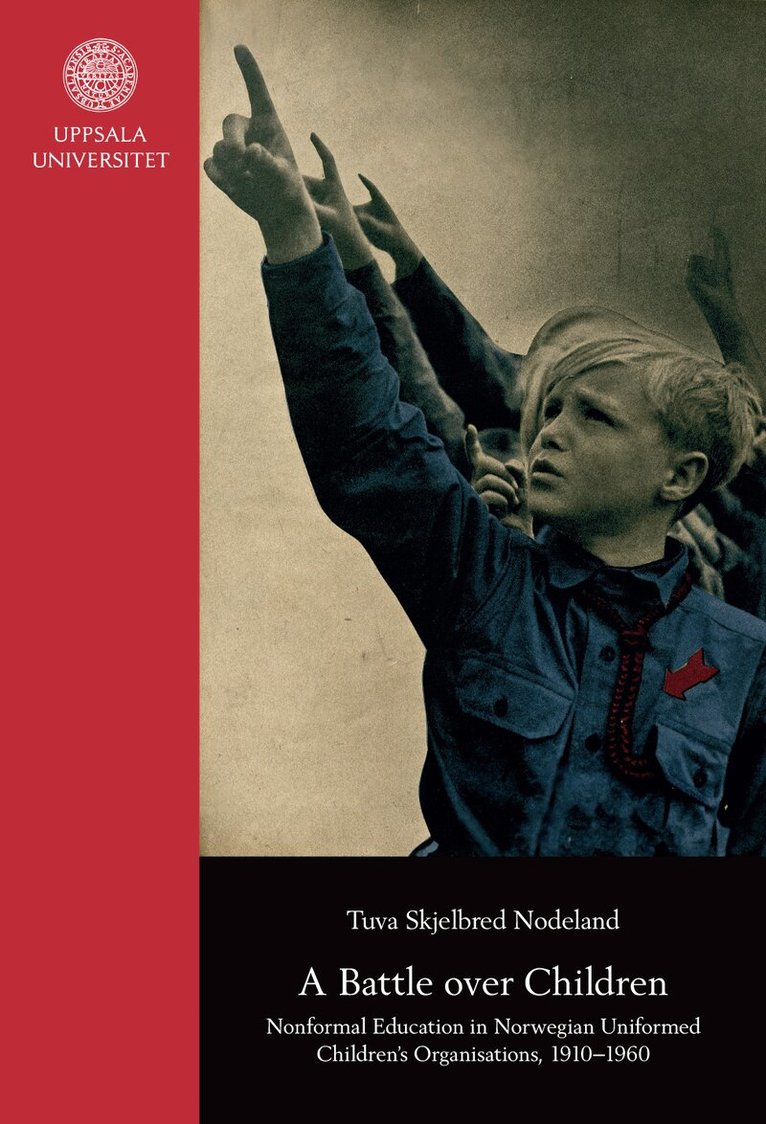
A Battle over Children: Nonformal Education in Norwegian Uniformed Children's Organisations, 1910-1960
Häftad, Engelska, 2023
308 kr
Skickas inom 5-8 vardagar
A Battle over Children investigates how children became targets of political education in different uniformed children’s organisations in Norway between 1910 and 1960. Following the introduction of the Scout movement to Norway in 1910, a range of competing uniformed children’s organisations developed. Soon, Christians, communists, social democrats and national socialists were all competing for influence over Norwegian children through uniforms, rituals and loyalty oaths, adventure and outdoor life. The thesis explores what this nonformal education phenomenon can tell us about the incorporation of children into the political mass culture of the twentieth century. The emergence of uniformed children’s organisations helped reinforce and spread the idea of children as a group that could be mobilised for various social, religious and political aims. The aim of the thesis is to explain how this process of politicisation developed in Norway between 1910 and 1960. The thesis analyses how the process changed over time and was conditioned by larger political and social shifts. Inspired by Antonio Gramsci’s concept of hegemony, the thesis places the organisations as participants in a civil-society battle to shape children’s political identities. Drawing on archival material, newspapers, parliamentary debates and membership magazines, the analysis charts the development of the organisations’ battle through four chronological phases. The analysis shows how the politicisation of children between 1910 and 1960 was driven by important conflict lines in Norwegian society such as tension between the labour movement and organised Christianity. It shows how the consolidation of compulsory schooling made it all the more important for groups to secure the reproduction of values they could not be sure their children would gain in school. The findings question ideas of early-twentieth-century childhood as an innocent and protected state isolated from political life. In this research tradition, youth movements tend to be understood as disciplinary tools to make children socially useful, but not as an expression of youth’s political involvement. Instead, I argue for the need to consider how children practically engaged with politics in spaces constructed for them by adults. Taking Norway as a case of a liberal, democratising state, my study suggests that such societies in many ways behaved in similar ways to societies that developed state organisations to shape children’s political identities, only that the process took place as a battle for consent on the civil society arena rather than as a state-driven process.