Studies in Civil-Military Relations – serie
Visar alla böcker i serien Studies in Civil-Military Relations. Handla med fri frakt och snabb leverans.
9 produkter
9 produkter
Häftad, Engelska, 2023
405 kr
Skickas inom 5-8 vardagar
The all-volunteer force (AVF), created in conjunction with the end of the draft in 1973, has been the most significant development in modern American military history. Since its inception, the influence of the AVF has reached far beyond the US armed forces, affecting the very character of American civil-military relations. While its successes and challenges continue to be widely discussed and fervently debated, one thing is certain: the AVF is critical to both US national security and the fabric of American society. The insightful, cogent, and provocative essays contained in this timely volume represent a crucial first step in assessing the AVF after fifty years of service. Here, fifteen renowned authors speak to vital issues that remain relevant today and will endure well into the future.The AVF has garnered both triumphs and shortcomings but continues to be an essential institution. Engaged dialogue about the AVF is crucial to ensure that it remains ready to meet and overcome potential threats and that policymakers address the central obstacles it faces today.The All-Volunteer Force is the most comprehensive assessment of the force since its advent and reveals the momentous sway the AVF has had on the military, government, and society. In crafting this far-reaching collection of essays, William A. Taylor examines the AVF in four distinct parts, analyzing its history, results, challenges, and implications. In doing so, this compelling book explores all the major facets of the AVF—past, present, and future—that influence the military, government, and society in the United States.This dynamic volume brings together a multidisciplinary group of distinguished authors who each bring to bear important perspectives on specific aspects of the AVF. These contributors include leading scholars, general officers, civilian policymakers, and personnel experts who collectively provide a holistic assessment of the accomplishments and shortcomings of the AVF during its fifty years of service.
Inbunden, Engelska, 2023
665 kr
Skickas inom 5-8 vardagar
The all-volunteer force (AVF), created in conjunction with the end of the draft in 1973, has been the most significant development in modern American military history. Since its inception, the influence of the AVF has reached far beyond the US armed forces, affecting the very character of American civil-military relations. While its successes and challenges continue to be widely discussed and fervently debated, one thing is certain: the AVF is critical to both US national security and the fabric of American society. The insightful, cogent, and provocative essays contained in this timely volume represent a crucial first step in assessing the AVF after fifty years of service. Here, fifteen renowned authors speak to vital issues that remain relevant today and will endure well into the future.The AVF has garnered both triumphs and shortcomings but continues to be an essential institution. Engaged dialogue about the AVF is crucial to ensure that it remains ready to meet and overcome potential threats and that policymakers address the central obstacles it faces today.The All-Volunteer Force is the most comprehensive assessment of the force since its advent and reveals the momentous sway the AVF has had on the military, government, and society. In crafting this far-reaching collection of essays, William A. Taylor examines the AVF in four distinct parts, analyzing its history, results, challenges, and implications. In doing so, this compelling book explores all the major facets of the AVF—past, present, and future—that influence the military, government, and society in the United States.This dynamic volume brings together a multidisciplinary group of distinguished authors who each bring to bear important perspectives on specific aspects of the AVF. These contributors include leading scholars, general officers, civilian policymakers, and personnel experts who collectively provide a holistic assessment of the accomplishments and shortcomings of the AVF during its fifty years of service.
Inbunden, Engelska, 2023
501 kr
Skickas inom 5-8 vardagar
Contested Valor is a challenging examination of the use and status of black Marines in United States military service during the Cold War era. These pioneering men experienced contested military integration, as well as multiple forms of institutional and social opposition, which called their humanity, manhood, and rights to full citizenship into question. Efforts to undermine their service compromised their right to be counted among the elite and sidelined their story to the fringes of Marine Corps and US history.Cameron McCoy describes the factors and pressures leading to the racial turbulence that surfaced in the Marine Corps from the end of World War II through Vietnam, and the measures taken by civilian and Marine officials to maintain and restore organizational integrity based on a foundation of white supremacy. He examines the psychological effects of institutionalized racism on African American Marines during the Vietnam era and the emergence of a new generation of black men unwilling to submit to the traditions of a Jim Crow Marine Corps. By exploring the realities American society constructed about black Marines, this work calls attention to the diverse ways in which these men coped within a strict, prejudiced organization and found greater purpose as US Marines despite an embattled image.Contested Valor weaves the experiences of black Americans in the armed forces into the larger tapestry of the American racialist past and aptly captures the dilemmas, triumphs, and pitfalls that the first African American Marines encountered during the contentious eras of World War II, Korea, and Vietnam. McCoy explores the creation of organizational policies designed to minimize their footprint as US Marines until the social experiment of military integration faded and illustrates the discriminatory practices that further delegitimized their wartime reputation.McCoy demonstrates that black Marines’ absence from the historical record has been compounded by the negligence and oversight of past historians as the Marine Corps reckons with its racist past and its first black Marines.
Inbunden, Engelska, 2024
508 kr
Skickas inom 10-15 vardagar
The beautiful picture of brothers in arms vanquishing a tyrant. The power of a well-orchestrated army and navy winning historic battles. Overwhelming military might and ability through teamwork. This is how the US military services portray themselves to the public and to their own service members through official doctrine. However, under the veneer of jointness, deeply fraught processes are at play. Frequently, the services think more about protecting organizational turf than about national security and maintaining an advantage against the United States’ external adversaries. Uniting US military services is a difficult endeavor that becomes even more so the farther from a battlefield and the higher up the command structure the unifying needs to happen.In The Collaborative Fight, Paul R. Birch and Lina M. Svedin examine cases of institutional jointness among US military services from the late nineteenth century into the twenty-first century. They draw actionable conclusions for practitioners in the defense establishment while giving examples of successful joint cooperation that overcame the difficulties inherent in pursuing it. Even the successful cases that Birch and Svedin discuss show that the US military services face bureaucratic incentives and organizational leadership issues that make battlefield cooperation less than ideal.Birch and Svedin adeptly translate theory and history into approaches useful to practitioners in the field while examining the theoretical framework outlining the drivers in joint military cooperation.
Häftad, Engelska, 2022
355 kr
Skickas inom 10-15 vardagar
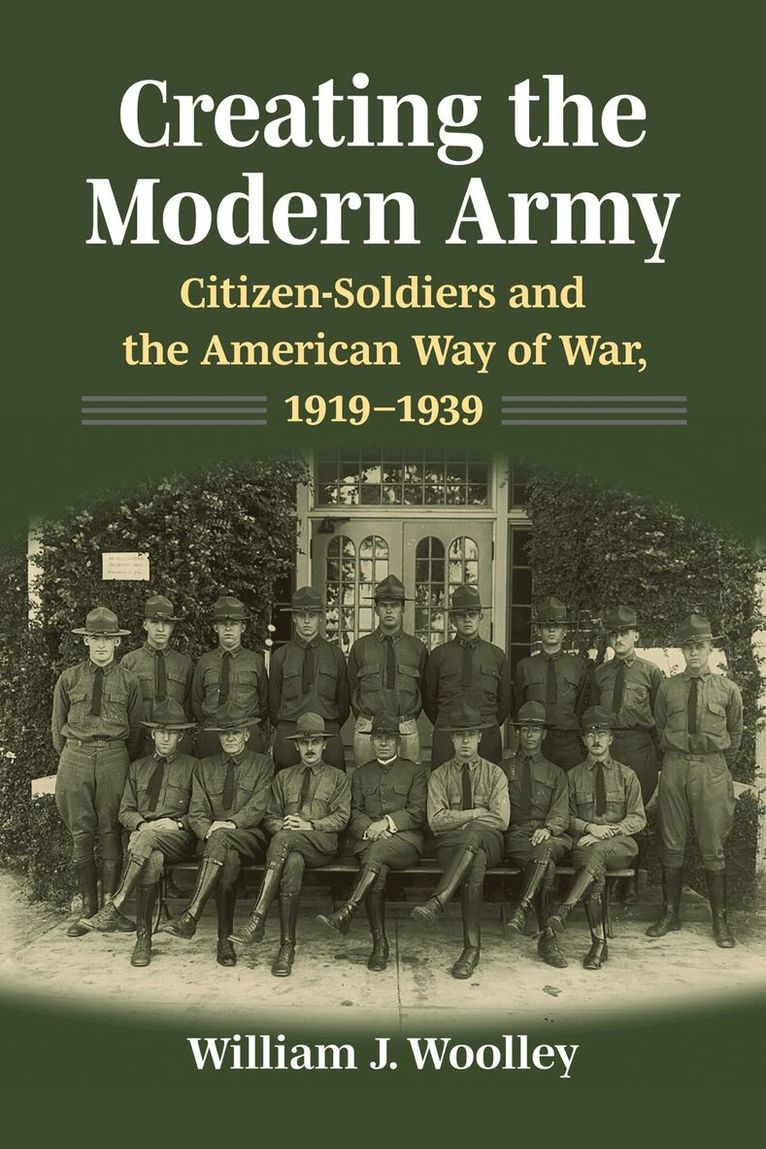
Winner: Army Historical Foundation Award for Excellence in U.S. Army History WritingThe modern US Army as we know it was largely created in the years between the two world wars. Prior to World War I, officers in leadership positions were increasingly convinced that building a new army could not take place as a series of random developments but was an enterprise that had to be guided by a distinct military policy that enjoyed the support of the nation. In 1920, Congress accepted that idea and embodied it in the National Defense Act. In doing so it also accepted army leadership’s idea of entrusting America’s security to a unique force, the Citizen Army, and tasked the nation’s Regular Army with developing and training that force. Creating the Modern Army details the efforts of the Regular Army to do so in the face of austerity budgets and public apathy while simultaneously responding to the challenges posed by the new and revolutionary mechanization of warfare.In this book Woolley focuses on the development of what he sees as the four major features of the modernized army that emerged due to these efforts. These included the creation of the civilian components of the new army: the Citizen’s Military Training Camps, the Officer Reserve Corps, the National Guard, and the Reserve Officer Training Corps; the development of the four major combat branches as the structural basis for organizing the army as well as creating the means to educate new officers and soldiers about their craft and to socialize them into an army culture; the creation of a rationalized and progressive system of professional military education; and the initial mechanization of the combat branches. Woolley also points out how the development of the army in this period was heavily influenced by policies and actions of the president and Congress.The US Army that fought World War II was clearly a citizen army whose leadership was largely trained within the framework of the institutions of the army created by the National Defense Act. The way that army fought the war may have been less decisive and more costly in terms of lives and money than it should have been. But that army won the war and therefore validated the citizen army as the US way of war.
Inbunden, Engelska, 2025
619 kr
Skickas inom 10-15 vardagar
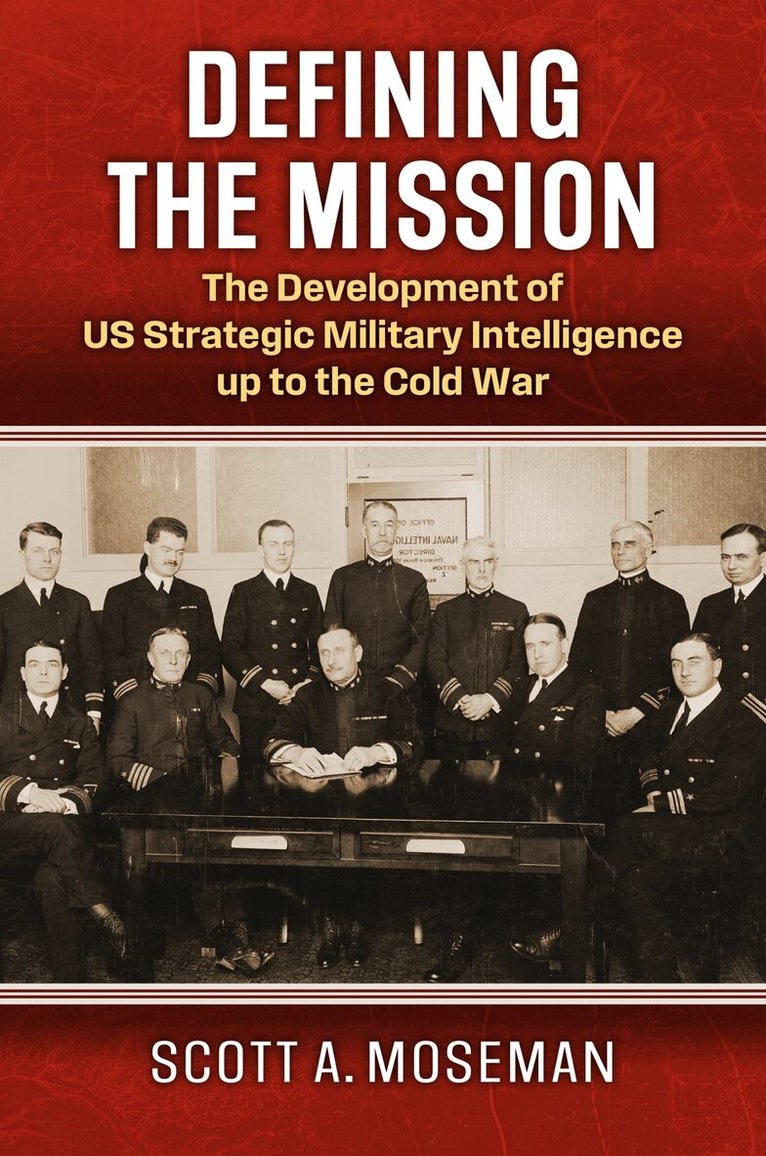
The untold history of how strategic military intelligence organizations responded and adapted to the pressures and influence of the US military, government, and public to define themselves and their mission.From 1882 to 1947—the year the CIA was established—strategic military intelligence organizations struggled to define their missions. The American public, government and military leaders, and intelligence professionals all had competing ideas of what military intelligence should be and do. The quest of strategic military intelligence organizations to define themselves and their mission was directly influenced by the trends of a growing American military and maturing American society in the late-nineteenth and early-twentieth centuries. This dynamic and insightful facet of intelligence history, however, has remained largely in the shadows. How did government leaders and American society define strategic military intelligence organizations? How did these organizations describe themselves in their service to the US military and the American public as they evolved from a four-man office in 1882 to a multi-organizational operation with a staff of thousands by the 1940s?In Defining the Mission, Scott Moseman examines how US strategic military intelligence organizations have adapted to several external and internal factors in finding their raison d’Être. Focusing on the Office of Naval Intelligence and the Military Intelligence Division, Moseman explores themes including the growth of the American military, internationalism versus isolationism, the increasing complexity of the government, military professionalism, Hamiltonian versus Jeffersonian ideals, military progressivism, and domestic security. Exploring the contours of the dynamic relationships between strategic military intelligence organizations and government, military, and society, Moseman shows how the mission and work of military intelligence reflects the very society it serves.
Inbunden, Engelska, 2025
563 kr
Skickas inom 10-15 vardagar
The previously overlooked story of how the labor of Black GIs helped win the war and advanced racial integration in the US armed forces.More than 80 percent of Black GIs in World War II served behind the front lines. At the beginning of the war, segregation policies maintained physical separation of Black and white GIs and only allowed Black soldiers to do simple, menial work, maintaining a false sense of racial inferiority. But the mechanization of armed forces during World War II demanded more skilled laborers behind the front lines. The Army Service Forces, created in March 1942, turned to Black GIs to solve the serious manpower shortage and trained them for jobs previously done only by white GIs. In Building Bridges, author Douglas Bristol tells the story of how military necessity led to unprecedented changes in the employment of Black troops. These changes had unanticipated consequences. American military leaders adopted a new racial discourse that emphasized the rights and potential of Black GIs. The new opportunities also exposed racial discrimination, giving Black GIs and their allies more leverage to demand better treatment.Black GIs built bridges, roads, and runways. They repaired engines and radios. They transported bombs, bullets, food, gasoline, and water to hard-pressed soldiers on the front lines. Their numbers, skills, and necessity only grew as the war continued. By the end of the World War II, Black GIs had cracked the glass ceiling in the racialized military hierarchy behind the front lines and became indispensable to keeping the American war machine running around the globe.
Inbunden, Engelska, 2025
675 kr
Skickas inom 10-15 vardagar
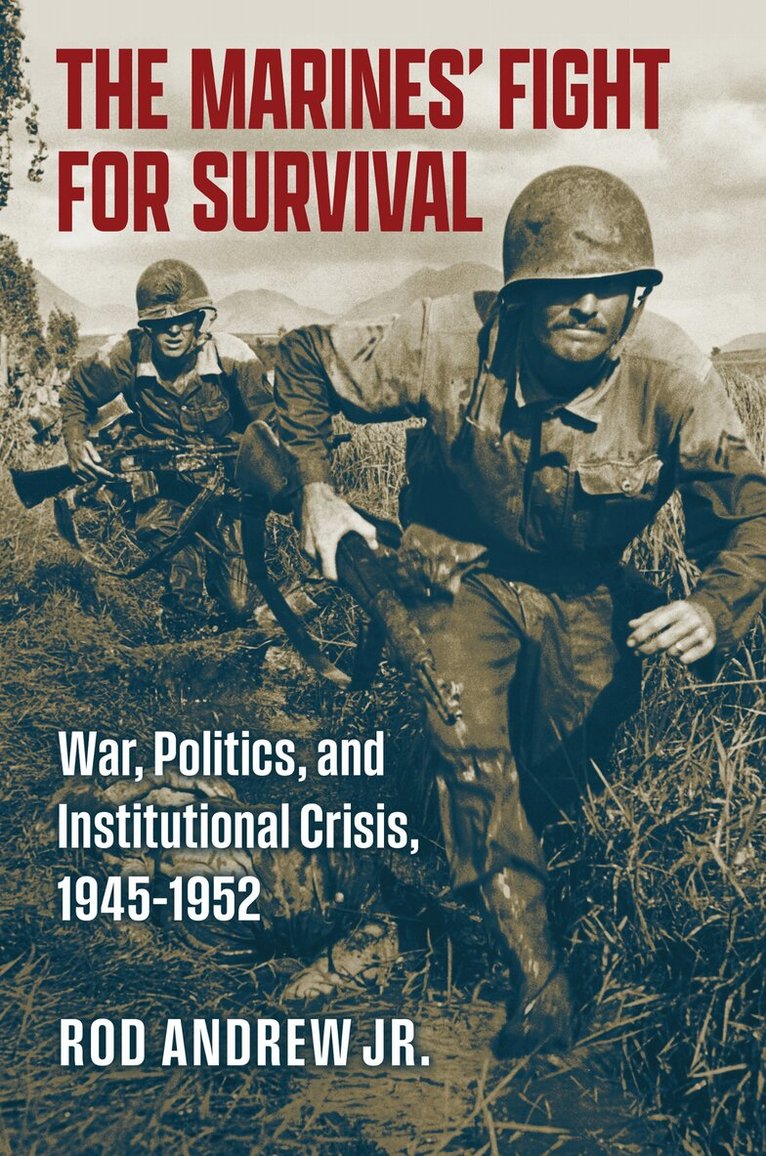
The compelling history of how the US Marines and their allies fought to preserve the Corps and establish its role in national defense.Only five years after Marines raised the American flag on Iwo Jima, the United States Marine Corps was close to becoming a hollow force. A parsimonious Truman administration and a hostile defense secretary, Louis Johnson, had reduced the Corps to a handful of understrength infantry battalions, assorted supporting artillery and tank units, and twelve aircraft squadrons. Its future hung in the balance.In The Marines' Fight for Survival, historian and retired Marine Corps Colonel Rod Andrew Jr. guides readers through the dramatic twists and turns of the campaign waged by a handful of senior Marines, citizens, legislators, and journalists to defend the Corps and prevent its elimination or forced irrelevance. Through politicking, intrigue, deception, and extreme moral courage, the Corps' defenders waged a bitter battle of policy and publicity in the halls of power and the national media.But while this campaign of persuasion moved the needle in some important ways, the final victory for the Marines' future was ultimately won on the battlefields of Korea. Andrew argues that it was the gritty performance of the frontline Marines and their supporting airmen in Korea that ultimately saved the Corps. The elite reputation that they created for themselves, and the affection they had garnered from the public throughout the twentieth century, would not have been possible without the valor and the victories of frontline Marines. The Corps' place in the national defense structure was sealed with the Douglas-Mansfield Act of 1952, in which Congress granted a legal voice to the USMC Commandant on the Joint Chiefs of Staff and made the Corps the only service branch to have a permanent minimal strength protected by law.
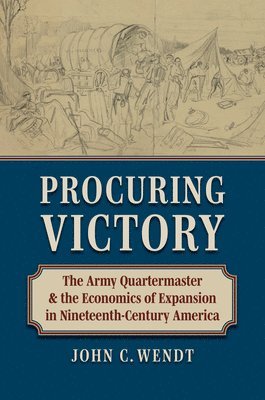
Procuring Victory
The Army Quartermaster and the Economics of Expansion in Nineteenth-Century America
Inbunden, Engelska, 2026
563 kr
Skickas inom 10-15 vardagar
A groundbreaking study of U.S. Army quartermasters during the wars of the nineteenth century. Historian John Wendt shows how the federal dollars exchanged between military personnel and civilians underwrote American expansion and had profound effects on the course of American military, economic, and social history.The United States Army of the nineteenth century has been called many things—“conquerors,” “constabularies,” “peacekeepers,” and “professionals,” among others. Yet, despite spending hundreds of millions of dollars throughout the rapidly growing United States, rarely has the nineteenth-century Army ever been seen as a business. The Army’s quartermasters were almost entirely reliant on local banks, merchants, and markets to supply campaigns across North America, including the Second Seminole War, the Mexican-American War, and the Civil War, From this novel vantage point, John Wendt stitches together seemingly disparate military and economic events into a coherent narrative of military spending across the mid-nineteenth century.The Army’s Quartermaster Department served as the Army’s chief military logistics agency, responsible for procuring transportation, clothing, and food. One quartermaster in particular, George Hampton Crosman, served in the department for nearly four decades of military campaigns, territorial expansion, and institutional transformation. Wendt allows readers to see through Crosman’s eyes how North American regions on the fringe of warfronts navigated the economic realities of financial crisis, western expansion, and industrialization. Significantly, he uncovers new insights into the numerous written and unwritten rules that governed the financial, logistical, and moral terms of civil-military relationships and sheds light on the individuals who quietly shaped the arc American history.