Studies in Marxism and Humanism – Serie
Visar alla böcker i serien Studies in Marxism and Humanism. Handla med fri frakt och snabb leverans.
4 produkter
4 produkter
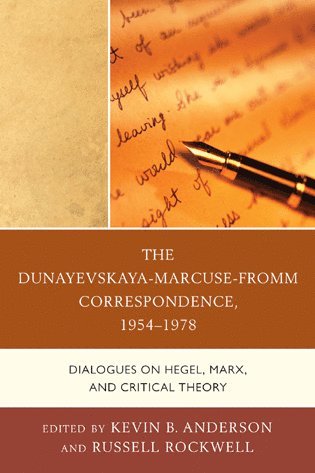
Dunayevskaya-Marcuse-Fromm Correspondence, 1954–1978
Dialogues on Hegel, Marx, and Critical Theory
Häftad, Engelska, 2012
608 kr
Skickas inom 10-15 vardagar
This book presents for the first time the correspondence during the years 1954 to 1978 between the Marxist-Humanist and feminist philosopher Raya Dunayevskaya (1910-87) and two other noted thinkers, the Hegelian Marxist philosopher and social theorist Herbert Marcuse (1898-1979) and the psychologist and social critic Erich Fromm (1900-80), both of the latter members of the Frankfurt School of Critical Theory. In their introduction, editors Kevin B. Anderson and Russell Rockwell focus on the theoretical and political dialogues in these letters, which cover topics such as dialectical social theory, Marxist economics, socialist humanism, the structure and contradictions of modern capitalism, the history of Marxism and of the Frankfurt School, feminism and revolution, developments in the USSR, Cuba, and China, and emergence of the New Left of the 1960s. The editors’ extensive explanatory notes offer helpful background information, definitions of theoretical concepts, and source references. Among the thinkers discussed in the correspondence – some of them quite critically-- are Karl Marx, G. W. F. Hegel, Rosa Luxemburg, Georg Lukács, Theodor Adorno, Max Horkheimer, Jean-Paul Sartre, Simone de Beauvoir, V. I. Lenin, Nikolai Bukharin, Sigmund Freud, Leon Trotsky, Mao Zedong, Daniel Bell, and Seymour Martin Lipset. As a whole, this volume shows the deeply Marxist and humanist concerns of these thinkers, each of whom had a lifelong concern with rethinking Marx and Hegel as the foundation for an analysis of capitalist modernity and its forces of opposition.
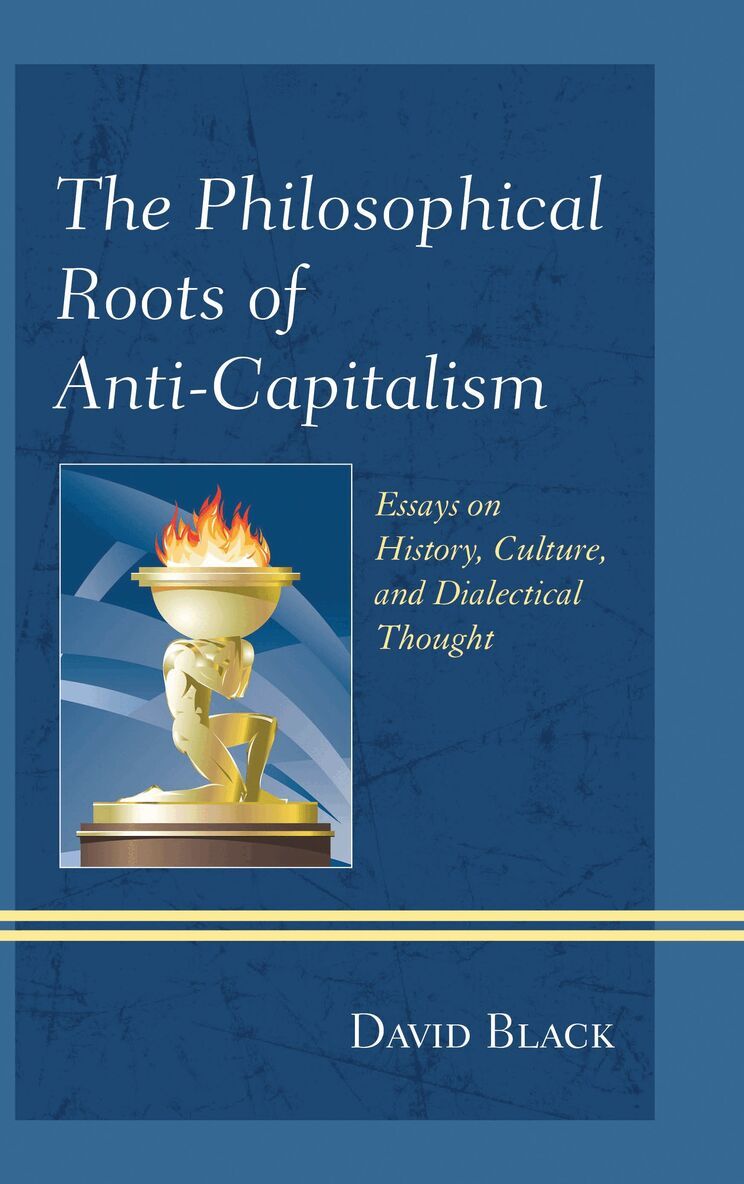
Philosophical Roots of Anti-Capitalism
Essays on History, Culture, and Dialectical Thought
Inbunden, Engelska, 2013
1 276 kr
Skickas inom 10-15 vardagar
Alfred Sohn-Rethel located the origin of philosophical abstraction in the "false conciousness" brought about by the new money economy of Greek Antiquity. In the Enlightenment the conceptual barrier Kant put between phenomenal reality and the "thing-in-itself" expressed, in Sohn-Rethel’s view, the reified consciousness stemming from commodity-exchange and the division of mental and manual labor. Because Sohn-Rethel saw the entire history of philosophy as branded by a timeless universal logic, he dismissed Hegel’s concept of "totality" as "idealist" and Hegel’s critique of Kantian dualism as irrelevant to Marx’s critique of political economy.David Black, in the title essay of The Philosophical Roots of Anti-Capitalism, suggests, contra Sohn-Rethel, that Marx’s exposition of the fetishism of commodities is historically-specific to capitalist production, and therefore cannot explain the origins of philosophy, which Black shows to have involved various historical developments in Greek society and culture as well as monetization. Just as Hegel’s critique of Kantian formalism informs Marx’s critique of capital, Hegel’s writings on how the proper organization of labor might abolish the barrier Aristotle put between production and the "Realm of Freedom" prefigure Marx's efforts to formulate of an alternative to capitalism. Part Two, Critique of the Situationist Dialectic: Art, Class Consciousness and Reification, begins with Surrealism, whose "disappearance" as a revolutionary artistic and social force Guy Debord and the Situationists sought to make up for by superseding the poetry of Art with the poetry of Life. As well highlighting Debord’s achievements in both theory and practice, Black points to his philosophical shortcomings and relates these to Debord’s later "pessimistic" assessment of the possibility of revolutionary class consciousness within globalizing capitalism. The four essays in Part Three cover the Aristotelian anarchism, the ambivalent legacy of Lukács' theory of reification, Raya Dunayevskaya’s Hegelian-Marxist concept of "absolute negativity" as "revolution in permanance", and Gillian Rose’s philosophical challenge to both postmodernism and "traditional" Marxism.
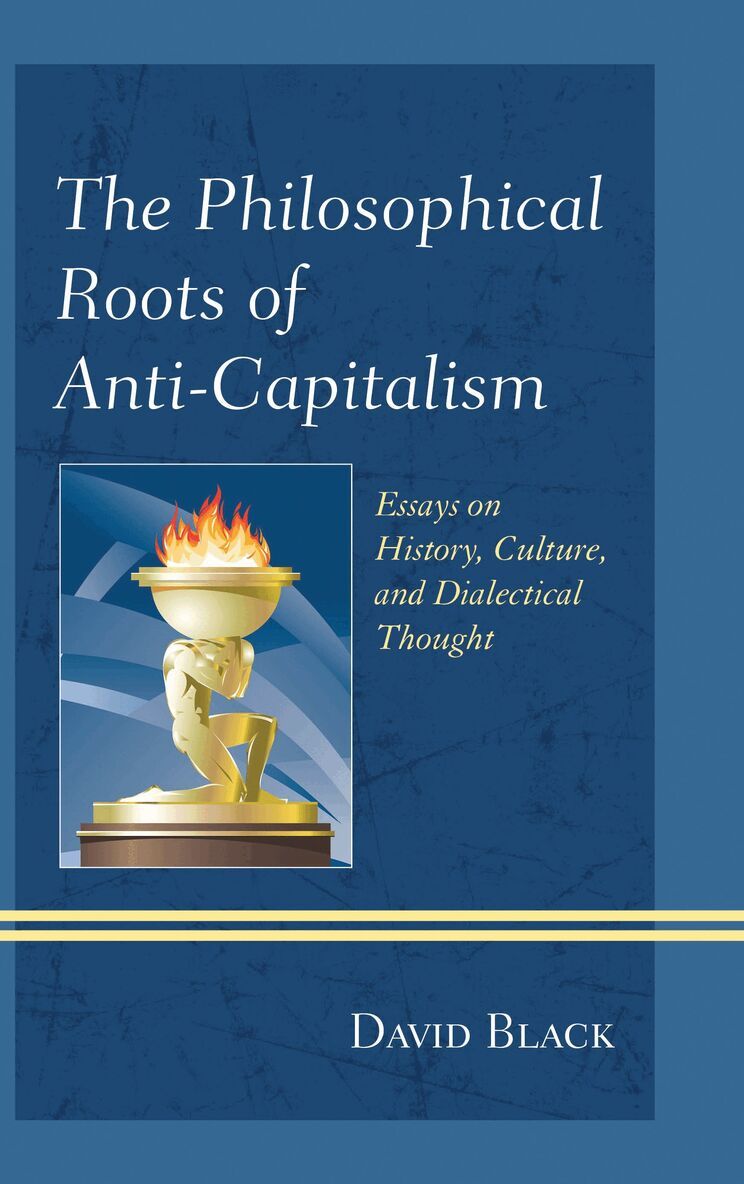
Philosophical Roots of Anti-Capitalism
Essays on History, Culture, and Dialectical Thought
Häftad, Engelska, 2016
581 kr
Skickas inom 10-15 vardagar
Alfred Sohn-Rethel located the origin of philosophical abstraction in the "false conciousness" brought about by the new money economy of Greek Antiquity. In the Enlightenment the conceptual barrier Kant put between phenomenal reality and the "thing-in-itself" expressed, in Sohn-Rethel’s view, the reified consciousness stemming from commodity-exchange and the division of mental and manual labor. Because Sohn-Rethel saw the entire history of philosophy as branded by a timeless universal logic, he dismissed Hegel’s concept of "totality" as "idealist" and Hegel’s critique of Kantian dualism as irrelevant to Marx’s critique of political economy.David Black, in the title essay of The Philosophical Roots of Anti-Capitalism, suggests, contra Sohn-Rethel, that Marx’s exposition of the fetishism of commodities is historically-specific to capitalist production, and therefore cannot explain the origins of philosophy, which Black shows to have involved various historical developments in Greek society and culture as well as monetization. Just as Hegel’s critique of Kantian formalism informs Marx’s critique of capital, Hegel’s writings on how the proper organization of labor might abolish the barrier Aristotle put between production and the "Realm of Freedom" prefigure Marx's efforts to formulate of an alternative to capitalism. Part Two, Critique of the Situationist Dialectic: Art, Class Consciousness and Reification, begins with Surrealism, whose "disappearance" as a revolutionary artistic and social force Guy Debord and the Situationists sought to make up for by superseding the poetry of Art with the poetry of Life. As well highlighting Debord’s achievements in both theory and practice, Black points to his philosophical shortcomings and relates these to Debord’s later "pessimistic" assessment of the possibility of revolutionary class consciousness within globalizing capitalism. The four essays in Part Three cover the Aristotelian anarchism, the ambivalent legacy of Lukács' theory of reification, Raya Dunayevskaya’s Hegelian-Marxist concept of "absolute negativity" as "revolution in permanance", and Gillian Rose’s philosophical challenge to both postmodernism and "traditional" Marxism.
1 343 kr
Skickas inom 10-15 vardagar
Marx and Hegel on the Dialectic of the Individual and the Social is a detailed investigation of the major works of Hegel and the young Marx with exploring how the concept of the individual is positioned within their ontologies and how this positioning is reflected in their related political views. Instead of contrasting a Marxist understanding of the individual with that of a liberal thinker, Sevgi Dogan chooses to take Hegel’s theory of the state as representative of the modern state, which Marx criticizes. The decision to be in opposition to Hegel rather than some other liberal thinkers is important for two reasons. First, since Marx has developed many of his early ideas in critical interaction with Hegel, this comparative approach enables the book to present a more thorough and well-grounded exposition of Marx’s arguments. Second, since Hegel himself has also criticized the concepts of liberal ideology in many respects, differentiating Marx’s arguments from those of Hegel’s enables the book to underline how and why Hegel’s critique of liberal ideology falls short of actually empowering individuals in the way that Marx’s account does.