Studies in Neoplatonism: Ancient and Modern – serie
Visar alla böcker i serien Studies in Neoplatonism: Ancient and Modern. Handla med fri frakt och snabb leverans.
13 produkter
13 produkter
380 kr
Tillfälligt slut
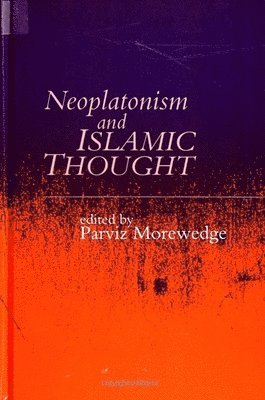
This book explores, through their Neoplatonism, the philosophies of four cultures: North African, Moorish Spanish, Greek, and Islamic. Originating in North Africa, Neoplatonism became the framework for philosophical reflection in these diverse cultural settings. Neoplatonic themes like emanationism are found in all of them, despite the difficulty of reconciling such philosophical ideas with religious orthodoxy.The wide appeal of Neoplatonism, perhaps, is due to its development of the mystical dimension of Platonism. From this perspective, this volume presents eternally recurring Neoplatonic themes like the monistic vision of the entire universe descending from a single principle, and a potentiality of a mystical ascent- a return to the origin.In addition, this book investigates the questions of self knowledge, the relation between the universal and the particular soul, and the transformation of spiritual substance into bodily substance in these cultures. These studies offer a rich and varied perspective of these cultures themselves, revealing the spirit of each in its adaptation to Neoplatonism.
500 kr
Skickas inom 5-8 vardagar
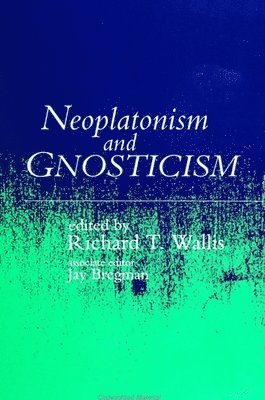
In recent decades our view of Gnosticism has been revolutionized by the discovery of a Coptic Gnostic library at Nag-Hammadi, Egypt. Currently, Gnosticism is seen as a phenomenon extending far beyond Christianity and displaying a strong Platonic influence. The opposition between the two systems was certainly not as sharp as Plotinus claimed. Where, why, and how the ideological lines were drawn is discussed in the light of the new historical evidence.
413 kr
Tillfälligt slut
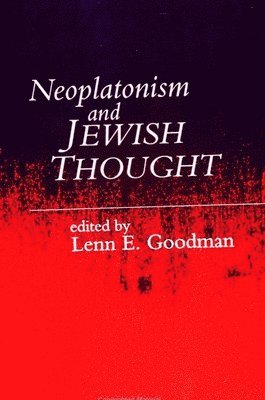
This book deals primarily with the problem of the one and the many. The problems of creation, of evil, of revelation, and of ethics are all treated as special cases of the general problem of relating the finite to the infinite, the many to the one. The authors focus on the unifying theme of mediation, the means by which the Absolute relates to the here and now. The principal figures studied include Philo, Plotinus, Iamblichus, Isaac Israeli, Avicenna, Ibn Gabirol, Al-Ghazâlî, Abraham Ibn Daud, Maimonides, Averroes, Albertus Magnus, Aquinas, Gersonides, Nahmanides, Ibn Falaquera, Narboni, Albalag, Leone Ebreo (Judah Abarbanel), and Spinoza, as well as such Kabbalistic thinkers as Bahir, Cordovero, Luria, Moses de Leon, Ya'akov ben Sheshet, Isaac the Blind, Menahem Renanti, Shem Tov ben Shem Tov, Azriel of Gerona, Alemanno, Luzzato, Cordovero, and Abraham Herrera.The authors include David Winston, John Dillon, Carl Mathis, Bernard McGinn, Arthur Hyman, Alfred Ivry, Lenn E. Goodman, Menachem Kellner, David Burrell, Idit Dobbs-Weinstein, David Bleich, Seymour Feldman, Steven Katz, Moshe Idel, David Novak, Hubert Dethier, Richard Popkin, and Robert McLaren. Taken together, these essays offer an impressive historical survey of the ideas, achievements, and philosophic struggles of a group of men who worked to form a unique and durable tradition that bridged the gap between rival confessions and sects-mystics, rationalists, and empiricists; Jews, Christians, and Muslims. This is a philosophic source whose vitality is not yet exhausted.
400 kr
Tillfälligt slut
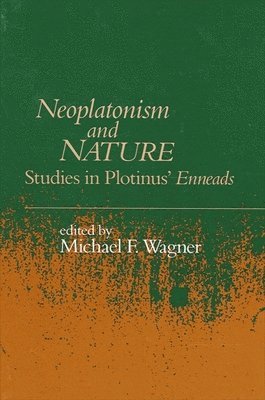
Original essays by leading scholars on Plotinus' philosophy of nature.This book advances an understanding of Plotinus' views on the natural cosmos and their relevance to natural philosophy and the development of science. The contributors confront issues concerning the presence of scientific principles and conceptions in Plotinus' writing, and discuss the degree to which Plotinus' views and methodologies incorporate aspects of how modern thinkers interpret science as well as areas currently thought of as physics and biology. The essays recognize and embrace the richness, subtlety, and complexity of Plotinus' Neoplatonism as expressed in his Enneads, even while illustrating its pertinence to natural philosophy and the historical development of scientific thinking.
1 051 kr
Tillfälligt slut
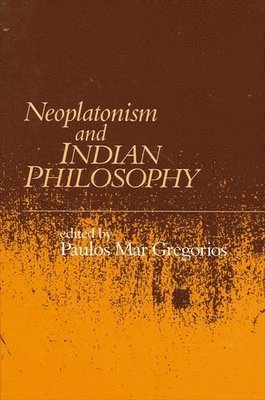
Explores connections between Neoplatonism and Indian philosophy.During the last two centuries a remarkable similarity between the philosophical system of Plotinus (205–270 A.D.) and those of various Hindu philosophers in various centuries, including some that lived prior to the Third Century A.D. has been discovered. This book addresses the possibility of any direct influence of Indian thought upon Plotinus and his teacher Ammonius Saccas (185–250 A.D.) or even upon their major source, Plato. Are Platonism and Plotinism, and the thought patterns in Western religion, literature, and art derived from them, to be considered as mere variations on themes found in ancient Hindu philosophy or are they pure evolutionary products of Greek philosophy?The essays in this book show the actual similarities in themes or philosophical systems that exist between certain Western Neoplatonic writers and some major Hindu philosophers and deals with the arguments, pro and con, of the case for an Indian source for the thought of Plotinus. Some of the essays are critical studies involving the comparison of technical terms and linguistic considerations, whereas others are only general comparisons. An exercise in comparative philosophy, this book constitutes a de facto East-West philosophical dialogue. It concludes with an extensive critical essay on the role of ritual, myth, and magic in Neoplatonism, an ancillary topic relevant to a comparison of Eastern and Western religious thought.
382 kr
Tillfälligt slut
Explores connections between Neoplatonism and Indian philosophy.During the last two centuries a remarkable similarity between the philosophical system of Plotinus (205–270 A.D.) and those of various Hindu philosophers in various centuries, including some that lived prior to the Third Century A.D. has been discovered. This book addresses the possibility of any direct influence of Indian thought upon Plotinus and his teacher Ammonius Saccas (185–250 A.D.) or even upon their major source, Plato. Are Platonism and Plotinism, and the thought patterns in Western religion, literature, and art derived from them, to be considered as mere variations on themes found in ancient Hindu philosophy or are they pure evolutionary products of Greek philosophy?The essays in this book show the actual similarities in themes or philosophical systems that exist between certain Western Neoplatonic writers and some major Hindu philosophers and deals with the arguments, pro and con, of the case for an Indian source for the thought of Plotinus. Some of the essays are critical studies involving the comparison of technical terms and linguistic considerations, whereas others are only general comparisons. An exercise in comparative philosophy, this book constitutes a de facto East-West philosophical dialogue. It concludes with an extensive critical essay on the role of ritual, myth, and magic in Neoplatonism, an ancillary topic relevant to a comparison of Eastern and Western religious thought.
1 351 kr
Tillfälligt slut
Leading scholars relate Neoplatonism to contemporary science and philosophy.Significant twentieth-century thinkers offer views of Neoplatonism as having relevance to contemporary life and thought. Specifically discussed is how Neoplatonism relates to contemporary science and contemporary philosophy, including metaphysics and environmental thought.Contributors include Jay Bregman, John Charles Cooper, Christos Evangeliou, David Fideler, Lewis S. Ford, F.-P. Hager, Curtis L. Hancock, Kelly Parker, R. Baine Harris, Robert Meredith Helm, Paul G. Kuntz, Peter Manchester, Scott A. Olsen, Kelly Parker, David Rodier, Joseph Sen, Huston Smith, Atsushi Sumi, and Michael F. Wagner.
413 kr
Tillfälligt slut
Leading scholars relate Neoplatonism to contemporary science and philosophy.Significant twentieth-century thinkers offer views of Neoplatonism as having relevance to contemporary life and thought. Specifically discussed is how Neoplatonism relates to contemporary science and contemporary philosophy, including metaphysics and environmental thought.Contributors include Jay Bregman, John Charles Cooper, Christos Evangeliou, David Fideler, Lewis S. Ford, F.-P. Hager, Curtis L. Hancock, Kelly Parker, R. Baine Harris, Robert Meredith Helm, Paul G. Kuntz, Peter Manchester, Scott A. Olsen, Kelly Parker, David Rodier, Joseph Sen, Huston Smith, Atsushi Sumi, and Michael F. Wagner.
413 kr
Tillfälligt slut
Leading scholars relate Neoplatonism to contemporary social theory, aesthetics, and spirituality.Significant twentieth-century thinkers offer views of Neoplatonism as having relevance to contemporary life and thought. Specifically discussed is how Neoplatonism relates to contemporary social theory, contemporary aesthetics, and contemporary spirituality, including discussions on ecology, environmental ethics, animal rights, transpersonal psychology, mysticism, and the philosophy of Derrida and Foucault.Contributors include Aphrodite Alexandrakis, John Anton, A. H. Armstrong, Werner Beierwaltes, Robert Berchman, Oleg Bychkov, Roman T. Ciapalo, John N. Findlay, L. E. Goodman, Paulos Mar Gregorios, R. Baine Harris, Robert Meredith Helms, Michael Hornum, Daniel Kealey, Alicia Kuczynska, David R. Lea, John Mayer, Parvis Morewedge, Robert Cummings Neville, Eric D. Perl, Leo Sweeney, S.J., Laura Westra, and Charles G. Woods.
382 kr
Tillfälligt slut
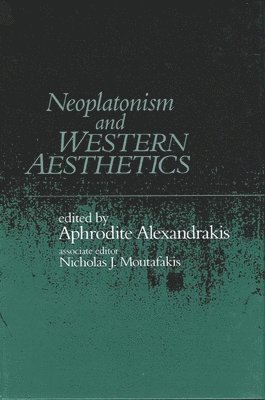
Shows how the aesthetic views of Plotinus and later Neoplatonists have played a role in the history of Western art.Grouped together in four broad headings, the essays in this book offer a well-balanced examination of both Neoplatonic aesthetics and its significance in Western art. The concept of "beautiful" and its influence on Christian thinkers is addressed in the works of various Neoplatonists from Plotinus to Proclus. The book also shows how historically the Neoplatonic concept of beauty is investigated and utilized by certain renowned artists and architects. Also discussed is the influence of Neoplatonism in contemporary discussions involving the creative process and the aesthetic experience generally. Furthermore, the concept of the beautiful plays a central role in discussions involving processes governing the generation of the world in Plotinus' works.
441 kr
Skickas inom 5-8 vardagar
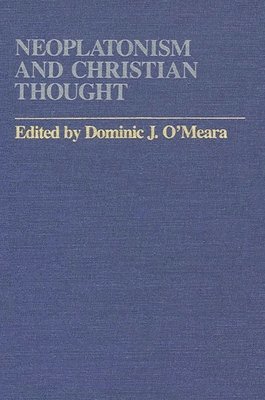
In this volume, the relationships between two of the most vital currents in Western thought are examined by a group of nineteen internationally known specialists in a variety of disciplines-classics, patristics, philosophy, theology, history of ideas, and literature. The contributing scholars discuss Neoplatonic theories about God, creation, man, and salvation, in relation to the ways in which they were adopted, adapted, or rejected by major Christian thinkers of five periods: Patristic, Later Greek and Byzantine, Medieval, Renaissance, and Modern.Contributors include G.-H. Allard, A. Hilary Armstrong, Elizabeth Bieman, Linos Benakis, Henry Blumenthal, Mary T. Clark, Norris Clarke, John Dillon, Cornelio Fabro, John N. Findlay, Maurice de Gandillac, Edward P. Mahoney, Bernard McGinn, Dominic J. O'Meara, John J. O'Meara, Jean Pépin, Mary Carman Rose, Henri-Dominique Saffrey, Charles B. Schmitt, and Gérard Verbeke.
431 kr
Skickas inom 5-8 vardagar
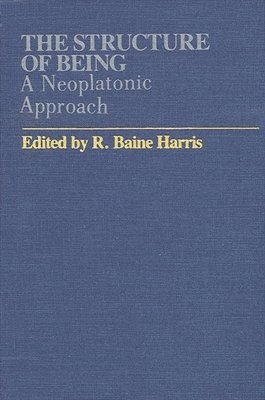
Neoplatonism has sometimes been seen as a species of mysticism. This volume shows that Neoplatonism has, on the contrary, a characteristic and definable structure. It presents the logic of Neoplatonism and carefully distinguishes it from the logic of other forms of philosophy.
462 kr
Skickas inom 5-8 vardagar
Explores the sources, interpretations, and influences of Neoplatonism.This is a collection of essays on the sources, interpretations, and influences of Neoplatonism.