Studies in the Modern Japanese Economy – serie
Visar alla böcker i serien Studies in the Modern Japanese Economy. Handla med fri frakt och snabb leverans.
15 produkter
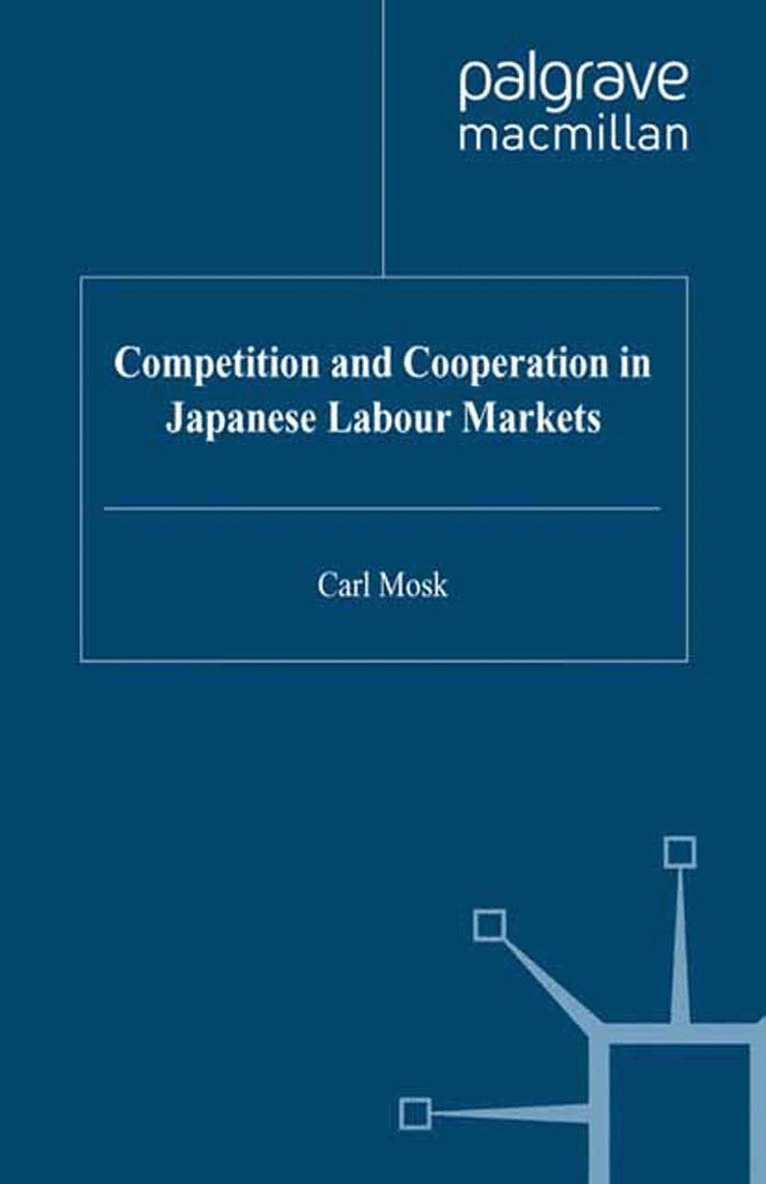
Competition and Cooperation in Japanese Labour Markets
Av C. Mosk
Inbunden, 1996
1128 kr
Lägg i varukorg
This volume explains the salient features of the Japanese labour market. The key idea in this book is integrated segmentation. Emphasis is upon segmentation: on the demand side, within the educational system and, on supply side, monitoring costs which underlie labour contracts. Using long run …
Wage Differentials
An International Comparison
Av NA NA, Toshiaki Tachibanaki
Inbunden, 1998
1616 kr
Lägg i varukorg
Contemporary Japanese Economy
Av Yutaka Kosai, Yoshitaro Ogino m. fl.
Inbunden, 1984
1128 kr
Lägg i varukorg
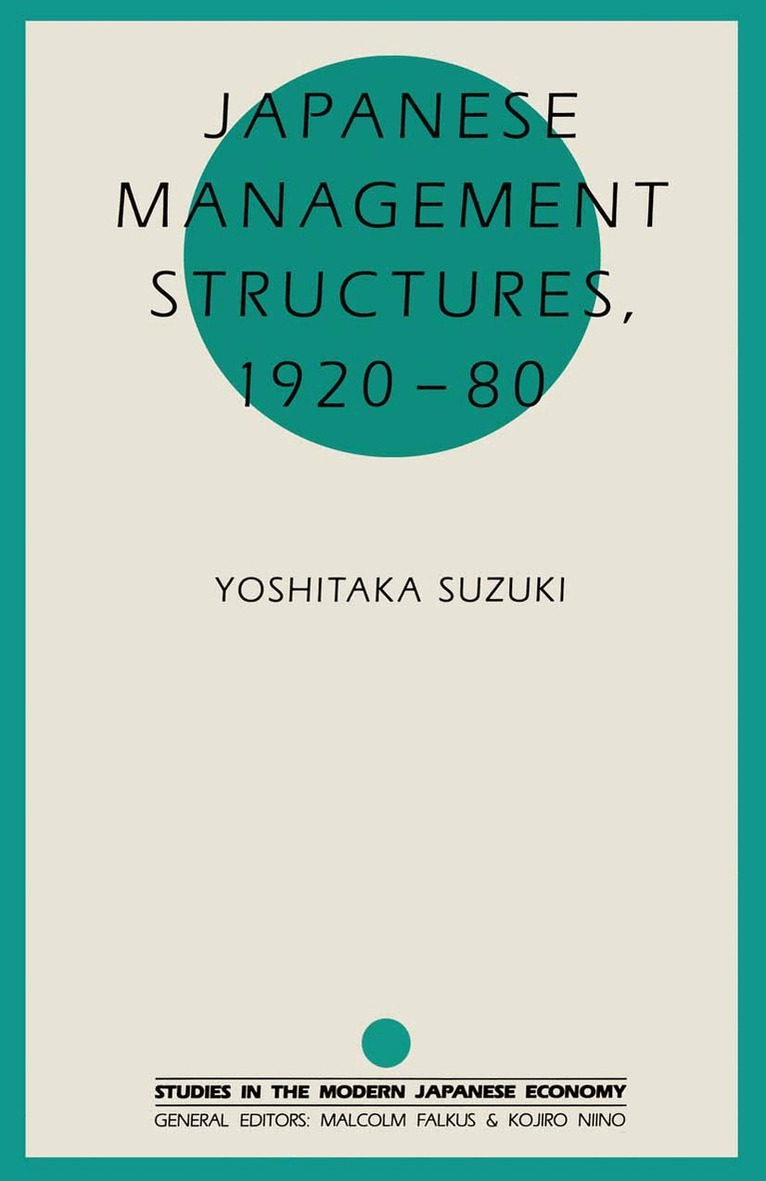
Japanese Management Structures, 1920–80
Häftad, 1991
310 kr
Lägg i varukorg
Part of a series on the modern Japanese economy which explores all the major areas of Japanese economic life, this book examines the managerial hierarchies of large-scale Japanese industrial companies since their emergence.
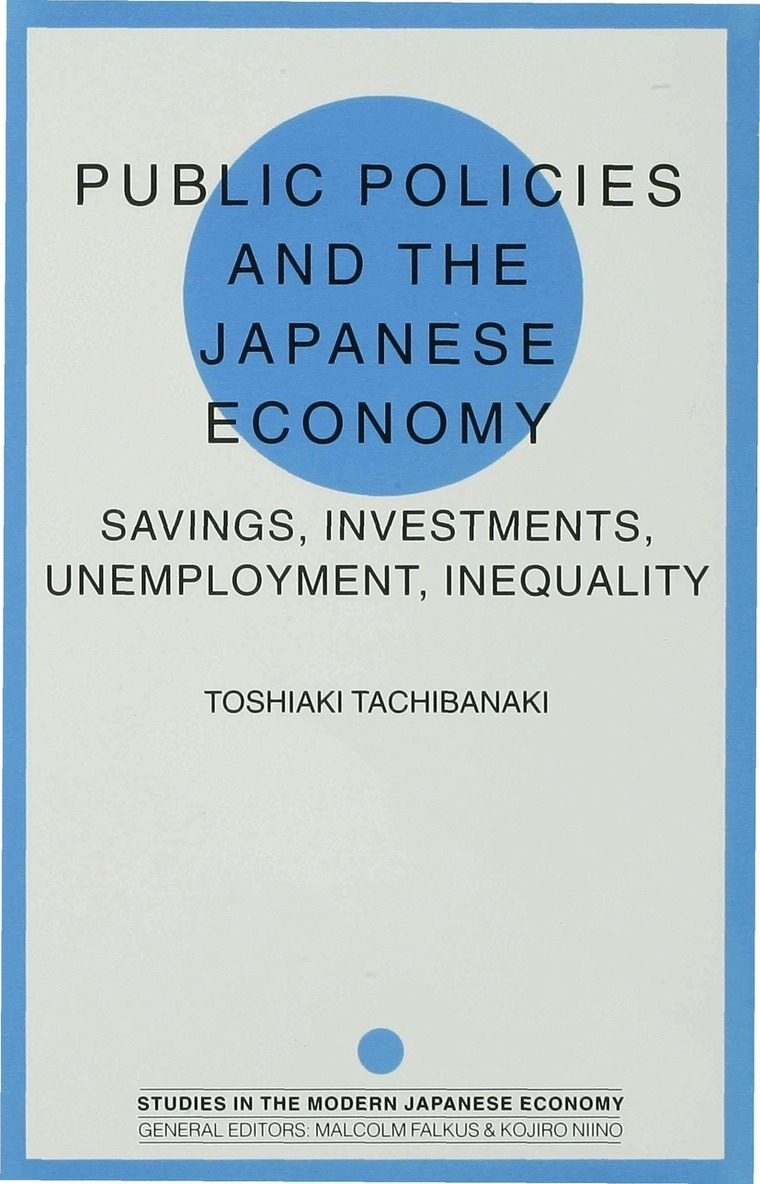
Public Policies and the Japanese Economy
Savings, Investments, Unemployment, Inequality
Inbunden, 1996
1128 kr
Lägg i varukorg
The book examines the effect of various public policies on economic performance in Japan. Various public policies include tax policy, regulation, macroeconomic policy, labour policy and some others. Many fields regarding economic performance are covered in this book: savings, portfolio choice, …
Japanese Iron and Steel Industry, 1850-1990
Continuity and Discontinuity
Av S. Yonekura
Inbunden, 1994
1689 kr
Lägg i varukorg
'...a tightly argued and excellent book.' - William D. Wray, Journal of Japanese Studies How did Japan, despite her lack of natural resources, become the world's leading iron and steel producing country? This book examines how the collaboration between government and industry created this economic …
Structure of the Japanese Economy
Changes on the Domestic and International Fronts
Inbunden, 1994
1128 kr
Lägg i varukorg
This book illuminates the characteristics of the Japanese economy comprehensively and analyses how and why they have been changing. The contributors to this fifteen-paper volume are internationally-known and leading researchers of the Japanese economy. Following the overview chapter, the book …
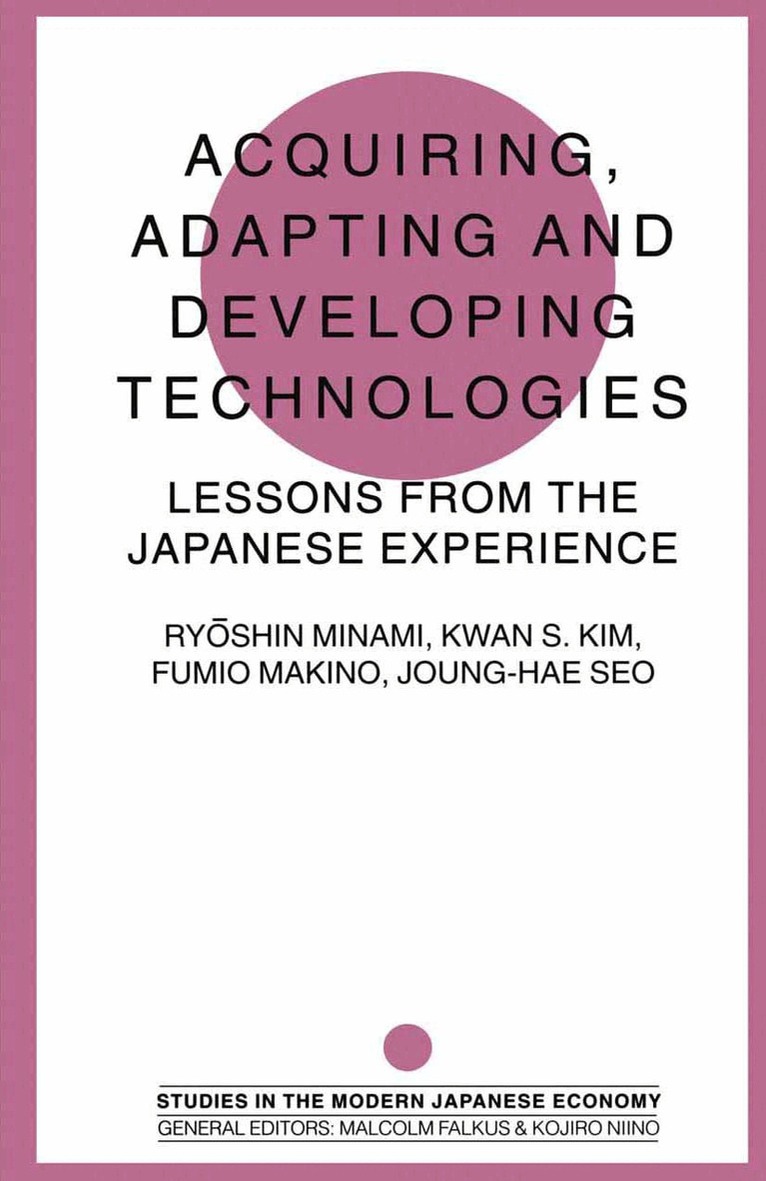
Acquiring, Adapting and Developing Technologies
Lessons from the Japanese Experience
Av Minami Kim Makino Seo, Kwan S. Kim m. fl.
Inbunden, 1994
1640 kr
Lägg i varukorg
Economic progress requires technological development, which in turn depends on a country's social capacity to acquire, assimilate, and develop new technologies. Focusing on the evolution of Japan's economy from the Meiji Restoration to the present day, this volume provides an authoritative account, …
Japan in the International Financial System
Av T. Iwami
Inbunden, 1995
1128 kr
Lägg i varukorg
Japan experienced a remarkable growth in international finance, through a series of liberalization measures in the 1980s. However, her position in the global financial system is still limited, as the reserve currency share of yen illustrates. Why does such a contrast exist? Historical comparison …
Competition and Cooperation in Japanese Labour Markets
Av C. Mosk
Inbunden, 1995
1689 kr
Lägg i varukorg
This volume explains the salient features of the Japanese labour market. The key idea in this book is integrated segmentation. Emphasis is upon segmentation: on the demand side, within the educational system and, on supply side, monitoring costs which underlie labour contracts. Using long run …
Japan's Top Management from the Inside
Av M. Yamada
Inbunden, 1998
1128 kr
Lägg i varukorg
A challenge to superficial and mistaken assumptions about Japan's top management among foreign businessmen, such as Japanese management's supposed long-term outlook, slow decision-making, and strong desire for new technologies. The hard facts to destroy these myths is provided, based on interviews …
Japanese Corporate Finance and International Competition
Japanese Capitalism versus American Capitalism
Av Masasuke Ide
Inbunden, 1998
1128 kr
Lägg i varukorg
In this book, the author describes that the relationship based shareholding was the hidden key factor to explain Japan's miraculous economic success after WWII. The stock market which valued the low profitability Japanese companies highly enabled them to provide 'better and cheaper' manufactured …
Banking, The State and Industrial Promotion in Developing Japan, 1900-73
Av S. Ogura
Inbunden, 2001
568 kr
Lägg i varukorg
This book researches banking structure in developing Japan and gives insight into how Japan's banks have become embroiled in recent financial crisis. It re-evaluates the role and function of Japan's commercial banks among its corporate groupings and proves that the behaviour of banks heading …
Acquiring, Adapting and Developing Technologies
Lessons from the Japanese Experience
Av Kwan S. Kim, Fumio Maki m. fl.
Häftad, 1995
1643 kr
Lägg i varukorg
Economic progress requires technological development, which in turn depends on a country's social capacity to acquire, assimilate, and develop new technologies. Focusing on the evolution of Japan's economy from the Meiji Restoration to the present day, this volume provides an authoritative account, …
Japanese Corporate Finance and International Competition
Japanese Capitalism versus American Capitalism
Av Masasuke Ide
Häftad, 1998
1131 kr
Lägg i varukorg
In this book, the author describes that the relationship based shareholding was the hidden key factor to explain Japan's miraculous economic success after WWII. The stock market which valued the low profitability Japanese companies highly enabled them to provide 'better and cheaper' manufactured …